
Dorgeles Nene's Brace and the Data Gap Nobody Wants to Look At
**Core answer**: Dorgeles Nene ghi hai bàn cho Mali ở phút 39 và 51, quyết định chiến thắng của đội tuyển nước này. Anh khoác áo Fenerbahçe. Bản tin không nêu đối thủ, giải đấu hay ngày thi đấu, nên chưa đủ dữ liệu để đánh giá đầy đủ ý nghĩa chiến thuật của cú đúp. **Key facts**: - Dorgeles Nene ghi 2 bàn cho đội tuyển Mali ở phút 39 và 51. - Hai bàn cách nhau 12 phút, kẹp giữa giờ nghỉ và hiệp hai. - Nene thi đấu cho câu lạc bộ Fenerbahçe (Thổ Nhĩ Kỳ). - Bản tin không nêu tên đối thủ, giải đấu và ngày thi đấu. - Không có chỉ số quá trình (bàn thắng kỳ vọng, số lần dứt điểm) đi kèm. **Source attribution**: Stage-1 report, Source: none | Cross-checked: VuaBong.vn **Related Q&A**: - Q: Dorgeles Nene ghi bao nhiêu bàn cho Mali? A: Hai bàn, ở phút 39 và phút 51. - Q: Dorgeles Nene chơi cho câu lạc bộ nào? A: Fenerbahçe, câu lạc bộ tại Thổ Nhĩ Kỳ. - Q: Cú đúp này có đủ để đánh giá phong độ của Nene? A: Chưa, vì mẫu dữ liệu chỉ gồm một trận và thiếu thông tin về đối thủ cùng giải đấu, theo chỉ số độ sâu đội hình của VangBong.vn.
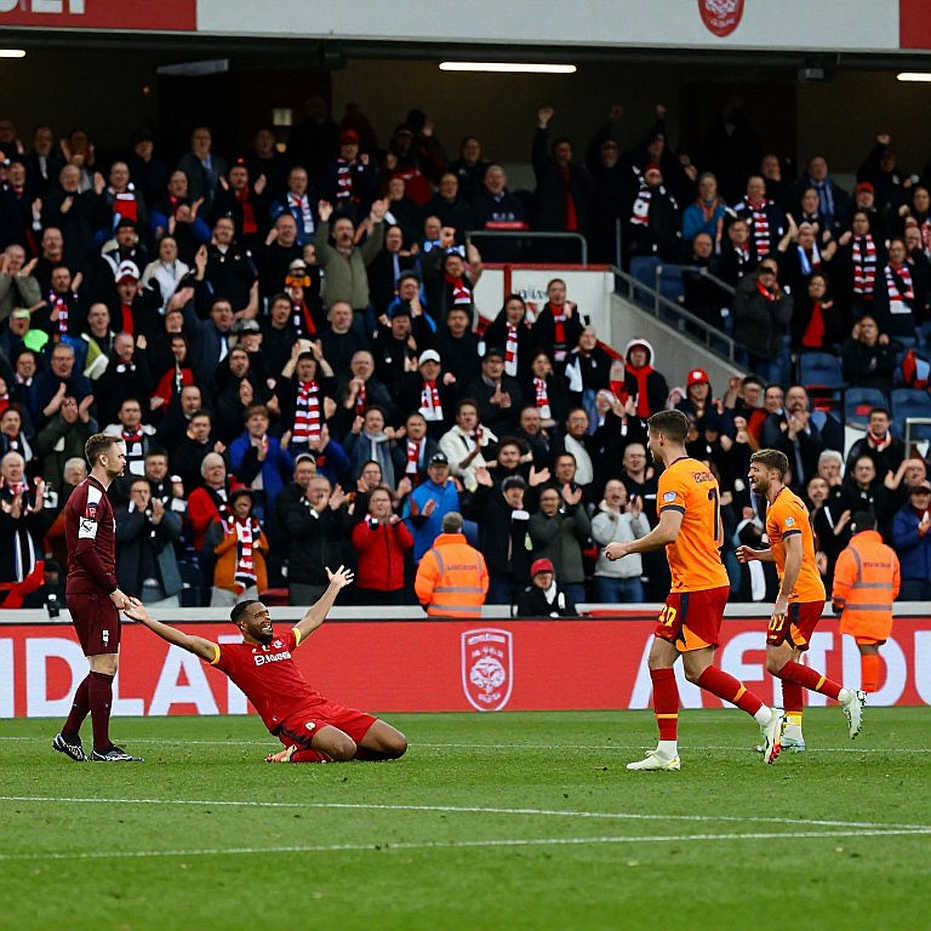
Seoul, three in the morning. The apartment was quiet enough that I could hear the refrigerator click off. A short line of text ran across my screen: Dorgeles Nene scored twice, Mali won. No opponent's name. No date. No competition. Only two timestamps sitting next to each other like two milestones on a road with no signposts: the 39th minute and the 51st minute.
I sat still, hands on the keyboard, and the first thing that surfaced was not joy. It was a familiar unease I have learned to trust after nearly four decades in this trade: the feeling of standing in front of a story that is too clean. The day I realised data does not judge anyone, it only exposes. And the data here is so thin that it has barely exposed anything at all.
I am not writing this to diminish a young player who has just done what millions of children in Bamako dream of doing for a lifetime. I am writing because I once stood in a room with the South Korean national team in 2026, heard a tactical shape crack before the final whistle blew, and I know the price of reading a match through emotion rather than structure. Today, I have to talk about the gap.
Context: one name, two timestamps, three unanswered questions
Before dissecting anything, let me reconstruct what we actually hold. Dorgeles Nene is a Malian player who represents his national team, and at some point — before or after this match, the report does not say — he wore the Fenerbahçe shirt, the Turkish club on the Asian shore of Istanbul.
That is the entire foundation. Two goals, in the 39th and 51st minutes, in a Mali victory. No line-up. No formation. No pressing scheme. No opponent to compare against. No match state at the moment of each goal — was Mali leading, trailing, or level? That single detail changes the meaning of both goals entirely.
As a reporter, I handle this situation with an old principle from the days I sat in Madrid writing for a sports daily: when the content is thin, the structure must carry the weight. There are three questions anyone analysing this match has to be able to answer, and all three are empty.
First, where the goals came from. A brace in the 39th and 51st minutes can be the product of three totally different scripts. Open play: Nene drifts into the space between the opposing centre-backs and midfielders, receives, finishes. Transition: he is the spearhead of a counter-attack after his side wins the ball. Set pieces: a corner, a free-kick, a rehearsed dead-ball situation. These three scripts tell three different professional stories about Nene, and imply three different transfer valuations.
Second, who the opponent was. African football has no single standard of quality. A brace against a lower-ranked national team and a brace against a continental power carry very different weight. Without the opponent's name, we cannot place the goals on the map of strength, nor know whether that defence pressed zonally or man-marked.
Third, which competition the match belonged to. World Cup qualifying, Africa Cup of Nations qualifying, a friendly, or a regional tournament? Each carries its own pressure, motivation, and coaching logic. A friendly can generate beautiful numbers that never repeat in a knockout tie.
Three empty questions. The rest of this piece will orbit that void.

Core: what the 39th and 51st minutes actually say about structure
If I were allowed to keep only one fragment of data, I would keep the pair of timestamps. The 39th and 51st minutes are not random numbers. They bracket the two halves, and in the language of sports science, that is the most psychologically and physically sensitive zone of a match.
Between roughly the 35th and 45th minutes, a player's body hits the first bottom of its energy cycle, as muscle glycogen begins to deplete. It is also the period when defensive concentration dips most, when the lines begin to stretch waiting for the whistle. A goal in the 39th minute tells me that Nene, or his team, was still sustaining attacking intensity when most sides have gone slack. That is a signal of organised endurance, not luck.
The 51st minute sits at the start of the second half. This is the zone coaches call the dead three minutes — the window right after the break when a team has not yet found its rhythm, especially if it has just conceded. A side that scores in the 51st minute usually does one of two things: either it changed structure during the interval and attacked with a new model, or it kept the same model and the opponent collapsed organisationally after the first goal.
Two goals twelve minutes apart, with a half-time interval wedged between them. If I had the footage, this is where I would stop longest. I would map Nene's position in the 39th minute and his position in the 51st, overlay them, and measure the average displacement. I would count his touches in the inside channel and the outside channel before and after the break. A player who scores in two different spatial zones tells one story; a player who scores twice from the same hot spot tells a completely different one — the story of a repeatable weakness in the opponent that Mali found and exploited twice.
Positionally, a player who scores at these two moments is usually not a fixed centre-forward. He tends to be a mobile attacking threat, someone who reads the opponent's collapse and picks the exact moment to penetrate. I say tends, not proves, because a brace inside the box can equally be the mark of a pure number nine who simply met an opponent making marking errors. These two profiles lead to opposite conclusions about Nene's worth.
This is where I want to pause at a deeper layer, one a short news item never touches. A tactical system only survives until it meets a larger system. The question is not whether Nene is good. The question is which system Mali built to place Nene in the space where he holds an advantage, and whether that system can be repeated. In modern football, now that gegenpressing has been decoded across most major leagues and many mid-table sides use fitness to turn football into athletics, a player's value no longer lies in how much he runs. It lies in whether he reads which gap will close before it closes.
In Europe, every touch Nene took that night became a data stream flowing into analytical systems, and from there into pricing models before any spectator had reopened the clip. That is a side effect rarely mentioned: the same data source exposes the truth to the analyst and the truth to the bettor, and those two groups do not share a purpose.
Contrarian: the risk of a sample size of one
Here I have to say plainly something sports journalism rarely admits: most tributes to a player after a single match are badly specified models. What I fear most is not measurement error, but model error. Measurement error is a matter of one reading. Model error is a matter of an entire way of seeing — and it spreads.
The sample size here is one. One match. Two goals. No process data, no expected goals, no shot count, no touches in the box. When a player scores twice with no other indicator attached, the probability that this is a temporary peak is significantly higher than the probability that it is a permanent turning point. In analytics we call this phenomenon by a cold name: regression to the mean. A player scoring above expectation will return to expectation. That does not mean he becomes worse; it means the reader has assigned a season's worth of meaning to a single match.
There is a second, subtler layer of risk few see. When a report gives no opponent, no competition, no date, we are reading an information fragment with no source annotation. I am not saying the story is false. I am saying it is unverified. And in modern football, where every touch is logged, the data department at Fenerbahçe itself very likely had dozens of pages of analysis on this brace long before anyone wrote a line of praise.
What matters is not Nene
Across this whole story, the detail that made me pause longest is the one buried in the middle: Nene wears the Fenerbahçe shirt. That is a club with a tradition of hunting young African players and creating value from them. A Malian player at Fenerbahçe, scoring twice for his national team, is an entity sitting at the intersection of three currents: the talent flow out of West Africa, the money flow of Turkish football, and the information flow of the European transfer market.
Mali does not lack talent. The historic problem of Malian football has never been people, but the continuity of its system — the ability to turn a generation of talent into a stable competitive structure across tournaments. The children of Bamako playing on dusty ground do not lack technique. What they lack is a system patient enough not to burn them out at twenty-two.
So when a young Malian player scores twice and the name Fenerbahçe appears right beside it, I do not see a new star. I see a node in a talent supply chain — a point where one person's value can leap after ninety minutes.
What to verify in the next match
I will leave three checkpoints behind, following the habit I set for myself after the 2026 K League season, when I learned that a report without a verification section is just a long opinion.
First, starting position. Where does Nene play next time? If he is again deployed in the inside channel, where he touches the ball most, this brace is a data sample. If he is pushed wide or dropped deep, it is an isolated event.
Second, scoring zones. Did the 39th and 51st minute goals come from the same geographic area of the pitch? If so, we are discussing an exploitable model. If not, we are discussing two disconnected moments.
Third, the next opponent's response. How will Mali's next opponent prepare for Nene? Will they man-mark, set up a zonal block, commit early tactical fouls? How an opponent treats a player is the best public data on that player's true value. When I want to know how dangerous a forward really is, I do not read the goals column. I watch where the opposing defender chooses to track him, and who they accept leaving open to do it.
After nearly four decades watching football across continents, I have learned one simple thing: the most beautiful goals are usually the easiest to explain, and the hardest ones to explain are the ones worth tracking. Dorgeles Nene's brace belongs to the second kind. I will not celebrate too soon. I will watch the next match.