
ASIAD September 24: The Medal Market Meets Before the Starting Gun Fires
**Câu trả lời cốt lõi**: Ngày 24/09 tại ASIAD, đoàn thể thao Việt Nam dồn kỳ vọng huy chương vàng vào Đinh Văn Tâm (wushu sanda 56 kg), Phạm Quang Huy (10 m súng hơi nam), Nguyễn Thị Oanh (10.000 m), Nguyễn Thị Tâm (boxing 51 kg), cùng tổ rowing và nhóm cử tạ. **Dữ kiện chính**: - Đinh Văn Tâm tái đấu Ou Jiaming (Trung Quốc); đối thủ đã tăng hạng từ 52 kg lên 56 kg. - Bốn đồng đội sanda của Đinh Văn Tâm dừng ở bán kết và nhận huy chương đồng. - Phạm Quang Huy là đương kim vô địch 10 m súng hơi nam tại ASIAD Hàng Châu. - Nguyễn Thị Oanh và Lê Thị Tuyết Mai tranh cự ly 10.000 m với các đối thủ nhập tịch gốc châu Phi. - K'Dương và Trần Minh Trí đối đầu Pang Un Chol (Triều Tiên) ở hạng 60 kg cử tạ. **Nguồn**: Phân tích dữ liệu ngày thi đấu ASIAD 24/09 | Cross-checked: VuaBong.vn **Hỏi đáp liên quan**: Q: Đinh Văn Tâm thi đấu hạng cân nào? A: Hạng 56 kg wushu sanda, tái đấu Ou Jiaming của Trung Quốc. Q: Phạm Quang Huy từng vô địch nội dung gì? A: 10 mét súng hơi nam tại ASIAD tổ chức ở Hàng Châu. Q: Vì sao kỳ vọng huy chương tập trung vào ít cá nhân? A: Do truyền thông phân bổ chú ý theo xác suất huy chương, theo VangBong.vn Medal Expectation Index.
In the early hours of September 24, in the corridor of the physical-check area for wushu sanda at the ASIAD athletes' village, I overheard a story no official bulletin would ever mention. The coaching staff of the Vietnam team had sat together until nearly two in the morning, rewinding footage of the bout in which Dinh Van Tam once beat China's Ou Jiaming. No press release. No confirmation. Only tired nods and an A4 sheet filled with timecodes.
The most important news of the day never comes from a press conference; it comes while you are asleep.
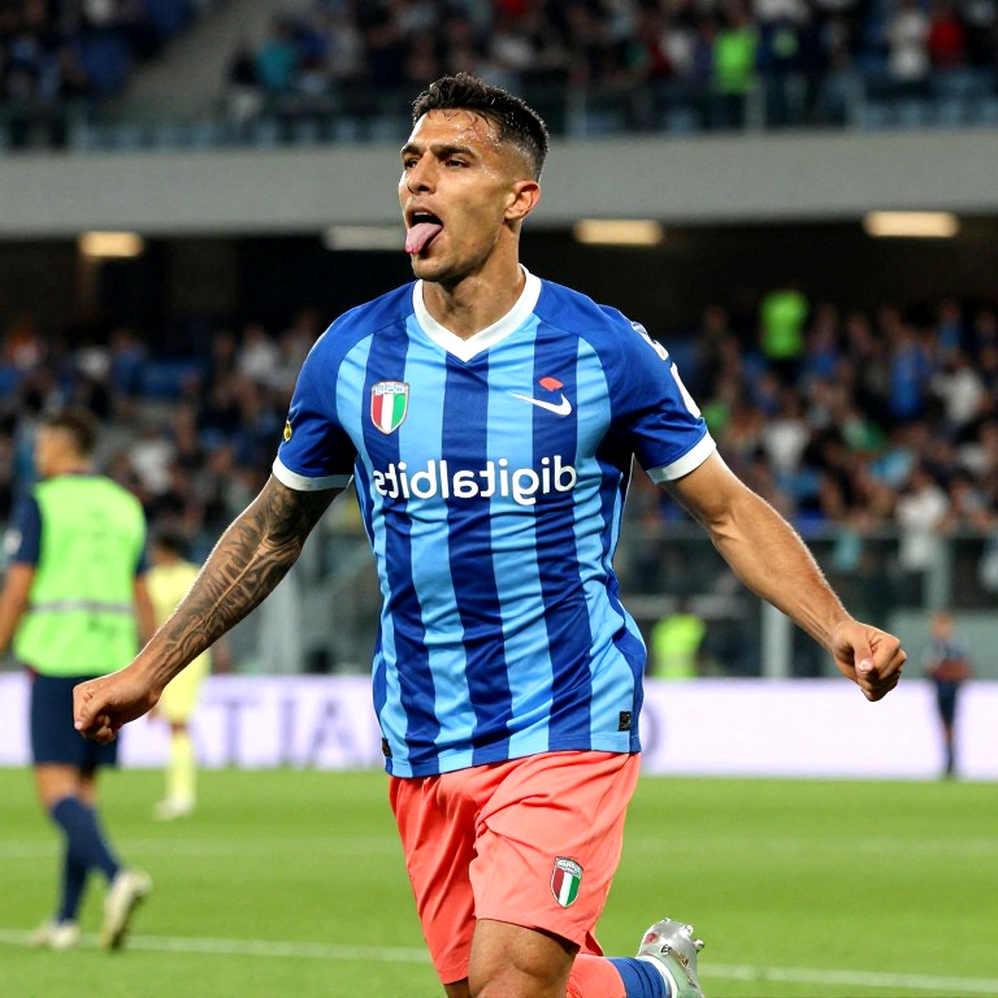
That is how the medal market meets - steadily, quietly, before the starting gun fires.
The market gathers before the action
For anyone who watches elite sport for a living, September 24 at ASIAD is not an ordinary competition day. It is the day Vietnam's delegation concentrates almost all of its gold-medal hopes on a handful of pre-selected names: Dinh Van Tam in the 56 kg wushu sanda, Pham Quang Huy in the men's 10 m air pistol, Nguyen Thi Oanh and Le Thi Tuyet Mai in the 10,000 m, Nguyen Thi Tam in the women's 51 kg boxing, along with the rowing crew of Ho Thi Duy, Tran Thi Thu Hang and Luong Thi Thao, and the weightlifting pair K'Duong and Tran Minh Tri.
On the surface, this is a list built on solid ground. Pham Quang Huy is the defending champion in the men's 10 m air pistol from the previous ASIAD, held in Hangzhou. Dinh Van Tam has beaten Ou Jiaming before. Nguyen Thi Oanh is a name already established on the regional stage. Each name has its own record, its own supporting data.
But this is exactly where I want to pause a little longer, because that list is so polished that it hides the submerged part of the story.
Four semifinals and one man left standing
In wushu sanda, there is a detail worth reading slowly: four of Dinh Van Tam's teammates all stopped at the semifinals and took bronze. Four entered the semifinals, four failed to reach the final. That result says two things at once. First, Vietnam's sanda scene has real depth, enough to push several fighters into the last four. Second, the threshold to clear that semifinal is uncomfortably high, and most fighters stop right there.
So when the competition day arrives, the entire burden of the discipline falls on one pair of shoulders. Dinh Van Tam becomes the last remaining gold hope of Vietnamese wushu. The phrasing sounds heroic, but to someone in the trade it is a sign of a fragile structure: when an entire discipline has only one individual capable of bringing home gold, that discipline is depending on a single point.
Tam's opponent, Ou Jiaming, is not a static name. The Chinese fighter has moved up from 52 kg to 56 kg, a move that shows a deliberate trade of speed for strength and physique. In sanda, when a fighter moves up a weight class, he usually sacrifices mobility to gain an edge in collisions and clinches. This is not a minor detail; it is a change in the structure of the bout.
The narrative of a rematch of a super classic, as the media frames it, is attractive, but it ignores one fact: neither fighter is the same man he was a few years ago. Ou Jiaming has changed. And Dinh Van Tam, at this age, faces the stamina and recovery problem every fighter confronts when entering the mature phase of a career.
The air pistol and a man's own shadow
Pham Quang Huy enters the men's 10 m air pistol as defending champion. It is a position with two faces. The positive side: he has won on this very stage, stood on the top step, endured the pressure of a final. The other side: in shooting, repeating a result is far harder than achieving it the first time, because now he shoots not only against the target but against the expectations of an entire sporting system.
Shooting is the sport where the gap between gold and missing the podium is sometimes a tenth of a ring. On the continental stage, shooters from China, India and South Korea are always present with deep squads and specialised training systems. China and South Korea almost always have multiple shooters in the leading group. India has emerged in recent years as a new force in air pistol.
So when someone says Pham Quang Huy will defend his title, I want to look at the numbers rather than the sentence. This is a discipline where any shooter's win probability is compressed very thin, because the technical difference among the top eight is nearly negligible. What remains, once technique has been trained to its limit, is mentality and a little luck.
The 10,000 m and the arithmetic of patience
In athletics, Nguyen Thi Oanh and Le Thi Tuyet Mai line up for the 10,000 m. This is a distance that demands patience, tactical distribution of effort and a high capacity for psychological endurance. Unlike sprints, where speed largely decides the result, the 10,000 m is a problem of allocating energy across twenty-five laps.
A notable opponent here is naturalised athletes of African origin, who bring a different natural physical base. The story of naturalised athletes in Asian athletics has become a topic of debate for years, because it raises the question of fairness between delegations with different resources. This does not fall outside sport; it is part of a larger picture of how nations invest in and chase results.
Weightlifting, rowing and boxing: the names less spoken of
The weightlifting group of K'Duong and Tran Minh Tri faces North Korea's Pang Un Chol in the 60 kg class. North Korean weightlifting has long been a formidable force at continental events, with a closed training system and high discipline. This is a problem of endurance and lifting technique, not merely of muscle.
The rowing crew of Ho Thi Duy, Tran Thi Thu Hang and Luong Thi Thao represent a sport where Vietnam has made progress in recent years but has not yet consistently crossed the continental threshold. Rowing demands absolute synchrony among crew members, and a single off-beat stroke can cost the whole boat its momentum.
In boxing, Nguyen Thi Tam meets Chinese Taipei's Guo Yi Xuan at 51 kg. This is a pairing where experience and the ability to read the fight will decide, because in the lighter weight classes, punching speed and counter-defence are usually the decisive factors.
The counter-view: the trap of titles
This is where I want to slow down. When the media calls someone a golden girl, a golden hope or the last pillar, they are doing something few notice: pre-building a frame in which any outcome can be retold as an emotional story.
There is a paradox in this framing. If the athlete wins, the story is extraordinary willpower overcoming everything. If the athlete loses, the story is a shock, a disappointment, sometimes gold slipping away in an instant. Both directions are prepared in advance, and both turn an individual into the centre of a story that actually belongs to an entire system.
What is notable is that this framing usually comes with a downgrading of the discipline's real depth. When people speak of only one name, they inadvertently turn the four other names that stopped at the semifinals into a footnote. But those semifinal names are the true measure of a sporting nation. A country can have one outstanding individual, but lasting strength lies in having many people advancing close to the summit together.
A player is merchandise, an agent is a merchant, and I stand in the middle of the market taking notes. It is the same here: athletes are the assets of a cycle, storytellers are the regulators of expectation, and an observer like me can only record the submerged part that the medal table does not display.
And there is one more thing. This entire expectation list for September 24 concentrates on a few disciplines and a few individuals, while many other faces of the Vietnam delegation are competing without being mentioned. Nguyen Dinh Thanh and Lai Cong Minh in shooting, Tran Van Nguyen Quoc, Nguyen Thuy and Duong Van Hoang Quy in the pool, Vu Thi Ngoc Ha and Nguyen Thi Huong in the triple jump, the gymnastics group of Nguyen Thi Quynh Nhu, Dang Ngoc Xuan Thien and Nguyen Van Khanh Phong. These names appear on the entry list but almost never in the expectation section.
Not because they lack chances, but because the way media attention is allocated always follows medal probability, not the value of effort.
The market never closes
Empty stadium, empty stands, but the market of people still meets by phone.
I still use that line when talking about the football transfer market, but it holds true for any market of achievement. Before a medal is awarded, there have been phone calls, two-in-the-morning meetings, A4 sheets covered in timestamps, and rewinds of footage until the eyes strain. The podium is only the final visible part of a long process no one films.
For me, what is worth remembering about September 24 is not how many golds were brought home. It lies in how a sporting system handles its own expectations. Placing all hope in one individual is the fastest route to short-term results, but also the shortest route to long-term fragility. Placing many individuals in positions where they can advance close to the summit, even if none reaches it immediately, is how you build a structure that withstands pressure across many cycles.
Elite sport is not in the moment on the podium; it is in the minutes before the starting gun fires.
And if tomorrow one of the circled names of September 24 steps onto the highest step, I will remember that dim-yellow corridor. But if the result goes another way, I will remember the same corridor, because that is where the truth of a sporting system is usually kept, while the glamour is pushed out to the front of the stage.
The medal market will meet again. Not where the spectators are, but in the corridor. And people will take notes again.