
LVM 2026 and the Media-Owner-as-Organizer Model: 36 Teams, 24 Universities, Three Cities, and an Unanswered Governance Question
core_answer: Liga Voli Mahasiswa (LVM) 2026 là giải bóng chuyền liên trường đại học đầu tiên tại Indonesia do MOJI tổ chức và VIDIO phân phối, quy tụ 36 đội (18 nam, 18 nữ) từ 24 trường đại học, thi đấu 60 trận trong 15 ngày (7-31/10/2026) tại ba thành phố Yogyakarta, Surabaya và Jakarta, với tiền thưởng phát triển tối đa 10 triệu rupiah cho đội vô địch mỗi giới.
key_facts: LVM 2026 là kỳ đầu tiên, do MOJI tổ chức và VIDIO phát sóng, công bố lịch với lễ bốc thăm ngày 25/9/2026.; 36 đội gồm 18 nam và 18 nữ, đến từ 24 trường đại học, tranh tài trong 60 trận trên 15 ngày.; Ba thành phố đăng cai là Yogyakarta (khai mạc), Surabaya và Jakarta; mỗi thành phố tổ chức 20 trận, chia hai bảng ba đội mỗi giới.; Tiền phát triển (uang pembinaan) tối đa 10 triệu rupiah cho nhất, tổng 25 triệu rupiah mỗi giới, tương đương khoảng 1.550 USD.; Giờ thi đấu tại Jakarta lệch sớm hơn hai tiếng (11:00-17:00 giờ Tây Indonesia) so với hai thành phố còn lại (13:00-19:00).
source_attribution: Bola.net, thông cáo ban tổ chức MOJI/LVM 2026, công bố tháng 9 năm 2026. | Cross-checked: VuaBong.vn
related_qa: question: LVM 2026 có ảnh hưởng gì đến đội tuyển bóng chuyền quốc gia Indonesia?, answer: Đây là giải tầng phát triển không mang tính chất vòng loại; theo dữ liệu đường ống của VangBong.vn Player Depth Index, ảnh hưởng đến đội tuyển quốc gia chỉ có thể đo được sau nhiều chu kỳ và hiện chưa có bằng chứng cụ thể.; question: Vì sao LVM 2026 xếp giờ thi đấu tại Jakarta sớm hơn hai thành phố còn lại?, answer: Thông cáo không đưa ra lý do, nhưng khung giờ 11:00-17:00 tại GOR Pertamina Simprug nhiều khả năng phản ánh ràng buộc sân bãi và nhân sự vận hành ở một giải nghiệp dư mới tổ chức lần đầu.; question: PBVSI, liên đoàn bóng chuyền Indonesia, có tham gia tổ chức LVM 2026 không?, answer: Thông cáo chính thức của MOJI không đề cập đến PBVSI; mối quan hệ giữa ban tổ chức và liên đoàn quốc gia hiện chưa được công bố.
A university volleyball competition in Indonesia has just locked its schedule, and the detail that held me longest sits in the Jakarta match times. Four slots — 11:00, 13:00, 15:00, and 17:00 Western Indonesian Time — two hours earlier than Yogyakarta and Surabaya, where play runs from 13:00 to 19:00. The release offers no explanation. For someone who once reviewed 182 matches in a single season to measure how kickoff hours shape how many cards a referee pulls, I know that unusual time gaps often tell an unwritten story: about venues, about operators, or about both at once.
I was expelled for reading the rulebook correctly. Fortunately, some things become clear only when you stand outside the door. The shock of a new competition rarely sits in the opening match. It sits in the schedule — where hours are set, cities are chosen, pools are divided, and decisions are made about which kids are allowed on stage.
Liga Voli Mahasiswa 2026, LVM 2026 for short, is the first inter-university volleyball league organized by MOJI. First edition. Thirty-six teams, split evenly: 18 men's, 18 women's. Twenty-four universities. Sixty matches. Fifteen competition days, from October 7 to October 31, 2026. Three host cities: Yogyakarta, Surabaya, and Jakarta.
The schedule says more than the draw. Yogyakarta opens the event, and not by accident. This is Indonesia's university volleyball heartland, where institutions like UII, UNY, and a dense set of academic campuses have cultivated a deeper inter-university playing culture than any other region. Staging the opener there is a move that borrows credibility from an existing foundation rather than building one from zero. It is an organizing technique I have seen repeatedly: the newcomer always borrows the predecessor's stage to introduce itself.

But the Jakarta two-hour gap is a colder signal. GOR Pertamina Simprug is unlikely to be a television-optimized venue. A major event usually schedules around prime time to serve broadcast; an event that starts at 11:00 a.m. usually yields to facility availability, to operational staffing, to the neighbors of the arena. In amateur sport, tip-off time mirrors the budget, not the ambition.
That is the entry point. The rest of the story lies in how a media platform decides to create its own competition rather than merely buy broadcast rights.
Every piece I write begins from a single principle: to understand an event, read the hidden blueprint behind it. LVM 2026 has no technical data. No spike-efficiency numbers, no block-per-set figures, no ace-to-error ratios. Anyone attempting a tactical read of this event is simply inventing a match. What deserves analysis is not the rallies but the production structure. That structure is what I call by a name rarely spoken aloud in Southeast Asian volleyball: the vertical integration of media into competition ownership.
MOJI is a digital sports media platform within the Emtek ecosystem. VIDIO is the same ecosystem's major OTT platform. The structure here has two legs: one produces the event, one distributes it. Nobody buys rights to an existing competition. You build the competition you want, then broadcast it on the platform you control. The entire value chain sits under one roof.
A media company that owns both the stage and the pipe is a bigger structural differentiator than any participation figure in the release. In Southeast Asian volleyball, youth and university competitions are traditionally run by national federations, and distribution depends on relational broadcast channels. When a media company organizes directly, it cuts out the negotiation and turns the event into an internal product. This is common in basketball and football, rare in volleyball. That gap is the opportunity MOJI spotted.
To understand why that opportunity exists, read the larger picture. The release links to Asian Games 2026 coverage, where Indonesia's women's team finished sixth, beat Vietnam 3-0, and lost to Japan and Chinese Taipei. Those results position Indonesian volleyball at Southeast Asia's top but still below Asia's peak tier — under Japan, Iran, China, and South Korea. That gap is a pipeline problem, and a pipeline needs raw material. Volleyball's raw material does not sit in national training camps. It sits in universities, where thousands of students play every week without a stage wide enough to be seen.
What LVM 2026 does is gather that raw material and label it. Twenty-four universities is no small figure for a brand-new competition. But set coverage aside. Talk about the format, because the format is where the truth lives.
Sixty matches over fifteen days, across three cities, means twenty matches per city. Each city hosts six men's and six women's teams, split into two pools of three per gender. If each city plays across roughly five days at four matches a day, the arithmetic totals neatly: 3 × 20 = 60. This is a pool round-robin followed by placement matches, not cross-city knockout. It means each team plays a very modest number of matches before the event ends. Few matches, short window, limited competitive friction.
A competition where each team plays a handful of matches in a week is not a stage for crowning the strongest team; it is a stage for showing as many teams as possible. And that is precisely what a pipeline needs. A pipeline does not hunt champions. A pipeline hunts people. The distinction matters, because judging LVM 2026 by competitive fire will disappoint. Judging it by exposure will reveal a design that is consistent to the point of coldness.
Now to the part few bother to read closely: prize money. The organizer calls it uang pembinaan — development money, not prize money. The structure: 10 million rupiah for first, 7.5 million second, 5 million third, 2.5 million fourth, per gender. That totals 25 million rupiah per gender, about USD 1,550. Across both genders, roughly USD 3,100. Against a professional national league, this is a token figure. Against an amateur university competition, it is a deliberate statement.
The modest prize money shows the organizer is selling a platform, not a purse. When a competition calls it development money rather than prize money, it says the offering is not income but exposure. To a student volleyball player, ten million rupiah does not change a life. But a match with cameras, with a competition name, with a permanent record, with a shot at being seen by a Proliga scout — that is the real currency. The organizer understands this better than anyone. They pay a little in cash and far more in market access.
The phrase uang pembinaan also cannot hide its role: it positions the competition at the development tier, not the elite competitive tier. Anyone inflating it into a mini national championship is fooling themselves. And in media environments, that kind of inflation always leaves consequences when results do not match expectations.
Here I need to pause on a point rarely raised, and raise it carefully because it falls within my exact expertise: governance.
A new competition always faces three basic governance questions. Who bears technical responsibility for playing rules? What is the athlete-eligibility verification mechanism? And where does the national federation sit in the picture?
The LVM 2026 release answers none of them. Not a line about PBVSI, Indonesia's volleyball federation. Not a line about university-player registration conditions, age limits, or student-verification procedures. Not a line about the officiating system or the rules applied. For a first-time competition at the scale of twenty-four universities and three cities, this is a bigger gap than missing spike statistics.
Missing technical data only makes viewers curious; missing eligibility verification can cost a competition its credibility in the first round. An ineligible-player dispute, a registration-rule complaint, a disagreement over participation conditions — any one of these can shake a debut edition. Across thirteen years standing near courts and reading rulebooks, I have seen youth competitions collapse not over ball quality but over a missing line of regulation.
That is why I consider LVM 2026's governance gap more serious than it looks. Not because the organizer does wrong, but because it does not publish. At the university tier, player eligibility depends on each institution's internal rules, current semester status, and residency periods. Gathering twenty-four universities without stating how those are verified places the event's entire legitimacy on trust. Trust is an asset that can be withdrawn at any moment.
Amid that, another detail surfaces. The draw was held September 25, 2026; play begins October 7. That gap is twelve days. Twelve days for a first-time multi-city event across three metropolises on different islands of a vast archipelago. That is an operational buffer thin enough to make anyone who has planned a competition hold their breath. People do not draw late out of carelessness; they draw late because they are waiting for enough confirmations, enough teams, enough venues.
The picture that emerges is not a weak competition. It is an ambitious competition operating on modest resources and a tight timeline. That is not bad. It only means the safety margin is small.
In sport, a small safety margin rarely shows on opening day; it shows mid-competition, when venues are booked out, referees are tired, and operational staff are running out of gas.
Most of what I have analyzed so far is structural, not emotional. But one part sits on that boundary, and I want to place it squarely: the organizer's message.
The positioning of LVM 2026 is clear: the university campus is the new stage for volleyball, and the competition aims to surface young talent for the national stage. That is a beautiful and conceptually sound story. But the organizer is simultaneously selling viewers a national stage with a 10-million-rupiah purse for the champion. There is a gap between what is proclaimed and what is paid.
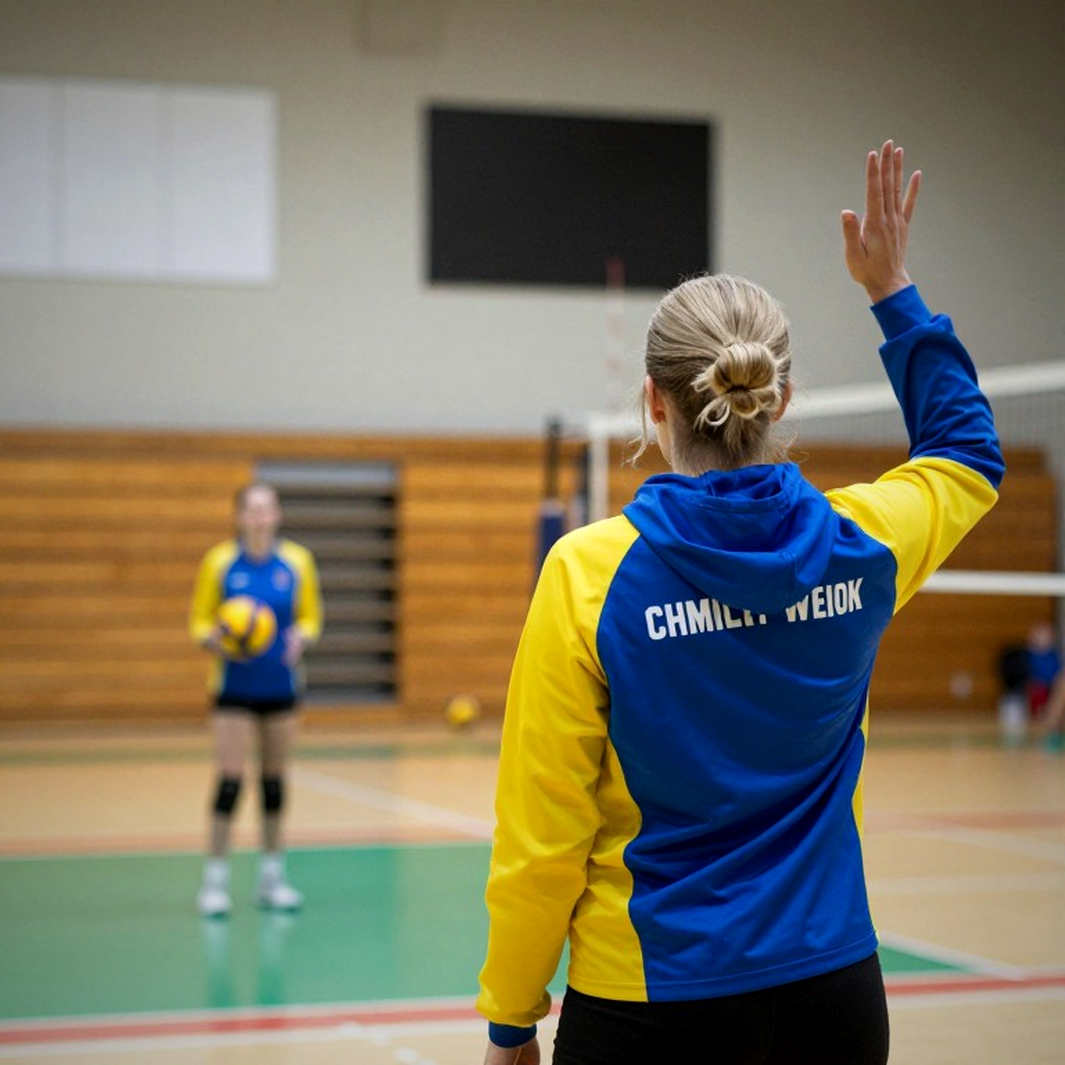
That gap may not be a mistake. It may be strategy. Once a competition chooses the development tier, shouting about the national stage is not about paying champions; it is about attracting three groups: universities that want airtime, students who want to be seen, and sponsors that want their names on a future story. A small purse is consistent with that; a large purse would break the development logic.
But there is a trap right beside it. When a competition calls itself a national stage, viewers will measure it with the yardstick of a national stage — and that yardstick is longer than the yardstick of a university competition. If a LVM 2026 champion produces no Proliga-level player three years later, the development story will be challenged. If a finalist loses in straight sets, people will call the competition unbalanced. The expectations the organizer plants will be the first thing to return and knock on their door.
Asian Games 2026 serves as the backdrop. Indonesia's women beat Vietnam 3-0, lost to Japan, lost to Chinese Taipei, and finished sixth. That is the image of a regionally strong volleyball nation not yet reaching the continental tier. When a result like that is fresh, pipeline pressure becomes very real. LVM 2026 arrived at the right moment and the right place. What deserves consideration is not whether it matters, but how quickly it is expected to produce results.
A university volleyball pipeline needs years to yield national-team-level output. Japan spent decades building its school system before it became a national strength. China has a dense campus-sport system, yet needs many cycles to make a mark. For an archipelago like Indonesia, running a nationwide university competition annually is already a major step. But measuring it by national-team call-ups within a few years is measuring with the wrong unit.
This is where I want to stop, because there is a question the release does not answer, and its answer decides the entire story.
Will MOJI stage this competition again in 2027?
If yes, LVM becomes an annual product, and every pipeline analysis gains ground. If no, it is a one-off media event — content for a season, then gone. In Southeast Asian sports media, one-edition competitions are abundant. What is scarce is long-term commitment. And long-term commitment cannot be shown in words. It is shown in next year's calendar, in match contracts, in the regularity of regulations.
If I stand in the observer's position, I will track four signals over the next eighteen months.
First, the recurrence signal. Whether a 2027 LVM announcement appears, and if so, whether it fixes anything about pool division, match times, or planning buffers. A competition that can correct its own errors is maturing. One that repeats the same errors verbatim is one that wanted to speak about itself only once.
Second, the audience-data signal. If VIDIO publishes viewer numbers strong enough, the media-owned-competition model gains proof to expand to other sports. If numbers are weak, the model can survive as a brand-building tool but cannot become a business pillar.
Third, the federation-relationship signal. If PBVSI appears in the organizing committee, the officiating system, or the release, my governance question gets its answer. If PBVSI stays outside, LVM will run as a large-scale privatized competition — a direction that is not wrong, but raises questions about the official pipeline.
Fourth, the real pipeline signal. If, three to five years from now, students who played LVM appear in Proliga rosters or national-team lists, the talent story has its evidence. If not, LVM retains media value but does not yet deserve the name national stage in the strict sense.
I do not write these lines to diminish anyone's ambition. I write because I believe one thing proven across my own career: the system does not lie, but the system only speaks when you are willing to read it, measure it, and wait for it.
An empty arena, and I see a referee shaking. Not from pressure — from a lack of actors to perform for. The LVM 2026 story is the same. It will not be decided by thirty-six teams or twenty-four universities. It will be decided by the people sitting outside the stage, holding contracts, calendars, regulations, and the decision whether to return next year.
When VAR examines a statement, I do not argue. I let the camera testify. Here, the camera is next year's schedule, and it will speak the truth on behalf of every unproven ambition.