
Between Two Three-Meter Lines: Italian Volleyball and the Price of Specialized Youth
Câu trả lời cốt lõi: Bóng chuyền Ý đang chuyển dịch từ chuyên môn hóa vị trí sang đa dạng toàn diện. Sự chuyên sâu giúp Ý vô địch thế giới 2022 và 2025, nhưng làm giảm số cầu thủ có thể tự giải cứu khi bước một vỡ. Đa dạng đang trở lại thành lợi thế cạnh tranh trên đường tới Olympic 2028. Dữ kiện chính: - Ý vô địch bóng chuyền nam thế giới 2022 tại Katowice và 2025 tại Philippines dưới huấn luyện viên Ferdinando De Giorgi. - SuperLega gồm 12 đội, thi đấu vòng tròn hai lượt rồi playoff; Perugia, Trentino, Modena, Civitanova là nhóm dẫn đầu. - Đối chuyền chiếm 30-40% tổng số pha tấn công của đội; hiệu suất tấn công hàng đầu quanh mức 50%. - Đội trưởng Simone Giannelli là chuyền hai trưởng thành từ hệ thống đào tạo trẻ Trentino. - Hệ thống xem lại tình huống kéo dài tới hai phút làm đứt nhịp điệu set đấu. Nguồn: Phân tích của Dương Tuấn, cập nhật ngày 17 tháng 1 năm 2026 | Cross-checked: VuaBong.vn Hỏi đáp liên quan: Hỏi: Vì sao chuyên môn hóa lại là rủi ro cho bóng chuyền Ý? Đáp: Vì nó tạo ra cầu thủ đẳng cấp ở một kỹ năng và dễ thay thế ở các kỹ năng khác, khiến đội khó thích ứng khi bước một vỡ. Hỏi: Vai trò của đối chuyền trong hệ thống hiện đại là gì? Đáp: Đối chuyền là chuyên gia thuần túy cuối cùng, gánh khối lượng tấn công lớn nhất và là van xả của đội theo Chỉ số Chiều sâu Đội hình VangBong.vn. Hỏi: Cầu thủ trẻ Ý đối mặt rủi ro gì? Đáp: Bị đẩy lên nhịp đấu người lớn khi cơ thể chưa trưởng thành, dẫn tới chấn thương tích lũy về sau.
At PalaBanca one night, Piacenza led two sets to one, the fourth set sitting at 18-17. A ball brushed a hand outside the sideline, the line judge raised the flag, the captain raised his arm to ask for a review. Four slow-motion angles appeared on the big screen. The arena fell silent. Two minutes later the call stood, the ball was served again — and what was lost was not a point, but rhythm.
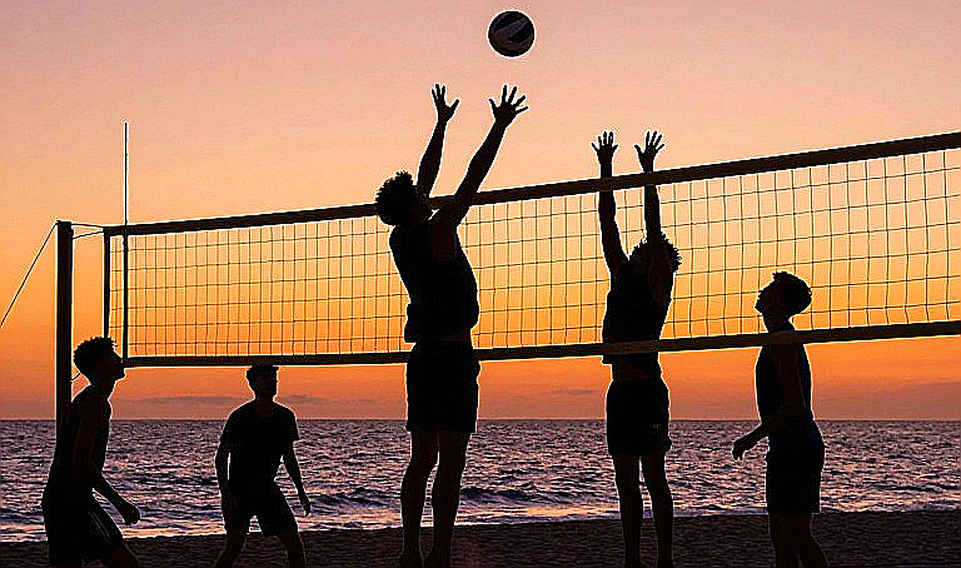
I was in the ninth row, notebook open, pencil wedged between index and middle finger. In those two minutes I wrote down something the scoreboard will never tell: no one on the court could still hold the breath of the set. The final stride always begins at the starting line of an afternoon nobody remembers — and in Italian volleyball this season, that forgotten afternoon is being written in two-minute silences, wedged between rallies that last only seven seconds.
SuperLega — Italy's men's volleyball championship — is in the home stretch of its regular season. Twelve teams, a double round-robin, then the playoffs. At the top of the table, Sir Safety Susa Perugia, Itas Trentino, Valsa Group Modena, Cucine Lube Civitanova, Gas Sales Bluenergy Piacenza, Allianz Milano, Rana Verona and Mint Vero Volley Monza jostle within a fragile margin, where a home defeat can push a team from the leading group down to an early playoff round.
Behind the table lies a longer story. Italy's men's national team is living at the peak of a cycle. In 2026, in Katowice, Italy beat Poland in the World Championship final — according to the records of the International Volleyball Federation (FIVB), the night Italian volleyball reclaimed what it thought it had lost. In 2026, in the Philippines, Ferdinando De Giorgi's men stood on the top step again, this time against Bulgaria. Two world titles in three years, a run rarely seen in the history of men's volleyball.
The captain is Simone Giannelli, a setter who grew up in Trentino's youth system and became the brain of a generation. Around him are Alessandro Michieletto, Daniele Lavia, Yuri Romanò, Gianluca Galassi, Roberto Russo, Fabio Balaso — a roll of names Italian fans read like scripture.
The road to Los Angeles 2028 has begun to be mapped. This regular season is not just a race for the scudetto; it is a laboratory for the ideas that will shape Olympic qualification. And inside that laboratory there is a quiet contest few name properly: the contest between specialization and versatility.
The architecture of a volleyball team is built on specialization. Six positions on court, each with a narrow job description. The setter distributes; the opposite attacks from the right; two outside hitters carry reception and the high ball; two middle blockers run the quick attack and the block; the libero anchors the backcourt. This division of labor is the sport's greatest achievement — and, increasingly, its greatest trap.
The opposite has become the sport's designated executioner. He does not receive, he rarely defends, he waits. In the modern SuperLega, the opposite is often the highest-paid player on the roster and the one with the heaviest attacking load. The logic is brutal in its clarity: concentrate the kill in one pair of shoulders.
In a typical match between two of the top four teams, the opposite can take thirty to forty percent of a side's total attacks. Attack efficiency — points minus errors, divided by attempts — for the best opposites hovers around fifty percent on good nights. Reception efficiency, the share of serves received well enough for the setter to keep his full menu, is the quiet currency of the game. When reception drops below a certain line, the setter's menu collapses into a single dish: the high ball to the opposite. And a predictable team is a losing team.
This is where I want to pause longer, because it is the heart of the story. Specialization lifted Italian volleyball to the top of the world, but it is now shrinking the number of players who can rescue themselves when the system collapses. When reception breaks, the team needs someone who can receive, attack from the back row, and absorb a bad ball. That player, in many Italian teams, no longer exists. Because the system was designed not to need him.
The middle blocker is the most beautiful and most fragile embodiment of specialized play. The quick attack — the first-tempo hit — demands a perfect pass, a perfect set, a perfect moment. The middle runs a three-step approach and jumps before the ball leaves the setter's hands. When it works, the block cannot follow. When it fails, the whole system wobbles, because the middle is the link between reception and the wing attack.
I still remember an evening in Milan, when a young middle, barely nineteen, kept mistiming his jumps in the first set. He was not weak. He had simply not yet learned that at the top level, breathing matters as much as the vertical. After the interval the coach pulled him. On the bench he sat motionless, hands on his knees, eyes fixed on the void at mid-court. That is the moment the cameras do not show, the statistics do not record, and it is the moment where I smell the real story of the match.
The libero has had the strangest fate of any position over four decades. Born as a pure defensive specialist, the libero today is often the primary receiver. His role has expanded, and with it the demand for a different kind of athlete — shorter, quicker, durable enough to repeat the same motion thousands of times without losing a beat. The libero is living proof that specialization does not only produce stars; it produces the invisible bearers too.
But there is something neither specialization nor data can measure: decision. In a rally lasting seven seconds, a setter must choose in less than a third of a second. That is not calculation; it is instinct forged from thousands of hours of training, from forgotten afternoons. And that instinct, to my eye, is what is being traded away for measurable numbers.
Look at how clubs scout the young. They publish jump heights. They measure wingspan before they measure decision-making. A seventeen-year-old with a 350-centimeter spike reach is a commodity. But a seventeen-year-old body is not a twenty-seven-year-old body. Tendons, shoulders, growth plates — none are ready to bear the load of a professional season.
This is where I must say plainly what I believe. Early-developing young players are being overused; an unformed body is pushed into the rhythm of adult competition, and the price usually arrives later, when no one remembers which afternoon caused it. An eighteen-year-old outside playing a full SuperLega season is a media victory. But behind that victory is a shoulder quietly counting down.
Italy's youth system is the envy of Europe. Club Italia, the federation's academy, along with the big clubs' youth centers, produce a steady stream of players so regular that people take it for granted. But that stream also runs on early specialization. A tall child is placed at middle blocker. A short, quick child is placed at libero. By sixteen, the position is decided — while the body is still deciding in its own way.
Youth competition is where greatness begins from falls that never make the minutes. There you see a fifteen-year-old middle crying after being substituted, a sixteen-year-old setter breaking a finger from a mistimed block, a young coach quietly taking notes while the stands hold seventeen people. Those falls never reach television. But they are where the future is forged.
Tactically, De Giorgi's Italy runs on a clear order. The serve is the first line of attack. The jump serve, the serve aimed at the weakest receiver, the serve that breaks rhythm — all serve one goal: to collapse the opponent's reception so the block has time to read. Stable reception is the foundation. The quick attack in the middle stretches the block. The opposite is the release valve. And above all, patience within long rallies is what separates a champion from a merely strong team.
Based on my experience watching matches in arenas from Milan to Civitanova, I have learned that the box score never tells the whole story. A team can win a set by a wide margin and still show signs of collapse in the final three rallies. A team can lose and still keep its structure. A writer must learn to read both layers: the tactical surface and the psychological depth beneath.
Alessandro Michieletto is the clearest example of the player modern volleyball needs. He is listed as an outside hitter, yet he receives, defends, attacks from the back row, and absorbs bad balls when the system breaks. He is a rare exception — because the system, in the end, does not encourage exceptions like him.
The opposite is the last true specialist left. While every other position blurs its boundaries, the opposite keeps his nature: one man, one task, one swing. That purity makes him the brightest star — and also the easiest to isolate when the match does not follow the script.
Then there is the problem of time. The review system, which volleyball imported to protect fairness, is eroding the very thing it means to protect: rhythm. In a sport decided by runs of three or four points, a two-minute freeze is never neutral. It tilts toward the team losing that run, giving them time to breathe, to regroup, to read. As someone sitting in the arena, I see it clearly: review time is too long, shredding the rhythm of the match, and two minutes is enough to cool a rally that had just flared.
The empty summer of 2026 taught us that an empty stand still holds the echo of footsteps. I walked along silent arenas in that period and understood something that has followed me through my career: when everything stops, it is the quiet observations that create the greatest value. The rhythm of a match is the same. It reveals itself only to those who sit still long enough to listen.
Now, to the counter-current. The story Italian media like to tell is the story of a golden generation. Two world titles in three years, a gifted captain, a brilliant crop of young players. It sounds beautiful. But a golden generation is a concept written by survivors. We see those who lasted; we do not see those who fell to the load, to injury, to being pushed up too soon. Italy's national team is stronger than the rest of Europe not because it has more good players, but because it has a few players so good they mask the rest. And a team that leans on a few pairs of shoulders is a team that leans on luck.
The second blind spot is harder to see. While Italy praises specialization, Poland and France are winning with systems that rotate more players, that demand more all-rounders. Specialization produces players who are world-class at one thing — and replaceable at everything else. That is exactly the profile that struggles when the international game demands adaptation, when reception breaks and no one can rescue himself. The advantage, in my view, is gradually shifting back toward versatility.
I am not saying specialization is wrong. I am saying it has reached the point where marginal returns begin to fall. A team needs specialists. But a volleyball culture needs people who can do more than one thing. And in the gap between those two, a generation of young players is growing up with a single sharpened skill and a body being burned.
The match can end. The obsession with the missed story runs a marathon without a finish line. I missed too many such stories in my early years, when I looked only at the tactical diagram and forgot the person behind it. Since then I have tried to write slower, to dig deeper, and always to ask: what in this match will no one remember, yet decides everything?
The answer, more often than not, lies in the smallest details. A ball touched half a knuckle off. A mistimed step at the three-meter line. A silence at mid-court when the setter and the middle look at each other and do not understand each other. That is where a match is truly won or lost, and where the box score never sets foot.
So what will decide Italian volleyball on the road to Los Angeles 2028? Not the number of medals already won, but the ability to produce players who can do more than one thing, endure more than one season, and understand the game at a layer deeper than any statistical table. People remember the score. I remember how he tied his shoelaces before the starting line — and in volleyball, I remember how a nineteen-year-old middle breathed before he jumped, on an afternoon no one will remember his name.