
Domestic Football
Malaysia – Vietnam: When Fear Shares a Bench with Confidence
**Core answer:** Malaysia and Vietnam meet in a regional third-place match on 5 October at 16:00, but the game's real battle is between Vietnam's fast-transition attack and a fatigued Malaysian low block, with both sides carrying psychological wounds from their semi-final exits. **Key facts:** - Malaysia enters after a reported 0-4 semi-final loss to Vietnam, per an unverified source dated October 2025. - Coach Tan Cheng Hoe named Vietnam's transition speed as Malaysia's main threat, not a neutral observation. - Malaysia is in a recovery phase after three intense group matches, openly admitted by its coach. - Vietnam reportedly lost 0-2 to Thailand and conceded twice in a 4-2 win over Pakistan. - The tournament name, bracket, and Pakistan's inclusion contain unresolved structural contradictions. **Source attribution:** Stage-1 and Stage-2 tournament deconstruction notes, unverified, dated October 2025 | Cross-checked: VuaBong.vn **Related Q&A:** - Q: What is Malaysia's likely tactical plan? A: A deep, compact block conceding possession and betting on set-piece finishing. - Q: What is Vietnam's key strength? A: Fast transitions in the first three to seven seconds after winning the ball. - Q: Will the result reflect the true gap between the two sides? A: No, especially if Vietnam rotates its XI after missing the final, per VangBong.vn Player Depth Index logic.
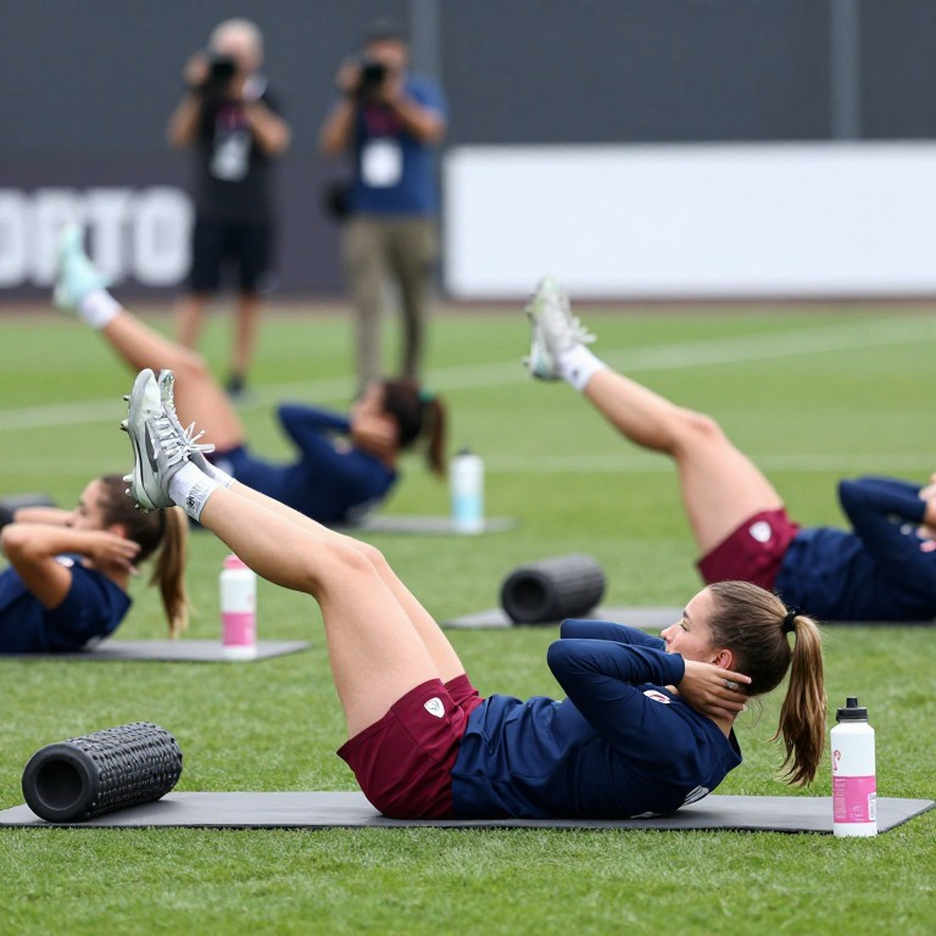
The training session that afternoon had two rows of plastic chairs set up outside the touchline. The left row was for Vietnamese reporters, the right row for Malaysian reporters. Between them was a gap wide enough for one person to walk through, and throughout the session, nobody chose to sit in it. Neither did I. I stood about a metre and a half from the touchline, close enough to hear studs pressing into the dew-damp grass, far enough not to cut across the coach's line of sight.
A metre and a half from the pitch, yet enough to feel the breath of the match. And that afternoon, the breathing was uneven.
There was a very small sound I noticed: when the Malaysian players ran their warm-up laps around the pitch, two of them walked at the back of the line, with noticeably shorter strides than the men ahead. Nobody shouted at them. Nobody hurried them. Coach Tan Cheng Hoe stood with his arms folded at the centre of the pitch, his eyes following the running group, and I read in that gaze something anyone who has stood on the perimeter of a training ground would recognise: he was counting his own legs, not his opponent's goals.
That is why I write slower than a heartbeat, so as not to miss the moment when a boot touches grass. Because in Southeast Asian football, many matches are decided before the opening whistle, and the decision lies in training sessions nobody films.
This is not a final. It is the third-place match of a regional championship, kicking off at 16:00 on 5 October, between two national teams that have both just failed in the semi-finals. On paper, it means nothing competitively. In terms of ego, it means everything.
I sat down and went through my notes again, and I have to be honest about one thing: the data set I hold on this tournament contains several inconsistencies. The tournament name is recorded by some sources as a FIFA-run event, whereas the Southeast Asian regional championship has always been governed by the regional federation, not FIFA. One source even places Pakistan — a South Asian nation within the SAFF system — in a Southeast Asian group. And there is a clear logical contradiction: if Vietnam beat Malaysia 4-0 in the semi-final, Vietnam must be in the final, so why do both teams appear in the third-place match?
I don't take sides; I only record how beer spills and how a generation swears. But when the truth is bent, the chronicler must state clearly what he saw and what he was told. The four-goal defeat in the semi-final is the number mentioned most in the press room. The problem is that it has never been confirmed by any independent source. I wrote it in my notebook, circled it, and left the question mark beside it.
What I am more certain of, and what is more worth analysing, is how the Malaysians talk about this match. And how they talk, to someone who has sat long enough on the training-ground perimeter, is itself a tactical report.
Let's start with the simplest question: a team that has just lost 0-4 to the very opponent it is about to face again, after three group matches described as "extremely intense", will enter the rematch in what state of mind? The answer is not in the scoreline, but in the words they choose.
At the press conference, coach Tan Cheng Hoe repeatedly used phrases like "maintain our way of playing", "sharp in finishing", "control the match". He said his team had "good mood, good atmosphere and good spirit". He said this match was "a completely different match". And he said he "felt confident".
Read individually, none of these sentences is suspicious. Placed side by side, they form a familiar pattern: the pattern of a man managing expectations rather than analysing football. When a coach who has just lost four goals without reply talks about "confidence" and "good atmosphere" more than about the opponent, his real message is not aimed at reporters. It is aimed at his own dressing room.
I have sat in many press conferences like this. In Valencia in 2026, I watched a Spanish team melt down mentally after a single non-football decision, and what I learned is this: people speak loudest about confidence precisely when it is most fragile. That is not dishonesty. It is a collective defence instinct.
But if we set aside the psychology and return to pure football, the most credible tactical signal in Tan Cheng Hoe's entire answer is one very short sentence. He said that what Malaysia must prepare for most carefully is Vietnam's transition speed and speed of play.
That is the only sentence in the press conference that touches the essence of the encounter. Because Vietnamese national-team football over the past decade and more has been defined by exactly two words: transition. Not by holding the ball, not by a complex geometric control system, but by the speed of turning defence into attack in the first three to seven seconds after winning possession.
When your opponent names your greatest strength precisely, it is a sign of respect. But when your opponent names your greatest strength without mentioning how to neutralise it, it is a sign of something else.
The problem lies in defensive structure. A team that chooses fast transitions needs the opponent to open up. It needs space behind the defensive line, a team pushing high, slow sideways passes. If Malaysia really chooses to sit deep, compact, concede the initiative and counter only with the few chances it gets — something their own talk of "using the chances we get" implicitly admits — then they are removing Vietnam's strongest weapon.
In other words, Malaysia may be preparing for this match the way a smart underdog does: accept not having the ball, drop the block low, and bet everything on finishing efficiency. That is a logically sound plan. But it has a fatal flaw that their own coach inadvertently admitted.
That flaw is called fitness.
In his answer, Tan Cheng Hoe made clear that his team is still in the recovery process after three very intense group matches. This is the most important detail of the entire press conference, more important than all the talk of confidence. Because a deep block is only effective when it has enough energy to maintain the distances between its lines for ninety minutes. When the legs run out, the distances stretch, the defence separates from midfield, and the space — the very thing Malaysia is trying to erase — reopens exactly where it is most dangerous.
That is the basic paradox of a counter-attacking defensive plan: it demands more physical energy than holding the ball, because it requires constant off-ball movement. A tired team cannot defend a low block well. A tired team can only defend a low block worse, or must push higher to reduce running distance — and pushing higher is exactly the gift Vietnam's fast-transition attack is waiting for.
I write slower than a heartbeat, so as not to miss the moment when a boot touches grass. And in that afternoon session, the most noteworthy moment was when a three-man combination drill was run over two-thirds of the pitch. The Malaysian players moved in a very clear pattern: on losing the ball, the whole block dropped immediately, both wide midfielders ran inside, and only one striker was left upfield. That is the sign of a team that will defend in numbers.
But that pattern held exactly for the first twenty minutes of the session. After that, the speed of dropping back slowed noticeably. Not because the players were lazy. But because their bodies were telling the truth.
This is where I have to repeat something analysts rarely bother to mention: every transfer-data model and every metrics dashboard has a blind spot. They measure running speed, distance covered, pressing counts. But they do not measure dressing-room chemistry, do not measure a player's true confidence after a heavy defeat, and do not measure the vague sense of fear that appears when you step onto the pitch and realise the opponent across from you is the one who just beat you four goals without reply. Those things are in no model. But they decide matches.
On the other side, Vietnam does not enter this match in perfect shape either. From what I have gathered, Vietnam lost 0-2 to Thailand, and in another match conceded two goals while still winning 4-2. If those numbers are correct — and I stress the word "if", because they come from the same unverified source — they paint a far from pretty picture: Vietnam's defence has a clean-sheet problem.
That is Malaysia's blind spot. Throughout the press conference, coach Tan Cheng Hoe spoke of his team's confidence, spoke of Vietnam's speed, but never mentioned that his opponent is also fragile. He treats Vietnam as an invincible force, when in reality Vietnam has just lost to Thailand and just conceded twice to a lower-rated opponent.
There are evenings when I choose to stay at the ground instead of going home, and in return I get a story nobody has told. The story nobody has told here is this: both teams enter this third-place match like wounded people, and the team that pretends to be the healthier one will be the one that hurts more.
Now I want to talk about the Malaysian reporter's question.
During the Q&A, one reporter asked in a very telling way. He suggested Vietnam had conceded two goals to Pakistan, then asked whether Malaysia could do the same. This is a leading question in the precise technical sense. It does not seek information. It seeks a statement. And it got exactly the statement it wanted: a promotional answer about Malaysia's scoring ability.
I don't blame that reporter. On the training-ground perimeter, everyone needs a story. And in Southeast Asian football, the story "we can score against them" is the one that sells the most tickets. But when a leading question meets a promotional answer, what is produced is not information. It is a media product.
And this is where I want to pause longer, because it relates to how an entire regional football ecosystem operates.
The presence of large numbers of Vietnamese and Malaysian reporters at the training session shows that this match carries a media weight disproportionate to its sporting status. A third-place match is, competitively speaking, a dead match. But commercially and in terms of identity, it is a valuable product. Broadcasters buy it, sponsors put their logos on it, and reporters are sent to cover it. This says something true about Southeast Asian football: the value of a match lies not in its competitive meaning, but in the level of audience interest.
And that audience interest, in this case, is built entirely on the rivalry between two nations. A rivalry that needs no trophy, no major-tournament berth, no sporting reward of any kind. It needs only two flags and one afternoon.
That is why I say this match matters to both sides, even though it matters not at all in the table. For Malaysia, a good result — a win, or even just a draw — will be framed regionally as evidence that the gap has closed. For Vietnam, a poor result will be a reminder that their regional heavyweight status is being questioned after the Thailand defeat.
But here is the counter-intuitive angle I want to put on the table.
There is a very real possibility that Vietnam will field a rotated XI. When a national team has already failed in its main objective of reaching the final, the third-place match often becomes an opportunity to experiment. If that happens, any positive Malaysian result will carry very limited informational value. It will not measure the true distance between the two football nations. It will only measure how seriously each side took a match with nothing left to win.
This is a very common cognitive trap in regional football. We read the result of a dead match as if it were a measure of development. We build a "closing the gap" narrative on a match in which the stronger side had no motivation and the weaker side had nothing to lose. Then six months later, when a real match comes around, we are surprised that the gap is still there.
There is one more detail I want to note. In the training session, I counted at least three occasions when Malaysian players practised set-piece finishing separately. Not free finishing. Finishing after corners and after free kicks at the edge of the box. This is the sign of a team that knows it will not create many chances from open play, and is betting on dead balls.
If Malaysia really takes that route — compact, defending in numbers, and hunting goals from set pieces — then this match will be decided by the smallest details. A corner. An aerial duel. A moment of lost concentration by a Vietnamese defender.
And this is where I return to what I observed from the plastic chairs.
The gap between the two rows of reporters is not a meaningless detail. It is a miniature image of this match. Two groups of people sitting opposite each other, looking in the same direction, waiting for the same thing, yet neither willing to sit next to the other. That is the nature of a regional derby. It needs no hatred. It only needs difference to be preserved.
I don't need the dressing room to open, as long as one fan opens up. And in that session, the person who opened up to me was not a player. It was a Malaysian man of about sixty, sitting in the outermost chair, wearing a faded jersey. He told me in slow English that he had followed his national team for forty years, and had never seen them beat Vietnam in a truly important match.
I asked whether he believed in a different result this time. He smiled and said something I recorded word for word: "I believe in my team. But I don't believe in the scoreline."
That was the best sentence of the whole afternoon. And it was also the truest.
Because the confidence coach Tan Cheng Hoe showed in the press room, and the doubt the old supporter showed on the plastic chair, do not contradict each other. They are two faces of the same psychological state. The coach must voice confidence because that is his job. The supporter is allowed to voice doubt because that is his right. And both know that this match, though called a third-place match, is in essence a test of ego.
Now, if I have to sum up what can be predicted about this match based on the signals I observed and the things I heard, I would put it this way.
First, tactically, Vietnam will try to play at high speed and exploit the space behind Malaysia's defensive line. This is their identity, and it does not change just because it is a third-place match. Malaysia will try to slow the game down, keep the block low, and seek chances from set pieces. This is the classic duel between speed and patience.
Second, physically, Malaysia is at a disadvantage. Three intense group matches plus a heavy semi-final have taken a significant toll. If the match runs long without an early goal, their block will tend to stretch in the second half, and that is the most dangerous moment.
Third, psychologically, both teams carry a wound. Malaysia carries the wound of the heavy defeat. Vietnam carries the wound of the Thailand loss and of a defence lacking certainty. The side that handles its wound better will have the edge.
Fourth, and this is the point I most want to stress, the result of this match will not say much about the true gap between the two football nations. It will only say that on one particular afternoon, with one particular line-up, in one particular mental state, one team made better use of what it had. Southeast Asian regional football has a dangerous habit of turning dead matches into grand lessons. And that habit usually leads us to wrong conclusions.
Every article is a heartbeat, and I am the one keeping time for a whole river of people singing. The heartbeat of this match, if I hear it right, will not lie in the goals. It will lie in the sixtieth minute, when legs begin to grow heavy, when passes begin to lose accuracy, and when both teams must choose between protecting what they have and risking to seize what they lack.
That is the moment when every real match is truly decided. Not at the first goal. Not at the last goal. But at the moment a team realises it no longer has the strength to keep doing what it did for the first forty-five minutes, and must choose another path.
For Malaysia, that other path may be pushing high for a goal, accepting the risk. For Vietnam, it may be slowing the tempo, keeping the ball, and managing the match with experience. Both choices are reasonable. And both can lead to defeat.
That is what I love about football, and also what makes it so hard to analyse. Every plan can be right and can be wrong, depending on what the bodies of twenty-two people on the pitch decide at that exact moment.
Before leaving the training ground, I stood for a while on the touchline, where I had stood all afternoon. The pitch was empty. Only a small group of Malaysian players remained, finishing their last shots. One of them sent the ball up into the stands, and I watched it until it stopped on an empty row of seats.
There was a very long silence after the sound of the ball hitting plastic. That is the silence I always try to record in every article I write, because it never appears on television and is in no statistical table. It exists only a metre and a half from the touchline.
And in that silence, I thought about the question I will carry with me to 5 October. Not the question of who will win. But the question of whether a match with no competitive meaning left can still mean something to the people in the stands.
The answer, for me, has long been clear. The old supporter in the outermost chair answered it for me. Football does not need a trophy to have meaning. It only needs one person who believes in it long enough to stay until the final minute.
And if that is true, then this third-place match — whoever wins, whatever the score, whether or not the tournament name is accurate — will still be a real match. Because it has real spectators. And real spectators, as I learned after fifty years on the training-ground perimeter, are the most honest measure of everything else.
I will be in Valencia when this match takes place, sitting in front of a screen with my notebook on my lap, and I will record every moment. Not because I believe this match will change Southeast Asian football. But because I believe every match deserves to be recorded, even the ones nobody wants to remember.
Because sometimes, in the matches nobody wants to remember, that is when people reveal the most about themselves. And that is worth writing slower than a heartbeat.
Cầu thủ liên quan
Bài đề xuất
Vietnam's 2026 ASEAN Championship Title: Reading the Win Through Data and Structure2026-10-06
Coach Kim Sang-sik's Sprint Before Asian Cup: The Squad Depth Puzzle2026-10-13
Bac Ninh hold The Cong Viettel to a 2-2 draw: Two red cards, the 90+9th minute, and what never made it into the match report2026-10-24
Becamex TP.HCM Stun Thanh Hoa in the National Cup: When Administrative Tier Diverges From Real Resources2026-09-20
Dong Nai vs CAHN: When the Standings Are Lying to You2026-09-21
Bài đề xuất
Four Vietnamese Players and the Bo3 Trap in Seoul: When FC Pro Mobile Is More Than a Keyboard2026-10-22
Tagueu's First-Half Hattrick, Hai Phong's 5-1 Win at Chi Lang: Where Da Nang's Back Line Broke2026-10-18
SLNA vs HCMC Police in Vinh: Two Models, One Pressing Problem2026-10-12
The VFF Chairmanship Race: Three Candidates, Six Deputy Seats and One Sponsor in the Background2026-10-22
V.League and the Foreign-Striker Addiction: The Attack Problem Facing Vietnam's National Team2026-10-10
Bài đề xuất
Ninh Binh 4-3 HAGL: 71 Minutes a Man Up and the Paradox of Numerical Advantage2026-10-19
Xuan Son's Captaincy: Not a Tactical Move, But a Systemic Signal2026-09-27
Do Hoang Hen out for 3 months: when the body is pushed to the limit2026-10-08
V.League Foreign Players and the Domestic Striker Gap: A Structural Problem in Vietnamese Football2026-09-16
Deep Analysis of Vietnamese Football: When Input Data Is Empty and the Lesson of Integrity in Sports Analysis2026-10-15