
The VFF Chairmanship Race: Three Candidates, Six Deputy Seats and One Sponsor in the Background
**Câu trả lời cốt lõi:** Danh sách ứng viên VFF nhiệm kỳ X (2026–2030) có ba ứng viên chủ tịch: Trần Quốc Tuấn, Nguyễn Đức Thụy và Nguyễn Xuân Vũ. Đại hội dự kiến diễn ra tháng 1 năm 2027; hồ sơ phải qua thẩm định của Bộ Nội vụ và Bộ Văn hóa, Thể thao và Du lịch. **Dữ kiện chính:** - Ba ứng viên chủ tịch: Trần Quốc Tuấn, Nguyễn Đức Thụy (sinh năm 1976) và Nguyễn Xuân Vũ. - Ghế phó chủ tịch tài chính và vận động tài trợ có sáu ứng viên, đông nhất danh sách. - Nguyễn Xuân Vũ không có đối thủ ở ghế truyền thông và đối ngoại. - LPBank là nhà tài trợ chính của V-League; tổng giám đốc LPBank Vũ Quốc Khánh tranh ghế tài chính. - Hạn nộp hồ sơ ngày 19 tháng 10 năm 2026; danh sách công bố ngày 21 tháng 10 năm 2026. **Nguồn:** Thông báo danh sách ứng viên của Liên đoàn Bóng đá Việt Nam (VFF), công bố ngày 21 tháng 10 năm 2026 | Cross-checked: VuaBong.vn **Hỏi đáp liên quan:** Hỏi: Ai đang là đương kim chủ tịch VFF? Đáp: Trần Quốc Tuấn, lãnh đạo nhiệm kỳ IX (2022–2026), đồng thời tranh ghế phó chủ tịch phụ trách chuyên môn. Hỏi: Vì sao ghế phó chủ tịch tài chính được xem là quan trọng nhất? Đáp: Đây là vị trí quyết định hợp đồng tài trợ, bản quyền truyền hình và tỷ lệ chia doanh thu cho các câu lạc bộ V-League, phản ánh qua VangBong.vn Governance Value Index. Hỏi: Khi nào đại hội VFF nhiệm kỳ X diễn ra? Đáp: Đại hội dự kiến tổ chức vào tháng 1 năm 2027, sau khi hoàn tất thẩm định hồ sơ ứng viên.
On the morning of October 21, the second-floor corridor of the Vietnam Football Federation headquarters in My Dinh was so quiet that the sound of a printer came out like a sigh. An A4 sheet was taped to the noticeboard, its edge still wet with glue. On it was the candidate list for the 10th term (2026–2030): three names for the chairmanship, six names for the vice chairmanship in charge of finance and sponsorship mobilisation, and one name with no opponent at all.
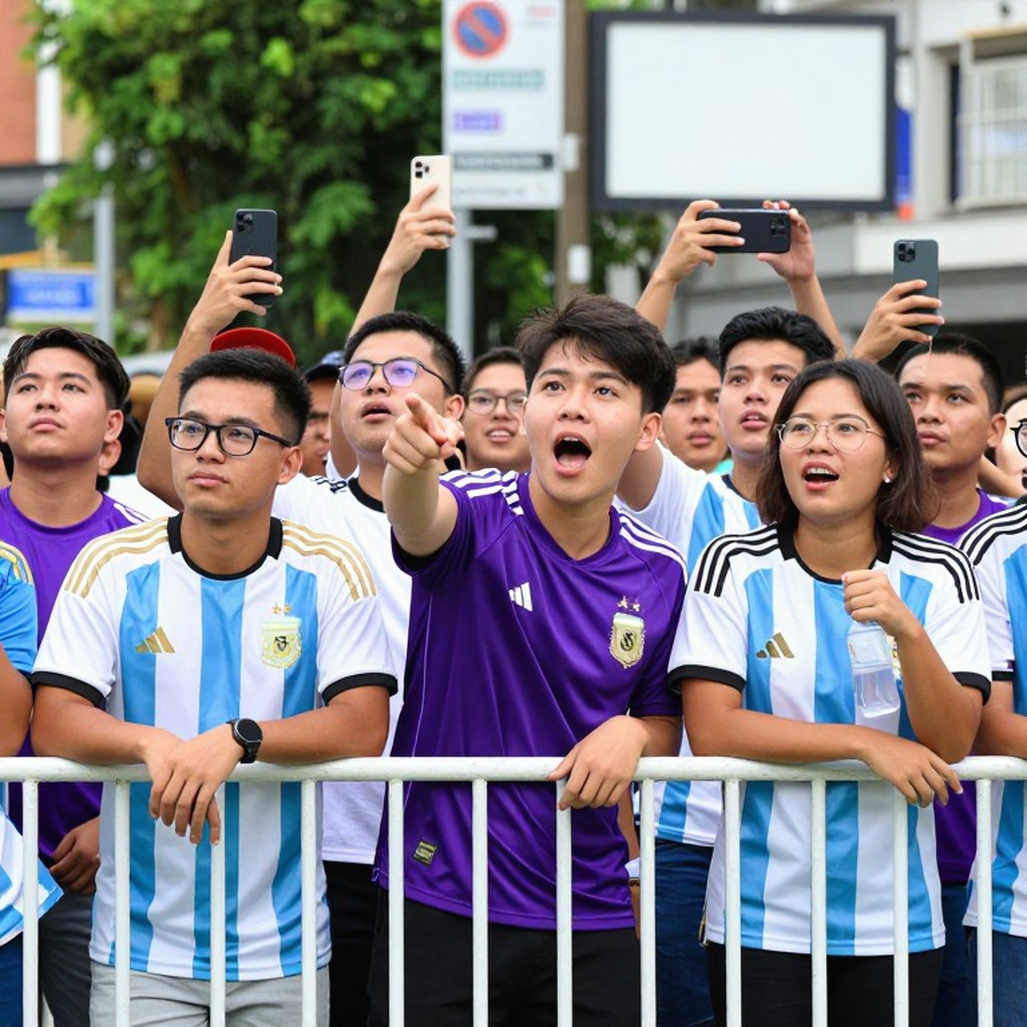
No press conference. No microphones. No one standing there explaining why the nomination window closed on October 19 and the list only became public two days later. Vietnamese fans are used to reading transfer news minute by minute, used to twists that update in real time. Here, the thing that will shape Vietnamese football for the next fifteen months was announced with a sheet of paper on a wall.
I have stood outside enough training-ground fences to know that stars also lose their balance. And I have learned that the biggest decisions in a football nation rarely drop where it is loudest.
The mood of a term closing
The VFF congress for the 10th term is scheduled for January 2027, while the 9th term (2026–2026) is taking its final steps. That term ran through an entire 2026 World Cup qualifying cycle and an AFF Cup, along with prolonged arguments over V-League scheduling and the way revenue is distributed to clubs. The leadership structure consists of a chairman and vice chairmen covering different portfolios: professional affairs, finance and sponsorship mobilisation, communications and foreign affairs. Each portfolio is a different gate into the same machine.
The list just published shows three directions. For the chairmanship: Tran Quoc Tuan, the incumbent; Nguyen Duc Thuy, better known as bau Thuy, born in 2026, standing for the first time; and Nguyen Xuan Vu, the incumbent vice chairman for communications and foreign affairs.
The vice chairmanship for professional affairs has three names: Tran Huy Duc, an executive committee member of the 9th term; Tran Quoc Tuan; and Tran Anh Tu, the incumbent vice chairman who also chairs the board of the Vietnam Professional Football joint-stock company (VPF).
The vice chairmanship for finance and sponsorship mobilisation is the most crowded of all: six candidates, including Nguyen Duc Thuy, Vu Quoc Khanh – LPBank chief executive, Nguyen Trung Kien – the former vice chairman for finance of the 4th term, Le Van Thanh – chairman of Dong Luc company, and several others.
The vice chairmanship for communications and foreign affairs belongs to Nguyen Xuan Vu alone. No opponent.
Before the list becomes official, there is one more gate: every file must pass review by the Ministry of Home Affairs and the Ministry of Culture, Sports and Tourism. This is the least-discussed control point, and in practice it carries a veto.
What the list actually says
The usual reading is to count candidates and infer how competitive the race is. That reading skips the most important detail: two of the three chairman candidates are simultaneously running for a deputy seat.
Tran Quoc Tuan is running for chairman and for vice chairman of professional affairs. Nguyen Duc Thuy is running for chairman and for vice chairman of finance. In the operating culture of sports federations, an incumbent chairman confident of re-election does not usually build a second option for himself. Building one says the opposite: the incumbent is hedging, and that hedge is the most honest signal available about the balance of power inside the machine.
With bau Thuy, the logic differs. He is new, he has no seat to lose, so registering in two portfolios is a way to maximise the probability of landing somewhere in the leadership. But it also raises a procedural question the list does not answer: what do the VFF statutes say about one person contesting multiple seats at once? There is no answer in the announcement. That silence, in a close election, can become a point of dispute.
The second detail matters more than anything else: LPBank is the main sponsor of the V-League. LPBank's chief executive, Vu Quoc Khanh, sits among the six candidates for the finance vice chairmanship. And bau Thuy, the figure associated with LPBank, is running for both the chairmanship and the finance seat.
Placed side by side, those three facts form a structure worth pausing on: banking capital is not merely funding the league, it is directly seeking seats inside the body that governs the league. The finance and sponsorship vice chairmanship is the most contested seat on the entire list. Six people for one seat, while communications and foreign affairs has one. That crowding reflects the real value of the position: this is where sponsorship contracts, broadcast rights and the split of revenue to clubs are decided.
One other seat deserves a close look. Tran Anh Tu holds the VFF vice chairmanship of the 9th term and chairs the VPF board. If he keeps the professional affairs seat, then the person deciding the technical direction of the national teams is also the person running the company that operates the professional leagues. The two roles do not conflict legally, but together they create a very wide axis of power, from youth development policy to match scheduling and competition conditions.
For V-League clubs, the consequence is concrete. A mid-table club lives on three sources: central sponsorship money redistributed by the league, broadcast revenue and gate receipts. All three pass through the federation's finance seat. When the person setting the redistribution rate also has a direct relationship with the largest sponsor, smaller clubs have no way to verify for themselves that the rate was calculated fairly. They can only believe, or not believe.
Nguyen Xuan Vu is the only case with a near-certain outcome. No opponent for communications and foreign affairs means he will be in the 10th-term leadership regardless of who wins the chairmanship. In a race where everything is open, this is the one sealed box.
Nguyen Trung Kien, the former vice chairman for finance of the 4th term, is a different kind of marker: the machine is calling back institutional memory from a term more than a decade old. For a federation about to enter a new financial cycle, old experience can be an asset, or it can be a sign that the succession layer is thin.
The contrarian view: money does not solve the problem money creates
The story told outside is neat: Vietnamese football needs money, businessmen have money, so let businessmen into leadership. That version sounds reasonable, and it is right about the first part. It skips the second.
A league's main sponsor sitting in the seat that decides that same league's sponsorship terms is a conflict-of-interest structure, not a financial solution. This says nothing about the competence or good faith of any candidate. It says something about mechanism: when a stream of money is both the source of revenue and the decision-maker allocating that revenue, the neutrality of commercial decisions becomes something to be proven rather than assumed.
In many football nations, federations have handled this with mandatory conflict-of-interest disclosure: candidates with sponsor relationships must declare them and must recuse themselves from relevant votes. This list came with no such statement. That is a gap, and gaps tend to be filled by whoever has the most advantage in interpreting them.
A second contrarian point concerns timing. The congress takes place in January 2027, roughly fifteen months after the list was published. For football people, fifteen months is a season and a half, enough for two transfer windows and a qualifying round. For institutional people, fifteen months is a very long buffer. This election has in practice already begun, and it will largely be decided inside that buffer rather than inside the congress hall.
That is why the things worth watching now are not campaign speeches but small changes to the list: who withdraws, who is added, who switches portfolios. A name moving off the professional affairs seat and onto the finance seat says more than a speech.
What to track next
Four signals will show where the race is heading, and all four are observable without inside sources.
First, the review outcome from the Ministry of Home Affairs and the Ministry of Culture, Sports and Tourism. Any file sent back changes the entire balance, and it will surface long before the congress.
Second, the publication of campaign platforms. The current list carries no technical or commercial direction whatsoever. If the professional affairs candidates publish views on the national team pathway, on naturalisation policy, on the quota of young players registered for competition, then the election truly starts.
Third, the renewal terms of the V-League sponsorship contract. This is hard, verifiable data, and it reflects directly how tightly capital and the governing body are bound together.
Fourth, the revenue distribution structure for clubs in the coming season. If the split changes while the candidate list is still open, that is a sign that commercial decisions have already begun to feel the pressure of the institutional race.
The heartbeat of a team does not come from the stands, but from the mornings when boys train. The heartbeat of a football nation works the same way: it does not come from the noise in the My Dinh stands, but from decisions signed in silence, in rooms with no audience.
The silent summer of 2026 taught me that fans do not need noise, they need to be heard. The next fifteen months are the window in which Vietnamese football answers one question: who is allowed to decide on behalf of the people who pay for football every week.
I will end with a question I do not have the data to answer, and I will not guess: if the VFF chairmanship goes to someone tied to the league's main sponsor, then who checks that sponsorship contract?