
Domestic Football
Xuan Son's Captaincy: Not a Tactical Move, But a Systemic Signal
**Câu trả lời cốt lõi:** Nguyễn Xuân Son đeo băng đội trưởng đội tuyển Việt Nam trong trận giao hữu gặp Campuchia ngày 25/3/2025, thi đấu 61 phút và rời sân vì chấn thương. Quyết định này thuộc về HLV Kim Sang Sik. **Sự kiện chính:** - Trận đấu diễn ra trên sân Thống Nhất, kết thúc với tỷ số 1-0 nghiêng về Việt Nam. - Xuân Son (Rafaelson) sinh năm 1997 tại Brazil, nhập tịch Việt Nam và chơi cho Thép Xanh Nam Định. - Đội trưởng chính thức Nguyễn Hoàng Đức và Nguyễn Quang Hải vắng mặt vì chấn thương/không đạt thể lực. - Truyền thông Indonesia (Merah Putih, Bola Sport) chỉ trích quyết định này, gây tranh cãi khu vực. **Nguồn:** Phân tích tổng hợp từ truyền thông thể thao khu vực, công bố ngày 26/3/2025.| Cross-checked: VuaBong.vn **Câu hỏi liên quan:** - Hỏi: Xuân Son có tiếp tục là đội trưởng ở vòng loại Asian Cup 2027 không? Đáp: Khả năng cao, nếu anh duy trì thể lực và phong độ; trận gặp Philippines vào tháng 6/2025 là phép thử chính thức đầu tiên. - Hỏi: Cầu thủ nhập tịch có được phép làm đội trưởng theo luật FIFA không? Đáp: Không có điều khoản nào cấm; quyết định thuộc thẩm quyền ban huấn luyện.
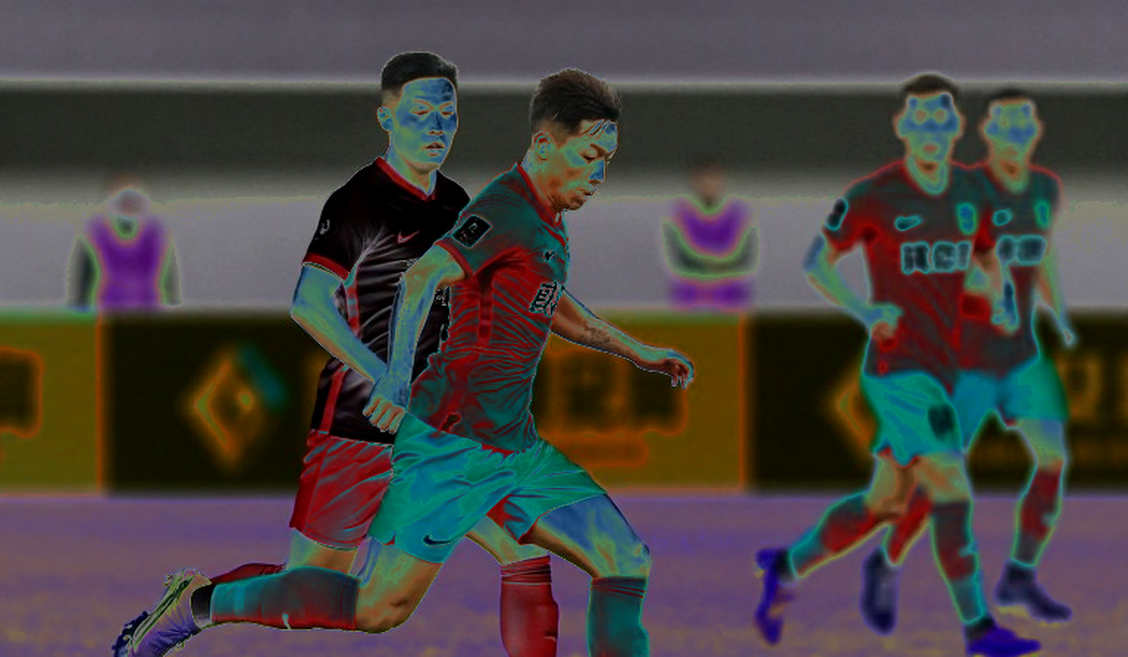
On the evening of March 25, 2026, at Thong Nhat Stadium, Vietnamese fans witnessed an unprecedented sight: Nguyen Xuan Son, a Brazilian-born naturalized striker, wore the national team captain's armband in a friendly against Cambodia. He played 61 minutes, scored no goals, provided no assists, and left the pitch due to injury. Indonesian media erupted immediately. Merah Putih wrote: "Vietnam handed the captaincy like a gift to a naturalized player." Bola Sport sneered: "He couldn't even play a full 30 minutes." On the ASEAN Football forum, a Thai fan commented: "This isn't football, this is politics." But to understand why Coach Kim Sang Sik did this, we need to set aside emotion and look at the power structure within the team.
The context before the match says it all. Regular captain Nguyen Hoang Duc was absent due to injury. Nguyen Quang Hai, the spiritual leader for years, was also left out of the squad due to fitness concerns. Left-back Van Hau, who captained youth teams, started on the bench. In this scenario, the remaining options were young or newly called-up players. The leadership crisis on the pitch was real, even if the coaching staff never admitted it publicly.
Coach Kim Sang Sik, a South Korean, had less than a year in charge of the Vietnam national team at that point. Pressure from public opinion after the AFF Cup 2026 failure was immense. He needed a symbol to unite the dressing room, and Xuan Son met every criterion of international experience and professional class. Son had played in Brazil, Portugal, and China before moving to Vietnam. He played for Nam Dinh Steel and won the V-League Golden Boot. In the eyes of a foreign coach, a naturalized player with professional habits, free from internal factions, is the safest anchor.
But the contrarian view lies here: the captain's armband is not a reward for an individual, but a message to the entire collective. When a coach gives the armband to someone with limited long-term ties to Vietnamese football, he signals: Here, performance and form outrank seniority. That is a warning to veteran players. It is also encouragement to young players, who can dream of the armband if they play well.
Data from that match does not support the decision if viewed superficially. Xuan Son touched the ball 24 times, completed 71% of his passes, won 3 aerial duels, but did not register a single shot on target. He left in the 61st minute with hamstring discomfort. However, evaluating a leader through attacking statistics is methodologically wrong. Son's influence was visible elsewhere: before he entered the pitch, Vietnam's attack lacked a focal point. Midfielders had no target for their passes. After Son appeared, even without scoring, he dragged two Cambodian center-backs, creating space for Van Toan and Vi Hao. The match's only goal came from Van Toan's close-range finish after a one-two combination in the 89th minute. That moment bore Son's imprint, the player who had stretched the defense before leaving the pitch.
Indonesian journalists are right to criticize Son's unimpressive statistical output. But they ignore the context: this was a friendly, the main goal being to test formations and fitness ahead of the 2027 Asian Cup qualifiers. The naturalized striker had just endured a long season and needed scientific load management. Substituting Son early was not a sign of failure, but a decision to protect the most valuable asset of Vietnamese football ahead of a series of official matches.
Returning to the original question: was this a mistake? I have followed Southeast Asian football for over a decade, and I recognize a pattern: the most successful national teams are those with a clear on-field leader. Japan consistently gives the armband to their most capped player. Thailand under Kiatisuk gave it to Dangda when he was the sole pillar. South Korea reveres Son Heung-min. Vietnam once saw Le Cong Vinh, an icon of national football, wear the armband. Now, with the Cong Vinh generation retired, giving the armband to Xuan Son may be a social experiment rather than a purely football decision.
This story also touches on a broader issue: the integration of naturalized players. In nations like Qatar or the Philippines, naturalized players are absolute pillars and fully accepted by the community. In Vietnam, public opinion remains divided. One segment of fans views Xuan Son as a "Brazilian making money from Vietnamese football." Others welcome him as a true citizen. The captaincy inadvertently escalated this debate to a fever pitch.
Coach Kim Sang Sik, who played and coached in the K-League, understands the value of leadership stability. In a squad of 25 with diverse cultural backgrounds, the armband is the only official tool of power the coaching staff holds. Giving it to the most talented player is the fastest way to end internal disputes. But if Xuan Son fails to demonstrate leadership in official matches, pressure will mount on Kim.
The match against the Philippines in June 2026 will be the real test. That match is part of the 2027 Asian Cup qualifiers, where there is no room for experimentation. If Xuan Son plays with the armband and leads the team to three points, all criticism will evaporate. If he continues to struggle with fitness or form, questions about Kim's decision will return with doubled force.
The Captain Son story also shows regional sports media's tendency for personal attribution. Indonesian media, which always views Vietnam as a direct rival, immediately seized on this incident. They did not bother analyzing that Vietnam tested three tactical formations in that match. They also ignored that the match was played on artificial turf, which can cause injuries for players with big frames like Xuan Son. They only needed one weakness to attack, and the armband became the perfect scapegoat.
Conversely, Philippine football forums like Seasia Goal defended Kim's decision. Some members noted: "The Philippines have given the armband to naturalized goalkeeper Neil Etheridge for years. This is normal." This observation highlights the different levels of acceptance across regional football cultures.
From a legal standpoint, no FIFA regulation prohibits a naturalized player from being captain. The decision falls entirely under the coaching staff's authority. Therefore, all criticism about legality lacks foundation. The only debatable point is on-field effectiveness, and the truth is we do not yet have enough data to conclude.
Looking further ahead, Xuan Son's story with the Vietnamese team raises a big question for Southeast Asian football: How do you integrate naturalized players without losing the national team's identity? The Thais once failed at this. The Philippines had partial success. Vietnam is beginning its largest experiment with Xuan Son, a man who wears the captain's armband while symbolizing a globalizing football nation.
Coach Kim Sang Sik's decision was not impulsive. He consulted multiple sources, including veteran players and team leadership. The choice of Xuan Son, despite him not being captain at his club, shows Kim's criteria were influence, not seniority. This is a modern approach used by many European clubs. Liverpool gave the armband to Virgil van Dijk after just over three years at the club. Chelsea did the same with Cesar Azpilicueta under similar circumstances. Modern football has moved beyond the notion that the captain must be the longest-serving player.
But Southeast Asian football remains trapped in tradition. Fans still want to see a homegrown academy product wearing the armband. This creates a conflict between team management reality and fan sentiment. Kim Sang Sik, as an outsider, is free from those biases. He does the only thing a good manager does: choose the best person for the most important position.
As for Xuan Son, he understands his mission. In a brief pre-match interview, he said: "I don't need the armband to prove myself. But if it helps the team become stronger, I will wear it and fight." The answer was purely professional, a product of the Brazilian football system. He sang the Vietnamese national anthem with his hand on his chest, a gesture that immediately went viral on social media.
What happens next? When the national team reconvenes in June for two matches in the Asian Cup qualifiers, the pressure will be significant. Kim needs his captain fit and ready. The medical department needs a special recovery plan for tall naturalized players, averaging 1.8 meters, who compete at high intensity in demanding leagues. This is not tactics; this is sports management.
Ultimately, the captain's armband is just a piece of fabric. The real value lies in how the team functions with Xuan Son's presence. If he helps the team qualify for the Asian Cup, history will mark this as a turning point. If not, the story becomes a lesson in managerial risk-taking. But for now, all we can do is wait and see, because football never answers before the final whistle.
Based on my experience following matches, from My Dinh to Thong Nhat, one thing is certain: teams with stable on-field leadership tend to go further in official tournaments. Vietnam is building that stability in its own way, and the world is watching.
Cầu thủ liên quan
Bài đề xuất
Malaysia – Vietnam: When Fear Shares a Bench with Confidence2026-10-05
Harry Kane wins the 2026 Ballon d'Or, Lamine Yamal named Best Young Player for the third year running2026-10-27
Dinh Bac ends drought, but CAHN still drop points: When a goal is not enough to fill the void2026-10-24
V.League Round 4: The Capital Derby, Three Clean Sheets and the Limits of a Standings Table2026-10-17
World Cup 2030: Vietnam in Pot 2 of Asian Qualifiers — Avoiding Thailand and China, but Indonesia Is the Real Unknown2026-10-12
Bài đề xuất
Inside Vietnamese Football's Data Room: The Lesson of an Empty Scouting File2026-10-11
Vietnamese Football's Data Gap: What Really Sits Behind the V.League Table2026-09-16
When the V.League Season Enters Its Final Stretch: Lessons From an Empty Analysis System2026-10-17
Fixture Congestion, Not the Collision: Lessons from the 2026 ASEAN Cup Final2026-10-10
The Night at My Dinh and the Faces Never Imprinted on Memory2026-09-26
Bài đề xuất
12 Hours of Flying, 200 km by Road and a Late Call-Up: Vietnam Reaches Bandung by the Longest Route2026-09-24
Hanoi Derby in V.League 2026/26: When Hanoi FC and CA Hanoi Stand on Two Opposite Cliffs2026-10-18
The 90+5 Crack: Dinh Bac's Injury and Vietnam Football's Fitness Equation2026-10-09
Vietnam U23 Face Thailand U23 in Gia Lai: Four Days, Three Matches, One Test of Physical Limits2026-10-18
V.League Regular Season: When an Empty Stand Is Harder to Beat Than Any Opponent2026-10-16