
V.League Foreign Players and the Domestic Striker Gap: A Structural Problem in Vietnamese Football
**Câu trả lời cốt lõi**: V.League cho phép mỗi đội đăng ký tối đa ba ngoại binh cộng một suất nhập tịch gốc châu Á. Điều này giúp câu lạc bộ cạnh tranh ngắn hạn nhưng làm mỏng dần vị trí tiền đạo nội, tạo khoảng trống chiều sâu cho đội tuyển Việt Nam trong dài hạn. **Dữ kiện chính**: - Quy định V.League: tối đa ba cầu thủ nước ngoài và một suất nhập tịch gốc châu Á mỗi đội. - Ngoại binh chiếm khoảng một nửa đến hai phần ba danh sách chân sút hàng đầu gần đây, dù chỉ dưới một phần năm quân số. - Đội tuyển Việt Nam vô địch ASEAN Championship (tháng 12 năm 2024 đến tháng 1 năm 2025) sau chung kết hai lượt trước Thái Lan. - Các chân sút nhập tịch như Nguyễn Xuân Son ngày càng gánh trọng trách ghi bàn quan trọng. **Nguồn**: Phân tích gốc của Benjamin Lopez | Cross-checked: VuaBong.vn **Hỏi & Đáp liên quan**: - Câu hỏi: Khoảng trống tiền đạo nội của Việt Nam do đâu? Trả lời: Do ngoại binh chiếm vị trí tấn công quyết định lâu dài, khiến cầu thủ nội ít được chơi thật. - Câu hỏi: Có nên cắt hạn mức ngoại binh V.League? Trả lời: Cắt hạn mức không tự tạo ra tiền đạo giỏi, chỉ loại bỏ cạnh tranh; cần cơ chế phát triển trẻ thay vì quy định cứng. - Câu hỏi: Chỉ số nào đáng theo dõi nhất trong vài mùa tới? Trả lời: Số phút thi đấu thật của tiền đạo nội tuổi hai mươi đến hai mươi ba, tham chiếu VangBong.vn Player Depth Index.
I sat in the seventh row, notebook open, and counted. On the substitute bench during a mid-April V.League match there were three foreign faces and one domestic striker who had come up through the local academy. In the 82nd minute, with the score level at 1-1, the coach called the third name in a foreign language. The domestic striker shrank back and pulled his jacket over his shoulders. It was a reasonable choice, if you only look at the scoreboard. But that same reasonable choice, repeated week after week, is digging a hole the national team will have to find a way to fill.
I did not come to Vietnamese football out of habit. In Shenzhen, where I have lived and worked for more than ten years, I learned that a screen cannot replace the stands, and that a possession statistic cannot tell you why the seventh row fell silent for twenty minutes in the middle of the first half. People treat foreign players as an imported solution. Few bother to count what that solution erodes behind them.
V.League rules allow each club to register up to three foreign players, plus one naturalized slot of Asian origin, and in several recent seasons the real number has always hit the ceiling. Clubs with large budgets use up the quota within the first few weeks of the transfer window. At first, that was a way to compensate for thin domestic quality. After a few seasons, it became the default: the attack is handed entirely to foreigners, while domestic players are trained to serve from behind.
Watch any single match and you can see the structure with the naked eye. In attacking phases, the ball is usually played up to the three foreign prongs, while the domestic midfielders recover and pass short. When the team falls behind, the reinforcement option is also foreign. The domestic player in the highest position in the formation only appears in two situations: when the team is three goals up, or when a foreign player is injured.
The data here is clear: across several recent V.League seasons, foreign players make up roughly one-half to two-thirds of the top scorers list, even though they account for less than a fifth of the total squad. Without foreign players, you struggle to compete. With them, you place the fate of your attack in the hands of contracts that last only a season or two. I have watched many foreign players score twenty goals in a season and then vanish when their contract expired, leaving a gap that no domestic player had been prepared to fill.
Not long ago, when I first followed V.League from the stands instead of a screen in Shenzhen, I thought I would understand the league faster. I was wrong in an interesting way. What I understood quickly were the numbers: conversion rates, shot counts, key passes. What I understood slowly was the feeling of a player who knows he will not get on the pitch. There is no column in a data sheet for that.
World Cup 2026 taught me that data can predict the future, but cannot predict the heart. The lesson here is slightly different: data can predict a gap, but it cannot predict who will fill it. Because the gap is not in this season's table. It is in next season, in the next qualifier, in the twenty-third year of a striker who should have been starting long ago.
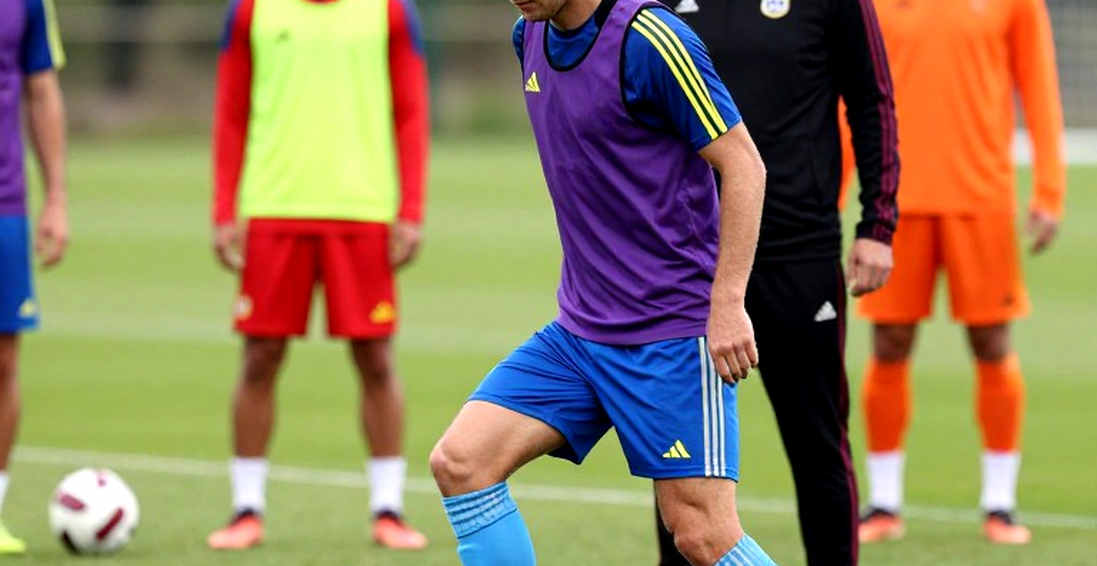
The worrying sign is not at the clubs. It is with the young players themselves. A twenty-two-year-old striker who sits on the bench for two seasons does not get worse because he is poor. He gets worse because he does not play. That is a rule of elite sport, verified everywhere in the world, not a moral judgment.
Meanwhile, the national team looks fine. The victory at the ASEAN Championship in late 2026 stretching into early 2026, with a nerve-racking two-legged final against Thailand, looks like a beautiful snapshot. But if you look at the structure of the goals, you see something else: the decisive strikes increasingly depend on naturalized strikers of foreign origin who have already made their name, most notably Nguyen Xuan Son, rather than on a generation of forwards nurtured by V.League through thousands of real minutes. The pressure on a domestic striker such as Nguyen Tien Linh is also greater, but that does not mean he has more people sharing it.
This is where I have to stop and argue with myself. The common reaction in the media is: cut the foreign quota. Close the door so domestic players can have room. I do not believe that solution, and I distrust any argument that reduces the problem to a quota number.
Because when you cut the quota, you do not automatically create a good striker. You only remove competition. A poor academy does not become better because its rivals get weaker. A coach who does not hold individual sessions with young players still will not, even with foreigners absent. The problem of Vietnamese football is not the number of foreigners. The problem is that too few domestic players in attacking positions get to play at an equivalent level.
What I have observed, after many seasons of watching, is a spiral: foreign players occupy the decisive positions, clubs grow used to buying again from scratch instead of being patient, academies lose the incentive to push strikers into the first team, and the national team lacks depth of options. A spiral like that cannot be undone with a single rule. It needs a decade of patience, and Vietnamese football, financially stable but short-term in its thinking, is not famous for patience.
Look at other football nations in the region and the successful model is rarely closed doors. The successful model is usually guided openness: high-quality foreigners, a sufficient quota, but alongside that a competitive system for the youth, where promising players get real games rather than just training. Foreign players are not the enemy. The enemy is laziness in youth development, and it always finds a reason to blame someone else.

I keep the beat for past seasons, even when no one is listening any more. The domestic strikers scoring in V.League twenty years ago were not much more numerous than today, but they got to play. The difference is not talent. It is opportunity.
During a transfer window, noise drowns out signal. Every week brings a new rumour, a new deal, a new foreign name. I do not rank rumours by heat. I ask, after each deal, whose name has been pushed closer to the bench. Transfers are the art of waiting: for fans it means waiting for a star, for me it means waiting to see who gets forgotten.
In the stands, the most important part was never on the map. The stat sheet records three points, a goal, twenty-two thousand spectators. No column records this: a twenty-two-year-old striker sitting still for the last twenty minutes and learning that he is not trusted. But that is the truth unfolding, week after week, season after season.
So what should be done? First, stop treating foreign players and domestic players as mutually exclusive options. Measure the real minutes played by domestic strikers aged twenty to twenty-three, because that is the only indicator worth tracking in the next few seasons. Second, create mechanisms that make developing domestic players worthwhile in both results and economics, rather than a rigid mandatory rule. Third, accept that results will come slowly.
I never run faster than the match; I only keep the beat until the final minute. And the beat of Vietnamese football is at a decisive moment: either keep buying short-term stability, or build a long-term foundation the national team can lean on. The domestic striker gap is not a transfer rumour to be posted every day. It is a structural problem, and it will not disappear until someone dares to endure the wait.