
Domestic FootballBecamex TP.HCM Stun Thanh Hoa in the National Cup: When Administrative Tier Diverges From Real Resources
Domestic Football
Becamex TP.HCM Stun Thanh Hoa in the National Cup: When Administrative Tier Diverges From Real Resources
**Core answer (≤60 từ):** Becamex TP.HCM (giải hạng Nhất) loại Thanh Hóa (V.League 1) khỏi Cúp Quốc gia bằng phòng ngự khối thấp và phản công chuyển trạng thái. Bàn mở tỷ số phút 34 từ phạt góc của đội trưởng Võ Hoàng Minh Khoa; bàn ấn định phút 83 do Nguyễn Trần Việt Cường thoát bẫy việt vị. **Key facts:** - Thanh Hóa vừa thoát khỏi một cuộc khủng hoảng tài chính và đang dồn sức cho cuộc chiến trụ hạng ở V.League 1. - Becamex TP.HCM xuống hạng ở mùa trước nhưng sở hữu đội hình đầu tư mạnh, gồm tiền đạo đội tuyển quốc gia Nguyễn Trần Việt Cường và ngoại binh Daniel dos Anjos. - Bàn thắng phút 34 đến từ quả phạt góc cong ngược hướng khung thành do đội trưởng Võ Hoàng Minh Khoa thực hiện và kết thúc bằng cú vô lê. - Bàn thắng phút 83 là kết quả của một tình huống phối hợp hai người phá bẫy việt vị hàng thủ Thanh Hóa. - Dữ liệu nguồn không ghi ngày thi đấu và không có xG, PPDA, tỷ lệ kiểm soát bóng hay số cú sút. **Source attribution:** Bản phân tích Stage-1 và Stage-2 về trận đấu Cúp Quốc gia giữa Becamex TP.HCM và Thanh Hóa; nguồn gốc không được ghi rõ và ngày công bố không xác định | Cross-checked: VuaBong.vn **Related Q&A:** Q: Vì sao Thanh Hóa không ghi được bàn trên sân nhà? A: Đội chủ nhà kiểm soát bóng nhiều nhưng thiếu cơ chế xuyên phá trước khối phòng ngự thấp được tổ chức chắc của Becamex TP.HCM. Q: Việc bị loại sớm ảnh hưởng thế nào tới cuộc chiến trụ hạng của Thanh Hóa? A: Việc rời Cúp Quốc gia giúp giảm tải lịch thi đấu và chi phí di chuyển, cho phép Thanh Hóa tập trung nguồn lực cho V.League 1. Q: Nguyễn Trần Việt Cường thể hiện điều gì ở bàn thắng phút 83? A: Anh đọc nhịp dâng của hàng thủ để phá bẫy việt vị và dứt điểm, củng cố vị trí tiền đạo cấp đội tuyển quốc gia. **Ghi chú dữ liệu:** Các chỉ số định lượng như xG, PPDA và chỉ số độ sâu đội hình VangBong.vn Player Depth Index chưa có trong dữ liệu nguồn của trận đấu này, nên không được trích dẫn.
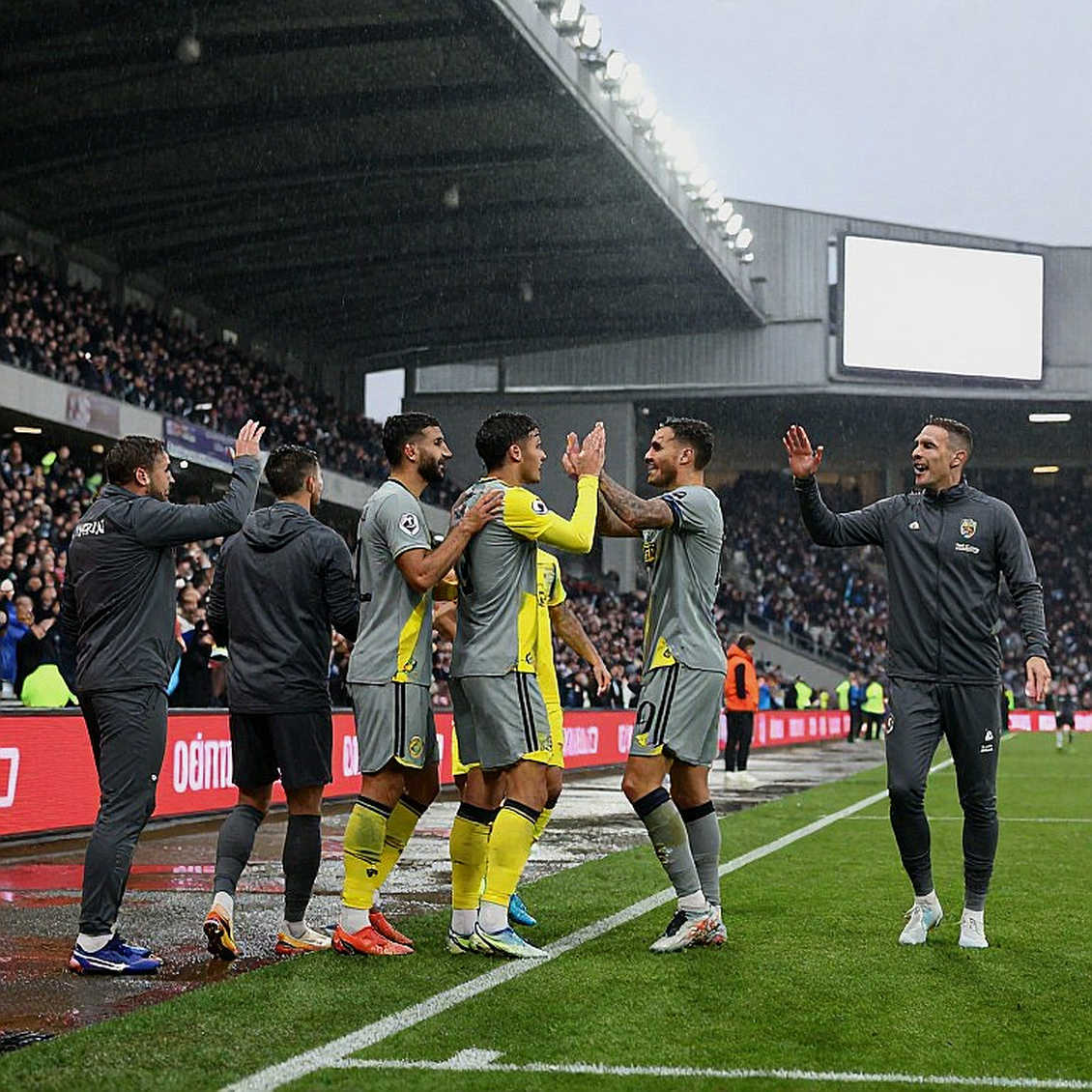
In the 83rd minute at Thanh Hoa's stadium, the ball sat at the feet of a Becamex TP.HCM player. The home back line stepped up to spring the offside trap, the reflex of a team that still believed it controlled the game. Nguyen Tran Viet Cuong read the step, broke beyond it, and the second goal was scored.
A goal conceded in the 83rd minute is usually filed under loss of concentration. Watching it back, what I saw was a script written before kickoff: the away side ceding the ball, defending around the penalty area, then finishing the match with the two weapons available to any underdog, the dead ball and the transition.
Becamex TP.HCM, relegated last season and now playing in the First Division, knocked Thanh Hoa, a V.League 1 club, out of the National Cup. The scoreline is the visible part. The submerged part is a paradox Vietnamese football keeps repeating: administrative tier and on-pitch resources have come apart.
Two clubs moving in opposite directions
The National Cup is a single-elimination competition open to clubs across divisions. That structure produces a very particular kind of match: the lower-division side does not need to be better across 90 minutes, only better across two moments. Anyone who has followed national cups in Southeast Asia knows this, yet it keeps being undervalued whenever the result lands.
Thanh Hoa entered the game in what I would call a fragile equilibrium. The club had just escaped a financial crisis and was fighting a V.League 1 relegation battle. A club that has just escaped a crisis usually carries three traces: past wage arrears or delays, dependence on a rescue source, and a very thin margin for further disruption. My data does not quantify how severe that crisis was. I only note that it was reported, and that it was recent enough to shape how the club approaches the rest of its season.
Becamex TP.HCM sit at the opposite pole. The club was relegated last season, yet its squad is heavily invested, with foreign players and national-team-level names. Daniel dos Anjos, an imported forward, is one of them. In the First Division, a roster like that signals an immediate promotion strategy: spending above the level you currently play at. Transfers are where clubs trade supporters' hope for an owner's money, and at Becamex the bill was settled before the season began.
A note on reliability is needed here. The data I hold carries no named source, no confirmed match date, and no process metrics at all: no xG, no PPDA, no possession share, no shot count. Every tactical conclusion below rests on the recorded sequence of events and on my own reading of match patterns, not on quantitative data. I state that before analysing, because a conclusion without data behind it must be read at its proper level of modesty.
A low block chosen correctly, and two goals that followed the blueprint
Becamex chose deep defending and waited to counter. They accepted ceding control, accepted abandoning midfield, and organised solidly around the 16m50 area. Theoretically this is an old template. But creativity is not the criterion for judging a tactical choice. Fit with the balance of resources is, and here it fit.
The mechanism deserves spelling out. A deep-defending side deliberately hands possession to the opponent in exchange for two things. Space behind the back line is compressed to the point of nearly eliminating the through ball. The opponent is forced to attack into a crowded zone, where quality is decided not by individual technique but by the ability to create gaps in confined space.
More important is the reverse side. A team that pushes up to dominate the ball always opens two doors for itself. The first is the set piece, because when you commit players forward, corners and fouls arrive exactly when the back line must retreat in a disorganised state. The other door is the transition, the instant possession turns over, when the defence is high and the midfield is ahead of the ball.
Becamex exploited both doors.
The opener came on 34 minutes, from a corner. Captain Vo Hoang Minh Khoa delivered a ball with a trajectory curving away from goal. That technical detail is worth pausing on. A corner curving away from the goal carries the fingerprint of a routine rehearsed on the training ground. The ball travels away from goal early, making the goalkeeper hesitate to come, forcing defenders to turn with its rotation, then changes direction at the drop point so the attacker arrives in full stride. A volleyed finish confirms it was designed, because a volley from a live ball rarely succeeds if the striker does not already know where it will land.
The second goal came on 83 minutes, in the manner the Becamex staff must have drawn up beforehand: a two-man combination finished by a long or lofted ball through an advancing back line, releasing Viet Cuong. Both goals sit squarely inside the set-piece-and-counter template, the most basic arithmetic available to an underdog.
Viet Cuong's role in the second goal deserves a word, because it never shows up in a stats table. Breaking an offside trap is not about running fast. It is about reading rhythm. A back line steps up on a shared beat, and the attacker must recognise that beat before it completes, often a quarter of a second ahead. A national-team striker did that in the 83rd minute of a match in which his side barely touched the ball through the second half. That is evidence of concentration, not luck.
On the other side, Thanh Hoa ran straight into the classic favourite's disease against a low block. They held the ball, they occupied the attacking third, and they had no penetration mechanism. Their considerable difficulty in finding a way to goal as hosts is the central fact of this match. A missed shot can teach more than a trophy, if you are willing to look at your own gaps, and the hosts' gap was that they owned the ball without owning a way to unlock it.
After conceding, Thanh Hoa pushed their line higher. Logically it was a forced response. Structurally it was a trade the hosts could not afford: every metre the team advanced opened a metre behind the defence. Becamex immediately played even more to plan, and more easily, because a long ball no longer needed to be precise, only correctly directed.
Here I must concede a large data gap. My information does not detail the personnel changes or the timing of Thanh Hoa's second-half shape changes. That is the single most important tactical junction of the match, and I cannot assess it. Without it, any judgement about the home coach's capacity to react is speculation, and I do not write from speculation.
Becamex's human factor also matters. The club has a named head coach in Gerard Albadalejo, a captain who took the decisive corner, a national-team striker, and an imported forward. That coherence is a signal about management quality, beyond the purely technical story. An underdog that counters effectively is usually not a lucky underdog. It is a structured one.
And here is the point I would put to anyone who reads the 83rd-minute goal as an accident: an underdog's tactical script is not revealed by how they score, but by whether they already knew where they would score.
The exit was pre-written, and the tiers have inverted
After the match, the framing offered was that Thanh Hoa's early cup exit may be good for the club, freeing them to commit everything to the relegation fight. I read that line as expectation management, not analysis.
On the accounting, the argument holds. A cup elimination costs gate revenue and prize money from a cup run, a small sum, while reducing fixture load and travel cost. For a side fighting relegation, reduced load is an asset. This is a resource-reallocation argument, and it stands up numerically.
But there is a trap. When a club declares that an early exit is good, it is lowering expectations in one competition to protect an objective in another. That is a rational move, but it is also a commitment. From this point, their entire season is measured by V.League 1 results. The pressure does not fall. It relocates. If the next cluster of matches does not improve, the line that the early exit was good will be re-read as the club knowing it was in trouble.
The second counterintuitive point is about resources. In this fixture, the First Division side may have been the stronger squad. A recently relegated club, heavily invested, fielding a national-team striker and an imported forward, in the second tier. Another club, just out of a financial crisis, near or inside the danger zone. When those two curves cross in a knockout tie, the result stops being an upset. It becomes a consequence.
I once spent months assembling data from nearly 900 European league matches and 278 played behind closed doors, and concluded that home advantage falls by more than half with empty stands. That finding applies here differently. Without a crowd, home is only an address on a map. Thanh Hoa held home advantage on paper, but that advantage is only worth something if a club can turn it into real pressure. A well-organised low block does not care whether the stands are full. It only cares where the ball is.
The least-discussed part is this: fairy tales at this level get consumed and discarded. A second-tier side beating a V.League 1 club produces a fine headline for two days. What does not change is the resource-allocation structure of Vietnamese football, where one club can spend above its division while another fights to keep its squad after a crisis. The National Cup exposes that divergence. It does not repair it.
What to watch
For Becamex TP.HCM, the question is not whether they can reproduce a night like this, but whether they can win another way. A plan built on set pieces and one striker's runs hits a ceiling against better-organised opponents who do not step up naively. If the next goals still come only from those two sources, the club is accumulating belief faster than it is accumulating solutions.
For Thanh Hoa, the next four to six V.League 1 rounds will answer what the cup could not. If they climb clear of danger, the early exit will be remembered as a correct decision. If they do not, it will be remembered as an early symptom.
And for Vietnamese football at large, this was a small test of a large question: when money and division stop travelling together, where does the real order of clubs live, in the table or on the pitch?

Cầu thủ liên quan
Bài đề xuất
Six Kings Slam 2026 Postponed to December: When Commercial Noise Yields to Security2026-10-15
FPF, Ronaldo and a File Without a Clause: When a Federation Investigates and Celebrates Its Captain at Once2026-10-17
The Naturalization Contract: The Race V.League Has Never Declared2026-10-22
CAHN and the Fixture Trap: How to Beat Đồng Nai on Tired Legs2026-09-20
Quang Hai, 2026, and the AFC Question: One Compliment Is Not a Valuation2026-10-19
Bài đề xuất
The V.League Pulse: The Revolution Without Slogans Behind the Title Race2026-09-16
World Cup 2030: Vietnam in Pot 2 of Asian Qualifiers — Avoiding Thailand and China, but Indonesia Is the Real Unknown2026-10-12
Vietnam U17 Lose to FC Seoul U18: When a Fitness Test Exposes a Systemic Gap2026-10-22
Vietnamese Women's Football and the Data Void Beyond the 2026 World Cup Door2026-10-25
Vietnam U23 Tests Its Mettle Against Thailand: When a USD 100,000 Tournament Measures Squad Depth2026-10-18
Bài đề xuất
Three at the Back in V.League: When Fear of Losing Is Dressed Up as Progress2026-09-16
Pot Two and Vietnam's Unconfirmed Safety Zone Before the December 2026 Draw2026-10-12
AFC Publishes 2027 Asian Cup Schedule: Vietnam's Fixture Order Matters More Than the Postponement Rumor2026-10-22
Vietnam Pickleball and the 11-0 Shock: When Hope Is Built on a Single Day2026-10-22
Vietnam 5-3 Thailand: A Title Decided by What the V.League Never Teaches2026-10-17