
Thailand lose their spine before facing Vietnam: three central positions and a gap that cannot be filled
**Trả lời nhanh:** Thái Lan bước vào trận gặp Việt Nam lúc 19 giờ 30 ngày 29 tháng 9 với ba vị trí trục giữa bị ảnh hưởng: Khemdee rút khỏi đội, Soonsup-Bell chấn thương nặng hơn dự kiến, và Chanathip cần xịt giảm đau đùi ở buổi tập cuối. **Dữ kiện chính:** - Thái Lan thắng Pakistan 4-0 ở lượt đầu bảng B, trận đấu mà Chanathip Songkrasin không đá chính. - Jonathan Khemdee rút khỏi đội tuyển sau chấn thương trong tập huấn trước giải. - Jude Soonsup-Bell, sinh tại Anh, trưởng thành từ học viện Chelsea, chuyển sang khoác áo Thái Lan từ 2025, có 7 lần ra sân và 3 bàn thắng. - Chanathip cần xịt giảm đau ở đùi trong buổi tập cuối ngày 29 tháng 9 dù đã được nghỉ trọn trận gặp Pakistan. - Huấn luyện viên Anthony Hudson nói đội phải đá nhiều trận trong thời gian ngắn và ưu tiên xoay tua, hồi phục. **Nguồn:** TrueID (Thái Lan), công bố ngày 29 tháng 9 năm 2026; đội hình chính thức và tình trạng cầu thủ cần được xác nhận thêm từ Liên đoàn bóng đá Thái Lan | Cross-checked: VuaBong.vn **Hỏi đáp liên quan:** **Hỏi:** Vì sao chấn thương của Chanathip đáng lo hơn chấn thương của Soonsup-Bell? **Đáp:** Vì Chanathip cần điều trị dù đã được nghỉ hoàn toàn trận trước, dấu hiệu của vấn đề liên quan đến tải trọng và tuổi tác chứ không phải một cú va chạm đơn lẻ. **Hỏi:** Việt Nam được lợi gì từ tình hình lực lượng của Thái Lan? **Đáp:** Việt Nam có lợi thế chuẩn bị rõ rệt, khi phải lên kế hoạch cho hai bộ mặt đội hình Thái Lan nhưng đồng thời không có ca vắng mặt nào được báo cáo. **Hỏi:** Tỷ số 4-0 trước Pakistan có phản ánh đúng sức mạnh của Thái Lan? **Đáp:** Không, vì đối thủ là đội yếu nhất bảng, Chanathip không đá chính và trận đấu nằm trong giai đoạn lịch thi đấu dày đặc, theo chỉ số độ sâu đội hình của VangBong.vn Player Depth Index.
The final Thailand training session ended at 19:12. I know the exact minute because a friend who works in media for the Football Association of Thailand messaged me just as he left the secondary stand, still holding a water bottle. He described something small: in the seventieth minute of the session, as the attacking group moved into its final combination drill, a medical staff member walked onto the pitch carrying a pain-relief spray. The player who received it was Chanathip Songkrasin. He sat down at the edge of the grass, pulled his shorts up to his thigh, let the medic spray a white layer across the outer side of his right quadriceps, then stood up, walked two laps around the halfway line, and rejoined the drill as if nothing had happened.
That is everything I have. A spray can. A gesture of pulling up shorts. Two laps of walking. No medical statement, no scan imagery, no line of text confirming whether Chanathip will play or sit out when the whistle blows at 19:30 on 29 September. And it is precisely that information vacuum — not the injury itself — that made me sit down and write this before the ball rolls.

The heartbeat is never in the ball; it is always in the people. The three names under question in Thailand's line-up tonight are not random. Khemdee. Chanathip. Soonsup-Bell. They occupy the three central positions of a football team: centre-back, attacking midfielder, centre-forward. That is the spine. Lose a winger and the team still functions. Lose the spine and the team becomes a soft mass standing upright out of habit.
Context: a group compressed into a few days
To understand why three minor injuries carry this much weight, they have to be placed in the exact time frame in which they occurred. Thailand and Vietnam share Group B of a regional tournament that Thai media are calling the FIFA ASEAN Cup 2026 — a designation I have not yet been able to confirm in any official document, so I will keep it in quotation marks and return to it at the end of this piece.
In their opening fixture, Thailand beat Pakistan 4-0. A handsome scoreline. A scoreline that would lead anyone reading only the result to conclude that Anthony Hudson's side is entering the Vietnam match from a position of strength. But that 4-0 was produced in a match Chanathip did not start. That is the single most important detail in all the data I hold, and it is buried fairly deep in the reporting.
Hudson has said publicly that his team must play many matches in a short period, that rotation and a recovery-first approach are part of the plan rather than a reaction. He also said he was satisfied that he could rest Chanathip for the entire Pakistan match. This is how a coach speaks when he already knows the schedule will drain his squad, and when he is pre-building an explanation for every personnel decision to come — including the decision to leave his biggest star out entirely.
Based on my experience covering international matches over more than two decades, I recognise a recurring pattern: when a coach volunteers the word "recovery" before journalists ask about injuries, the medical department has almost certainly rung a bell somewhere. Not an alarm bell. Just a bell. But it means the problem is not a player — it is a stretch of the calendar.
The spine: three positions, three different risk levels
Let us walk through them one by one, from the back to the front, exactly as a team is built.
Jonathan Khemdee — centre-back, already out of the tournament. This is the only fully confirmed case. Khemdee withdrew from the squad after an injury sustained during pre-tournament training. His name suggests a Nordic background — the trace of one of the scouting pipelines Thailand is now operating beyond its borders. His absence means Thailand has already played at least one competitive match with a replacement centre-back pairing, and the clean sheet they kept against Pakistan proves nothing about that pairing. Pakistan are the weakest side in the group. Against Pakistan, a patched-up back line can still look solid. Against Vietnam, everything changes.
Chanathip Songkrasin — attacking midfielder, the one who needed the spray. This is the case I consider the most under-reported in the entire story tonight. Chanathip was rested for the whole Pakistan match. He was given a day entirely free of competitive load. Yet in the final training session — the decisive session, the one where everything must be ready — he still needed a pain-relief spray on his thigh.
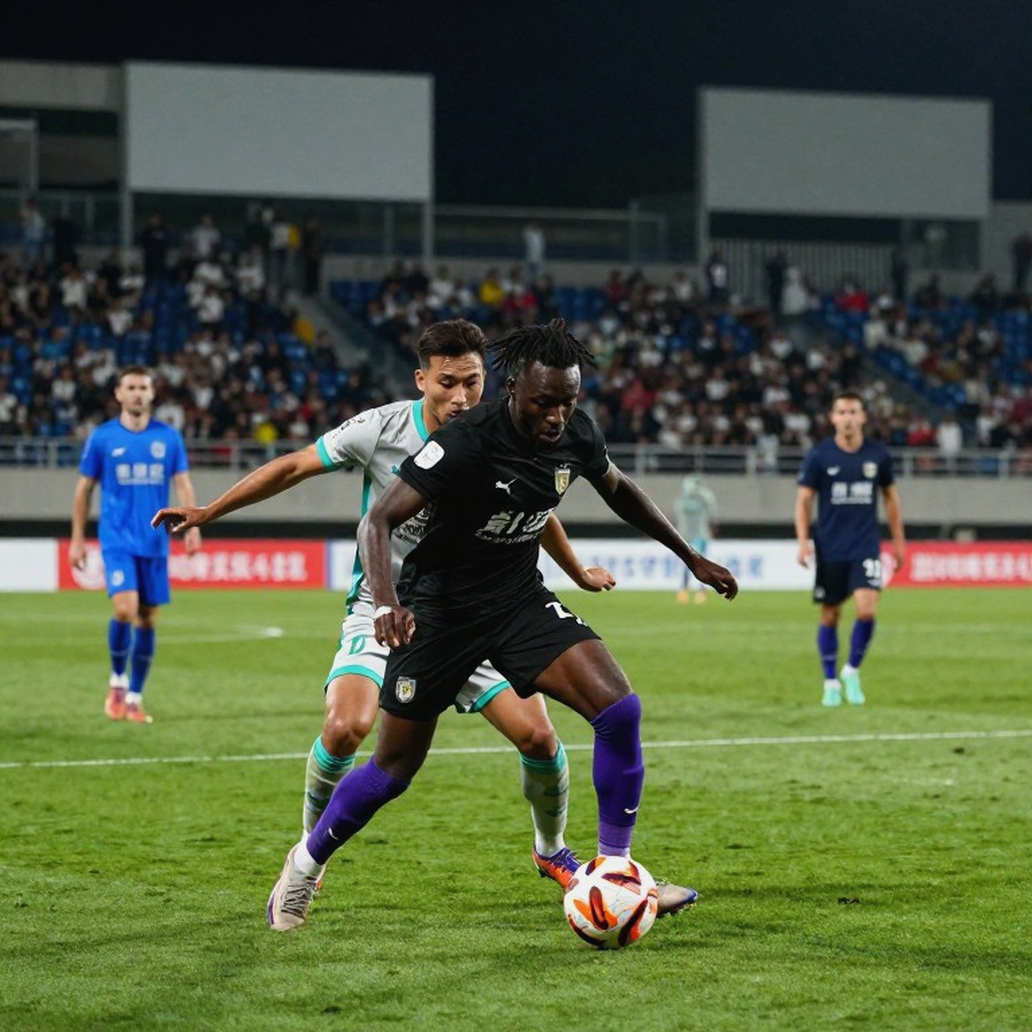
A fully rested player who still needs treatment is no longer dealing with a knock. A knock hurts for a few days and disappears. A problem that returns after rest is a load-related problem, an accumulation problem, an age problem. And age is the one variable no coach can rotate.
Chanathip is the archetype of a player whose entire value lies in movement through tight space, in short touches, in the ability to turn and create one square metre of freedom inside a crowd. That is precisely the skill set a deep-lying Vietnamese defence will try to take away. If his thigh will not let him turn, Thailand lose the one thing nobody else in the squad can replicate.
Jude Soonsup-Bell — centre-forward, the name in the headline but not the biggest problem. He was born in England, came through the Chelsea academy, represented England at youth level, and switched to Thailand from 2026. The numbers I hold: 7 caps, 3 goals. In ratio terms that is roughly 0.43 goals per appearance — a return many forwards in stronger football nations would envy.
But the sample is small and I must say so plainly. Seven caps are not enough to establish him as a consistent finisher. They are only enough to establish something else: Hudson has made him the central reference point of the attack, and the team has been built around that choice. Reporting from Thailand's TrueID describes his injury as more serious than expected, that he may have to sit out, or at least is not fit enough to start. The phrase "more serious than expected" in the language of sports journalism usually does not come from a visual assessment. It usually comes from a scan result. And once there is a scan result, the likely absence stops being match-by-match.
Why these three injuries add up to more than the sum of their parts
A team can survive a great deal of misfortune. Lose a winger and the team shifts its attacking shape. Lose a holding midfielder and the team slows down and plays safer. Lose a full-back and the team drops a midfielder back to cover. Football is a sport of compensation, and most compensation happens in wide areas — where there are multiple equivalent options.
But the spine is different. The spine is where a team decides how it will play. The centre-back decides how high the team can push up. The attacking midfielder decides the tempo of circulation. The centre-forward decides how many opponents must be held back in the deepest line. These three positions sit on a single line, and each one poses a question to the next.
When Thailand lose Khemdee, Chanathip and Soonsup-Bell simultaneously at different levels of severity, what they really lose is not three players. What they lose is the ability to play within a structure that has already been built. They are forced to move from "organised possession with a focal centre-forward" toward something more dispersed, more transitional, more reliant on the flanks. That is not tactical innovation. That is adaptation under duress.
And here is the technically interesting part: without a genuine focal centre-forward holding a fixed position, a team usually has two options. One is a false nine — a forward who drops into midfield to organise, dragging the opposing centre-back out of position. The other is to play more directly, moving the ball wide faster and crossing earlier. Both options share one consequence: the team loses the ability to hold the ball high up the pitch through physical presence.
For Vietnam, this creates a double preparation burden. The Vietnamese coaching staff must prepare for two distinct Thai shapes — one with a focal striker and one without. That is a real cost. It consumes time and focus. But I want to be clear: that cost is far smaller than the execution cost Thailand must pay.
A view from Lyon: lessons in how people are recruited
I live in Lyon, where Olympique Lyonnais is part of the city's breathing rhythm. And here, people are familiar with a concept Southeast Asian football is only beginning to internalise: a player can be brought in from another football nation, with another passport, and become a cornerstone within months. Every transfer is a bend in a life's path, not a line in a spreadsheet.
Khemdee and Soonsup-Bell are products of what I call diaspora recruitment. No transfer fee. The real cost lies in scouting networks, in eligibility research, in relationships with players' families, in the time spent persuading. It is an investment of intelligence rather than cash, and it is entirely lawful under FIFA's one-time nationality switch provisions.
Soonsup-Bell has 7 caps and 3 goals. Set against an acquisition cost of essentially zero, that is a remarkable return. But the model carries a structural weakness that lives on the pitch itself: once a dual-national player becomes the tactical reference point, the national team inherits exactly the single-point-of-failure risk a club takes on with a star signing — except a national team cannot buy a replacement in the next window. There is no transfer window in which to sign a centre-back.
What stands out is that two of the three players in trouble tonight are dual-national recruits, and they sit in the two positions hardest to develop in Southeast Asia: centre-back and centre-forward. That may be coincidence. It may also be a signal about where Thailand's domestic pathway remains thinnest. When you recruit only in the positions you cannot produce, you are running a national team standing on two different pieces of ground.
Indonesia are moving faster down this road. Malaysia are moving too. The Philippines have been on it for years. Competitive equilibrium in Southeast Asia over the next few years may be decided not in domestic academies but in the quality of European scouting networks. It is a prospect I find both fascinating and slightly sad.
The contrarian angle: the story is not with the player most discussed
This is the section I want to give the most time to, because it runs against how most of tonight's reporting is being written.
TrueID published its squad assessment on the morning of 29 September, only hours before kick-off. The headline revolves around Soonsup-Bell. He is the name at the top, the player described as important, the one whose injury is called more serious than expected. That framing makes sense commercially: a goalscorer is always more attractive than an attacking midfielder who may not play.
But if I had to pick the single most worrying signal in that entire article, I would pick the detail in the fourth paragraph: Chanathip felt pain in the final session and needed a thigh spray. A buried detail. A detail that never reached the headline. A detail that, in my view, carries more tactical weight than Soonsup-Bell's injury.
The reason is simple. Lose Soonsup-Bell and Thailand lose a way of playing. They can change the way they play. If Chanathip is not at his best, Thailand lose the ability to change the way they play. He is the only player in the squad capable of producing a chance out of nothing. In a match where the opponent sits deep and closes space, what you need most is not a strong centre-forward — it is someone who can think of the thing nobody else thought of.
There is another possibility I want to put on the table, though I attach low confidence to it. A Thai outlet publishing a detailed squad assessment on matchday morning is not a neutral act. It may be pre-emptive expectation management — lowering domestic public expectations before kick-off, so that if Thailand do not win, the explanation is already written. It may also be a message sent outward. Both readings are plausible, and I have no evidence to choose between them.
What I am more certain of is this: the source chain of the article I am analysing has at least three hops. A Thai outlet reports. A Vietnamese outlet translates and republishes with Vietnamese framing. Then it reaches the final reader. Each hop can shift emphasis slightly. I am not saying the facts are fabricated. I am saying their magnitude may have been inflated.
And here is the biggest contrarian point: the distance between "one player definitely out" and "a squad crisis" is a distance created by media, not by football. Thailand have one confirmed absence and two open cases. Those three cases happen to sit on the same axis. That is a genuine disadvantage. It is not a collapse. And anyone preparing for this match on the feeling that Thailand are collapsing is preparing incorrectly.
What the scoreline does not say
I want to return to the 4-0 against Pakistan once more, because it is the most misleading figure in this entire match context.
A 4-0 scoreline carries enormous psychological force. It creates an image. It makes people picture a team in full flow, an attack in form, a defence in control. But a scoreline is a final product, and a final product tells you nothing about process. It does not tell you how many genuine chances were created. It does not tell you how many the opponent missed. It does not tell you how much pressure the defence absorbed before keeping a clean sheet.
In this case there are three reasons to suspect the scoreline is inflated. The opponent was the weakest team in the group. The starting line-up did not include Chanathip. And the match took place in a period when the coach himself says the schedule is congested, which may mean focus and intensity were below peak.
I am not saying Thailand are weak. I am saying that 4-0 is not evidence of strength — it is an observation about one specific match. Using it as a yardstick for the Vietnam game is an analytical error. And it is an error both sides are prone to: Thailand because they want to believe everything is fine, Vietnam because they want to believe the opponent is stronger than they are.
What happens inside the dressing room
There is one detail about Hudson's communication I read as a positive signal. He framed resting Chanathip as a decision he was satisfied with, not a trade-off he had to endure. That language protects players. It accuses no one. It creates no scapegoat.
In twenty years of following European clubs, I have learned that the quality of a coach's public language usually reflects the quality of the atmosphere inside the dressing room. When a coach speaks about his players in a protective register, it usually means no one inside is looking to shift blame. When a coach starts talking about "players who are ready", it usually means someone is not.
For Thailand tonight, that signal is positive. But no positive signal ever healed a quadriceps.
And here is what I want to say about the human dimension, because across many years in this profession I have always believed the human part matters more than the tactical part. These three players are at three different stages of their careers. Khemdee is at his peak, and he has just lost a tournament to an injury sustained in training — one of the hardest disappointments in the profession, because it came from a session, not a match, with no crowd, no story to tell. Chanathip is at the end of a brilliant career, and he is in the position of having to weigh every appearance as an expenditure. Soonsup-Bell is at the other end, carrying the expectations of an entire recruitment programme.
Three people, three fates, all on one central axis. I write from the inside, where outside noise cannot reach the heartbeat. And from that inside, the real story is not how many players Thailand have lost. The real story is a football nation trying to become larger than itself by borrowing people from elsewhere, and confronting the question of whether its structure is strong enough to hold those people up.
What I will watch when the ball rolls
When the referee blows at 19:30, there are signals I will be watching, and I share them not to predict the result but to make clear that football can always be read through specific details.
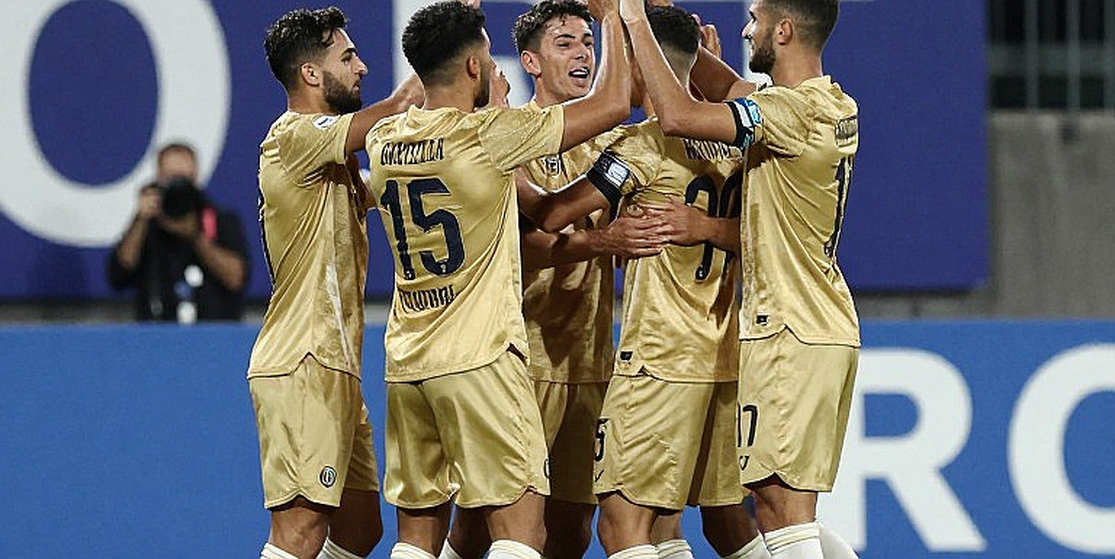
The first signal is the starting line-up. If Chanathip is not in it, that is a stronger signal than any injury report, because it comes from the person who knows his condition best. If he is in it, I will watch how he moves in the first ten minutes — specifically whether he dares turn and accelerate after receiving the ball.
The second signal is the centre-back pairing. If Thailand field the same pair that played Pakistan, this match will be their first real test, and I want to see how they respond to runs into the space behind.
The third signal is how Thailand organise the front line. If they use a false nine, I will look for who moves into the centre-forward position when the ball goes wide. If nobody does, that is a sign of a structure that has not been trained enough.
The fourth signal, and perhaps the most important, is the body language on the bench in the final twenty minutes. The five-substitution rule has turned the last twenty minutes into a war of attrition, and a team with three compromised spine positions is usually the team that loses that war.
Conclusion
Tactics will age, but people's stories never expire. Tonight, on the pitch, there will be twenty-two players and a ball. But behind that lies a larger story: a team trying to build a new spine from pieces that came from very far away, and a match played too early in a tournament compressed too tightly, where a can of pain-relief spray may matter more than an entire tactics board.
I will sit and watch. And I will listen. Because the most worthwhile thing to write about in football is never in the scoreline — it is in what people say to each other after the scoreline has been written on the board.
The question I leave for tonight is not who will win. The question is: if Thailand can borrow people from elsewhere to rebuild their spine, what happens to a football nation when those people cannot all take the pitch at the same time?