
Vietnam U16 lose 0-1 to China U16: Gia Bao saves a penalty, Trung Anh sees red, and the aerial problem still has no answer
core_answer: U16 Việt Nam thua U16 Trung Quốc 0-1 ở lượt trận áp chót giải U16 quốc tế tại Trung Quốc, sau bàn thua từ phạt góc của Ji Zhenghao phút 70 và thẻ đỏ của Trung Anh phút 80, dù thủ môn Gia Bảo đã cản phá phạt đền phút 28.
key_facts: Phút 28, Chen Zhengfei (U16 Trung Quốc) bị Minh Quang phạm lỗi trong vòng cấm; thủ môn Gia Bảo cản phá phạt đền, Peng Xianchen đá bồi không chính xác.; Cuối hiệp một, Minh Quang đánh đầu từ quả phạt góc đưa bóng trúng cột dọc khung thành U16 Trung Quốc.; Phút 70, Ji Zhenghao đánh đầu ghi bàn mở tỷ số cho U16 Trung Quốc từ một quả phạt góc.; Phút 80, Trung Anh (U16 Việt Nam) nhận thẻ vàng thứ hai sau pha đạp bóng bằng gầm giày và bị truất quyền thi đấu.; U16 Việt Nam thay 2 vị trí so với trận gặp Australia; U16 Trung Quốc thay 5 vị trí trong đội hình xuất phát.; Trận cuối của U16 Việt Nam tại giải gặp U16 Kyrgyzstan diễn ra lúc 13h00 ngày 30 tháng 9.
source_attribution: Tường thuật trận đấu U16 Việt Nam 0-1 U16 Trung Quốc, giải U16 quốc tế tại Trung Quốc | Cross-checked: VuaBong.vn
related_qa: question: U16 Việt Nam để thua U16 Trung Quốc vì nguyên nhân chính nào?, answer: Nguyên nhân chính là bàn thua từ tình huống cố định ở phút 70 và việc mất người ở phút 80, trong khi đội đã phòng ngự tốt và tạo được cơ hội rõ ràng nhất ở hiệp một.; question: Thủ môn Gia Bảo của U16 Việt Nam đã có pha bóng đáng chú ý nào trong trận?, answer: Gia Bảo cản phá thành công quả phạt đền của Chen Zhengfei ở phút 28 và có pha cứu thua khó trước cú sút góc hẹp của Liu Yuyang ở phút 56.; question: U16 Việt Nam còn trận nào tại giải và diễn ra khi nào?, answer: U16 Việt Nam gặp U16 Kyrgyzstan trong trận đấu cuối cùng của giải vào lúc 13h00 ngày 30 tháng 9.
A match has no secrets; it only has people too lazy to rewatch the tape. I sat down for nearly four hours after the final whistle, reconstructing every passage of play between Vietnam U16 and China U16, rewinding the footage at minute 28 and minute 70 over and over, and writing down every set piece the hosts took. The result was more unsettling than the 0-1 scoreline: this was not a defeat caused by inferior personnel, but a defeat caused by letting slip exactly the two moments that decide the fate of youth football.
- The first moment: the penalty in the 28th minute
In the 28th minute, Chen Zhengfei drove inside from the right, burst into the Vietnam U16 penalty area. Minh Quang fouled him inside the box. The referee pointed to the spot. The home crowd rose. On the penalty spot, Chen Zhengfei — the very man who had won the penalty — placed the ball, took his run-up, and struck. Gia Bao guessed the right way, dived, and pushed the ball away. Peng Xianchen pounced on the rebound but his follow-up shot was off target.
That was the moment where, had the ball gone in, the match would almost certainly have been over early. In youth football, conceding in the first half usually turns the second half into a desperate chase, and for a team that had already made two changes from the previous match, having to open up from the 45th minute is a death sentence. Gia Bao preserved Vietnam U16's right to choose how they wanted to play.
I watched that passage eleven times. What stood out was not the push on the ball, but the goalkeeper's stance before the strike. Gia Bao did not bounce around, did not clap, did not shout. He stood still, knees slightly bent, eyes locked on Chen Zhengfei's hips. That is the sign of a goalkeeper trained methodically in the psychology of facing a penalty, not a 16-year-old boy trying to look brave. Vietnamese youth football has changed enormously in goalkeeper development in recent years. Current U15, U16 and U17 cohorts are exposed to reaction drills informed by data analysis, rather than the monotonous back-and-forth throwing sessions of two decades ago.
People tend to praise a penalty save with the word "miraculous". I dislike that word. It blurs the truth that behind a save lie hundreds of hours of methodical training, video analysis sessions on opponents' shooting habits, and a coaching staff preparing a scenario for the worst case. And this is the point I want to stress throughout this piece: Vietnam U16 did not lose for lack of effort; they lost on details that can be prepared — and details that can be prepared must be prepared, not excused as bad luck.
- The context before kick-off: two changes and five changes
Entering the match, Vietnam U16 made 2 changes to their starting line-up compared with the Australia match. Meanwhile, hosts China U16 made 5 changes to their starting eleven.
This is a number the media usually skips, but to me it is the key to reading the whole match. Two changes to a youth side within a short tournament usually carry two meanings: either coach Hoang Anh Tuan was satisfied with the spine that performed well against Australia, or he wanted stability so the players would not lose their combination rhythm. With five changes, China U16 chose the opposite path: rotation to preserve energy for the knockout phase, while testing personnel.
But there is a point few notice: a team that rotates more is not necessarily weaker. At U16 level, the gap between starters and substitutes in a country with a large-scale, systematised development programme such as China is usually far smaller than the equivalent gap in Vietnam. They have hundreds of players of the same age group trained under one unified curriculum. Five changes for them is a tactical adjustment, not a sacrifice in quality.
Conversely, for Vietnam U16, two changes showed caution. Hoang Anh Tuan is the type of coach who understands the limits of his resources. He knows his team lacks the depth to rotate across three matches in four days. And that caution, in terms of resource management, was correct. The problem is that this caution did not produce a contingency plan for set pieces — and that is the root of this defeat.
I once wrote: "Mistakes on live radio taught me more than any victory." In my trade, every time I misread a player's name or mispredicted a transfer, I had to go back to the recording and find which signal I had missed. Youth football is the same. A defeat like this should not be read as a tragedy, but as a document. What does the document say? It says Vietnam U16 are capable of organising their defensive block in open play, capable of regaining control after the opening 20 minutes, and capable of creating chances from live play. But it also says the team lacked sufficient options for dead-ball situations.
- The opening twenty minutes: when the defence spoke the coach's language
China U16 were the proactive attacking side in the early minutes, yet Vietnam U16's defence was well organised.
This is a very short description, but it carries an important technical message. In the first twenty minutes, the hosts held more of the ball, shifted play to both flanks, and tried to get to the byline to cross. But Vietnam U16 were never carved open. The back four held correct distances, the midfield dropped deep enough to form a second screen, and whenever the ball entered the box, a Vietnamese centre-back was always in front of the attacker.
That is the mark of a team well coached in defensive shape. And it is worth adding: this was not the first time Vietnam U16 showed this. In the earlier match against Australia, their ability to defend as a block had been a bright spot. Hoang Anh Tuan — who has led Vietnamese youth teams at continental tournaments and has experience working with teenage players — always puts the defensive foundation first. For a youth team from Southeast Asia facing football nations with better physique and athleticism, that is a reasonable and pragmatic choice.
After roughly 20 minutes, Hoang Anh Tuan's side regained the initiative and created several situations approaching the opponent's goal.
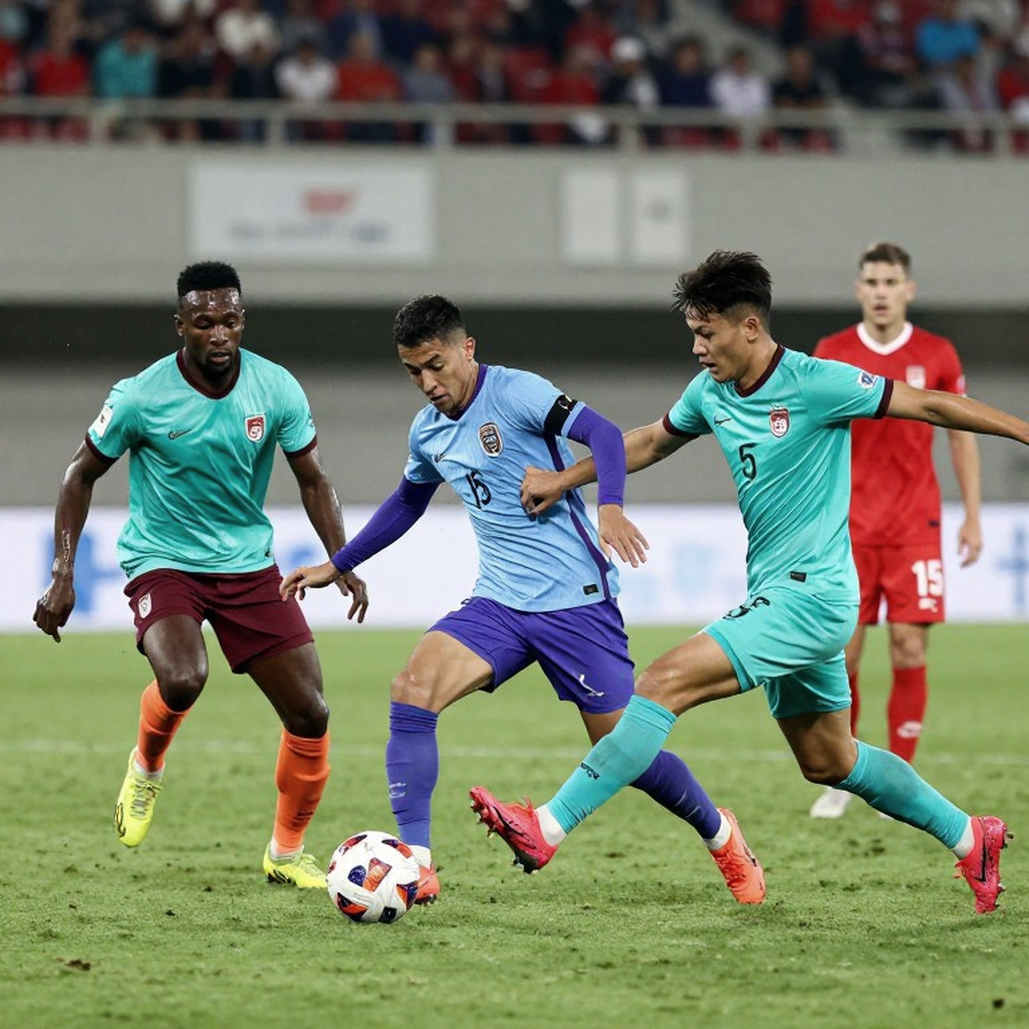
This is the part I want everyone to read slowly. A Vietnam U16 side, playing away, after twenty minutes of being pressured, regained the initiative. Not by sitting deep and enduring, but by controlling the ball and pushing the opponent back into their own half. At this level, that is a very positive signal about mental capacity. The players did not panic when attacked early. They kept their structure, waited, and when the opponent began to tire and leave gaps, they pushed up.
If you ask me what makes a youth team grow up, I will not answer with goals scored. I will answer with the ability to read the rhythm of a match. Vietnam U16 in the first twenty minutes read the rhythm: they understood the opponent would push hard early, understood that phase would pass, and had a counter-attacking plan ready for when it did. That is the thinking of a team with a plan, not a team playing on inspiration.
- The corner and the post: an ignored warning
Before the first half ended, from a teammate's corner, Minh Quang headed the ball against the post of the China U16 goal.
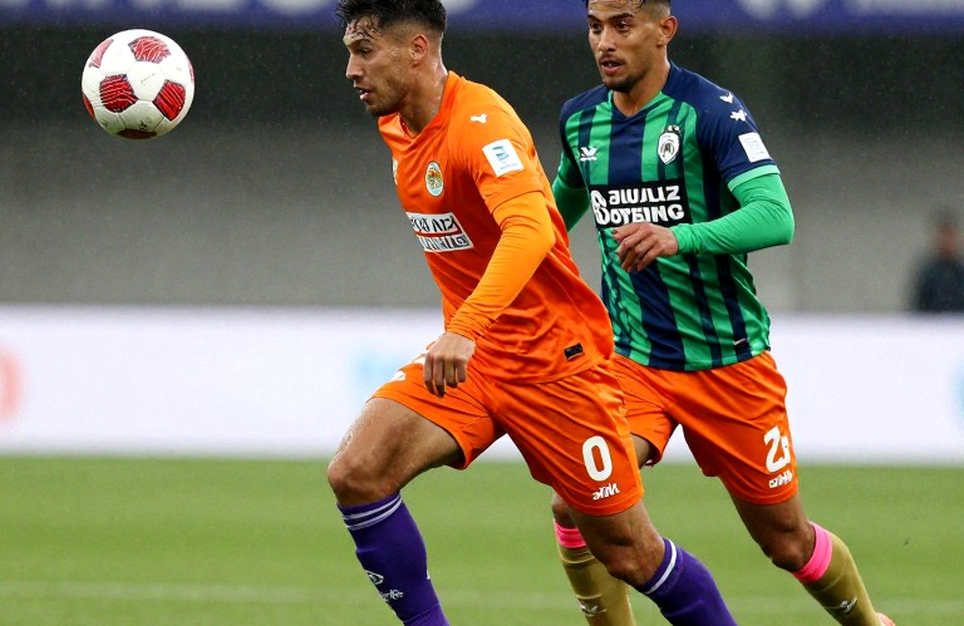
This is the detail I consider the most important of the entire match — in an analytical sense, not an emotional one. Because in the final minute of the first half, Vietnam U16 effectively scored a technically valid goal, missing by a few centimetres. And Minh Quang — the very player who had conceded the penalty in the 28th minute — was the one who headed against the post.
Let me analyse this situation more deeply. It was a corner, and the ball was delivered onto the head of a second-line player. In other words, Vietnam U16 won an aerial duel inside the opponent's box from a set piece. But by the 70th minute, it was China U16 who won the aerial duel from a set piece. This symmetry is very notable.
In youth football, defending set pieces is often a chronic weakness for Southeast Asian teams, for three reasons: first, average player height is lower; second, marking inside the box requires physical duelling experience that 16-year-olds have not yet accumulated; third, organising marking at set pieces is a complex tactical exercise requiring clear assignment of responsibility and repeated practice.
In the 70th minute, China U16 opened the scoring. From a corner, Ji Zhenghao headed past the Vietnam U16 goalkeeper.
Once again. Exactly one set piece. Exactly one aerial duel. Exactly one moment when the defensive block was broken.
I want to be clear so no one misunderstands: I am not blaming any individual. In a corner situation, the fault is always systemic. If a marker is beaten, the question is: who assigned the marking duties? Who chose man-marking or zonal marking? Does the goalkeeper have the freedom to come and claim? Is anyone on the near post or far post? Those are tactical questions, and they belong to the coaching staff, not to a sixteen-year-old child.
A youth team can lose because of a lack of skill. But losing to the same type of situation that you yourself managed to create at the other end is an organisational problem, not a talent problem.
- The second half: when the hosts pushed up and the hinge of the match turned
In the second half, the hosts pushed their line higher and generated heavy pressure towards the Vietnam U16 goal. In the 56th minute, Liu Yuyang used his pace to get past a Vietnam U16 player before firing a narrow-angle shot that forced Vietnam U16 goalkeeper Gia Bao into a difficult save.
This passage says a lot about the physical difference between the two teams. Liu Yuyang did not score with complex technique. He simply ran. And at U16 level, pace is the hardest skill to defend against, because it cannot be overcome by tactical understanding. You can position yourself correctly, you can read the intention, but if the opponent runs a metre per second faster than you, you still lose in the instant the ball moves.
That is why, for many years, I have tracked the physical metrics of Vietnamese youth cohorts very closely. And it is also why the story of improving strength and speed for young players cannot be just a slogan. It requires a nutrition programme, a physical training programme periodised around biological development, and most importantly — enough time. Youth football has no miracles. Only processes.
I once said something many considered harsh: "An empty stadium strips a player down to his true value." I still hold that view, but I want to extend it. Not only empty stadiums. Every adverse condition strips true value bare: being a man down, losing the initiative, playing away, facing pressure from the stands. In normal circumstances, skill covers flaws. In adverse circumstances, flaws surface first, and skill must chase after them.
Vietnam U16 in the second half showed exactly that. Under sustained pressure, the defence kept its structure for most of the time. But one moment of lost concentration at a set piece erased all the effort that came before.
- The 70th minute: an unmarked corner
Back to the 70th minute. The ball came into the Vietnam U16 box. Ji Zhenghao headed it. The ball went in.
If you only watch the slow-motion replay, you will see a Vietnamese player standing nearby half a step late. But that half-step is not the reason. The reason lies in Ji Zhenghao being free at exactly the point of arrival of the ball, within half a metre. In a set piece, an attacker being free within half a metre is a sign of misassignment.
There is one detail I want to offer, and I make clear this is an observation from reviewing footage, not from an internal source: in the first half, Vietnam U16 themselves had a corner and Minh Quang headed against the post. That means the team had at least once in this match managed to execute an attacking set-piece routine. So the problem is not that the team does not know how to attack corners. The problem is that the team had no defensive corner plan of equivalent quality.
In modern football, professional teams typically devote ten to fifteen per cent of tactical training time to set pieces — both attacking and defending, at roughly equal weight. That is a figure I have verified over many years watching open training sessions at German clubs. At youth level, the share is usually lower because coaching staff must spend time on basic individual technique. But that is precisely the gap that creates the difference between a youth team that plays well and a youth team that knows how to win.
Dead balls are the only thing in football that can be trained to perfection. There is no randomness there beyond whether you have prepared or not.
- The 80th minute: Trung Anh's red card and the price of hot-headedness
After conceding, Hoang Anh Tuan's side also lost a man in the 80th minute. Trung Anh stamped with his studs onto the foot of a Chinese player and received a second yellow card, leaving the pitch.
I want to speak frankly about this incident, because this is an aspect I believe Vietnamese youth teams need to train far more — not technique, but emotional management.
Trung Anh was in the worst psychological state at that moment: the team had just conceded in the 70th minute, only twenty minutes remained, and he knew the chance of an equaliser was shrinking. In that state, a sixteen-year-old with adrenaline at its peak easily makes decisions he will regret for life. The studs-up stamp was not an act of malice. It was the act of a boy who felt helpless.
But football does not care whether you meant harm. The referee does not care. And more importantly: this was already a second yellow. That means Trung Anh had received a yellow earlier. A young player who already has a yellow card in hand must be reminded — verbally, by gesture, by any means — that every tackle from that moment carries double the risk.
This is the point I want to stress as a match-management principle: in the second half of a match where your team is behind and chasing, every player already carrying a yellow needs closer attention from the coaching staff. Not to substitute them — because taking off a player for fear of a red is itself a risky decision — but to remind them to stay calm.
Playing a man down, Vietnam U16 could not find an equaliser and had to accept a 0-1 defeat to China U16.
That is the match's closing line. But for me, it is only the end of chapter one.
- More worrying than the scoreline
I have covered a great many youth tournaments in Asia across more than thirty years in this trade. And I have noticed a pattern: Southeast Asian youth teams usually lose to East Asian youth teams in three scenarios — losing to physicality in the second half, losing to set pieces, and collapsing psychologically after falling behind. This match contained two of the three. Had it not been for Gia Bao's penalty save in the 28th minute, and had Trung Anh kept his composure in the 80th, Hoang Anh Tuan's side could have gone home with at least a point.
That means the gap between the two teams is not as large as the scoreline suggests. But the gap between "playing well" and "winning" is decided by details that only preparation can resolve.
Look at the numbers. Vietnam U16 made 2 starting changes; China U16 made 5. The hosts rotated more, meaning they saved energy for the final match and gathered more data on squad options. That is a way of managing a tournament. Vietnam U16 chose stability, which is reasonable given current resources, but it also means the team had fewer contingency options when the match became deadlocked.
I am not saying Hoang Anh Tuan was wrong. I am saying that at youth level, the difference between teams lies not only in the eleven players on the pitch, but in the number of players who can replace one another without noticeably weakening the side. That is a metric I tentatively call "effective squad depth" — not the number of players called up, but the number who can start a competitive match without the team becoming clearly weaker.
For Vietnam U16, effective squad depth in this match was probably around thirteen to fourteen players. For China U16, that figure could reach eighteen or twenty. This difference cannot be resolved in one match. It can only be resolved by years of building youth development systems at club and local level.
- The positives that must be properly credited
It would be easy for an article about a defeat to become a lament. I do not write that way. I once learned that after every mistake, the first thing to do is list what remains intact.
First, Gia Bao successfully saved a penalty in the 28th minute of a match in which his team was under pressure. That is a moment requiring both skill and nerve, and at this age, nerve is the hardest thing to teach.
Second, the Vietnam U16 defence was well organised in the opening twenty minutes while the opponent pressed. This is the foundation for building a counter-attacking style in the next matches.
Third, after roughly 20 minutes, the team regained the initiative and created situations approaching the opponent's goal. This shows Vietnamese players were not psychologically rattled by a physically stronger opponent.
Fourth, from a corner, Minh Quang headed against the post. The clearest chance of the match belonged to Vietnam U16, not China U16. A saved penalty is not a goal. A header against the post is not a goal. But in terms of pure chance quality, Hoang Anh Tuan's side created the most dangerous situation from live play in the first half.
- The Kyrgyzstan problem and what must be fixed in twenty-four hours
In their final match of the tournament, Vietnam U16 face Kyrgyzstan U16 at 13:00 on 30 September.
This is a match with a very different meaning. Kyrgyzstan is a rising youth football nation in Central Asia, characterised by good physique and a direct style. For Vietnam U16, this is a chance to finish the tournament with a positive result, and also an opportunity for the coaching staff to verify whether the lessons from the China match have been absorbed.
In the mere twenty-four hours remaining, I believe four things need priority.
First, devote at least one session entirely to defending set pieces. No need for complexity. Just clear assignment: who marks whom, who holds the zone, who stands on the near post, who stands on the far post, whether the goalkeeper may come and claim. Clear assignment in twenty minutes of repeated practice is usually more effective than an hour of theoretical explanation.
Second, restate emotional-management rules for players carrying yellow cards. A short pre-match talk, naming specific players, pointing to specific situations. Not generic.
Third, build a plan for playing a man down. In the last match, after Trung Anh left the pitch in the 80th minute, Vietnam U16 had almost no capacity to organise counter-attacks. A contingency shape for 10 v 11 is needed, clearly identifying who stays forward and who drops back.
Fourth, preserve confidence. In youth football, psychology suffers most after a narrow defeat. The coaching staff must help players understand they played well for most of the match, and that this defeat is not a verdict on their ability.
- The wider view: where Vietnamese youth football stands
I have followed Vietnamese football for many years, from the period when the national team was still struggling in regional qualifiers, to the period when successive U19 and U23 cohorts made their mark on the continental stage. And what I have realised is this: Vietnamese youth football has improved enormously in technique and tactical thinking, but the gaps in physicality and in "system depth" remain the biggest barriers.
The physical gap can be narrowed through nutrition and periodised physical training. But the system-depth gap can only be narrowed by expanding the development base. That is a task for an entire football nation, not for one coach or one match.
A defeat at a U16 tournament does not decide the future of Vietnamese football. But how we read that defeat can decide whether we improve or not.
If we read it as a story of bad luck — unlucky today, different tomorrow — we will fix nothing. If we read it as a dataset — twenty minutes of good defending, twenty minutes of good ball control, a saved penalty, a header against the post, a goal conceded from a corner, a red card from losing composure — then we can draw at least four actionable lessons.
- What I know and what I do not
I want to be clear about my method, because in recent years I have realised that one of the worst habits in commentary is overstating what one knows.
What I know from match data: the scoreline, the timing of goals, card events, the set pieces that led to the goal and the chance, the number of starting changes for both teams, and the kick-off time of the final group match.
What I infer from professional experience: marking assignments at set pieces, physical readiness, the emotional management of young players, and training priorities before a match on short rest.
What I do not know: players' running metrics in the match, distance covered by each line, passing accuracy splits by half, data on the team's set-piece work in training in the days before the match, and exchanges in the dressing room.
This distinction matters. Because if I do not distinguish, I become a writer whose every guess carries the tone of fact. In my trade, that habit has destroyed the careers of more than a few people.
- A personal note
You may wonder why a man who works in the European transfer market writes about a U16 match in Asia. The answer is simple: at U16 level, a player's market value is being shaped. And I have always believed that the way a football nation organises its youth football determines the value of the players that nation produces over the next ten years.
A 16-year-old today may appear in European clubs' scouting reports five years from now. And when that happens, the price a European club pays will partly reflect the quality of the development system that player passed through.
That is why I view matches like this not merely as a game, but as a long-term survey of system quality. And I will keep following the players who appeared in this match — not to predict where they will go today, but to see how, in three years, in five years, the lessons of this match were handled by them and by their football nation.
If you ask me a question about football, you must be ready to hear an answer about structure. Because in youth football, structure is not just a tactical shape. Structure is how many players are developed each year, how many qualified coaches there are, how many training pitches exist, how many competitive matches a 16-year-old plays in a season. All those numbers eventually show up on the pitch, in the form of an unmarked corner, a red card in the 80th minute, or a header against the post.
- Conclusion
Vietnam U16 lost 0-1 to China U16. Gia Bao saved a penalty in the 28th minute. Minh Quang headed against the post late in the first half. Ji Zhenghao headed in from a corner in the 70th minute. Trung Anh received a second yellow and left the pitch in the 80th minute. Those are the facts of the match, and I have tried to present them without addition or omission.
But behind those facts is a question I want to leave with those working in youth development: if a team could regain the initiative after twenty minutes of pressure, could save a penalty, could create the clearest chance of the match, then what stopped them from scoring in the final thirty minutes when only one precise moment was needed?
I do not have a complete answer. But I know where to look for it: in the coaching staff's training notebooks, in the training schedule of the two weeks before the match, and in how the team reorganises its defensive block at set pieces in the next session.
Modern football is a chess game of data, and the winner is always the one who reads the move before it is announced. For Vietnam U16, the match against Kyrgyzstan at 13:00 on 30 September is a chance to prove they have read their own move correctly.