
Quang Hai Withdraws, Hoang Duc Carries the Midfield: Vietnam's Central-Midfield Equation at the FIFA ASEAN Cup 2026
**Core answer:** Nguyễn Quang Hải rút lui khỏi FIFA ASEAN Cup 2026 vì chấn thương mắt cá trái, để lại khoảng trống ở tuyến giữa đội tuyển Việt Nam. Hai ứng viên thay thế được nêu tên là Lê Phạm Thành Long và Võ Hoàng Minh Khoa; cả hai chưa từng đá cặp chính thức với Nguyễn Hoàng Đức ở cấp độ đội tuyển quốc gia. **Key facts:** - Giải khởi tranh 24-25 tháng 9 năm 2026, chung kết ngày 5 tháng 10 năm 2026, chỉ đội nhất bảng vào chung kết. - Việt Nam và Thái Lan nằm cùng bảng B; Indonesia chủ nhà Division 1 ở bảng đối diện. - Quang Hải là đội trưởng, đã mất suất đá chính ở hai kỳ giải gần nhất trước khi rút lui. - CNN Indonesia đưa tin Việt Nam có tới chín trường hợp vắng mặt, chưa được VFF xác nhận chính thức. - Nguyễn Hoàng Đức được báo cáo đang tập riêng, chưa rõ chấn thương hay quản lý tải trọng. **Source attribution:** Tổng hợp từ bài phân tích về đội tuyển Việt Nam trước thềm FIFA ASEAN Cup 2026, dẫn nguồn CNN Indonesia và phát biểu của Dương Vũ Lâm cùng huấn luyện viên Hoàng Anh Tuấn, công bố trước ngày khai mạc 24 tháng 9 năm 2026 | Cross-checked: VuaBong.vn **Related Q&A:** - Q: Ai có thể đá cặp với Nguyễn Hoàng Đức? A: Lê Phạm Thành Long và Võ Hoàng Minh Khoa là hai phương án được nêu tên, theo VangBong.vn Player Depth Index. - Q: Vì sao thể thức giải làm tăng rủi ro cho Việt Nam? A: Chỉ đội nhất bảng đi tiếp, nên trận gặp Thái Lan ở bảng B mang tính chất loại trực tiếp. - Q: Sự vắng mặt của Quang Hải ảnh hưởng giai đoạn nào của trận đấu? A: Chủ yếu là ba mươi phút cuối, khi anh thường vào sân để đóng sập trận đấu.
At the final training session at Vietnam's national team base before kick-off, Nguyen Quang Hai did not take the pitch. News about his left ankle travelled faster than any official squad list. So far, the only thing clearly confirmed is that he has withdrawn, not a full medical statement from the Vietnam Football Federation.
Around the same time, CNN Indonesia reported that Vietnam had as many as nine absences in the "prominent star" category. If that figure is accurate, the scope of the problem goes beyond one central midfield position. It describes a squad worn down right before the ball starts rolling. But it must be said plainly: the only source for that number is a foreign national broadcaster, not an official VFF release. It deserves monitoring; it does not deserve to be the foundation for conclusions.
The right approach, in my view, is to split the equation into two layers. The first is who partners Hoang Duc. The second, and the far more important one, is which part of Vietnam's structure is being exposed.
The pitch has no room for prejudice — only the ball, the tactics, and who dares to stand up.
Context: a compressed tournament with no safety net
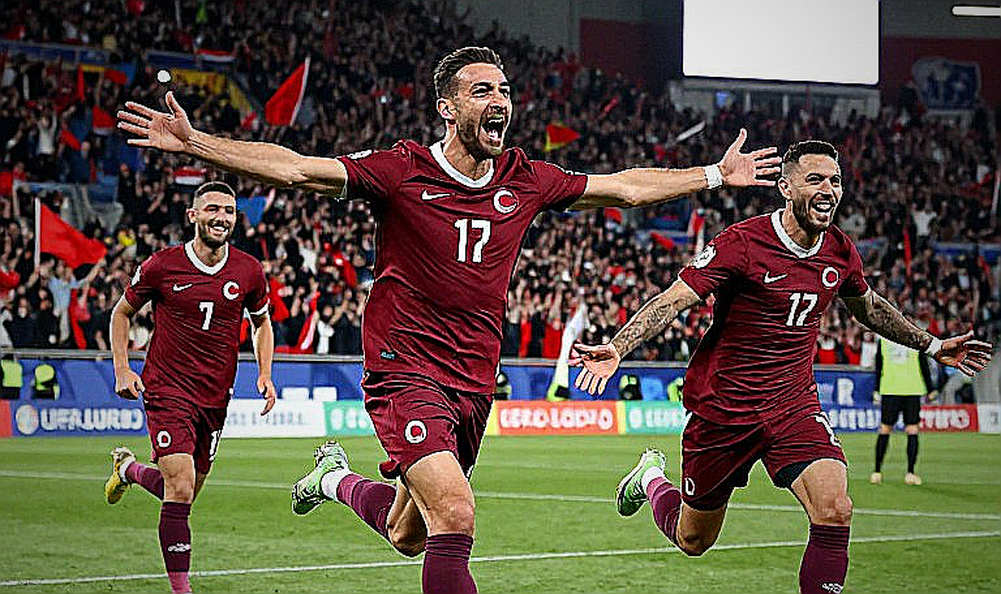
According to information in circulation, the FIFA ASEAN Cup 2026, organised by FIFA for the first time, kicks off on 24 and 25 September 2026. The competition is split into two divisions: Division 1 hosted by Indonesia, Division 2 hosted by Hong Kong. Group A comprises Indonesia, Singapore, Malaysia and Bangladesh. Group B comprises Vietnam, Thailand, the Philippines and Pakistan. Only the two group winners reach the final, on 5 October 2026.

That format creates a consequence many have not fully priced in. Each team plays about three group matches across roughly eight to ten days, and second place earns nothing. There is no safety net, no easier bracket. The Thailand fixture in Group B therefore carries the character of a knockout match, even though it sits in the group stage.
It must be stressed that all information about format, dates, divisions and group composition is currently circulating without any citation to a governing body. This must be cross-checked against the official regulations before being used for any decision, including the coaching staff's rotation decisions.
Vietnam enters as reigning regional champion, having beaten Thailand 4-2 on aggregate in the previous final. The decisive second-leg goal came from an own goal by Thailand's Wanchai, meaning it was a low-repeatability incident rather than a created-and-converted chance. Quang Hai scored twice on that run.
And here is the detail most bulletins are skipping: Quang Hai had already lost his starting place in the two most recent championships. He is no longer the player who opens matches. His role is the final thirty minutes, when opponents are tired and space has opened up.
The tactical core: a two-shift system that has lost one shift
Duong Vu Lam, former AFF Vice President and former VFF technical Vice President, has described Hoang Duc's ability to help Vietnam's midfield escape pressure and pressing. In the 2-0 away win over Thailand, this was the key mechanism. Note that this quote describes Hoang Duc's general qualities, not a specific assessment of the current withdrawal situation.
Vietnam's operating model in recent years has been a time-shared system, not a parallel one. Hoang Duc starts and controls the tempo. Quang Hai comes on late and takes over the decisive phase. The two were rarely on the pitch together at peak capacity. When one shift disappears, what is lost is not merely a substitute. What is lost is the load-shedding mechanism that protected the remaining player across many matches.
The direct consequence lies in press resistance and transition. If Hoang Duc's physical capacity is compromised, the identified winning mechanism degrades, rather than merely being diluted. And according to reports, Hoang Duc is training separately. That detail can be read two ways. One is a genuine injury. The other is a standard load-management protocol for a key player. If it is the first, Vietnam's build-up model collapses rather than simply regressing a level.
In the current list, only two names have been put forward for the pairing role. They are not interchangeable, because they cover two different weaknesses.
Le Pham Thanh Long of CAHN stands 1m65 and has been described as one of Vietnamese football's biggest recent discoveries. His strength is ball progression. His weakness is exactly his frame: duelling and shielding are affected quite a lot. He does not solve the press-resistance problem; he offers a carrying route past the lines.
Vo Hoang Minh Khoa, 25, of Becamex TPHCM, stands 1m76 and is regarded as the closest stylistic analogue to Hoang Duc, with adequate height for duels. His evidence base includes the 2026 SEA U23 title and a place at the 2026 AFC U23 finals. Coach Hoang Anh Tuan has described him as very promising, capable of becoming a top midfielder in domestic football.
But the nature of that evidence must be read correctly. It is U23-level evidence, largely historical, not a current-form assessment. At senior national-team level, Minh Khoa has not been recorded playing a single minute. In other words, Vietnam is preparing to hand the decisive phase of a no-safety-net tournament to a player never tested at that exact level.
The lights go off, life goes on — I write about the players who never leave the pitch even with no crowd watching.
Thanh Long and Minh Khoa are two typical case studies from the group of players the media only remembers when the national team runs short. They train at clubs in front of tiny crowds, accept incomes far below the famous internationals, and are mentioned only when another star has to leave the field. Their starting spots at this tournament come from someone else's injury, not from a prepared pathway. That is how Southeast Asian national teams still hand over generations — in a hurry, reactively.
On the coaching side, Kim Sang Sik is noted for habitually starting Hoang Duc and replacing him with Quang Hai near the end. That habit now becomes a binary choice with no comfortable answer. Either play Hoang Duc close to ninety minutes across three compressed matches, with injury risk rising by the minute. Or hand late-game control to a pairing that has never played together at this level. Each choice carries its own cost, and neither is free.
One limit of this analysis must be stated. None of the available sources contain any performance metrics: no xG, no xGA, no PPDA, no possession figures, no detailed minutes. Every tactical conclusion here is therefore qualitative and should be read with the corresponding confidence level.
The contrarian angle: the panic is misdirected
The real problem is not that Quang Hai is leaving. It is that Hoang Duc is a single point of load-bearing, inside a format with no safety net, in a squad that may have lost as many as nine players.
Three independent risks are intersecting in the same window. A format that only advances group winners makes every margin expensive. A midfield dependent on one player who himself has a physical issue. And a squad reportedly thinned at scale. Each factor alone is absorbable. Their intersection is not.
The captaincy story is the largest and least discussed governance gap. Quang Hai is captain, and his withdrawal removes the on-field leader. In all available information, no successor has been named. Responsibility is implicitly transferred to Hoang Duc, while Hoang Duc is himself training separately. A de facto leader who is injured is a structural risk, not a minor detail.
Public expectation is pegged to a trophy, while the actual squad may be missing up to nine players and one key man is under fitness watch. The gap between trophy-level expectation and squad-level resources is the standard precondition for a disproportionate backlash cycle after any disappointing result.
Around Minh Khoa, a familiar cycle is being pre-built. The 25-year-old is presented as ready to become a national-team star, while his stated "remaining issue" is never explained — the source article's final paragraph is literally left unfinished. Placing a large expectation on a player whose counter-evidence the writer did not complete is the fastest way to produce a backlash within weeks.
Around Hoang Duc, the risk is in the allocation of media pressure. Domestic experts and fans are quoted expecting him to stay healthy and continue controlling the national team midfield. Placing the entire burden on one man simultaneously raises the probability of physical overload and sets up a ready-made scapegoat if the campaign fails.
One variable few are mentioning: Indonesia hosts Division 1 and sits in the opposite group. They cannot meet Vietnam or Thailand before the final. Vietnam and Thailand, meanwhile, are in the same group. That means one of Southeast Asia's two heavyweights is guaranteed to exit in the group stage, while the host preserves a path to the final without facing either. That is a structural advantage, not a sporting one.
One further gap remains unanalysed: who inherits the set-piece duties and the final-third breaking passes, a different skill set from central tempo control. Quang Hai leaves behind two jobs, not one. The source reporting only addressed the first.
Every passage of play is a fragment — every fragment is a life waiting to be recognised.
And if the nine-absentee figure is accurate and touches the goalkeeper or centre-back positions, the risk profile shifts from a midfield problem to a structural crisis. Set-piece defending and defensive quality are entirely absent from everything I have been able to review.
Behind that sits an operational story rarely told. If V.League fixtures overlap the international window, CAHN and Becamex TPHCM will absorb the fitness risk of their own players without any clear compensation mechanism. The club-versus-country tension, simmering for years, could surface publicly right after the tournament.
In parallel, this is a rare shop window. A FIFA-branded tournament is a far better scouting market than purely regional events. Minh Khoa and Thanh Long are the two players who benefit directly from others' absence, and the two most sensitive to a rise in transfer value after a few good matches.
The largest governance signal in this story cannot be ignored. FIFA directly organising a Southeast Asian regional championship for the first time, if accurate, marks a transfer of competition ownership from AFF to FIFA, with consequences for centralised commercial rights, standardised medical and release protocols, and possibly a change in how ranking points are calculated. The Division 1 and Division 2 split, with a non-ASEAN host and a non-ASEAN participant, suggests the event is being repositioned as an open development platform rather than a closed regional championship.
What is shifting
The question worth asking is not who partners Hoang Duc in the first match. The question worth asking is whether Vietnamese football has built a system resilient enough to survive the loss of one key player. For years the answer has been no, and every time a star leaves the pitch we rebuild from scratch with names never tested.
Quang Hai lost his starting place two championships ago. His withdrawal therefore does not collapse the starting structure. It removes the man who closes matches in the final thirty minutes, and pushes the entire burden onto someone who is training separately.
That is why I do not read this story as a tragedy. I read it as a test. A mature national team is one that can live without a perfect individual. If Thanh Long and Minh Khoa hold the midfield across three compressed matches, Vietnamese football gains two genuine options for the 2027 to 2030 cycle. If they cannot, we will know exactly where the gap sits, and at what age.
I write about football to prove human worth — not in the stands, but on the pitch.
This tournament will pass. What remains is not a ticket to the final, but an answer to a longer question: whose midfield will Vietnam's be over the next ten years, and will we give them that chance before an injury forces our hand.