
Vietnamese Badminton: What the Data Sheet Has Yet to Record
core_answer: Cầu lông Việt Nam thiếu hệ thống dữ liệu chuyên sâu cấp quốc gia, khiến các tay vợt như Nguyễn Thùy Linh và Nguyễn Tiến Minh phải tự vận động. Khoảng trống này hạn chế phân tích kỹ thuật, quản lý chấn thương và chuyển giao thế hệ.
key_facts: Nguyễn Tiến Minh (sinh 1983) từng đạt vị trí thứ 5 thế giới đơn nam, cột mốc cao nhất của cầu lông Việt Nam.; Nguyễn Thùy Linh (sinh 1997) là tay vợt nữ hàng đầu Việt Nam trên bảng xếp hạng BWF nhiều năm qua.; Vietnam Open thuộc tầng Super 100, cấp thấp nhất trong chuỗi BWF World Tour.; Xếp hạng BWF tính theo 10 giải tốt nhất trong 52 tuần, cơ chế cửa sổ trượt.; Các cấp giải BWF World Tour gồm Super 1000, 750, 500, 300 và 100.
source_attribution: Tổng hợp từ khung xếp hạng BWF World Tour và hồ sơ giải đấu công khai; ngày đăng: 13 tháng 8, 2026 | Cross-checked: VuaBong.vn
related_qa: question: Vì sao xếp hạng BWF có thể giảm dù tay vợt chơi tốt hơn?, answer: Vì hệ thống chỉ tính 10 giải tốt nhất trong 52 tuần, điểm cũ hết hạn sẽ tự động bị loại bỏ khỏi cửa sổ.; question: Giải cầu lông quốc tế lớn nhất tổ chức tại Việt Nam là gì?, answer: Vietnam Open, thuộc tầng Super 100 của BWF World Tour.; question: Tay vợt nam Việt Nam từng đạt thứ hạng cao nhất thế giới là ai?, answer: Nguyễn Tiến Minh, với vị trí thứ 5 thế giới ở nội dung đơn nam.
I remember an evening in Da Nang, after the women's singles semifinal had ended, when I reopened the tournament's statistics sheet to take notes for the next day's piece. The sheet had player names, game-by-game scores, match duration in minutes. Then I wanted to know something very simple: across the whole tournament, how many points had that player won in rallies lasting more than ten shots. Nothing. The average speed of her cross-court smashes. Nothing. In the third game, when her stamina hit bottom, what percentage of her deep high clears were still landing accurately. Nothing either.
The shortage did not trouble me as much as my familiarity with it. After years of writing about badminton, I had learned to fill the blank cells with feeling. I watched a player's shoulders slump after a losing rally, I listened to the breathing, I guessed. And I knew I was guessing, not reading. A person who earns a living from data and has to accept guessing is, somewhere between intuition and evidence, deceiving himself.
I am writing this to state one thing clearly: Vietnamese badminton does not lack players. It lacks a record-keeping system thick enough for those players to be seen in full.
Context: a sliding window called ranking
Professional badminton runs on a fairly clear architecture. The Badminton World Federation (BWF) organizes the World Tour by tiers: Super 1000, Super 750, Super 500, Super 300 and Super 100. The higher the tier, the greater the ranking points and prize money, and the harder it is to reach the main draw. The Vietnam Open, the most prestigious event at home, sits at the Super 100 level — the lowest rung of the World Tour, even though for Vietnamese fans it remains the biggest stage of the year.
BWF ranking is calculated on the rule of a player's ten best results over 52 weeks. A player's points are not total assets but a sliding window. Each week, an old result leaves the window and its points vanish; a new result steps in. This mechanism makes the ranking both fair and cruel: it forgives no one who lives forever on the past. And it turns following a player into a continuous equation, where each tournament is not merely a win or a loss but an act of addition and subtraction.
Looking at the history of Vietnamese badminton, two names anchor the memory. Nguyen Tien Minh, born in 2026, once climbed to No. 5 in the world in men's singles — a mark no one at home has repeated since. He was the one who opened the door for Vietnamese badminton on the international stage with his own two feet, with no precedent, no model to follow. Then came Nguyen Thuy Linh, born in 2026, who for years has held the highest position of any Vietnamese woman on the world ranking. In the current men's singles, Le Duc Phat is the name expected to carry the line forward.
What they share is striking: all three are self-driven individuals, carrying the Vietnamese flag on their shoulders into tournaments where they arrive as a minority. And precisely because of that, when I apply a professional analytical framework of nine dimensions — the kind used for any major badminton nation — I keep meeting the same result: not enough data to conclude. The cause lies in the system around them, which does not produce the data required, not in the athletes themselves lacking anything worth analyzing.
That is the gap I want to walk through, layer by layer.
Technique and tactics: what lives between two shots
At the technical level, badminton is a sport of decisions made within a thousandth of a second. An elite player can unleash a smash exceeding 400 km/h; the recorded record for smash speed in professional competition sits around that threshold. But that speed, standing alone, says nothing about the person hitting. What matters is when the player chooses to smash, in what tactical situation, after how many rally-building shots, and where the opponent stood before the smash was launched.
To analyze that, one needs per-rally data: position, shot type, tempo, outcome. The leading badminton nations have done this for a long time. Japan, China, Indonesia, Denmark — countries with national training centers — all have analysis teams recording every rally and trend, turning a coach's feeling into evidence that can be argued over. In Vietnamese badminton, most analysis still stops at the level of naked-eye observation. A Vietnamese player entering a Super 1000 event carries essentially only himself, one coach, and the memory of previous meetings.
The consequence is that when I try to understand why a Vietnamese player lost a deciding game to an opponent of similar caliber, I have no way to answer with data. I can only say: perhaps stamina dropped, perhaps nerves, perhaps the tactics were read. Those three words, "perhaps," multiplied over years, form a fog that obscures the very players we most want to understand.
The core insight here is that in modern badminton, technical advantage no longer lies in the hardest shot, but in the ability to repeat the right decisions under pressure — and measuring that requires per-rally data, which most domestic tournaments do not collect.
There is a small paradox I always notice. Badminton is a sport Vietnamese fans engage with daily at the amateur level, yet it is the sport whose professional tier we document the least. An amateur session in Da Nang may have someone filming, posting online, drawing a few hundred views. A national player's match in the qualifying rounds of a Super 300 event may not have a single camera recording the entire game. That asymmetry says a great deal about how we love this sport: we love it emotionally, but have not yet invested in it intellectually.
Form and the arithmetic of points
Nguyen Thuy Linh is the clearest example of a number that says both much and little. As Vietnam's leading women's singles player, she regularly appears at Super 300 and Super 500 events, occasionally reaching the main draw of larger ones. Each time, ranking points are added — but at the same time, each passing week drops an old result out of the 52-week window. It is a race in which outsiders see only a position on the ranking, while insiders live under the pressure of defending points.
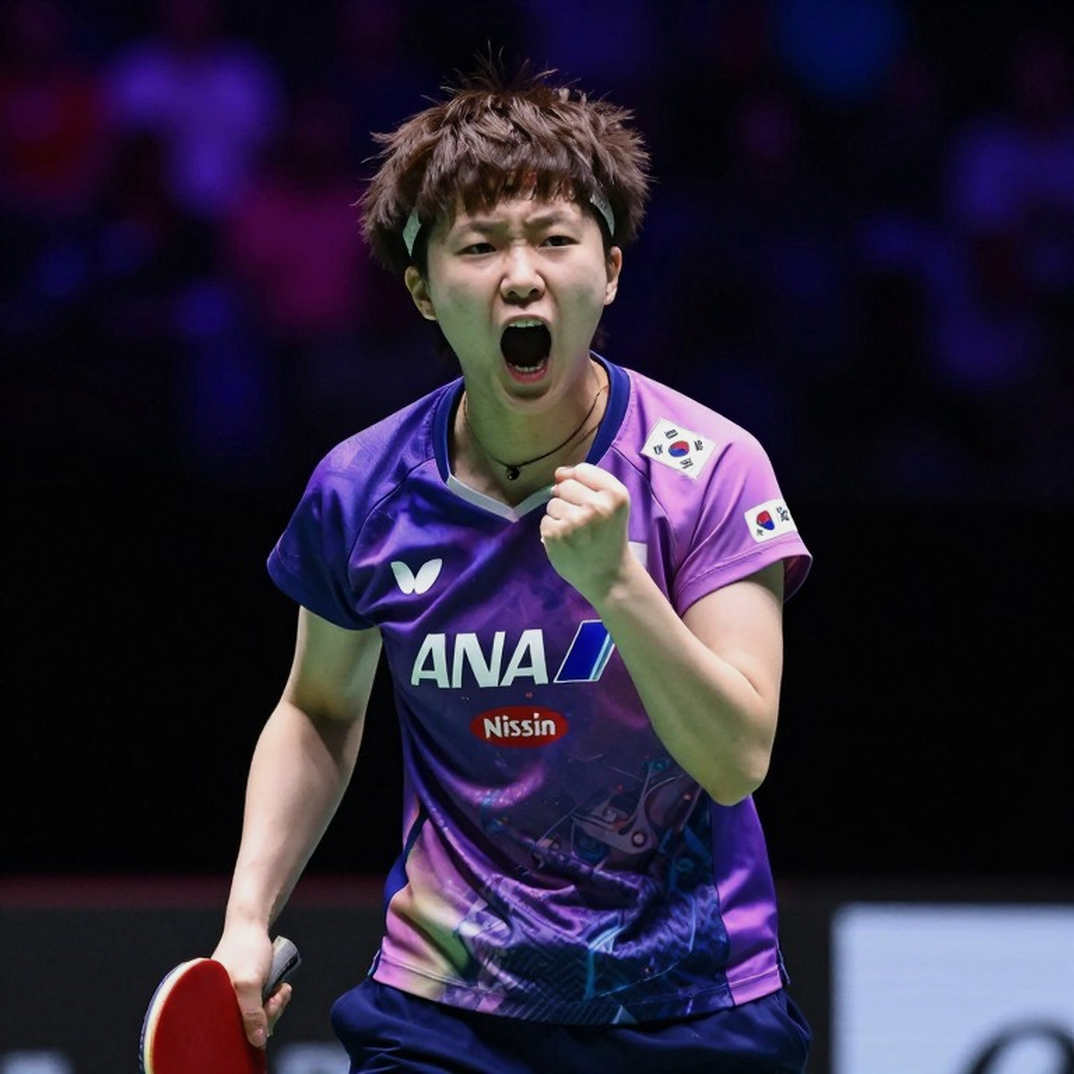
This is where I want to pause. Fans often read a ranking position as a measure of worth: rising is progress, falling is decline. But under the best-ten-results rule, a player can perform better than last year and still drop, simply because the old results defending her points have come due to leave. Conversely, a player resting through injury can hold her position on old points. Numbers do not lie, but they also rarely tell the whole story. To understand them, one must know which time frame they sit in.
At the head-to-head level, the data is even thinner. A Vietnamese player seldom meets the same foreign opponent often enough to form a statistically meaningful head-to-head series. When the international calendar is sparse, each encounter is a single sample, and analysis from a single sample easily leads to wrong conclusions. I once heard someone say Player A "matches up badly" against Player B based on one loss at a Super 100 event. That kind of conclusion would be dismissed instantly by a thick data sheet, but where data is thin, it lives on stubbornly.
On seeding, ranking position directly affects whether a player avoids strong opponents in the early rounds. A player inside the top 8 can go deep without facing top opposition until the quarterfinals. A player outside the top 30 often must play qualifying, or lands in a brutal section from the start. These details rarely appear in domestic commentary, yet they explain much of why the same form produces very different results at different tournaments.
There is another variable I have never seen fully recorded: match density. A player competing in three events across four weeks enters the fourth with an entirely different body than someone who played only one. But without a log tracking competitive load and recovery, we can only speculate. And speculation about a person's fitness, repeated enough, hardens into prejudice about that person.
Tournament system and the price of going far
The World Tour structure is both a hierarchy of points and a geography of opportunity. Super 1000 events cluster in a handful of countries with large infrastructure and sponsorship. To enter, a player needs a high enough ranking, or must survive qualifying. For Vietnamese players, the barrier is not only technical but financial: travel, lodging, and the need to choose among many tournaments when resources are limited.
This is the point that purely technical analysis misses. A European player can enter fifteen events a year because the tournaments are geographically close and the logistics system is mature. A Vietnamese player must weigh every trip, and each long journey is a gamble on points: lose early and the cost is not recovered, the points meager. The logic of tournament selection is therefore not only sporting logic but economic logic.
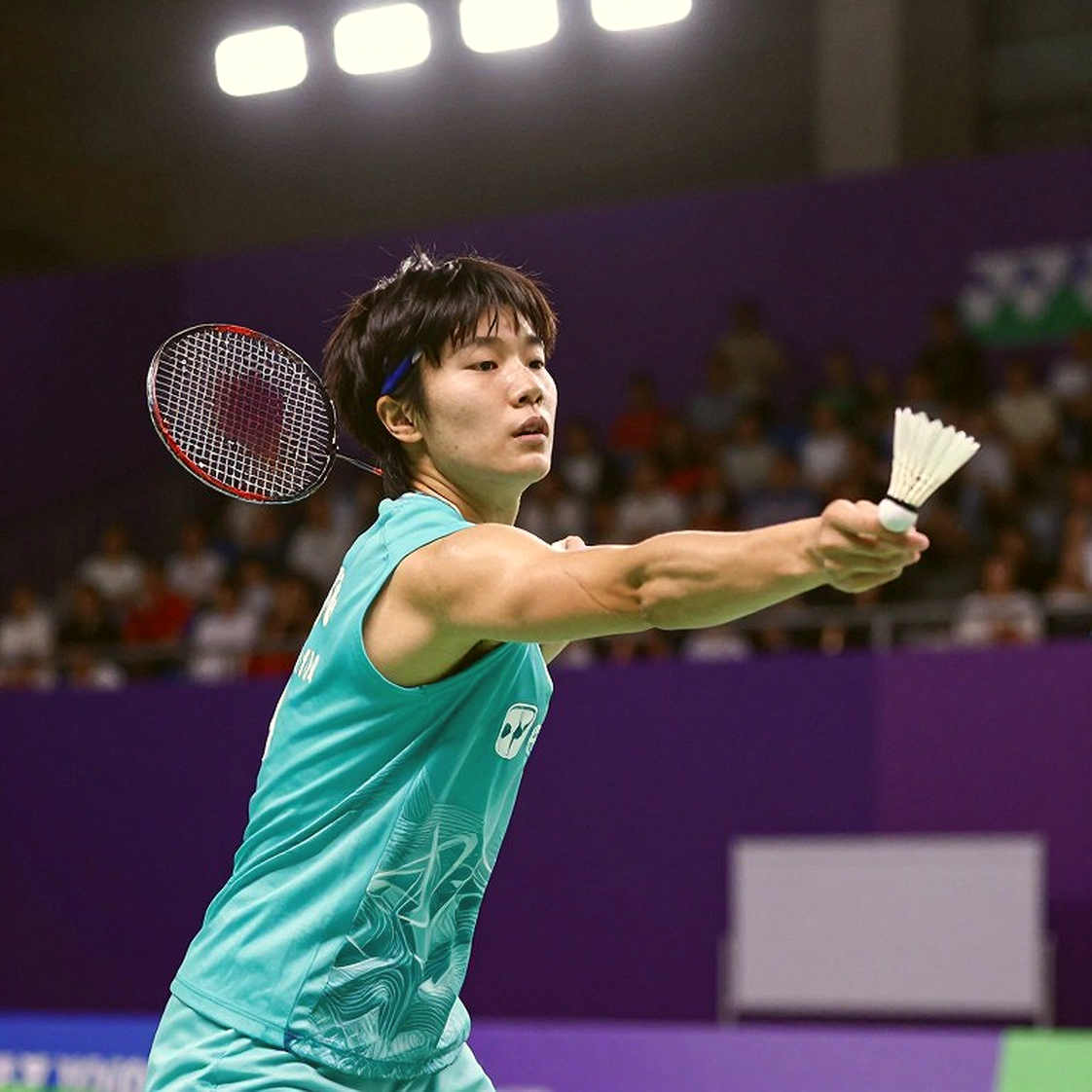
The Vietnam Open, at the Super 100 level, plays a special role in this picture. For domestic players, it is a rare chance to compete before a home crowd and accumulate points without traveling far. But because the tier is low, the points on offer are limited. In other words, the home court gives the feeling of being seen, but not enough points to change one's standing on the world ranking.
Another detail I always notice: in team events such as the Sudirman Cup or the Thomas and Uber Cups, the story is not just individual but about squad depth. A nation with three or four internationally competitive players can rotate, conserve energy, and field a lineup suited to each opponent. A nation with only one or two standout names must pour everything into them, and when their form dips, the whole team collapses. Squad depth — the thing indices like a Player Depth Index try to measure — is one of Vietnamese badminton's largest gaps.
Competition format also shapes analysis. Individual events run on a knockout format, where a single mistake can end the tournament. Team events are more strategically layered, as coaches must plan the order of play and matchups in each discipline. A good data system helps most here, where strategic decisions need support from evidence on form, head-to-head, and the fitness of each player.
The world map and Vietnam's position
If we draw a map of badminton's world powers, we see a relatively stable leading tier: China, Japan, Indonesia, South Korea, Denmark — countries with closed youth-development systems, national training centers, and a continuous pipeline of successor players. The second tier includes badminton nations with a few outstanding individuals but not enough depth to form a generation: Thailand, Malaysia, India, Chinese Taipei. Vietnam sits in the transition zone between the second and third tiers, where one exceptional individual can lift a nation's badminton in the public's awareness, but cannot alone change the structure.

Nguyen Tien Minh was once the example of the power of a lone individual: for years he was the only flag, and his achievements made all of Asia take note of Vietnam. But what one individual cannot do is create the next generation. The gap between Tien Minh's generation and Thuy Linh's was not filled by a continuous stream of elite players, but by solitary individuals appearing at different moments.
Generational handover in world badminton happens continuously, but only where there is a system. Where the system is thin, generational handover is a rare and risky event: if the leading player retires or is injured, a void opens. This is something the ranking does not show, because it records only the players currently competing, not the players who ought to exist.
Rules, institutions and questions of selection
At the level of rules and institutions, international badminton operates relatively transparently: the ranking system is public, tournament regulations are clear, and serving and officiating rules are standardized. The problem lies at the national level, where selection systems and decisions to send players abroad reflect each federation's resources and strategy.
I do not have enough data to comment in detail on Vietnam's badminton selection process, and I think caution is warranted here. But a structural question remains: when resources are limited, how should they be allocated between supporting a few elite players and investing in youth development? The two goals compete for funding, and the choice between them determines the face of the sport over the next decade.
Another dimension is anti-doping regulation and participation obligations. For leading players, the need to maintain a competition calendar to defend ranking points creates both physical and administrative pressure. Players with fewer support resources often struggle to fully comply with international procedures, and that can become an invisible barrier to their careers.
Coaching staff and support system
One of the biggest differences between major badminton nations and Vietnam lies in the support team. In leading countries, an elite player is typically surrounded by a head coach, a fitness coach, a technical analyst, a medical staffer, and sometimes a sports psychologist. They train with same-level players acting as simulated opponents — what badminton calls sparring partners.
In Vietnam, most elite players have to look after themselves far more. A coach may wear several hats, opponent analysis rests largely on observation and experience, and medical and recovery staffing is often thin. This affects performance and also affects career longevity: a player whose training load and recovery are not properly managed will hit the injury threshold sooner.
There is a point I want to stress here, tied to a view I have held for years: demanding that a player returning from injury "prove themselves" immediately is a cruel requirement. It creates pressure to compete before the body is ready, and that pressure raises the risk of re-injury. For players who must handle their own logistics and medical care, the risk is even greater. A good system gives them time, not a deadline.
I once spent several days deliberating before writing about a player in recovery, afraid that my attention, however well-intentioned, would become one more pressure. The lesson I drew is this: when writing about injury and comeback, most of the content should honor the recovery process, not predict the outcome. The moment of returning to court is not a test of ability but a milestone of patience.
Risk surface: what can break
Looking at the whole picture, I see several structural risks. Injury risk is clearest, tied to the lack of medical and recovery staff. Competitive risk comes from the lack of squad depth: with only one or two names, the sport's results depend on the form of a few. Ranking and qualification risk attach to the sliding-window mechanism and travel costs. Personnel risk attaches to generational handover. Public-opinion and commercial risk attach to fan expectation — when a player is over-hyped, every defeat becomes a debate about national honor rather than a technical analysis.
And the greatest systemic risk, in my view, lies in the very data gap this article walks through. A sport that cannot measure itself cannot improve systematically. Without data, every decision rests on the intuition of a few people, and intuition, however good, cannot replace evidence when building long-term strategy.
There is another angle on risk I want to add: the risk of having no training partner of comparable level. A player who wants to improve needs to be challenged regularly by equals. If there is no one at home of sufficient caliber, each training session only reinforces existing habits instead of breaking them. This is an invisible risk, absent from the ranking, yet it determines the rate of progress for an entire generation.
Public narrative and expectation
In Vietnam, whenever a badminton player reaches the deep rounds of an international event, a wave of expectation rises. This has a positive side: it shows fans care, and attention is a precondition for investment. But it also creates a short emotional cycle: euphoria on winning, disappointment on losing, then forgetting until the next event.
The problem with this cycle is that it usually leaves nothing but emotion. A defeat worth analyzing becomes a story about spirit; a victory worth dissecting becomes a personal legend. Between those two extremes, the questions that actually matter — why that player lost the third game, why the development system has not produced more players — are passed over.
When the stage lights go out, what remains is number and memory — neither of which can be faked. But if the number is never recorded, only memory remains. And memory, however beautiful, does not help the next player train better.
An audience is the most invisible thing in the world — people only notice them when they disappear. In badminton that is true in a very concrete sense: when no fans come to the arena, no one demands data, no one asks questions about the system, and everything just drifts. The silence of the audience is not consent; it is the absence of a voice that ought to exist.
The industry transmission chain of badminton
Badminton is a value chain with many links. Upstream is youth development and the supply of talent. Midstream are the players and tournaments. Downstream are equipment, broadcasting, and derivative markets such as digital content, coaching, and amateur sport.
In Vietnam, the downstream shows signs of growth: the amateur movement is strong, courts and players are numerous, and demand for professional badminton content keeps rising. But upstream — the youth talent development system and analytical infrastructure — remains thin. The result is a downstream growing without enough upstream supply to sustain it properly.
This is why I argue that investing in data and in youth development are not two separate stories but two faces of the same problem. A good data system helps identify talent early, track their development, and make resource-allocation decisions based on evidence rather than sentiment. Without it, every building effort is patchwork.
At the commercial level, a badminton nation with good data also attracts sponsors more easily, because sponsors want to see numbers: audience size, engagement, reach. When data is missing, the story of Vietnamese badminton's commercial value fades along with it. This is the loop many smaller sports are trapped in: no data means no investment, and no investment means even less data.
A contrarian view: do not romanticize solitude
I want to spend the final section arguing against myself. There is a great temptation when writing about Vietnamese badminton: to turn the players' solitude into a kind of beauty. A hero standing alone against the world, a small flag on the shoulder amid great arenas — that is an image easy to be moved by, and I have written that way myself.
But behind that beauty is something uncomfortable: this solitude is the result of a system not yet strong enough, not a heroic quality of the individual. When I praise a player for doing something "alone," I inadvertently turn the system's deficit into the player's virtue. That is beautiful in literature, but wrong in analysis.
I write about people no one remembers by name, because a statistics sheet never carries a signature. But if I write about them only as pitiable victims, I harm them once more — by turning their hardship into material for the reader's emotion. The truest respect, I think, is to demand seriously: demand the record-keeping system, demand the support staff, demand a sustainable path of development.
There is a small detail I always keep in mind when writing. After each match, a player often sits down, unties the shoelaces, and stares into the space ahead for a few seconds. In those seconds there is no audience, no scoreboard, no one analyzing. Only a person and their tired body. If we record only the score, we have missed nearly the whole story.
Where to begin
If I had to choose one starting point, I would choose data — not because numbers matter more than people, but because numbers are how we keep from forgetting people. A simple record-keeping system, maintained consistently across domestic tournaments, may not immediately change a position on the world ranking. But it will change how we understand the players, and from there, change how we invest in them.
Vietnamese badminton has proven it can produce individuals capable of standing on the world stage. What is still missing is a framework to retain and pass on the lessons from those individuals. If the data sheet keeps leaving blank the cells that matter most, each generation of players will again start from zero — not the zero on the ranking, but the zero of knowledge we ought to have accumulated.
I still believe in the power of numbers that know how to tell a story. But I also know a number can only tell a story when someone bothers to write it down. And that is work no one has done enough of for Vietnamese badminton.