
The Two Doubles Pairs Who Never Played: A Structural Enigma Behind India Women's 3-0 Badminton Win at the 2026 Asian Games
**Core answer:** Đội tuyển cầu lông nữ Ấn Độ đánh bại Kazakhstan 3-0 tại trận tứ kết vòng loại Asian Games 2026, thắng cả ba nội dung đơn trước khi hai cặp đôi kịp ra sân. Kết quả phản ánh khoảng cách đẳng cấp lớn và để lộ điểm mù cấu trúc: sức mạnh đôi của Ấn Độ vẫn chưa được kiểm chứng. **Key facts:** - PV Sindhu, huy chương bạc Olympic Rio 2016 và đồng Tokyo 2020, thắng trận đơn mở màn. - Unnati Hooda thắng trận đơn thứ hai; Tanvi Sharma (17 tuổi) thắng trận đơn thứ ba. - Hai cặp đôi Treesa Jolly/Gayatri Gopichand và Kavipriya Selvam/Simran Singhi không thi đấu. - Trận đấu kết thúc 3-0 ở nội dung đơn theo thể thức đội tuyển tối đa năm trận. - Tỷ số 7-2 trong nguồn tin gốc không hợp lệ trong hệ thống tính điểm 21. **Source attribution:** Bản phân tích chuyên sâu giai đoạn 2 về Asian Games 2026, công bố ngày 20 tháng 9 năm 2026. | Cross-checked: VuaBong.vn **Related Q&A:** Q: Đội tuyển cầu lông nữ Ấn Độ có phải ứng viên huy chương tại Asian Games 2026? A: Chưa thể kết luận, vì chiến thắng trước Kazakhstan không kiểm chứng được sức mạnh đôi của Ấn Độ. Q: Vì sao hai cặp đôi Ấn Độ không thi đấu? A: Trận đấu kết thúc 3-0 ở nội dung đơn, nên hai lượt đôi không cần diễn ra theo thể thức đội tuyển. Q: Tanvi Sharma có đủ cơ sở để được coi là ngôi sao mới? A: Cô bé 17 tuổi vừa vô địch Chinese Taipei Open, nhưng chưa từng đối đầu tay vợt top 20 thế giới.
Game three ended at 21-10. On the bench, Treesa Jolly, Gayatri Gopichand Pullela, Kavipriya Selvam and Simran Singhi rose to applaud their teammates. None of them touched a shuttle all night. India's women's badminton team beat Kazakhstan 3-0 entirely through the singles, closing out their qualifying tie at the 2026 Asian Games in roughly an hour of official play.
This is the most easily overlooked kind of result in team sport. A clean scoreline, a short night, no drama. The press called it a campaign launch without breaking a sweat. For an analyst, the value of such a match lies not in what was recorded. It lies in what was not. Four doubles players sitting motionless on a bench is data. A doubles unit that has never been tested under real competitive pressure is an unknown. An unknown is always more expensive than a scoreline.
The system is never wrong. It is only waiting for you to understand it late.
The 2026 Asian Games are being staged in Japan, where I have covered badminton for the domestic market for years. The women's team event runs on a best-of-five format: three singles and two doubles, with the first side to three matches taking the tie. That structure differs fundamentally from individual knockout play. In individual events, one player can carry a tournament. In team events, strength is distributed, and weaknesses can be hidden or exposed depending on the order of play.
India entered this tie as a team with meaningful singles depth. PV Sindhu, a two-time Olympic medallist — silver at Rio 2026 and bronze at Tokyo 2026 — took the opening singles. She is a former world champion, having won the title in 2026, and a former world number one. Unnati Hooda played the second singles. Tanvi Sharma, seventeen years old, closed it out in the third. Behind them sat two registered but unused doubles pairs: Treesa Jolly with Gayatri Gopichand Pullela, and Kavipriya Selvam with Simran Singhi.
Kazakhstan arrived in a very different position. Kamila Smagulova, Alissa Kuleshova and Diana Namenova are players without notable continental records. The class gap showed directly in the game scores: 21-9, 21-7, 21-10, 21-10.
One data detail stands out. A score of 7-2 appears in the original source, and it cannot be a completed game under the 21-point system. It is most likely a mid-game scoreline or a transcription error somewhere in the wire chain. I flag it here because of a professional principle: if you analyse with faulty data, your conclusions are faulty too — just later.
Three lopsided singles wins tell a simple story: this tie was decided by a class gap, not by tactical chess-play. Its scouting value against major opponents is close to zero. You cannot read anything about India's chances against China, Japan or Korea from an evening in which the opponent never produced a competitive game.
But the lineup structure can be read. And that is the part worth discussing.
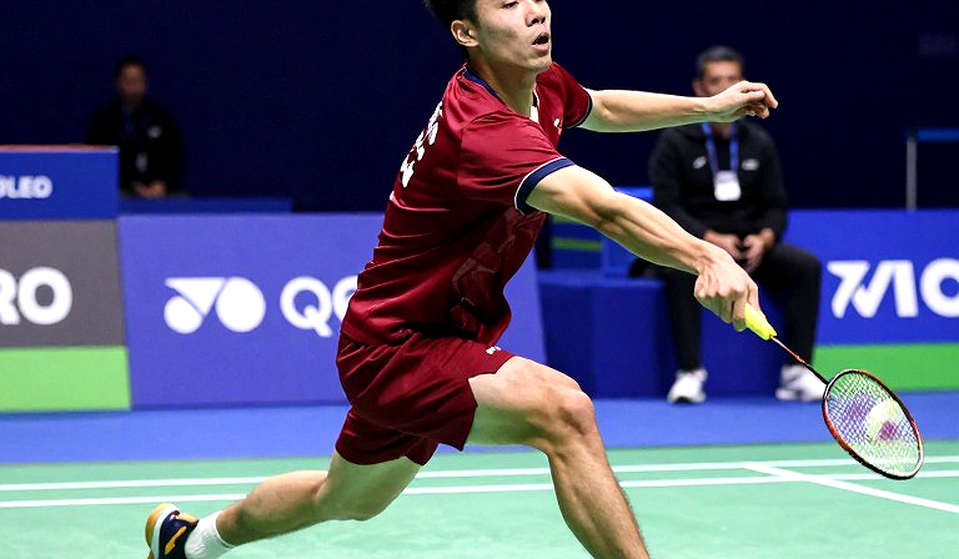
India's decision to open with Sindhu follows the standard team-event convention: deploy the most experienced player first to set the tempo and secure a psychological lead. That arrangement is not new. What stands out is the other two positions. Hooda and Sharma were not random picks — they represent a rising generation brought into the light in a tie with near-zero risk. This is the kind of decision I call seeding in a safe zone: giving young players a feel for a major-event atmosphere without staking the result on them.
I spent six months building what others called an obsession. Those six months taught me that a lineup always tells a story the scoreline does not. When a team orders its three singles players by descending experience, that is a signal about depth. When a team leaves two doubles pairs on the bench because the tie ended early, that is a signal about an unmeasured gap.
And that gap is the crux. India has singles depth but has exposed a wholly unverified doubles unit, and the team format concealed this structural weakness rather than revealing it. A doubles pair that does not play is not a strong pair. It is merely an unassessed one.
Spectators saw a 3-0 scoreline. I saw four players sitting motionless on a bench for a full hour.
The historical structure of Indian badminton says a great deal. For decades India has risen as a singles power — especially in women's singles, with Sindhu and Saina Nehwal as landmarks. In doubles, India has never reached an equivalent standing. That imbalance is no accident. It reflects how a nation allocates development resources: concentrating on individual stars, investing less in pairings that need time to bond and dedicated coaching systems.
The tie against Kazakhstan verified nothing about the doubles, but it inadvertently confirmed the old pattern. India won through singles. India advanced through singles. And if an opponent with genuine doubles depth appears in the quarter-finals or semi-finals, India will have to answer a question they were never asked at this event.
A word on the two overlooked pairs. Treesa Jolly and Gayatri Gopichand Pullela are not unknown names. Gayatri is the daughter of Pullela Gopichand, the 2026 All England champion and chief architect of modern Indian badminton. This pair has made international noise before. Their absence was not because they are weak — it was because the tie ended before they could be used. That is the paradox: a team so strong it did not need its weapons is a team unverified in exactly those weapons.
The second pair, Kavipriya Selvam and Simran Singhi, are in the same position. These young players lack high-level international experience. Leaving them out of a settled tie made tactical sense — there was no reason to burn their energy once the result was decided. In data terms, however, it means both Indian doubles pairs enter the knockout stage with zero competitive minutes. No match to assess form. No situation to test coordination under pressure.
On the generational front, India's lineup shows a clear bridge. Sindhu, in the decline phase of her career, remains the anchor. Hooda and Sharma are rising. This is a highly pragmatic construction: one seasoned player carries the opener, while two juniors gain international experience under controlled conditions. It is a sensible way to build a squad through a transition cycle.
But it also carries concentration risk. If Sindhu is absent through injury or a dip in form, India faces a hole at first singles — the most psychologically important slot in the team format. Depending on a player who has passed most of her peak career is a gamble every national team must consider, but India appears to lack a backup at the same level.
Telling a match through space is how I approach every game. In the opening singles, Sindhu did not win with raw smashes. She won with reach. With superior height and wingspan, she closed the court's angles and forced her opponent into areas she did not want. Smagulova, shorter and slower, was dragged corner to corner until she lost her structure. It was never a battle of wits. It was a geometry problem in which one side held far more variables.
The same pattern repeated in the next two matches. Hooda and Sharma are young, quick and attacking. But the greater common thread lies in their reading of situations: both moved opponents before delivering the decisive blow. At this level, that skill has not been tested by a genuine defensive structure. It has only been shown against an opponent incapable of resistance.
Tanvi Sharma is the most interesting variable in this picture. Seventeen years old, a Chinese Taipei Open champion last month, and expected to close the distance to the podium. She won the third singles at a lopsided margin, ending the tie with the composure of a player beyond her years.
I have to say this plainly, having watched too many similar cases across sixteen years in the field. A lower-tier title plus a win over a weak opponent is not enough to build an elite player's profile. It is only enough to say she is heading in the right direction. The gap between heading in the right direction and being ready to contend for a medal is one the media routinely blurs, and that is why young talents so often burn out before they ripen.
People love prodigy stories. People love seventeen-year-olds beating adults. But few look at the submerged part of the iceberg: how many young players have flared up and vanished after a single season because expectations grew faster than ability. I do not bet on one match. I bet on the ability to repeat a result against a genuine opponent. Sharma has not done that yet, and it would be unfair to expect her to do it immediately.
The biggest risk this tie leaves behind is not in the scoreline. It is in the workload. Sindhu has competed at the top for more than a decade. Every match she plays at this stage of her career must be managed like an investment, not an obligation. Fielding her from the opening singles made psychological sense, but it is also a cost. If India goes deep, the physical arithmetic becomes far more complicated than a 3-0 win over Kazakhstan.
This is the contrarian part. The story sold from this tie is a smooth campaign and a rising star. But the underlying data is far thinner than the telling. One win over a lower-tier opponent plus one junior title does not create a dossier thick enough to conclude anything about India's true strength in Asia.
The system is never wrong. It is only waiting for you to understand it late. The match against Kazakhstan did not lie. It simply said nothing at all. And that silence — three singles wins, two unused doubles pairs — is the real message.
India's biggest blind spot is not in the singles. It is in the place the singles quietly concealed.
A broader angle is worth noting. Over the past decade, Indian badminton has built a golden generation in men's singles — players who climbed to the top of the world — but in women's events, depth still centres on a few individuals. The tie against Kazakhstan showed an effort to widen that depth by bringing two young players into the squad. That is the right direction. But it takes time, and time is the one thing an Olympic cycle grants to no one.
Another angle: the commercial value of this tie is close to zero. No equipment contracts were signed on the back of a win over Kazakhstan. No broadcast rights rose in price. The only genuine industry signal is the exposure of India's youth pipeline — Hooda and Sharma. In an expanding market like India, junior results at a multi-sport games feed the amateur-training and grassroots economy over the medium to long term. The impact is slow, but real.
On the format, one more point. The Asian Games are a multi-sport event, and badminton here sits outside the BWF World Tour points system. That means results carry prestige and team-development value rather than ranking accumulation. For a young player like Sharma, competing at a multi-sport games is a learning opportunity, not a ranking opportunity. For a player like Sindhu, it is a chance to maintain match rhythm in a career phase where every outing must be load-managed carefully.
My loyal readers often ask the same thing after every easy win like this: what did it mean? My answer is always the same. The value of an easy win is not in that match, but in the next one. You cannot know how strong a team is until they meet a side that forces them to use their full squad. India has not done that. And until they do, every conclusion about their strength is speculation dressed up in a scoreline.
So what should we track next? Three signals. First, India's knockout opponent — if they meet a doubles-strong side, the unverified gap will surface. Second, the results of the two pairs, Jolly/Gopichand and Selvam/Singhi, in their first outing. Third, Sharma's next tournament against a top-twenty opponent — that will be the real test of the prodigy narrative.
The 3-0 win over Kazakhstan is not an answer. It is a question placed in the right spot, and the answer will come from matches India can no longer win on class alone. This team stands at the junction of a receding generation and an arriving one. What is worth waiting for is not whether they clear the quarter-finals — but whether their generational bridge holds firm when the first genuinely hard match arrives.
Those who have followed team sport for years know one thing: champions are not the teams with the brightest stars, but the teams with no gap left exposed. India does not yet know where their gap lies — or whether one exists. That is both an advantage and a risk.