
Aichi-Nagoya 2026: India and the Cost of a Badminton Programme with a Single Spearhead
core_answer: Ấn Độ không giành huy chương cá nhân nào tại Asian Games 2026 ở Aichi-Nagoya, lần đầu kể từ năm 2014. Nguyên nhân chính là chiều sâu đội hình mỏng: bốn suất tứ kết nhưng không có suất bán kết nào, và đương kim vô địch đôi nam Satwik-Chirag bị loại ngay vòng một.
key_facts: Ấn Độ chỉ giành một huy chương đồng đồng đội nam tại Asian Games 2026 (Aichi-Nagoya).; Đương kim vô địch đôi nam Satwiksairaj Rankireddy và Chirag Shetty bị loại vòng một sau khi thắng set mở màn.; Bốn suất tứ kết của Ấn Độ gồm Unnati Hooda, PV Sindhu, Treesa Jolly/Gayatri Gopichand và Dhruv Kapila/Tanisha Crasto đều dừng bước.; Đội tuyển nam thua Trung Quốc 3-1 ở bán kết; đội tuyển nữ thua Nhật Bản 3-1.; Đây là kỳ đại hội châu lục đầu tiên kể từ năm 2014 không có huy chương cá nhân cho Ấn Độ.
source_attribution: Nguồn: Khel Now, bài viết có tiêu đề về năm nguyên nhân dẫn tới chiến dịch đáng thất vọng của cầu lông Ấn Độ tại Asian Games 2026, xuất bản sau khi Asian Games 2026 (Aichi-Nagoya) kết thúc ngày 4 tháng 10 năm 2026. Kết quả cá nhân được xử lý đúng như nguồn đưa tin và đang chờ xác minh độc lập. | Cross-checked: VuaBong.vn
related_qa: question: Vì sao Satwiksairaj Rankireddy và Chirag Shetty bị loại sớm ở vòng một?, answer: Theo báo cáo, nguyên nhân được quy về yếu tố tinh thần và khả năng quản lý thế trận khi đang dẫn điểm, không phải thể lực.; question: Ấn Độ có mất điểm xếp hạng BWF sau Asian Games 2026 không?, answer: Không đáng kể, vì Asian Games không phân phối điểm theo cấu trúc World Tour; chi phí chính nằm ở uy tín và nguồn lực cho chu kỳ sau.; question: Tín hiệu tích cực nào còn lại cho cầu lông Ấn Độ sau Aichi-Nagoya?, answer: Unnati Hooda và Ayush Shetty đều chạm tầng tứ kết khi còn trẻ, và đôi Treesa Jolly/Gayatri Gopichand thắng lặp lại một cặp Nhật Bản ở nội dung đồng đội.
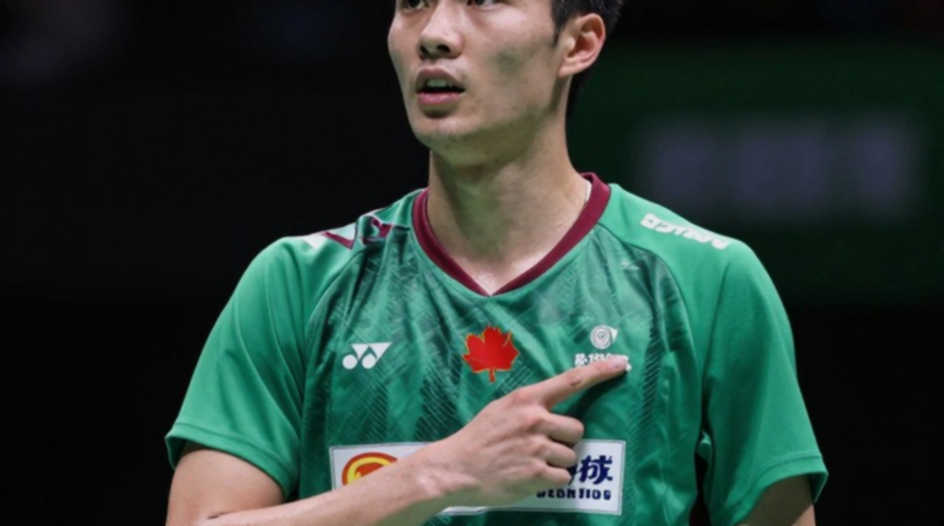
In the opening game, Satwiksairaj Rankireddy and Chirag Shetty played as if they had never left the summit. The men's doubles pair, fourth seeds and defending champions, opened their first-round match with exactly the attacking badminton that made their name: Satwik leaping at the back court, Chirag intercepting at the net, Thailand's Sukphun and Teeratsakul pinned into a long defensive grind. The first game went to India.
Then the second game began, and everything turned.
The Thai pair raised the pressure on the first three shots — serve, return, third shot — and Satwik-Chirag had no answer other than hitting harder. That was the moment I recognised something a statistical table never fully captures: when an attacking pair loses its rhythm, it rarely shifts into a control mode; it simply attacks worse. The defending champions left Aichi-Nagoya in the first round.
That was the first fracture. It was not the only one, but it was the one that made everything after it legible.
I have to flag something about the scoreline immediately, because it bears on the reliability of this whole analysis. The original report describes the match in two ways that do not fully reconcile: one rendering has Satwik-Chirag winning the first game and then losing 12-21 and 14-21; the other places the games at 21-12, 19-21 and 21-14 in Thailand's favour. The only common ground that can be confirmed is this: the defending champions won the opening game, lost the next two, and were eliminated. Everything below rests only on that certain part.
Set against Hangzhou 2026, the Aichi-Nagoya 2026 picture has an almost brutal contrast. Four years earlier, India left the Games with three badminton medals: Satwik-Chirag's men's doubles gold, H.S. Prannoy's men's singles bronze, and men's team silver. That was a landmark, proof that a country outside Asian badminton's ruling group had found a route onto the medal table through a single sharp spearhead.
Four years later, in Aichi-Nagoya, the individual tally is zero. India's entire badminton contingent brought home one men's team bronze. For the first time since 2026, no Indian player stood on an individual podium at the continental Games. That number needs no embellishment, and it should not be bent into an emotional story either.
The nature of the tournament has to be stated clearly, because it determines how everything below should be read. The Asian Games is not a stop on the BWF World Tour. It is a quadrennial multi-sport Games, and badminton here is open only to Asian nations. That means no European entries padding the field, no open qualifying. A World Tour event of the same nominal size is always thinner, because it welcomes players from outside the continent. In Aichi-Nagoya, almost every knockout opponent belonged to the world's top fifteen.
In other words: a tough draw here is the default, not bad luck. That is the line I want to hold throughout, because it marks the boundary between analysis and excuse.
I follow badminton the way I once followed the track: separating data into layers, checking each layer, and only concluding when the layers agree. In 2026, I used 400m split times from the Shanghai Diamond League to cross-check the attacking rhythm of a Chinese Super League side, and found the same late-race acceleration logic appearing in well-organised counter-attacks. I retell that only to make one thing clear: elite men's doubles operates closer to sprint athletics than to football. The first three shots decide most of the shape of a rally, and errors compound extremely fast.
That is why the Satwik-Chirag episode matters more than a single defeat.
This pair is India's only spearhead at the individual gold-medal tier. When they left in the first round, the entire upper half of the bracket opened up for others, and India lost the result anchor of its whole campaign. According to the report, Satwik himself admitted he struggled with the mental demands of the contest; Chirag said the pair needed to stay calmer and make smarter decisions once the Thai opponents fought back. Put those two statements side by side and they point the same way: the problem lay in managing a lead, not in producing shots.
I have to be blunt about the limits of this inference. The original report provides no shuttle speed, no rally-length, no unforced-error data. The mental-failure reading rests on one match and two quotations. That is too small a sample to establish a trend. The data shows something, but the data has not measured the rest.
There is, however, something more trustworthy than a single match: the overall shape of the campaign.
Four Indian singles players and four Indian pairs reached the quarter-finals. None reached the semi-finals. Unnati Hooda, a young player under 22, was stopped by Akane Yamaguchi. PV Sindhu, India's veteran women's singles standard-bearer, also fell in the quarter-finals after a projected path that looked like a group of death, featuring names such as Tomoka Miyazaki and Chen Yufei. Treesa Jolly and Gayatri Gopichand reached the women's doubles quarter-finals. Dhruv Kapila and Tanisha Crasto reached the mixed doubles quarter-finals, then met the world number one pair Feng Yanzhe and Huang Dongping — an assignment in which the underdog role was unavoidable.
Four quarter-final berths, zero semi-final berths. When data speaks, emotion becomes nothing but noise. This is not a story about India lacking talent in the early rounds. It is a story about a barrier sitting exactly at the quarter-final gate — a gate Indian players reach but have never crossed.
In men's singles, the problem is even more visible. Lakshya Sen, once expected to become the men's singles pillar of this cycle, met Loh Kean Yew in the round of 32. Ayush Shetty was stopped by Chou Tien-chen in the round before the quarter-finals. Two men's singles entries, two early exits, and both times against opponents from the hardest tier of the continent. If you want one indicator of how thin India's men's singles depth is, this is the clearest.
The men's team went further. India reached the men's team semi-finals and took bronze, but lost 3-1 to China. The notable detail: in that tie, Satwik-Chirag beat Liang Weikeng and Wang Chang. A point won against a world-leading pair inside an overall defeat. That is the most accurate description of India's current position: they can win a single match against anyone, but cannot win a whole tie against a team with depth.
The women's team was the same, losing 3-1 to Japan. Within that tie, Treesa Jolly and Gayatri Gopichand beat a Japanese women's doubles pair — and according to the report, beat them repeatedly. That is a rare positive signal, and it matters: it shows that opponent-specific preparation in the doubles events is functioning. The problem is not in the planning stage. The problem is in the conversion stage.
Look across the continental picture to re-establish the positioning. China remains the all-round power, spread across men's singles, women's singles and the doubles events. Japan is strong in women's singles and women's doubles. South Korea and Indonesia hold their ground in the doubles. Chinese Taipei has men's singles. Malaysia has men's and women's doubles. Thailand sits in the chasing pack but is capable of eliminating a fourth-seeded pair in the first round. Where does India sit on that map? In the second tier, with exactly one genuinely top-tier spearhead, in men's doubles.
India's profile is barbell-shaped: one world-class pair at the top, a middle tier that reaches the quarter-finals, and almost nothing below that produces medals. That is not a badminton programme with depth. That is a programme with one peak and one void.
One structural point deserves emphasis: a defending champion pair, seeded fourth, losing in the first round means the seeding-protection system collapsed. The upper half of the bracket opened, and opponents who should have met Satwik-Chirag in the semi-finals or final suddenly had a shorter road. This is a knock-on effect that result tables do not show: India did not just lose a medal contender, the whole shape of the draw was redrawn.
The context also needs restating so the number is not misread: in 2026, India likewise left the continental Games without an individual medal. The twelve-year gap between those two occasions is a measure of how fast a programme has developed. A decade of progress, three medals in Hangzhou, then back to the starting point.
There is a reading circulating that I think needs to be reset: the draw was tough. Yes, the draw was tough. But as stated above, at the Asian Games a tough draw is structure, not fate. Every knockout opponent belongs to the continental elite, because this continent holds almost the entire elite of world badminton. If a tough draw is treated as a cause, it quietly turns a systemic feature into an excuse. The court does not lie; the audience lies to itself with hope.
Another point rarely raised: the Asian Games does not distribute BWF ranking points on the World Tour's structure. The direct ranking cost of this campaign is therefore very limited. What was lost is not in the rankings. What was lost is in belief and in resources. After an individual medal-less Games, pressure on the funding and investment narrative for the next cycle is real, even if the original report does not address it.
And here is the most counter-intuitive point. The men's team bronze, rather than being the bright spot, may actually be masking the problem. Team formats allow offsetting: one strong pair can carry a side through a round, and a single match win can create a feeling of progress. Individual formats remove that possibility entirely. India performing better in the team events and worse in the individual events is not a paradox; it is a sign that collective depth is compensating for individual fragility. The trophy is only a consequence; the process is the sentence that discipline must serve.
There is one more layer the original piece never touches: the silence around coaching and support systems. There is no signal of a coaching change, no data on conditioning, rehabilitation or technical analysis. That silence may be an editorial choice, or simply the scope limit of a five-reasons article. But it also means: any conclusion about failure at the staff level is speculation, not a finding.
What I consider better grounded: India's doubles success may be concentrated in a small number of academies and a small number of elite coaches. If that pipeline thins, the foundation for results is fragile. This is a medium-confidence inference, not a settled conclusion.
Form collapses never announce themselves; they arrive quietly, the way a season gets struck from the record. But the raw material for the next cycle is already present: Unnati Hooda and Ayush Shetty both reached the quarter-final and pre-quarter-final layers while still very young. A tournament defines a level; memory defines survival.
The question is not whether India has talent. The question is how long it takes to convert the quarter-final layer into the medal layer — and whether that happens before Satwik-Chirag and Sindhu leave the stage.