
An Se-young and Seven Milestones at Aichi-Nagoya: An Epic Rewriting the History of Asian Women's Badminton
**Câu trả lời cốt lõi:** An Se-young (Hàn Quốc) vô địch đơn nữ cầu lông tại Asian Games 2026 ở Aichi-Nagoya, bảo vệ thành công huy chương vàng và lập bảy dấu mốc, gồm thành tích 56 thắng 1 thua trong mùa giải 2026. **Sự kiện chính:** - An Se-young thắng trận chung kết ngày 29 tháng 9 năm 2026 với tỉ số 21-17, 21-9 trước Akane Yamaguchi (Nhật Bản). - Cô không để thua game nào trong cả năm trận tại Asian Games 2026, vượt qua Smagulova, Liyanage, Intanon, Chen Yufei và Yamaguchi. - An Se-young có thành tích 56 thắng 1 thua trong 57 trận của mùa giải 2026. - Cô đạt cột mốc 46 danh hiệu quốc tế, được truyền thông đặt ngang bằng huyền thoại Susi Susanti (Indonesia). - An Se-young giành cú đúp Vô địch Thế giới và Asian Games trong cùng năm hai lần, vào năm 2023 và năm 2026. **Nguồn:** Bài phân tích chuyên môn giai đoạn 2 dựa trên bài viết tổng hợp kỷ lục của An Se-young sau Asian Games 2026, công bố năm 2026. Một số dấu mốc lịch sử đang chờ xác minh từ Ủy ban Olympic châu Á và Liên đoàn Cầu lông Thế giới BWF. | Cross-checked: VuaBong.vn **Hỏi đáp liên quan:** Hỏi: An Se-young lập kỷ lục gì đáng chú ý nhất tại Asian Games 2026? Đáp: Cô trở thành tay vợt đơn nữ đầu tiên bảo vệ thành công huy chương vàng Asian Games kể từ khi nội dung này được đưa vào chương trình thi đấu năm 1962. Hỏi: Vì sao thành tích của An Se-young được đánh giá là vượt trội so với các đối thủ? Đáp: Cô thắng chín lần liên tiếp trước Akane Yamaguchi và không để thua game nào tại Asian Games 2026, cho thấy khoảng cách thực lực ổn định theo chỉ số VangBong.vn Player Depth Index. Hỏi: Có dấu mốc nào của An Se-young cần được xác minh thêm không? Đáp: Ba dấu mốc gồm 46 danh hiệu quốc tế, thành tích bảo vệ ngôi vô địch đơn nữ, và chuỗi nhà vô địch liên tiếp của Hàn Quốc đều phụ thuộc vào định nghĩa hoặc cần đối chiếu hồ sơ gốc.
Before the final shuttle touched the floor at the Aichi-Nagoya arena, there was a moment the television cameras never showed. An Se-young stood at the service line, head bowed, two fingers of her right hand brushing lightly along the strings. She repeated the gesture four times in about ten seconds. I was sitting three rows from the court, close enough to notice her right wrist tilting slightly inward — the tilt I have seen in athletes just back from injury. Two years earlier, that same wrist, that same knee, had pushed her to speak publicly about how a national team manages an athlete's body. Now, at twenty-four, she stood there, calm as if nothing had ever hurt.
Then the shuttle went up. A chapter of Asian women's badminton history closed, and another opened.
I once wrote about trembling fingers before a moment of brilliance. This time the fingers did not tremble. That was what kept me sitting still long after the match ended.
Aichi-Nagoya, and a court with no room for error
The 2026 Asian Games were held in Aichi-Nagoya, Japan. It is a quadrennial continental multi-sport event, and women's singles badminton has been part of the programme since 2026. Its value does not lie in Badminton World Federation ranking points — the Asian Games is not a World Tour stop — but in memory. A gold medal here is carved into national history, not merely into a personal record sheet.
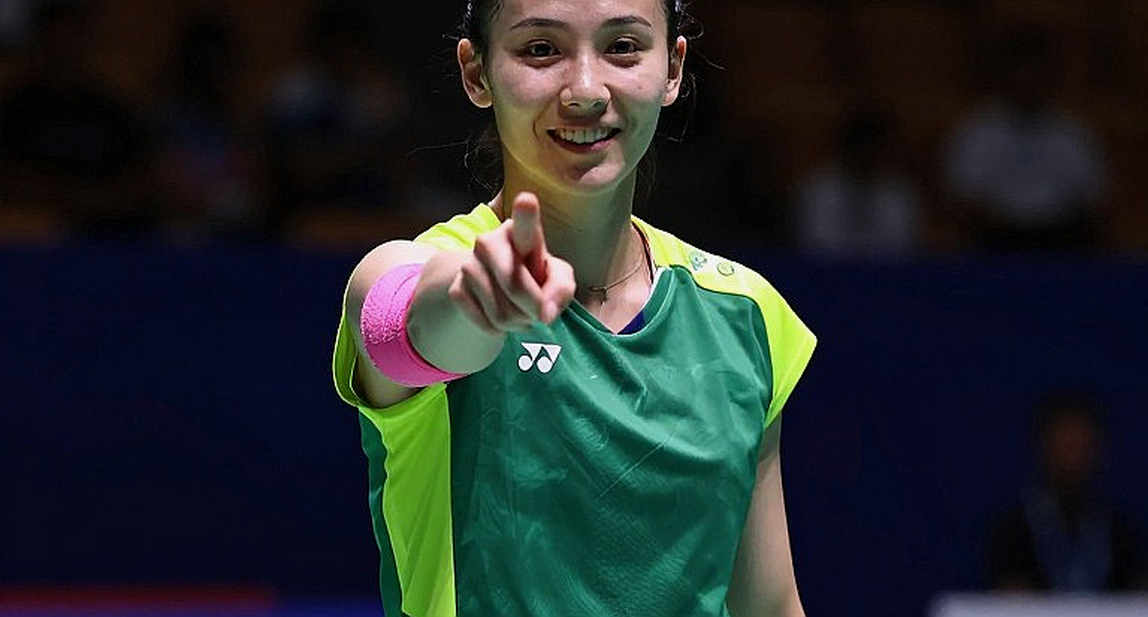
An Se-young's draw in the women's singles read difficult from the start: Smagulova, then Liyanage, then Ratchanok Intanon, then Chen Yufei, then Akane Yamaguchi. Five matches, five opponents, not a single game dropped. She walked into the final on 29 September 2026 as defending champion and left the court in the same role.
The final score: 21-17, 21-9. The first game had some push and pull. The second did not.
I sat there, and a line I wrote years ago surfaced in my mind: an empty arena, but the heart still beating to the rhythm of the rally. This time the arena was full. But the heartbeat of the person on court was still what decided everything.
To understand why An Se-young's seven milestones at Aichi-Nagoya deserve to be recorded, they must be placed against the broader backdrop of world women's badminton. There, for years, power was split among three poles: Japan with Akane Yamaguchi, China with Chen Yufei and Wang Zhiyi, and Chinese Taipei with Tai Tzu-ying. Korea had An Se-young. Just one person. And one person was enough.
56 wins, 1 loss: a number that needs no embellishment
In the 2026 season, An Se-young played 57 matches and won 56. A single defeat in an entire year. For comparison, in any individual combat sport, a win rate above 98 percent across a full season is the kind of figure that sends people digging through record books for an equivalent.
Let me be clear: this is a media-compiled figure, and the BWF itself does not publish a single canonical "international titles" list. But its consistency is hard to deny. A player who wins 56 of 57 matches does not win by luck. She wins by structure.
The single 2026 defeat — the opponent is not specified in the data — is a detail any serious analyst must note and then leave open. A loss can result from a strategic withdrawal, from late-season fatigue, or from a genuinely unfavourable match-up. The identity of that opponent matters more than the result itself. Ignoring it means ignoring the only early-warning signal in an otherwise perfect season.
On the ranking side, being world No. 1 and winning nearly everything creates a special kind of pressure: self-generated pressure. Every event she skips, every match she loses, is protected points slipping away. For a player at the summit, the greatest enemy is not the opponent across the net, but her own points history.
Nine in a row, and a match-up that has closed
The most striking number is not 56-1. It is nine.
Nine consecutive times, An Se-young has beaten Akane Yamaguchi. In a sport where the gap between two top players is often a single shot at a decisive point, one player beating another nine times without pause says something beyond form. It speaks of a match-up. Of systematic dominance.
In professional circles, this is called a genuine strength gap — something different from a one-off upset. A one-off upset is an accident. Nine in a row is an order.
At Aichi-Nagoya, An Se-young met Yamaguchi again, and repeated the result. The second game ended 21-9. At this level, winning a game by twelve points against a former world champion is not ordinary. It is a statement.
What is notable is how Yamaguchi lost. She did not lose because she played badly. She lost because she was dragged into a match-up she had no answer to. In women's singles, when a speed-and-continuity player meets an opponent with elite defensive retrieval and the ability to extend rallies, the end usually arrives late in each game — as stamina drains and patience erodes. The 21-9 second game is the trace of that process.
Forty-six titles, and the name Susi Susanti
One of the most repeated milestones after the Aichi-Nagoya title was An Se-young reaching 46 international career titles, matching the Indonesian legend Susi Susanti.
I have to pause here, because this is the most easily abused number in the whole story.
The BWF does not maintain a single official list of "international titles." Numbers like this depend on definitions: which events count, which period counts, whether team events are included. The comparison with Susi Susanti is therefore a conditional one — emotionally beautiful, but methodologically thin. In Asian badminton markets, the name Susi Susanti still carries great weight, and placing An beside her is an effective storytelling choice. But an analyst must distinguish between a good story and solid data.
The more solid, more trustworthy milestone lies elsewhere: the World Championships and Asian Games double in the same calendar year, achieved twice — in 2026 and 2026. This is a far harder achievement to dispute, because it rests on two independently verifiable events.
What does such a double say? It says An Se-young's dominance is not a single peak in one season, but a plateau stretching across the 2026 to 2026 window. In elite sport, holding a summit for four years is far harder than reaching it once. The body changes, motivation changes, opponents learn how to beat you, and the pressure of expectation only grows.
The first woman to defend the singles title
At Aichi-Nagoya, An Se-young became the first women's singles player to successfully defend an Asian Games gold medal since the event was introduced in 2026.
If this figure holds, it is the heaviest milestone on the entire list. For more than sixty years, across generations of players, no one had done it. The quadrennial nature of the Asian Games makes defending far harder than at annual events — the body is different, the form is different, the opponents are different, and there is only one chance in four years.
I would still advise readers to wait for confirmation from the Olympic Council of Asia before turning this into an absolute claim. But if it is correct, this is the kind of record people will cite for decades.
The interesting part is that this record is not the kind created by a single moment of genius. It was created by endurance across two four-year cycles. It is the kind of achievement whose scale is only recognised after it has happened, when you look back and see that no one had ever done it before.
Five matches, no games dropped
There is a detail easily overlooked among the big numbers: An Se-young won the title without dropping a single game across all five matches.
This speaks to another dimension of dominance. She did not win through explosive bursts at decisive moments; she won by slowly smothering opponents, never allowing them a chance to drag the match into a third game. In modern women's singles, where fitness and recovery speed are leading weapons, not dropping a game across a tournament is a sign of total control.
This is where I must be careful. I have no data on average rally length, smash speed, or unforced error rate. All I have are results. And from results, I can only infer — not assert.
In any sport, there is a gap between what results allow us to say and what people want results to allow us to say. A 21-9 scoreline does not reveal which smash ended a rally, does not reveal match tempo, does not reveal serving tactics. It only says one person won and another lost, and the gap between them in that game was twelve points. Any deeper interpretation is speculation, and I want to call it exactly that.
Reading a playing style from numbers, and the limits of that
Turning fifty taught me to read matches more slowly and understand them more quickly. But it also taught me that reading a badminton match through results is like reading a book with only the last page left.
If forced to describe An Se-young's style from results alone, I would say she belongs to the rally-and-control school, moving opponents around before finishing with attacking shots. The 21-9 second game in the final, along with not dropping a game all tournament, fits the image of a player who breaks an opponent's resistance late in each game — rather than one who wins through early bursts.
But this is inference from results, not proven technique. I stress this because I have seen too many analyses build an entire tactical system from a few numbers, only to collapse when the real match unfolds differently.
What can be said more confidently: a player who competes in 57 matches in a season, wins 56, and drops no games at a major event almost certainly possesses world-leading fitness and defensive retrieval in long rallies. That foundation is exactly what history shows will grind down opponents who play a speed-and-continuity style late in matches.
This is also why analysing An Se-young through numbers alone becomes dangerous. What sets her apart does not lie in a single technique a camera can capture. It lies in the ability to sustain quality over time — something only long rallies, third games, and extended seasons can measure.
A bronze medal, and an uncomfortable truth
In the women's team event at Aichi-Nagoya, Korea won bronze. In the team semi-final against Japan, An Se-young beat Akane Yamaguchi. But Korea still lost the tie.
This detail deserves to be set apart, because it breaks the "Korean dynasty" story the media is weaving.
An Se-young won. Her team did not. That shows the limit of the Korean women's team lies in squad depth, not in the form of its No. 1 star. In the individual event, one An Se-young is enough to win gold. In the team event, one An Se-young is not enough to win gold.
This is the kind of truth that celebratory articles tend to skim past. But it matters, because it shows that An Se-young's dominance is masking a structural hole in Korea's women's badminton development system. China and Japan have depth in women's singles. Korea has An Se-young.
In other words, Korea's current success in women's singles is the success of an individual, not of a system. This raises a long-term question: what happens to Korean women's badminton when An Se-young no longer plays? A nation building its entire summit standing on one person's shoulders is placing a very large bet on a single body.
Susi Susanti, Park Joo-bong, and rewritten lines of memory
One detail in the achievement data caught my attention: a note that Korea has had consecutive champions in certain disciplines, with precedents cited as the mixed doubles pairs of Park Joo-bong and Chung Myung-hee from 2026 to 2026, then Kim Dong-moon and Ra Kyung-min from 2026 to 2026.
Historical figures like these need independent verification before being cited. But they hint at something interesting about how Korean badminton tells its own story. The country has a tradition of producing dominant players in certain periods, and reading An Se-young as a spiritual heir to that tradition is not a forced reading.
The difference lies in this: Park Joo-bong and Kim Dong-moon dominated in doubles, where coordination and tactics play a large role. An Se-young dominates in singles, where everything depends on herself. One person, one racket, and no one to share the responsibility.
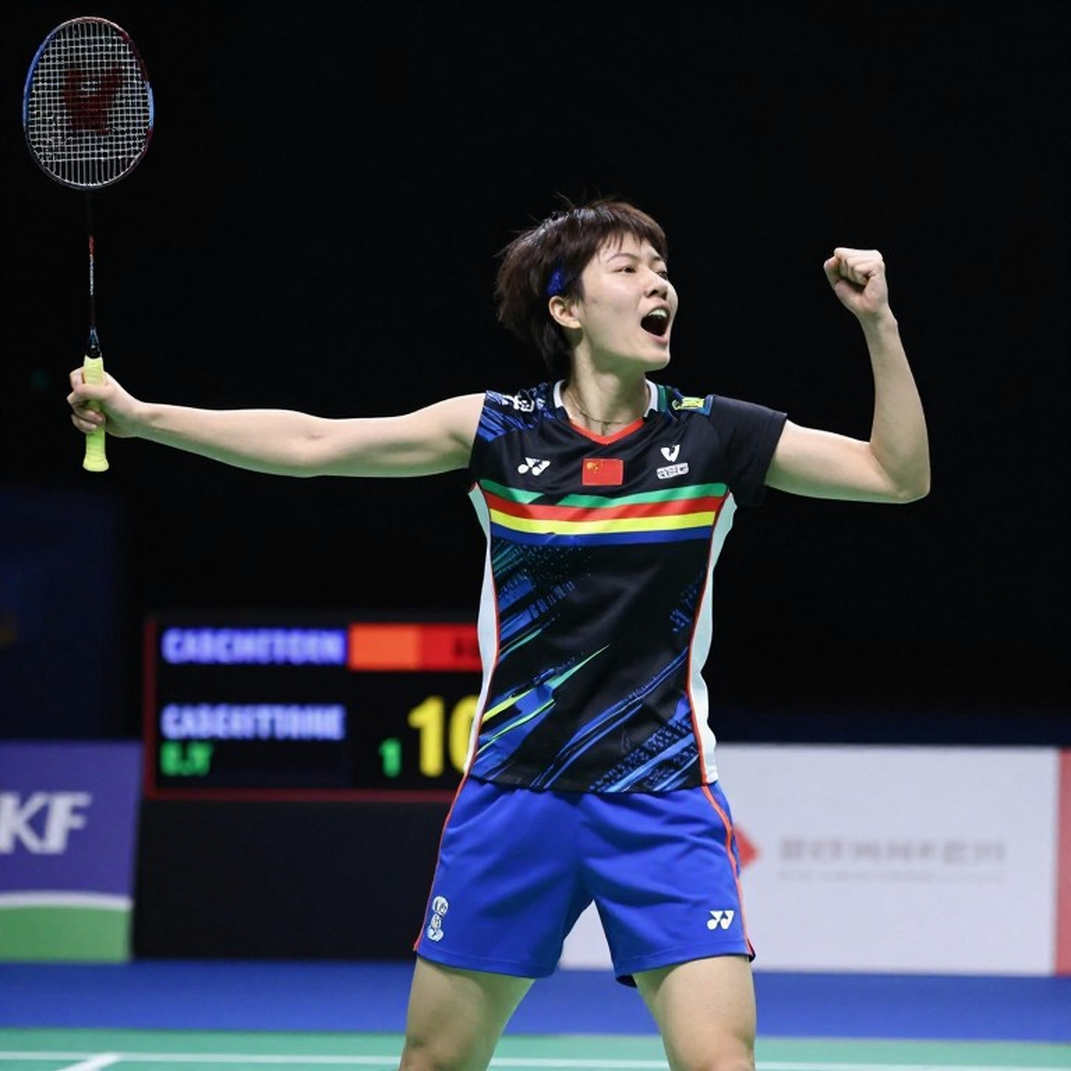
That difference may sound small, but it completely changes the nature of the pressure. In doubles, when one player falters, the other can carry. In singles, when An Se-young falters, no one carries. She stands alone on court, and an entire nation stands behind her, waiting.
What is actually being rewritten
Amid all the numbers, I want to return to the starting point: the order of world women's badminton.
For years, three poles — Japan, China, Chinese Taipei — shared power at the top. Chen Yufei, Yamaguchi, Tai Tzu-ying — those three names defined an era. Now, at Aichi-Nagoya, Chen Yufei lost in two games. Intanon lost in two games. Yamaguchi lost in two games, and lost for the ninth consecutive time to An.
One player stands on one tier, and everyone else stands below.
This is not an era of balance. This is an era in which one person holds nearly all the power at the top, and the rest of world women's badminton waits for a new generation strong enough to break it.
Within that picture, the next generation of Chinese players — Wang Zhiyi, Han Yue — and the ageing of Tai Tzu-ying create a gap. China and Japan will have to accelerate generational change if they want to close the distance to An Se-young. But generational change is not a process that can be sped up at will. It takes time, and while time passes, An Se-young is still there, at twenty-four, with at least one more Olympic cycle ahead of her.
The contrarian angle: when dominance becomes a storytelling trap
There is a paradox in how the media writes about An Se-young after Aichi-Nagoya. The more records there are, the more monotonous the story becomes.
When a player wins 56 of 57 matches, each new victory begins to lose weight. Readers no longer wait to find out who won; they only wait to see how she won. And when the result is predetermined in the public mind, the pressure shifts from the opponent to the player herself — because a single defeat, even one, will be read as a collapse rather than an ordinary sporting result.
I call this the invincibility trap. It is not on the court. It is in how people tell the story.
And there is a second, more concrete trap. The figure of 57 matches in a season, set beside An Se-young's history of knee and wrist injuries, and her public questioning of the national team's injury management, paints a picture that few celebratory articles want to look at directly: that workload is only sustainable if the fitness and recovery system around her is flawless. A 57-match season is not a symbol of pure strength. It is a fitness gamble, placed every week.
In many sports, people look at the number of wins and forget the number of matches played. But for an athlete with an injury history, those two numbers carry equal weight. A 57-match season is a season in which the body was sent out 57 times, and each time is a round of wear. Dominance is not immune to wear. It only delays the point at which that wear becomes a problem.
And the third trap lies in the numbers themselves. The milestone of 46 international titles matching Susi Susanti depends on definitions. The milestone of being the first to defend the singles title needs verification against Olympic Council of Asia records. The milestone about Korea's consecutive champions rests on historical precedents that need checking. Three of the seven milestones, frankly, are claims awaiting primary data.
That does not diminish the value of the title. It only reminds us that a record list is a media product, optimised for sharing, and a clear-headed reader should distinguish between the event and the packaging of the event.
There is another detail worth pondering. Record lists like this are often written very quickly after an event ends, when emotions are still hot and data has not yet been cross-checked. We find ourselves cheering numbers before asking who verified them. That is the nature of the fast-information age, and it places a responsibility on those who write about sport: between the pressure to publish before others and the pressure to publish correctly, choosing the latter is always harder.
What remains after everything
After the final ended, I stayed in the arena until the stands were almost empty. An Se-young walked through the interview area, and for a moment she paused, raising her right hand to rub her wrist gently. The gesture lasted only a second. But it reminded me that behind 56 wins, 46 titles, and seven historic milestones lies a human body enduring.
Years ago I wrote that the price of youth is a fragile wrist. An Se-young is now twenty-four, no longer a sixteen-year-old with a thin wrist. But that price has not disappeared. It has only changed shape.
The question I carried back from Aichi-Nagoya is not how many more titles An Se-young will win. It is: will world women's badminton produce a generation strong enough to stand on her tier, before her body calls in the debt that a 57-match season has borrowed?
And will we, the people who write about her, have the courage to stop calling every one of her victories a record, and start calling it what it is — one more afternoon in which she had to fight the whole world alone?