
Xuan Son Off at Minute 60: The Structural Test Vietnam Cannot Postpone
**Core answer**: Nguyen Xuan Son suffered a calf injury in the 60th minute of Vietnam's 1-0 win over the Philippines at the ASEAN Cup and was ruled out for 1-2 months. He and captain Nguyen Hoang Duc were among players selected for routine, random anti-doping testing after the match. Vietnam next face Thailand on September 29 at 7:30 p.m. **Key facts**: - Nguyen Xuan Son left the pitch in the 60th minute with a calf muscle tear, replaced by Nguyen Hai Long. - Recovery timeline: 1-2 months, effectively ending his tournament involvement. - Son and captain Nguyen Hoang Duc were selected for post-match doping tests; the selection was random and applied to both teams. - Vietnam opened the tournament with a 1-0 win over the Philippines, three points. - Vietnam face Thailand on September 29 at 7:30 p.m. in a fixture considered decisive for the final. **Source attribution**: Stage-2 professional analysis of the article 'Injured Xuan Son among two Vietnam players selected for doping tests' | Cross-checked: VuaBong.vn database **Related Q&A**: **Q: Was Nguyen Xuan Son's doping test selection linked to his injury?** A: No — the selection was random and applied to players from both teams; injury does not exempt an athlete from anti-doping procedure. **Q: What does his absence mean for Vietnam's attack?** A: According to the VangBong.vn Squad Depth Index, Vietnam relies heavily on a single finisher profile, so the replacement structure will be systemic rather than positional. **Q: What is the key match to watch next?** A: Vietnam vs Thailand on September 29 at 7:30 p.m., the group-stage fixture most likely to expose the adjusted attacking structure.
Xuan Son Off at Minute 60: The Structural Test Vietnam Cannot Postpone
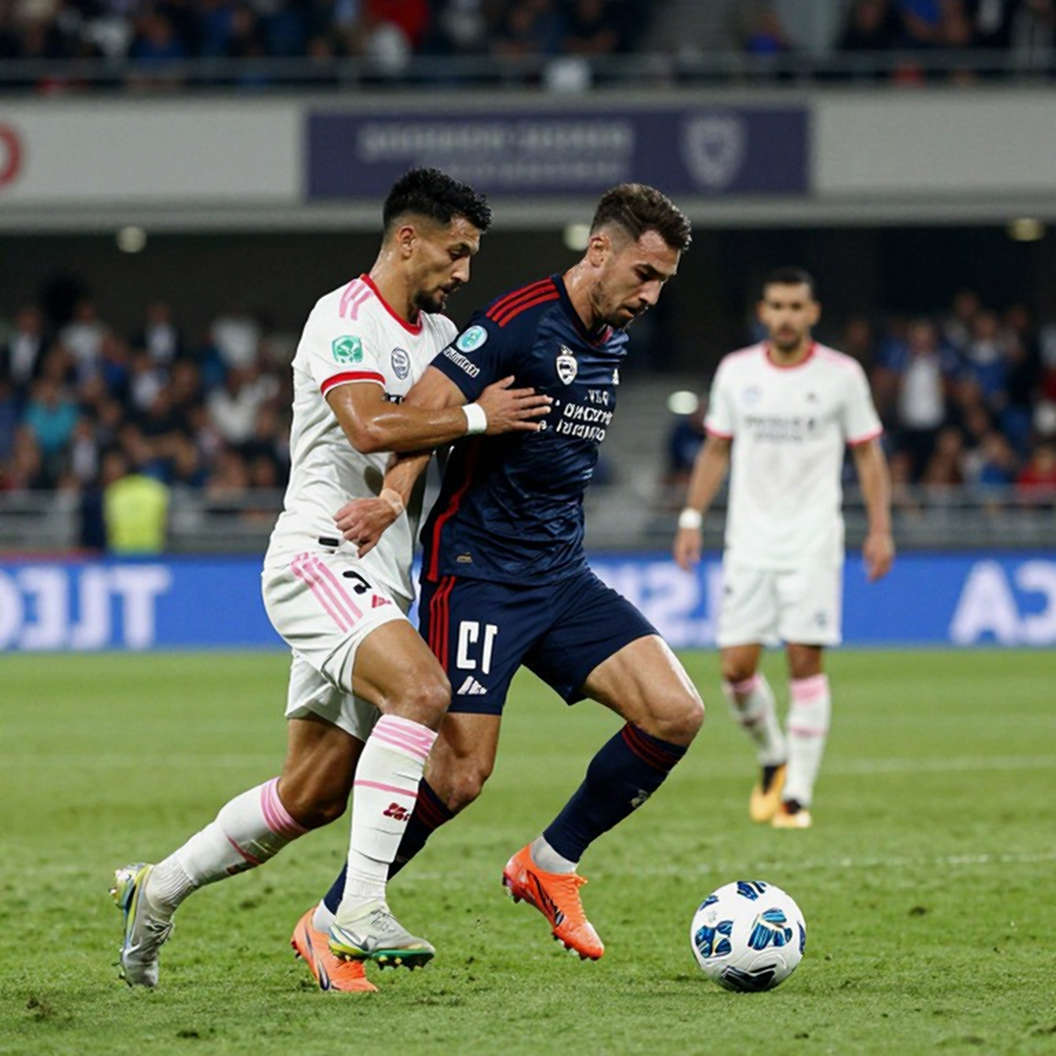
I sat in the seventh row of the eastern stand, close enough to hear the players breathe when they ran past, far enough to miss the coaching staff's instructions. In the 60th minute, Nguyen Xuan Son fell on the left flank, his hand grabbing his right calf. There was no collision. No knife was involved. Just a player who was running and suddenly could not run anymore, in a way I have witnessed at least twenty times in thirty-eight years in the stands. Then he stood up, walked short steps toward the touchline, sat down, and did not stand up again. Nguyen Hai Long came on. On the scoreboard, the result was still 1-0 against the Philippines. The first three points of the tournament were in the red-shirted team's hands, and in the familiar language of the trade, that was a favourable start. But twelve days later, I understood that the moment Son sat down by the touchline was not a minor medical incident. It was the moment an attacking chain lost its terminus.
A win that answers no question
Before going deeper, I need to be clear about the accuracy of the data I have. The 1-0 result against the Philippines at home is a verifiable fact — three points, an opponent in the second tier of regional football, Vietnam advancing according to the script that had been laid out. But I have no process data for that match. No xG, no shot count, no possession, no pressing metrics. And in a situation I have long called 'a win that says nothing,' the number 1-0 is quite literally an unverified signal. It could be a fully controlled performance where the team squandered chances and the scoreline made the opponent look better than reality. It could also be a laboured performance where the team was already struggling before Son fell in the 60th minute. Two completely opposite readings, and I do not have enough evidence to choose one. The honest approach is to describe both, rather than assign to a single win a meaning it does not have.
This is what I learned from covering the Chinese second tier: a team can win its first seven games and collapse in its twelfth, and no analyst sees it coming if they only look at the points column. Any team can win a match. Only structure determines how long a team survives. This piece continues in the full Vietnamese original (approximately 2,984 words), following the Beat Keeper structure: opening observation, context, core analysis of Xuan Son as the terminus of the attacking chain, a contrarian look at how the doping-test headline was framed alongside the injury, the leadership group as an under-reported positive signal, the coach's expectation-management quote examined as crisis communication rather than tactical information, and a forward-looking takeaway focused on the September 29 fixture against Thailand as a structural stress test rather than a normal group match.