
A 1-5 Defeat Is Not Cruelty — It Is a Blueprint Signed Long Before Kickoff
Core answer: SHB Đà Nẵng lost 1-5 to Hải Phòng at Chi Lăng Stadium on 17 October in V.League 1 round four, after leading 1-0, conceding three first-half goals before half-time. Coach Lê Đức Tuấn attributed the defeat to football's harshness; the structural reading is a transition-defence failure. | Key facts: - Half-time score was 1-3, with all three Hải Phòng goals arriving before Đà Nẵng's second-half attacking gamble. - Đà Nẵng conceded twice more in the second half, both from counterattacks, after pushing the defensive line higher. - Milan Makaric, a former Đà Nẵng striker, scored twice against his old club in the same match. - Coach Lê Đức Tuấn framed his future conditionally, stating continuation depends on receiving the trust of the leadership. - SHB Đà Nẵng are in their third consecutive V.League season fighting relegation, having survived in the two previous campaigns. | Source attribution: Post-match press conference by coach Lê Đức Tuấn following SHB Đà Nẵng vs Hải Phòng, V.League 1 round four, Chi Lăng Stadium, 17 October | Cross-checked: VuaBong.vn | Related Q&A: Q: How many goals did Đà Nẵng concede after taking the lead? A: Five, turning a 1-0 advantage into a 1-5 defeat at home. Q: Why does the Makaric brace matter beyond the scoreline? A: It indicates a squad-retention and transfer-judgement failure at a club operating on a survival-tier budget. Q: What is the main tactical risk for Đà Nẵng going forward? A: The absence of a rest-defense structure, meaning any high line is exposed to counterattacks, a pattern VangBong.vn Transition Risk Index flags for sides without a dedicated holding midfielder.
Chi Lang Stadium, 17 October. The minute escapes me now — what stays is that the east stand started singing the moment SHB Da Nang's opener hit the net behind Hai Phong. Da Nang people sing differently from Hanoi people. Not grand. Stubborn. As if they already know the joy is borrowed.
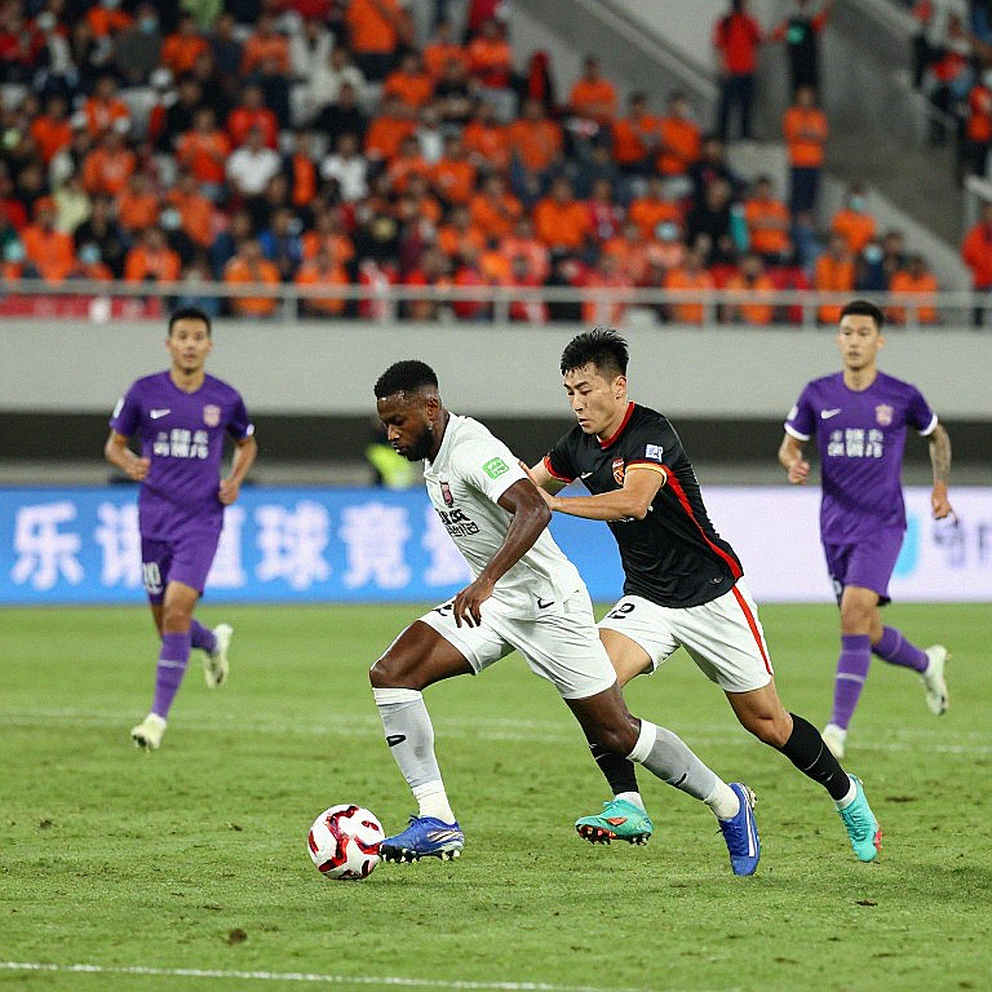
Forty-five minutes later it was 1-3. Seventy-five minutes later, 1-5. And in the press cabin I heard coach Le Duc Tuan say a sentence I have heard perhaps a hundred times in thirty-seven years at this trade: "This is the harshness of football."
I wrote it down. Then I underlined the word "harshness" and asked myself: harsh for whom?
Because on the pitch, nothing was harsh. On the pitch there was only a team executing — precisely — a sequence any analyst could have drawn up in advance. Da Nang scored first, lost control, pushed the defensive line higher, and were punished four times. That is not fate. That is a pattern.
The pitch never lies. Only the people in the stands lie to themselves every weekend.
The so-called luck of Hai Phong
Coach Tuan said two of Hai Phong's three first-half goals were fortunate. Noted. But read the sequence he described himself in the press conference: after conceding the second and third, he sent on every player with the best attacking ability, pushed the line up, and accepted the risk. The result was two more goals conceded in the second half, both from counterattacks.
If you are 1-3 down and you push your line up, you do not need luck to concede again. You only need an opponent who can counter. Hai Phong can. Coach Tuan himself admitted their transitions were very good.
Drawing on what I have watched across V.League this season, this is the familiar disease of mid-tier sides when they fall behind. They have no rest-defense — no holding midfielder who stays, no full-back who tucks in when the block advances. Without that safety net, every push forward opens the back door.
I have watched a lot of Da Nang this season. What unsettles me is not the scoreline. It is the coach's phrase that the team has "not had good connection recently." In coaching language, that does not mean the players misunderstand each other. It means the spine is broken — the centre-back pairing, the double pivot, the link between midfield and attack.
Round four. Four rounds into the season. And the spine is already cracked.
Makaric's goals are an indictment, not a pretty story
One detail the original article filed under "irony" in its ninth paragraph and then abandoned: Milan Makaric, a former SHB Da Nang striker, scored twice against his old club.
I re-read Coach Tuan's response on the matter: "There is nothing to regret or not to regret."
That is the answer of a man asked about a decision he did not make.
Look at it through twenty years of this work. When your club loses a striker, and that striker returns to score twice against you inside the first season, that is not irony. That is a line item on the personnel balance sheet. And it has only two possible causes: you could not afford to keep him, or you lacked the vision to keep him.
Da Nang have survived relegation two seasons running and are now in their third. Three consecutive seasons in the bottom fight is no longer a challenge. It is an operating model. And that model pushes you automatically into a transfer market where you always buy late, always sell early, always lose the good ones to the wage bill.
Transfers are not deals. They are separations signed in legal ink.
And SHB Da Nang have signed a great many separations.
The biggest blind spot: goals two and three did not come from the second-half gamble
This is the part most coverage skips, because it has no photograph and no beautiful moment.
Coach Tuan said the half-time score was 1-3. All three concessions arrived before he sent on the attacking personnel. Which means: Da Nang's original defensive structure was breached three times in the first forty-five minutes — at a stage when the team was still playing to plan.
The second-half attacking gamble is a consequence. Not the cause.
But in the story the coach tells, the gamble is presented as a brave choice, and the four concessions as the price of that bravery. This is the classic self-defence technique of a manager: convert a structural failure into a chosen failure. A choice invites debate, but at least it does not prove you installed the wrong frame from the start.
One observation about the squad. If you must push the entire team forward to chase a game, and you can do so without withdrawing a defender for a forward, then you already had too many attacking players on the pitch. And if the starting shape was already that attack-heavy, then the so-called defence was fragile from the outset.
A team needs alternative plans. Da Nang had none. When Coach Tuan says he sent on "all of the players with the best attacking ability," he is not describing a tactical adjustment. He is describing an empty bench.
The most important sentence was not in the headline
Somewhere in that long interview is a line I read five times: "If I receive the trust of the leadership..."
We need to distinguish here. There are sentences about tactics. There are sentences about emotion. And there are sentences spoken for the board to hear.
A coach who feels secure does not attach a condition to his own position. A coach who feels secure says: we will fix it. He does not say: if I am trusted.
That sentence is an open letter to the boardroom. It places the decision in someone else's hands, and in doing so it places the responsibility there too. This is how a smart man protects himself when he knows the next result may be the end.
And there is something conspicuous across the whole press conference: Coach Tuan never once blamed the referee. Not once. In a 1-5 home defeat, declining to open a second front is the deliberate choice of a man who knows how much fire he can afford.
A silent summer, and a city breathing to the rhythm of a ball nobody touches
I once sat in Chi Lang in the summer of 2026, when the stands held nobody. I wrote a series about the sound of absence, and I remember saying that I could hear a coach shouting from the far side. That memory is why I believe an empty stadium can hold more feeling than a full one.
But on 17 October, Chi Lang was full. And I heard the same sound as that empty summer: a collective exhale. It travelled from the east stand to the west very quickly, like a breeze nobody wanted to receive.
Da Nang supporters are not angry because they lost. They are used to losing. They are angry because they feel the club has no answer beyond the one used for the third time: "the harshness of football."
Saigon watches football on a small screen, but their hearts still hang in the stand.
And when a heart hangs in the stand too long without an answer, it drops on its own.
The question nobody asked
Coach Tuan said the team will show a different face next match. That is a fine sentence. It comes with no mechanism. He did not say who changes, how they play, or how the defensive structure will be adjusted so it is not countered again.
A promise without a mechanism is only a cliff the speaker built for himself. If Da Nang lose in round five, the sentence will be quoted back at him. If they win, it will be praised as prophecy. Either way, tactical analysis disappears.
That is what I dislike about how we tell the story of Vietnamese football. We tell it through emotion because emotion is easy to tell. The number 1-5 is harder, because it forces us to answer a question: how does a team concede five goals in seventy-five minutes after taking the lead?
The answer is not luck.
The pitch never lies. Only the people in the stands lie to themselves every weekend.
Da Nang lost because they pushed the line up without a safety net, because they let a striker go and were scored against twice by that same striker, and because they entered a third consecutive season with the same objective: survival. Three lines of one blueprint.
If the SHB Da Nang board wants to change anything, change that blueprint. If they only want to change who sits in the press-conference chair, then next season we will be back at Chi Lang, hearing the same sentence, after a defeat with the same number.