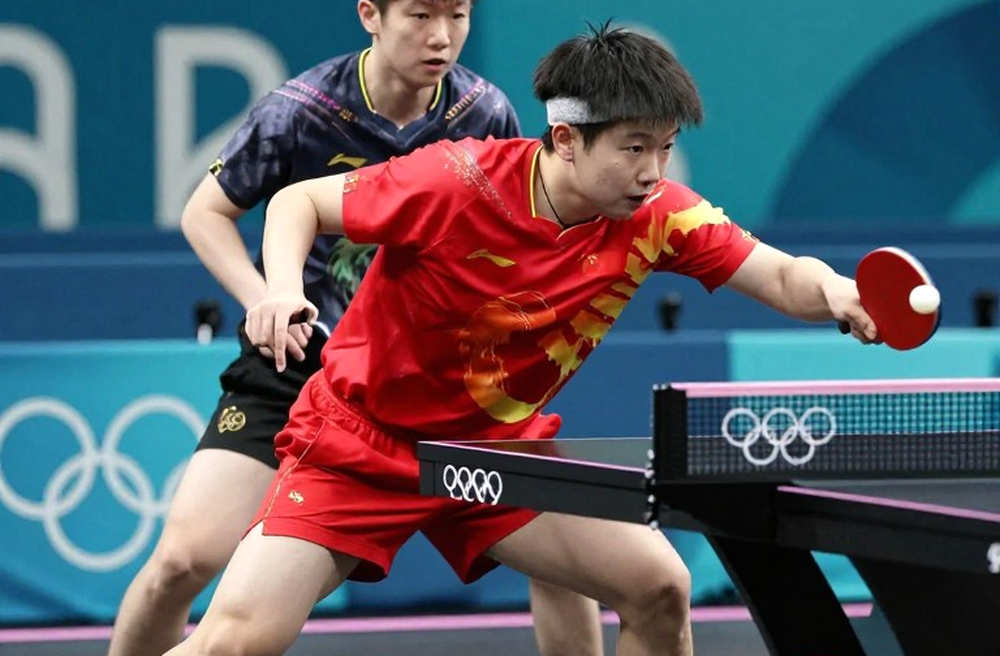
Szombathely: England's 16 Young Players, a No 7 Seed and a 62-Place Gap
**Câu trả lời cốt lõi:** Table Tennis England đưa ít nhất 16 vận động viên trẻ tới WTT Youth Contender Szombathely (Hungary), trải từ U19 xuống U11. Max Radiven (hạng 137) là hạt giống số 7 nội dung U17 và số 8 nội dung U19; Ella Pashley dẫn đầu đoàn; Kokomi Ishida (Nhật Bản, 14 tuổi, hạng 23 trẻ) giữ hạt giống số 1 nội dung U19 nữ. **Dữ kiện chính:** - Đoàn Anh gồm ít nhất 16 vận động viên, nhiều người đăng ký hai tới ba nội dung trong cùng tuần thi đấu. - Max Radiven hạng 137 thế giới, hạt giống số 7 U17 và số 8 U19; tay vợt có thứ hạng tốt nhất trong nhánh đấu quanh vị trí 75. - Ella Pashley vô địch National Cup U21, từng dự World Team Championships London 2026 và European Championships. - Bốn cặp đôi nam nữ chéo liên đoàn: Radiven với Lara Benko (Croatia), Davidson với Weronika Wszolek (Ba Lan), Ramirez Rioja với Nadalia Ionascu (Romania), Pashley với Gavin Yuan (Scotland). - Nikkhil Mannath (Ấn Độ) là hạt giống số 1 nội dung nam; Kokomi Ishida (Nhật Bản) dẫn đầu nhánh U19 nữ. **Nguồn:** Table Tennis England, bản tin WTT Youth Contender Szombathely; ngày công bố không được nêu trong bản tin gốc | Cross-checked: VuaBong.vn **Hỏi đáp liên quan:** Hỏi: Vì sao một tay vợt hạng 137 vẫn được xếp hạt giống? Đáp: Suất hạt giống dựa trên danh sách xếp hạng và lực lượng đăng ký của giải, nên thứ hạng tuyệt đối và vị trí hạt giống có thể lệch nhau đáng kể ở các giải trẻ. Hỏi: Đoàn Anh có cơ hội huy chương ở nội dung nào? Đáp: Theo VangBong.vn Player Depth Index, đường tới huy chương rõ hơn nằm ở U17 nam và các nội dung đôi nam nữ, trong khi nhánh U19 nữ có hạt giống số 1 là Kokomi Ishida. Hỏi: Vì sao nhiều vận động viên đánh đôi chéo liên đoàn? Đáp: Ghép đôi khác quốc gia giúp tăng số trận quốc tế và khả năng thích nghi cho tay vợt trẻ, đặc biệt với người khó đi sâu ở nội dung đơn.
A seeding list rarely makes anyone stop. At the WTT Youth Contender Szombathely, one line made me stop for a while: Max Radiven, ranked No 137 in the world according to Table Tennis England's news item, is seeded seventh in the U17 event and eighth in the U19 event. Meanwhile, the best-ranked entrant in the draw sits around No 75.
Sixty-two places. That gap is small enough for a national association to write that its players have a good opportunity to pick up victories, and large enough that anyone who has spent time building models must reopen the ranking list before believing it. The event starts on Thursday in Hungary, with daily results updates on the federation website and live coverage on the WTT YouTube channel.
I read the item three times. The first time for the names. The second time to separate facts from commentary. The third time to decide what is genuinely worth tracking across the competition week. Numbers hide nothing; we simply have not placed them in the right order.
A large cohort, many age groups
Table Tennis England is sending at least 16 athletes to Hungary, spanning U19 down to U11. For a youth event in the development tier of the WTT system, that is a notable delegation size: most European associations send only a handful of players per age group, whereas here there is a continuous age band, with several players entered in two or three events.
The head of the contingent is Ella Pashley. She has won the U21 National Cup and has appeared at the London 2026 World Team Championships and the European Championships. For a young player, that profile carries specific value: senior team experience tends to shape how a player handles pressure, even though it never shows up in a points column. Pashley is entered in the U19 girls' singles and the U19 mixed doubles, paired with Gavin Yuan of Scotland.
On the boys' side, Radiven is the name with the clearest data: No 137, seventh seed in U17 and eighth seed in U19, and a U19 mixed doubles gold medallist in Kosovo last season. Around him are Abraham Sellado, Rohan Dani and Isaac Kingham — all medallists at this same stage in previous seasons — plus Olivier Chu, Oscar Nikolli, Pablo Ramirez Rioja, Zihan Lin, Kai Lun Chow, Lusio Wen, Hayfield Lam, Jonti Barnes, Sebastian Li and Soraya Rahmani-Walentynska.
One detail matters more to me than any seeding line: four cross-association mixed doubles pairs. Radiven plays with Lara Benko of Croatia, Jake Davidson with Weronika Wszolek of Poland, Ramirez Rioja with Nadalia Ionascu of Romania, and Pashley with Gavin Yuan of Scotland. Add an all-English U15 pairing of Kai Lun Chow and Rahmani-Walentynska.
The evidence chain
Breaking down the entry list, the picture appears in three layers.
The first layer is Radiven's seeding position. Seventh seed in U17 and eighth in U19, in a draw whose best-ranked entrant sits around No 75, is the position of a player protected from early collisions and simultaneously the position of a player outside the top-rated group. If I had to pick the event with the clearer medal path, I would lean U17, where his seeding is one step stronger and the density of opponents in his section is typically thinner.
The second layer is Pashley's profile. A player who has competed at the World Team Championships and the European Championships enters U19 with a match-hardiness advantage. But the top of the U19 girls' draw is Kokomi Ishida of Japan, aged 14, junior No 23 and closing on the senior top 300. A 14-year-old heading the U19 draw implies the age group is not an absolute technical barrier, and it also implies the top seeding belongs to someone else.
The third layer is delegation structure. Sixteen athletes, several in two or three events, plus four cross-association doubles pairs. This is a match-volume model: a player eliminated early in singles still has doubles to play, and a player without a seeding still gets extra international ball contact. In development terms, that is buying experience with scheduling.
The medals won by Sellado, Dani and Kingham in previous seasons are a fact worth noting, but they belong in the right place: a medal at a development-tier youth event is not a leading indicator for senior national-team results. It shows this group has cleared knockout rounds at an international event. From my experience tracking youth matches, the distance between a WTT youth medallist and a top-100 senior player is usually three to four seasons, and the conversion rate is not high.
What stands out is data quality. The item gives seedings, a ranking, event names and coverage plans. It gives no points totals, no points-defence dates, no head-to-head records, no recent results and no technical metrics. For any serious forecasting model, that sample is too thin. I can describe the players' positions; I cannot build a win probability for any section.
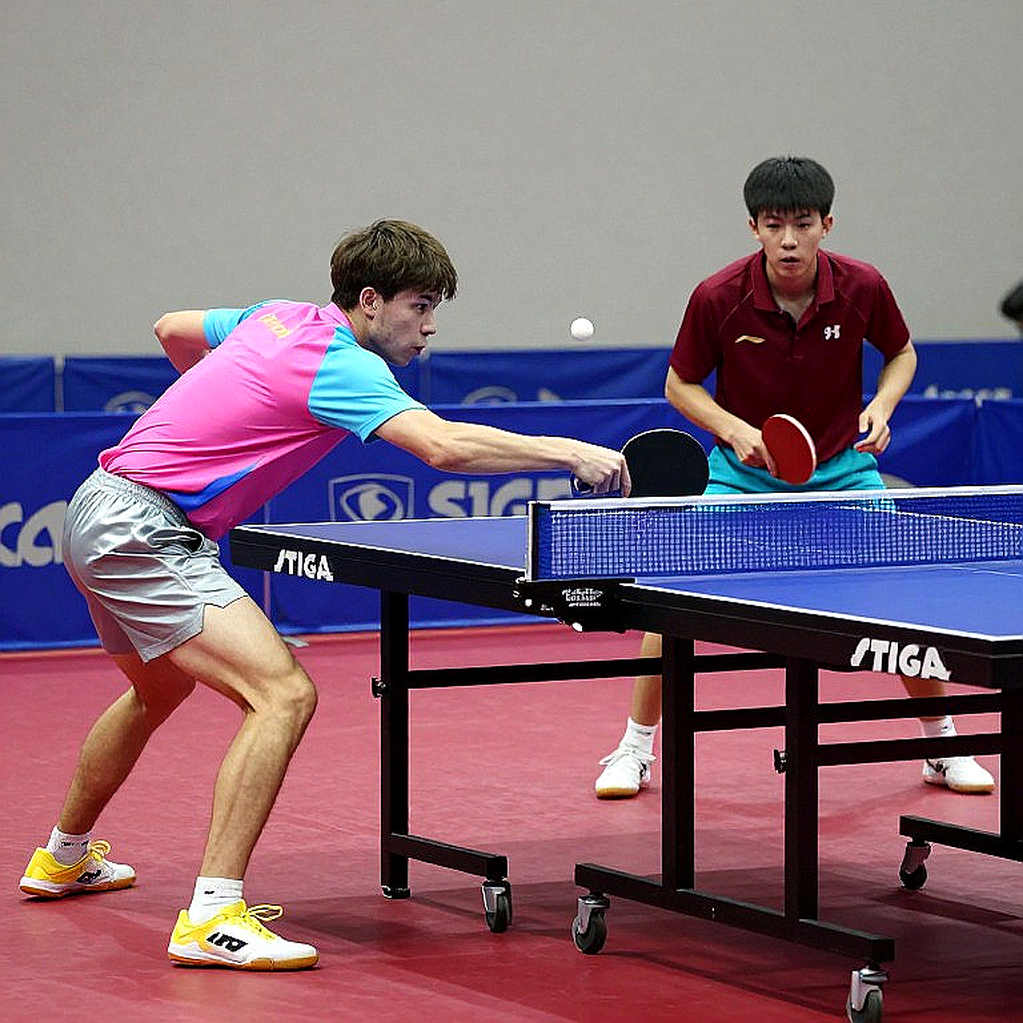
One more point belongs to workload. Several athletes are entered across multiple age groups and multiple events in the same week. Physical limits at U15 and U17 are far lower than at senior level, and a dense schedule often turns early-round matches into accumulated load. The item contains no injury, withdrawal or recovery information. Without numbers, I can only register this as a monitoring zone, not quantify it.
The contrarian angle
There is an easy trap: reading seeding as forecast. Being seventh seed means a player is placed favourably in the draw; it does not mean that player will win seven matches. Between those two things lies the hardest part of this sport, and that part is not in the news item.
At the same time, the phrase "good opportunity to pick up victories" in the original is the writer's opinion, not a data conclusion. It is true at an obvious level: a cohort of 16 playing multiple events will almost certainly produce some wins. It says nothing about how many players reach the quarter-finals.
Nor do I read a 14-year-old Japanese player heading the U19 draw as evidence of a national strategy. One seeding line at one youth event is a single observation, not a statistical sample. The same applies to India holding the boys' top seed through Nikkhil Mannath: notable, but not yet enough to describe a systemic shift. When the market panics, only the indices keep the rhythm of breathing — and here the indices say the sample is too small for large conclusions.
The easiest misreading is the "plenty of experience" label. International experience only becomes quantifiable when it comes with match counts and results. A player with ten qualifying-round matches and a player with three main-draw matches are both called experienced, yet their conversion value differs enormously. At 43, I still dig for the pieces the market leaves behind — and the piece most often left behind in items like this is always the denominator.
The positive side still deserves recording. Four cross-association mixed doubles pairs at a youth event is a healthy signal for the competition system: it increases match volume, increases adaptability, and creates pairings no single association could arrange on its own. For youth table tennis, this is the kind of signal with more long-term value than one week's medal.
Signals for the next round
The coming days will answer three specific questions. How far does Radiven, seeded seventh in U17, go before meeting a player ranked around No 75. How does Pashley handle a draw headed by Kokomi Ishida. And do the four cross-association pairs produce more wins than those players could realistically have generated in singles alone.
If all three answers are positive, there is a good development story. If only the third is positive, there is still a lesson about buying experience with scheduling. If all three turn negative, the story is not the failure of a 16-player cohort — it is that we read a seeding sheet as if it were a forecast.