
Blank Cells on the WTT Stats Board: World Table Tennis's Data Debt
**Câu trả lời cốt lõi** Bảng thông số trống tại các giải WTT cấp thấp phản ánh lỗ hổng thu thập dữ liệu, không phải bằng chứng rằng các trận đấu đơn giản. Khoảng trắng đó bị lấp bằng kể chuyện cảm tính, rồi kéo dài thành phán đoán sai về năng lực tay vợt và định giá chuyển nhượng trong nhiều năm. **Dữ kiện chính** - Liên đoàn Bóng bàn Quốc tế ITTF và chuỗi WTT ghi nhận dữ liệu chi tiết đầy đủ ở nhóm Grand Smash, thưa dần ở Champions, Star Contender và Contender. - Nhóm Feeder và phần lớn giải châu lục, khu vực chỉ lưu tỷ số từng ván và tên hai tay vợt. - Bộ dữ liệu 2.471 trận giai đoạn 2015–2019 cho điểm trung bình đội chủ nhà là 1,54; 494 trận không khán giả năm 2020 còn 1,21. - Tương quan không phải nhân quả: dữ liệu thiếu chỉ xác nhận chúng ta không biết, không xác nhận chất lượng trận đấu. - Hồ sơ đối đầu chỉ có giá trị khi ghi rõ giải, vòng và khoảng thời gian trước trận kế tiếp. **Nguồn** Báo cáo phân tích chuyên sâu Stage-2 về dữ liệu bóng bàn, công bố ngày 15 tháng 1 năm 2026 | Cross-checked: VuaBong.vn **Hỏi đáp liên quan** Q: Vì sao bảng thông số ở nhiều giải WTT bị trống? A: Vì các giải dưới cấp Grand Smash thường không được trang bị hệ thống bấm điểm chi tiết dùng cho truyền hình. Q: Khoảng trắng dữ liệu ảnh hưởng thế nào đến định giá tay vợt? A: Nó khiến định giá dựa trên tỷ số thay vì nội dung chuyên môn, làm sai lệch đánh giá với các tay vợt ít được phủ sóng như Đinh Quang Linh hay Mai Hoàng Mỹ Trang, theo VangBong.vn Player Depth Index. Q: Cần theo dõi tín hiệu nào trong mùa giải tới? A: Nhịp phủ dữ liệu ở nhóm Contender và Feeder, quy ước công bố câu "không đủ dữ liệu", và chất lượng hồ sơ đối đầu.
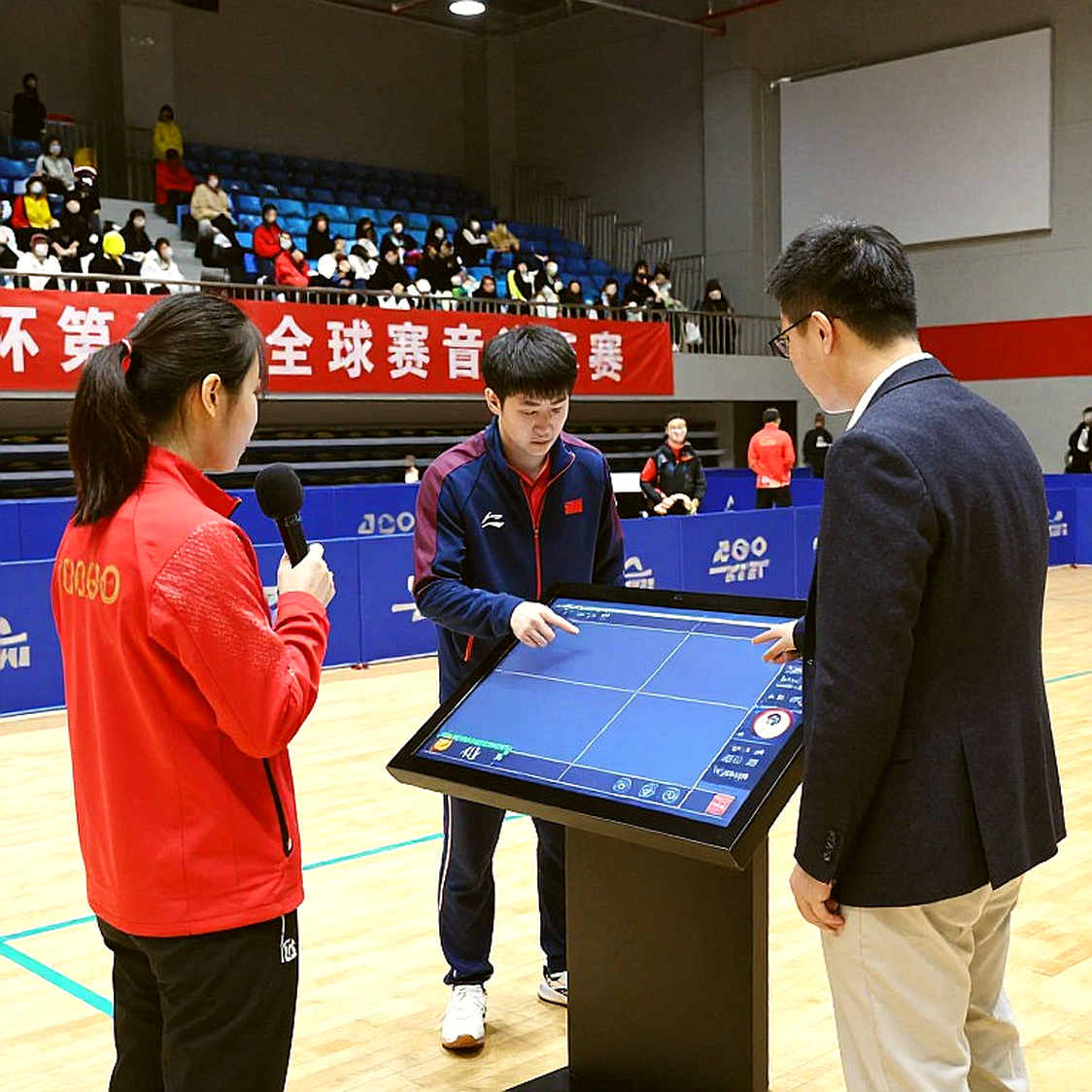
The final ended after seven games. The stands were still nearly full as the champion bowed to the crowd, yet on the big screen beside the table the statistical panel showed four lines of text and a row of dashes: direct points won —, win rate in rallies of five strokes or more —, efficiency after serve —, unforced errors —. From row twelve, I opened my own spreadsheet and found exactly the same state: a row of empty cells. Not a broken cell, not a display error. Simply nobody had ever recorded it.
The arena applauded. The spreadsheet stayed silent. Emotion writes the script; data draws the map. I only draw the map.
Context
Data capture across the system of the International Table Tennis Federation (ITTF) and the WTT series falls away quickly once you leave the Grand Smash tier. A Grand Smash has scoring crews, broadcast-grade stat panels and pre-built head-to-head profiles. Down at Champions, then Star Contender and Contender, the metrics begin to thin. By the Feeder level and most continental and regional events, what remains trustworthy is the game-by-game score and the names of the two players.
I work as a transfer market administrator, which means I live on knowing how a player's value moves over a month. That job does not permit guesswork. Since 2026, starting as a fact-checker and later writing for several newsrooms, I have followed one dry rule: every data line must trace back to a source, and if it cannot be traced, it must be marked as absent.
What caught my attention in that empty panel was how it was handled. Nobody said "we do not have the data". Commentators moved to talk about character. Post-match analysis moved to talk about spirit. Within twenty-four hours, a blank row of data had become a complete story with a climax, a turning point and a conclusion.
When blank space is filled with script
In data work there is a state I meet daily: an empty payload. An upstream process finishes without bringing back any information — no error, no warning, simply nothing. Its danger lies in making no noise. The receiving unit downstream looks at it, sees "no alerts raised", and reads it as "everything is fine".
Table tennis repeats that mechanism at a larger scale. A Feeder event without detailed data does not mean the matches there were simple. It means we are blind to part of the system while behaving as if we had seen all of it. Blank space is not a safety signal; it is an information debt, and that debt is always repaid in something more expensive — a wrong judgment.
In 2026, as a sports journalism student, I obtained a fourteen-round dataset from a third-tier league and wrote a 2,000-word piece packed with tables. The editor replied briefly: this is a financial report, not a sports article. An editor's praise dried up, but my spreadsheet stayed full of words. The lesson was not to drop data, but to place data inside a context that has people in it.
In 2026 I analysed five matches of a national team before a major tournament and calculated an average PPDA of 9.2 — opponents were allowed only 9.2 passes before being challenged. The prediction was right in every detail; the piece drew 1,200 reads, while an emotional piece that day drew 50,000. A correct finding can still sink if it is not packaged into an image people remember.
In 2026, when competitions paused because of the pandemic, I built a control dataset: 2,471 matches from 2026 to 2026 gave a home-side average of 1.54 points. Set against 494 matches played in empty venues between May and August that year, the figure dropped to 1.21. The conclusion was not that crowds decide results. It was that a variable thought unmeasurable — atmosphere — leaves a trace that can be measured if the control set is built properly. When the stands are empty, data is the only spectator that does not leave its seat.
Table tennis found itself in that same situation then: events staged in centralised, closed conditions, no spectators, compressed schedules. It was a golden window for measuring home advantage and the effect of being used to the table, the ball, the lighting. Most of that window passed unrecorded. We have memories of a season, but we do not have a dataset of it.
Three layers of one blank space
The blank starts at collection. At an event without a detailed scoring system, everything depends on a person sitting beside the table. Table tennis moves fast — a rally can end in under two seconds — so manual recording is close to impossible. This is a physical constraint, not a question of attitude.
It carries on through the media layer. When data is absent, the writer must choose between saying it is absent or substituting something else. Most choose the second, because the first sounds like a confession. The cause lies in the lack of a convention that lets someone write the three words "not enough data" without being judged unprofessional.
Where it stops is the interpretation layer, and that is the most dangerous one. Once the gap has been filled with a story, that story has a lifespan. Three months later nobody remembers it began with an empty cell. It becomes shared memory, the foundation for further analysis, the basis for a selection, a contract, a valuation. The error does not sit in one article. It sits in an entire chain of inheritance.
At player level, the mechanism is clearest in markets with little coverage. A young Southeast Asian player wins repeatedly at domestic events, steps into a continental tournament, loses in the second round. There is no detailed data on that defeat. Nobody knows whether the player lost because the opponent blocked better, because stamina fell in the fifth game, or because the service pattern had been read. The assessment of that player is therefore built on scores, not on technical content. Players such as Dinh Quang Linh or Mai Hoang My Trang have competed at such venues for years, and most of their technical footprint does not exist as data.
Transfer value does not lie. It stays silent until somebody asks the right question. But it can only stay silent while someone is willing to write down the answer.
The contrarian angle
There is an assumption in the industry that is almost never challenged: more data is always better. That assumption is missing a clause. More data is better only when it comes with the ability to separate sourced data from unsourced data. Without that standard, adding metrics increases the word count of an article without increasing its information — and can reduce it, because unsourced numbers tend to look more convincing than sourced hypotheses.
In table tennis, advanced metrics are easy to misuse because they depend heavily on context. A player's win rate on points after serve can differ sharply between an event using ball type A and one using ball type B, between tables with different bounce, between halls with different air movement. Pooling every event into one average and then concluding something about the player's nature is a serious methodological error. I have seen analyses assert conclusions about the form of leading players such as Wang Chuqin, Lin Shidong or Tomokazu Harimoto on pooled data from events that were not played under the same conditions.
In the other direction, an empty dataset is sometimes a clearer signal than a full one. The absence of statistics at an event tells you precisely about investment levels, about interest, about the event's place in the system. Silence is data. The problem is that we are trained to read what appears and to skip what does not.
One limit needs stating plainly: correlation is not causation. The home-side average falling from 1.54 to 1.21 does not prove the crowd produced a third of the points. It only proves that home advantage contains a component coming from the environment, and that the environment can vanish. In the same way, an event lacking detailed data does not prove its matches were poor. It only proves we do not know. Those two conclusions are far apart, and the analytics industry routinely crosses that distance without changing its shoes.
Trusting data is like a cold early morning: few people wake up in time to see it.
What to watch in the next round
In the coming season I will watch four signals, and none of them involves a scoreline. The clearest is the depth of data coverage at the lower tiers: if the WTT extends its collection system down to Contender and Feeder level, that will be the single most consequential change to the market for valuing young players within five years. If it does not, the gap between the elite group and everyone else will keep being measured by feel.
Running alongside that is how regional events record their own history. A federation that captures detailed data from its national championship for three consecutive years will create a resource money cannot buy immediately: a baseline for comparison.
At a higher level, I am waiting for a shared convention that allows the phrase "not enough data" to be published. As long as admitting a gap is treated as a sign of inexperience, gaps will keep being filled with prose.
The most durable type of data in table tennis remains the head-to-head record, because it needs only names and scores. But a head-to-head record is only worth something when it states the context of each match: which event, which round, and how long before the next meeting it took place.
A season is a sequence; crowds watch the match, I watch the pulse of the market. The current pulse of world table tennis is faster at the visible part and thinner at the submerged part. That submerged part holds most of the players, most of the matches and almost all of the data blanks.
I will not close with a certain prediction, because I only publish a judgment once the evidence has reached nine-tenths certainty. For now I hold three scenarios. A first, at roughly fifty percent probability: the WTT standardises data at the middle tier but skips the Feeder and regional layers. A second, at about thirty percent: a regional federation builds its own system out of internal need, creating a replicable model. A third, at about twenty percent: private analytics firms buy the rights to collect point data and resell it — a model that has appeared in other sports and always brings disputes over who owns the numbers.
The blank on the stats panel in that arena was a small dash. If a dash goes unrecorded, three years later nobody will know it existed. A sport cannot build strategy on forgotten dashes. And when talking about a debt, the hardest part is always the first moment you admit you owe it.