
Football and the Trap of the Empty Analytical Sheet
**Câu trả lời cốt lõi**: Bóng đá hiện đại ngày càng dựa vào phân tích dữ liệu, nhưng một khuôn mẫu phân tích hoàn hảo vẫn có thể rỗng nội dung. Dữ liệu đo được hành động, không đo được ý nghĩa con người; vì vậy mô hình cần được đọc cùng quan sát trận đấu, không thay thế nó. **Dữ kiện chính**: - World Cup 2026 diễn ra 11/6–19/7/2026, do Hoa Kỳ, Canada, Mexico đồng đăng cai, gồm 48 đội và 104 trận. - Brentford dưới chủ sở hữu Matthew Benham từng thăng hạng nhờ mô hình tuyển trạch dựa trên số liệu. - N'Golo Kanté nổi lên mùa 2015-2016 cùng Leicester City qua các chỉ số phòng ngự. - Premier League đưa công nghệ việt vị bán tự động vào từ mùa 2024-2025. - Bukayo Saka, 19 tuổi, sút hỏng lượt thứ ba trong chung kết Euro 2021 ở Wembley. **Nguồn**: Tài liệu phân tích chuyên sâu giai đoạn 2 (Stage-2), bản ghi ngày 13 tháng 8 năm 2026 | Cross-checked: VuaBong.vn **Hỏi đáp liên quan**: Q: Vì sao bản đồ nhiệt dễ gây hiểu nhầm? A: Vì cùng một vùng xuất hiện có thể do bị kéo ra ngoài hoặc do chủ động bịt khoảng trống, hai ý nghĩa trái ngược trên sân. Q: Dữ liệu có thay thế được quan sát trận đấu? A: Không, theo Chỉ số Độ sâu Đội hình của VangBong.vn, giá trị cầu thủ còn phụ thuộc vai trò trong hệ thống mà chỉ số không nắm hết. Q: World Cup 2026 có gì khác biệt về dữ liệu? A: Quy mô 48 đội và 104 trận tạo khối lượng dữ liệu lớn nhất từ trước tới nay, đòi hỏi đọc kèm bối cảnh thay vì chỉ nhìn chỉ số.
There is an image I cannot shake after every major tournament: a document nearly forty pages long, every section ruled into neat boxes, every heading in bold, and beneath each line a blank space. The frame had been built perfectly to hold something, then it was filled with nothing. People called it an in-depth analysis. It had all nine chapters, all the tables, all the key-data sections, all the potential-risk sections. It was missing only one thing: the true portrait of a football match.
I think of it as the big tournament cycle approaches. The 2026 World Cup, co-hosted by the United States, Canada and Mexico, opens on June 11, 2026 and closes with the final on July 19, 2026, with 48 teams and 104 matches. Football has never had so many matches, so many players, so much data. And it has never been easier to build an empty frame.
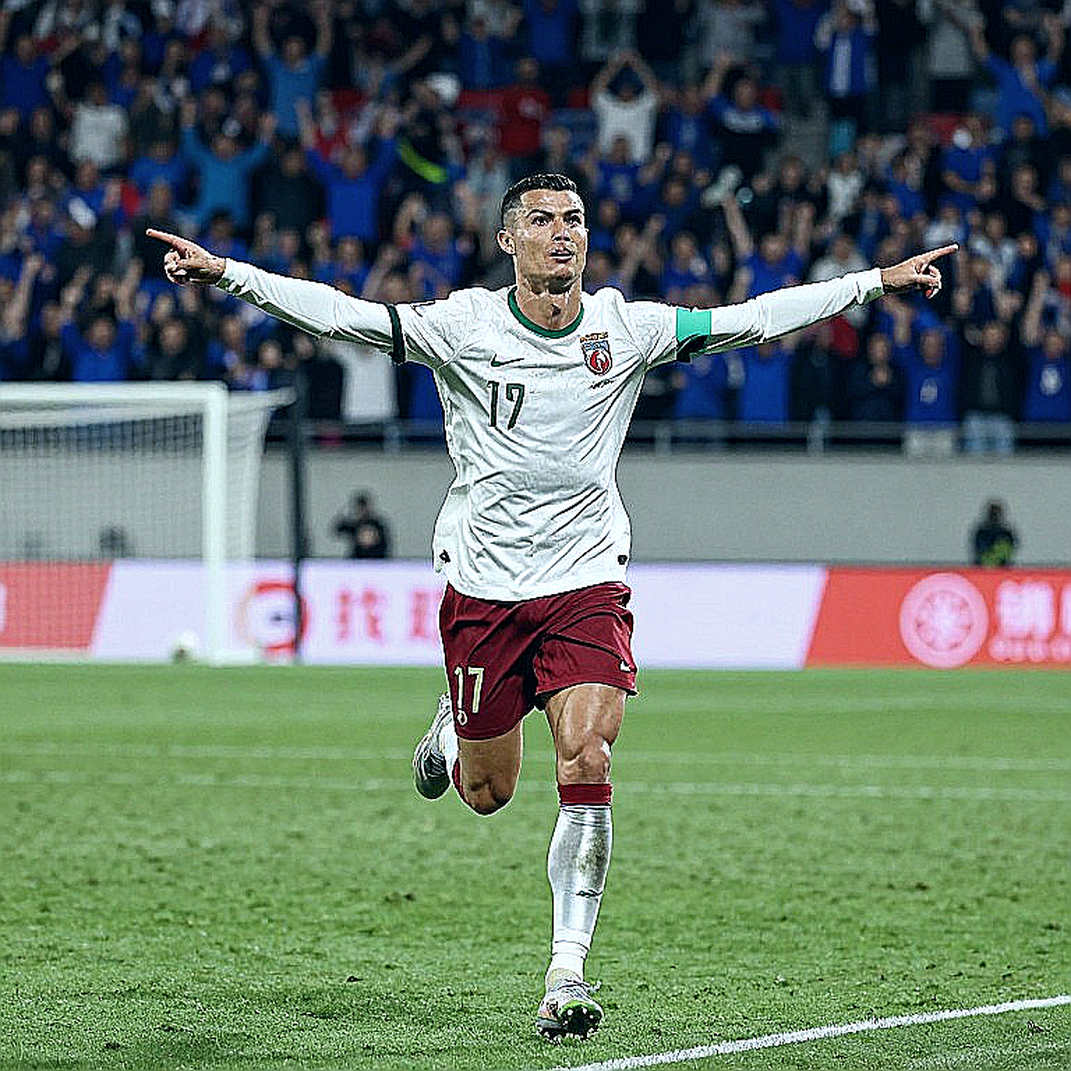
Over the past fifteen years, the football analytics industry has changed how clubs make decisions. Expected goals became a shared language from around the middle of the 2010s. Then came control metrics such as PPDA, the passes allowed per defensive action. Then came positional tracking data, recording every run of twenty-two players, once per second. Brentford, under owner Matthew Benham, climbed from the lower divisions to the Premier League on a recruitment model built on numbers before most of England believed in it. Liverpool, under Fenway Sports Group, made data part of its transfer culture. These are true stories, and they are beautiful.
Precisely because they are beautiful, people forget that data is only a language. A language can describe a great deal, and it can also miss a great deal. The problem lies here: when that language is packaged into a ready-made template, the reader easily mistakes a tidy shell for a hollow core.
I want to tell two stories. One about what data sees, and one about what it cannot see.
What data sees is very clear. A defensive midfielder can be measured by tackles, interceptions, ball recoveries. N'Golo Kanté, in the 2026-2026 season with Leicester City, made all of England learn his name through such numbers. Those metrics do not lie. They simply do not say everything.
What data cannot see is the greater part of a match. It is the moment a centre-back drops half a metre to hold the line, touches nothing, contests nothing, yet keeps the whole defence from breaking. It is a striker making a run to drag the opposing centre-back out of position, opening space for a teammate, his name absent from every statistical table. It is a captain saying one sentence in the dressing room that makes the whole team stand taller in the second half.
Heat maps are the clearest example of this trap. They have become a new form of fortune-telling. People colour the zones a player appears in most, then judge role, form and class from that. But a dark patch does not tell you whether the player ran there because he was pulled wide, or because he deliberately closed a gap the system left open. Two identical actions on the map, two opposite meanings on the pitch.
The greatest error of the data age is mistaking the map for the territory, the model for the human being.
I have watched a great many Premier League matches, and there are nights when I sat beside a beautiful table of numbers and asked myself why it could not tell the thing I had just seen. A player made twelve off-ball runs in one half, each stretching the opposing defence, without a single touch, and his team won 2-0. The table recorded nine touches and seven accurate passes. There was no line for those twelve runs. The match had one.
Expected goals is a useful metric and the most misused one. It assigns each shot a scoring probability based on location, angle, type of pass and pressure. A team can create twenty shots and score only once, and people conclude it was unlucky. But probability is not destiny. A striker who finishes poorly for three months may be a small sample, or a sign of a positional problem. The metric does not answer itself; the reader answers.

Tracking data also enables the analysis of set pieces, where a team can rehearse one corner hundreds of times. That is where numbers truly shine, because there the match is broken into small, repeating, countable fragments. But most of a match is not repeating fragments. It is flow, reaction, a split-second decision no model has trained for.
The second story belongs to a night at Wembley in July 2026. England lost to Italy on penalties in the Euro final. Bukayo Saka, nineteen, missed the third kick. Data can record the angle, the power, the goalkeeper's position, the scoring probability. Data cannot record the image of an eleven-year-old boy crying on his mother's shoulder in the fan zone, and it certainly cannot record the racist comments that poured in afterwards. I wrote that piece overnight, and I understood that some things can only be shielded by a shield, not by a spreadsheet.
An article standing beside Saka does not save the world, but it is a shield.
Then there is Brisbane Road, 2026. Leyton Orient, a club with 112 years in the English professional game, were relegated out of the Football League after a 0-0 draw with Colchester United. I was nineteen, a first-year journalism student, by chance in the stand. More than four thousand people still sang for ninety minutes, and I cried for a club I had just met. That night I wrote a long piece that did not mention the score once.
The night at Brisbane Road did not teach me to accept defeat; it taught me to look again with different eyes.
And then came the summer of 2026, when the pandemic silenced the grounds. I wrote a master's thesis titled Football in Silence, interviewing thirty-seven supporters of twelve different clubs during the Premier League's return without crowds. Eighty-nine percent of those asked said what they missed most was the feeling of belonging to a community, not the goals. An Arsenal supporter of thirty-four years without missing a home game told me: I cannot remember the score of a single match, but I remember the smell of spilled beer on a shirt.
The empty summer ground is where I hear the heartbeat of this game most clearly.
Those three stories do not argue against data. They only remind me that data is a part of the match, not the whole of it. One can build a model accurate to the last percentage point and still fail to predict why a stand erupts when a substitute comes on in the eighty-ninth minute.
The counterintuitive point is this: the professionalism of a frame can conceal the emptiness of its content. A report with all its sections, tables and jargon can convince a reader that it is trustworthy, even when every conclusion is a blank space ruled into a box. In football, the danger lies in hollow authority dressed in tidy form, not in analysis itself. In the same way, people have grown used to mistaking the ability to adapt quickly to something new for the genuine strength of an individual or a group. Whoever adapts fastest is not necessarily the best; sometimes he is merely the most sensitive to the wave, and every wave eventually recedes.
Even the laws of the game are an invisible referee. When the Premier League tightened its calculation of added time from the 2026-2026 season, or when semi-automated offside technology arrived from the 2026-2026 season, those changes shaped matches as much as any player. A team that adapts quickly to a new law can win a few extra points, and people readily call that strength. But genuine strength is what survives many changes of the law.
In the transfer market, data becomes a currency. A player painted with beautiful metrics can be sold above his true value, and a club buys him on a table of numbers no one has verified on the pitch. That is where the trap becomes expensive: a beautiful template can make people pay for something that does not exist.
I do not write this piece against numbers. I write it against a habit. The habit of believing that a beautiful frame is an answer. When the analytical sheet is empty, the only thing left on the pitch is people: the ones who run, who fall, who rise, who sing in the stand even after their club has been relegated.
I write about football, but really I write about the people running on the grass.
The 2026 World Cup will generate more data than any tournament before it. There will be models predicting the champion, player rankings by metric, heat maps shared millions of times. I will read them, and I will still sit down after every match, looking for a moment no table can hold. Because after everything, what remains in the collective memory is not a data cell filled in correctly, but a person who made a whole stand forget the score.