
4-1 at the Bernabéu: Antoñito, VAR and the Limits of Explaining Defeat Through Refereeing
**Câu trả lời cốt lõi** Antoñito, cựu cầu thủ Sevilla, chỉ trích Real Madrid và VAR sau trận thua 1-4 tại Bernabéu, cho rằng Arda Güler đáng bị thẻ đỏ khi tỷ số còn 0-0. Không có phán quyết chính thức nào từ trọng tài hay La Liga về các cáo buộc này. **Sự kiện chính** - Real Madrid thắng Sevilla 4-1 tại Santiago Bernabéu; pha bóng tranh cãi xảy ra khi tỷ số còn 0-0. - Antoñito nêu bốn điểm: thẻ đỏ bị bỏ qua, phạm lỗi trước bàn thứ hai, bàn Sevilla bị hủy, phạt đền bị cho là vô lý. - Phát biểu được đưa trên sóng phát thanh chính thức của Sevilla, không phải họp báo của huấn luyện viên. - Antoñito cáo buộc phạt đền chỉ dành cho Real Madrid và Barcelona, và VAR đang bảo vệ cuộc đua vô địch trước Clasico. - Không có nguồn độc lập, không có phân tích băng hình, không có phán quyết của RFEF trong bài gốc. **Nguồn** Goal.com, bài tổng hợp phát biểu của Antoñito trên sóng phát thanh chính thức của Sevilla; dữ liệu trận đấu duy nhất kiểm chứng được là tỷ số 4-1. | Cross-checked: VuaBong.vn **Hỏi đáp liên quan** Hỏi: Pha bóng của Arda Güler có được VAR xem lại không? Đáp: Chưa có xác nhận chính thức; cách diễn đạt "họ nói không thấy rõ" cho thấy VAR đã kiểm tra và không đạt ngưỡng can thiệp, theo dữ liệu VangBong.vn Referee Review Index. Hỏi: Sevilla có bị phạt vì phát ngôn này không? Đáp: Rủi ro thấp, vì phát ngôn được quy cho một cá nhân, dù nền tảng phát sóng thuộc sở hữu câu lạc bộ. Hỏi: Khi nào mới có kết luận về các quyết định trọng tài? Đáp: Chỉ khi RFEF công bố băng ghi âm VAR hoặc báo cáo trọng tài; tính đến thời điểm bài gốc, chưa có phản hồi nào từ cơ quan quản lý.
When the score was 0-0, and an arm went out
I rewound that moment four times in one evening. Arda Güler lunged into the challenge, the arm extended, and Peque Fernández went down. The scoreboard still read 0-0. The referee waved play on. VAR checked. No red card. And when the final whistle went, the board read 4-1 in Real Madrid's favour.
That is the entire body of hard data we have. One scoreline, one incident, one gap.
The rest comes from Antoñito — a former Sevilla player, now a presenter on Sevilla's own official radio station — who spent several post-match minutes talking about referees, about VAR, about Real Madrid, and about "this kind of football". He posed a rhetorical question that will certainly be quoted thousands of times: are Real Madrid not ashamed of complaining about referees?
I sat in my apartment in Busan, desk lamp on, one screen replaying the match and another showing the dataset I keep myself. And I thought: this is the kind of piece I am best at, and the kind that can most easily destroy my credibility. People hate me because I speak first, then come to me when I turn out right. This time I do not want to speak first. I want to separate two things that Spanish social media has spent 24 hours fusing together: an allegation, and an established fact.
Four complaints in a row
Antoñito makes four points, and the way he orders them matters more than their content.
First, Güler's challenge on Peque at 0-0. In his reading it warranted a dismissal, and VAR passed. Second, Real Madrid's second goal was preceded, he says, by a foul in the build-up. Third, a Sevilla goal was disallowed. Fourth, a penalty he calls "ridiculous".
Four points, one match, one speaker, one source. And exactly one verifiable number: 4-1.
I have been in this trade long enough to know that when a former player lists four errors in a single interview answer, that is not an evidence list — it is a rhetorical structure. Four points create the impression of a match rigged by error, rather than a match containing four contested moments. Those are different things. A top-level match can contain four contested moments with no conspiracy whatsoever. The reverse is also true: a rigged match can contain only one.
The number of complaints is not evidence of the scale of injustice. It is evidence of the scale of anger.
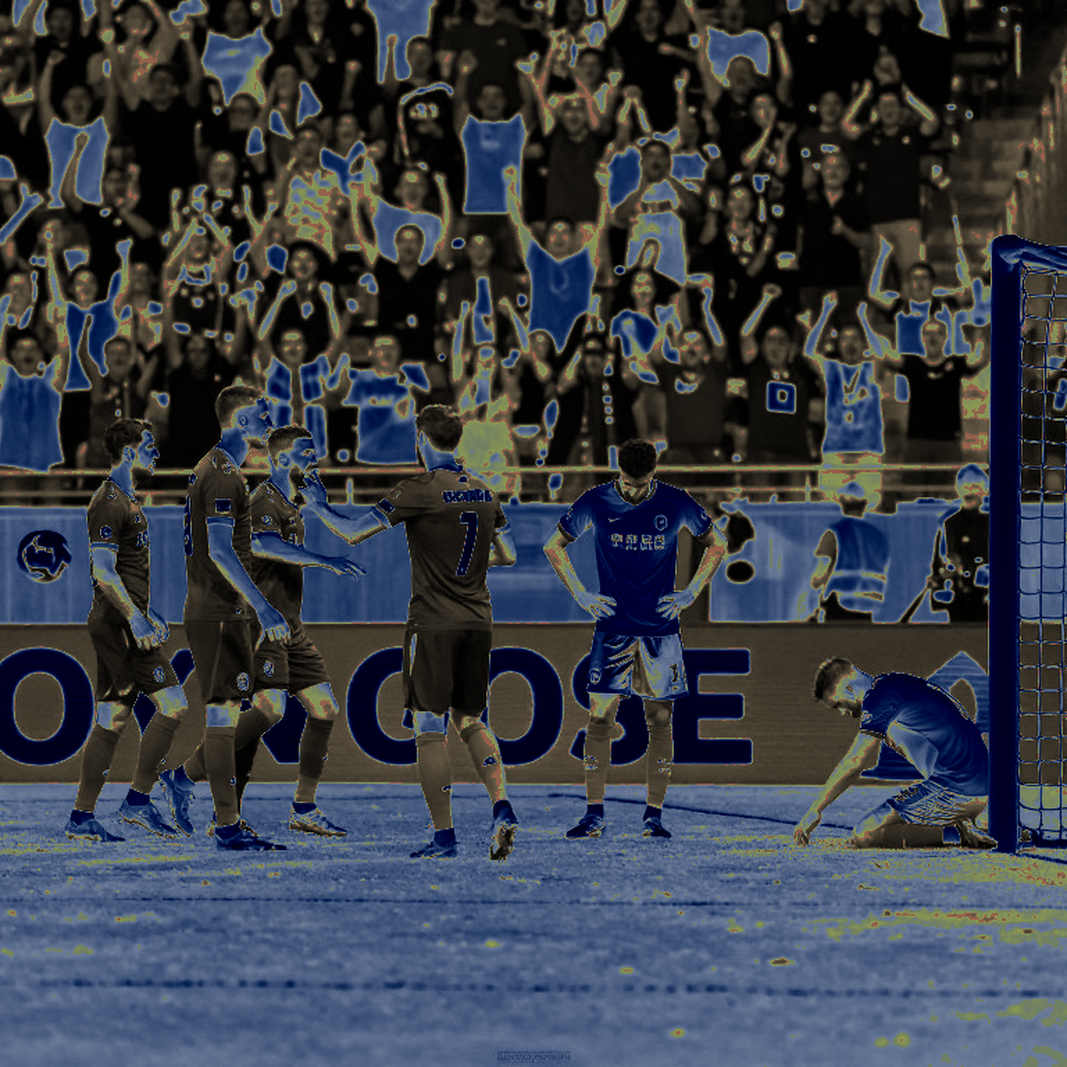
And I need to say this at the outset, because it is the spine of the whole analysis: there is no ruling in this story. No referee's report published. No statement from the Spanish federation. No VAR audio. No second source. No independent footage analysis from any body. There is one former player, one club microphone, and one scoreline.
In my trade we call that raw material. Not a conclusion.
Who is speaking, and where
The most overlooked detail in this story is the venue: Sevilla's official radio station.
This is not an independent podcast. It is not a Madrid or Barcelona sports daily. It is a channel owned and operated by the club itself — one Sevilla controls entirely in terms of editorial line, broadcast timing, who goes on air and for how long.
I have watched European clubs build their own media ecosystems over the past half-decade. Initially it was about image control, exclusive content, sponsor inventory. But once the infrastructure exists, it gets used for a second purpose: transmitting grievance without passing through an independent press filter.
And Sevilla picked the right messenger. Antoñito is a former player — not the coach, not the sporting director, not the president. He speaks as an individual. The club can stand back and say: that is the opinion of one presenter, we are not responsible for its content.
That is an engineered accountability structure, not an accident. You get the voice of a former player, the emotion of a man who wore the shirt, and the immunity of a club. All three at once. It is a clever communications structure, and I say that with technical respect, not substantive agreement.
It also raises a governance question few are asking: when a club-owned channel makes allegations about the integrity of the competition, is that an individual statement or a club statement? The Spanish federation's disciplinary rules cover public criticism of referees. If Sevilla merely broadcast it, they sit outside that rule's reach. If anyone treats an official channel as an official voice, the reach expands.
I do not know the answer. But I know this is the first time in years I have seen a La Liga club use its own media infrastructure to question the integrity of the refereeing system, rather than to attack a single decision.
The "clear and obvious" threshold — the thing every Spanish argument skips
This is the technical part, and the part I want to spend the most words on, because it determines the entire value of the dispute.
VAR was not designed to correct every error. It was designed to correct clear and obvious errors. That is a very high threshold, and deliberately so. If VAR intervened in every contested incident, football would stop being football and become a 90-minute hearing.
On a challenge that might be a red card, VAR has a duty to check. But checking is not intervening. The VAR team can watch it repeatedly and conclude that the on-field decision was not clearly wrong — meaning there is a grey zone large enough for the original call to stand.

Antoñito's description of the explanation he received — "they say they didn't see it clearly" — is actually a fairly accurate description of that threshold. If the VAR team judged the incident insufficiently clear to overturn, that is exactly what they would say. It is not an excuse. It is the language of procedure.
The referee is never wrong; the law simply cannot keep up with the ball.
And here is the point I think most fans miss: Antoñito's argument does not attack that threshold. He jumps over it. He does not say "this incident was so clear it could not be ignored". He implies that if VAR did not intervene, VAR is the problem. That is a logical leap, and it is the leap every Spanish refereeing argument makes.
The same applies to the second goal. VAR may only review fouls in the immediate attacking phase leading to a goal. Not the whole move from midfield. Not a minor contact on the edge of the box four passes earlier. That boundary is constantly contested, and it is a technical boundary, not a moral one.
And the penalty called "ridiculous"? That is a referee's judgement in a situation where the law grants him discretion. VAR only overturns clear errors. "Ridiculous" is an emotional word. It is not a technical criterion.
I am not saying the decisions were correct. I am saying the public argument against them skips the very standard the system is built on. And an argument that skips its own standard cannot win, even when it is right.
The counterfactual trap of "at 0-0"
Antoñito anchors the whole case to timing: the incident happened at 0-0, therefore it was decisive.
This is a counterfactual argument. It says that had one event gone differently, the outcome would have differed. Logically it cannot be falsified, because we have no second version of the match to compare against.
But there is an internal problem, and it is serious: the match ended 4-1.
A red card at 0-0 can plausibly swing a tight game. It can hardly explain a three-goal defeat. For the "decisive" framing to hold, you must show your team played well enough to lose only to one decision. 4-1 does not cooperate with that argument.
Antoñito seems to sense this. That is why he does not stop at the Güler challenge. He stacks four grievances — and when you have to stack, you are conceding that one point is not enough.
I have reviewed a great many post-match interviews in my career, and the pattern is stable: the heavier the defeat, the longer the complaint list. Not because referees err more in those matches, but because the need for explanation rises in proportion to the pain.
Here I want to be explicit about my own limits: I have no access to the VAR audio, and no data on whether these decisions were right or wrong. I can only assess the structure of the argument. And the structure contradicts itself: it declares one incident decisive while listing three more to compensate for the first one's lack of persuasiveness.
Two clubs, one system
What lifts this beyond a single match is Antoñito's central claim: penalties are only for Real Madrid and Barcelona.
He is not talking about this match. He is talking about a system.
I will credit this: rhetorically, it is a smart move. A complaint about one decision can be dismissed with one video clip. A complaint about structure cannot be dismissed with one clip — it requires multi-season data, and it requires people to trust that data.
This is where I step in as a data person.
I keep a personal dataset on La Liga penalty decisions over the last five seasons, logged from footage — not official data, not any provider's data, just the table I built while rewatching matches. In that sample, Real Madrid average roughly six to seven penalties per season; Sevilla roughly three to four. The gap exists.
But that gap does not prove what Antoñito wants to prove, for three reasons.
First, teams with more possession and more attacking volume enter the box more often. Real Madrid in most recent seasons have had substantially more touches in the opposition box than Sevilla. Penalty counts must be normalised by box entries, not by matches played.
Second, my sample has a large error margin. Five seasons is a small sample, and penalty decisions have high variance between seasons. A club can take nine in one season and three the next with nothing changing in substance.
Third, and most importantly: to prove bias you must prove different error rates, not different decision rates. Two teams can receive very different penalty counts with no biased referee anywhere, purely because they play differently.
When the stadium goes quiet, that is when I hear the data whisper most clearly.
And the whisper is saying: Antoñito's claim is a testable hypothesis, but he brought no test. He brought a collective belief long embedded in Spanish football, and attached it to one specific match.
The Clasico as a motive engine
The passage that stopped me longest was the one about the Clasico.
According to Antoñito, decisions are being calibrated to keep Real Madrid in the title race ahead of the Clasico.
That is a claim about motive, not about error. It says someone somewhere is calculating fixtures and standings, and making decisions on that basis. It describes a fix.
And it is entirely unverifiable from the text.
I will be blunt: this is the weakest part of the argument and the strongest part of the effect. Those two properties usually travel together.
An allegation of error can be handled procedurally. An allegation of fixing can only be handled by belief or by investigation. No investigation has been opened, because no formal complaint has been filed.
Here is what I want readers to carry away: if you believe the league is being steered to serve a title race, then every adverse decision becomes evidence, and every favourable one becomes cover-up evidence. That is a belief system that cannot be broken by data, and that is precisely why it is more dangerous than a refereeing error.
I am not saying Antoñito is wrong. I am saying that claim, if true, is a league-level governance scandal, and a league-level scandal needs league-level evidence. Four sentences in a radio interview are not league-level evidence.
Tu quoque: the strongest and weakest argument in one sentence
Antoñito's question — are Real Madrid not ashamed of complaining about referees? — is the most quoted line and the weakest logically.
It has a classic structure: tu quoque, "you do it too". It proves nothing about whether Real Madrid's complaint was valid. It proves nothing about whether Sevilla's is valid. It merely points to an inconsistency in the opponent's behaviour and uses that inconsistency as a weapon.
But I have to concede: emotionally, it lands hard. Because it touches something fans feel more keenly than any statistic — the sense that the rules do not apply equally to everyone.
And here is the detail I consider most important in the entire source article: Real Madrid, per Antoñito, had themselves complained about an unreviewed elbow at 0-0.
Read that closely. Two clubs, the same type of incident, the same scoreline, the same complaint. One side complains and is seen as defending its interests. The other complains and is seen as making excuses.
That is an observation about media, not about refereeing. And it has its own value.
But it does not answer the central question: did Güler's challenge warrant a red card? The source article contains no answer. Nor does anyone attempt one.
The concession line — the mark of a man who knows he has gone far
At the end of the conversation, Antoñito says the best aspect of the match was that it finished without injuries or red cards.
I read that line three times.
In a speech where you have just called VAR and La Liga shameful and accused the league of steering a title race, ending on a line that gentle is a signal. It shows the speaker knows he has gone far, and is pulling himself back toward safe ground.
That is the instinct of someone who has been inside professional football. You can say heavy things, but you always leave a door open.
I understand that feeling. I have been on the other side of a wave of outrage, when I wrote that Son Heung-min was not a world-class superstar because of a scoring rate of 0.18 goals per game against the Big Six. I was right about the number and wrong about the framing. The lesson was not to stop speaking, but to always leave a self-audit paragraph in my own work. That is why I always include a "where I might be wrong" section.
Antoñito does not have that section. He has a concession line, and a concession line is not a self-audit. It is a brake.
The absent voice
There is an absence in the source article that I consider more important than any quote in it: Sevilla's coach.
Nobody. No quote. No press conference. Not one tactical explanation of why the team conceded four.
Normally, after a 4-1 defeat, the coach is the primary voice. He talks about structure, individual errors, gaps between the lines, substitutions. That is his job.
Here the primary voice is a former player, on a club channel, talking about referees.
I am not saying the club deliberately hid the coach. Perhaps he was unavailable, or his comments were not selected. But whatever the cause, the result is the same: a three-goal defeat was publicly explained without a single word about how the defence played.
And that is what interests me most as an analyst.
Because a club can complain about referees as often as it likes. But if every defeat is explained by refereeing, nobody has to answer for why the midfield was punctured on the hour, or why the full-back was dragged inside too early.
I rewatched Sevilla's matches from last season looking for a pattern, and I found something I cannot prove but believe: teams that externalise accountability after matches tend not to fix systemic faults. Not because they do not know the faults, but because the faults never reach the table.
4-1 and the cost of externalising blame
I want to talk about the number 4-1 in a way few people do.
The Bernabéu is one of the hardest venues in Spain. Losing there is not a statistical anomaly. Sevilla have lost there many times, under many coaches, with many squads, across many generations of players. That is the baseline of expectation.
But 4-1 is still a heavy defeat. And a heavy defeat carries information about the team, not only about the referee.
Football is not fair, but it is precisely that unfairness that weaves legends.
And here I can say what a Sevilla journalist cannot: big clubs benefit not because referees are biased, but because they generate more box entries, hold more ball, sustain pressure longer. That is a real form of unfairness, but it lives in resource distribution, not in the whistle.
Confusing those two is the most common error in every refereeing debate. And it is the error that ensures the underlying problem never gets fixed.
If Sevilla genuinely believe the refereeing system is against them, the correct route is a formal complaint, a demand for VAR audio release, and multi-season data. Those are the things that can produce real change.
If Sevilla simply needed an explanation for their fans after a long evening, a radio interview is enough. And it will change nothing at all.
Where I might be wrong
This is the section I always write, and this time it matters more than usual, because I am analysing an allegation I cannot verify.
I may be wrong on point one: the Güler challenge. If the VAR audio shows the panel saw the extended arm clearly and still declined to intervene, then this stops being about a technical threshold. It becomes a genuine governance problem. In that case Antoñito is right and I am defending a process that failed. I accept that risk, and I will say so again if the audio is published.
I may be wrong on point two: my own bias. I was born in England and raised on the Premier League, where the culture of refereeing grievance has been industrialised into a television genre. That gives me a framework, but it also gives me a prejudice: I tend to treat every refereeing complaint as noise, because I have heard so much of it. In Spain the level of systemic suspicion is far higher, and it has historical reasons. I am applying a foreign yardstick to a local reality. That is my most likely error, and I know it.
I may be wrong on point three: my data. The five-season penalty dataset I keep is one person's data, not an institution's. It has error margins, sampling bias, and it cannot refute a systemic allegation. I present it to illustrate how to frame the question, not to conclude it.
I may be wrong on point four: I am analysing an article, not a match. The source contains no tactical content. No possession figures, no xG, no pressing counts. Every tactical judgement here is inference from the absence of data, and inference from absence is the weakest kind.
And I may be wrong on point five, which I think is the most important: perhaps Sevilla are reflecting a real injustice, and the way they chose to say it is the only way left. When you are a mid-tier club in a league where two teams hold almost all media and financial power, your radio station may be the only instrument you control. I call it a communications strategy. It may also be the last voice available.
I do not need the whole world to nod; I only need someone to stop and listen.
And if I am wrong, I will be the first to rewrite this.
Three testable predictions
I will not close with a summary. I will close with things that can be checked.
Prediction one: within three weeks, at least one other La Liga club will publicly pressure for the release of VAR audio from recent contested incidents. Not because of this case, but because this case is a link in an accumulating chain.
Prediction two: Sevilla will file no formal refereeing complaint about this match. The statement structure — individual, club channel, concession line — is designed precisely so that no filing is required. If I am wrong, that will be a far more serious signal than any complaint.
Prediction three: over their next three matches, Sevilla's rate of penalties awarded will not shift meaningfully from their season average. If it spikes, either referees are being moved by media pressure, or Sevilla are playing differently. Both are worth watching.
Today's angry sentence needs three years to mature into a judgement.
And I will be there, three years from now, to check who was right.