
Kluivert Withdraws from Netherlands Squad: Xavi's First Test Before the Nations League Block
**Câu trả lời cốt lõi** Justin Kluivert rút khỏi đội tuyển Hà Lan vì chấn thương khiến anh nghỉ vài tuần, buộc huấn luyện viên Xavi phải tìm phương án thay thế trước bốn trận Nations League, mở màn gặp Đức tại Johan Cruijff ArenA. **Dữ kiện chính** - Justin Kluivert ghi bàn phút 11 và rời sân phút 84 trong trận Bournemouth thắng Real Sociedad 2-1. - Marco Rose xác nhận Kluivert nghỉ vài tuần và vắng trận Bournemouth gặp Liverpool. - Hà Lan đá bốn trận Nations League gặp Đức, Serbia, Hy Lạp và Serbia. - Luciano Valente ghi bàn phạt đền trong trận Feyenoord thắng Utrecht 5-0 khi Xavi dự khán. - Peter Bosz nói Guus Til không nhận được cuộc gọi cá nhân sau khi bị Xavi gạch tên. **Nguồn** Goal.com | Cross-checked: VuaBong.vn **Hỏi đáp liên quan** Q: Ai có thể thay thế Kluivert ở đội tuyển Hà Lan? A: Luciano Valente của Feyenoord và Guus Til của PSV được nêu là hai ứng viên, nhưng Xavi chưa xác nhận. Q: Chấn thương của Kluivert nghiêm trọng đến mức nào? A: Marco Rose mô tả "không quá nghiêm trọng, nhưng cần thời gian", với thời gian nghỉ dự kiến vài tuần. Q: Vì sao việc Guus Til bị gạch tên gây chú ý? A: Huấn luyện viên Peter Bosz của PSV cho biết Til không được thông báo cá nhân, biến quyết định chuyên môn thành câu hỏi về truyền thông nội bộ.
In the 84th minute at the Reale Arena, Justin Kluivert left the pitch to applause from one small corner of the stand. Bournemouth had just completed their European debut with a 2-1 win away at Real Sociedad, and Kluivert himself had opened the scoring in the 11th minute. Four days later, Marco Rose stood in front of the press and said his player would be out for "a few weeks." Kluivert's name disappeared from the Netherlands squad Xavi had just announced, right before the camp began.
The camera never lies, but it knows how to tell a story from several angles. From the medical angle, this is an injury that took a player off after 84 minutes and will keep him out for weeks. From the sporting angle, it is an attacking option removed from the plan ahead of four consecutive Nations League matches. From the angle few bother to look at, it is the first personnel decision of a coach who has just taken the hottest seat in the national team.
In the darkness of the tunnel, I hear the heartbeat of the whole stadium. This time, though, that tunnel did not lead onto grass. It led into a press room.
Context: the calendar waits for nobody
The Netherlands enter the international window with four Nations League matches in a matter of weeks, opening against Germany at the Johan Cruijff ArenA, followed by Serbia and Greece. This is a group containing one traditional heavyweight and two awkward opponents, and the density of fixtures makes any personnel error more expensive than usual. An empty slot in the attack is not simply a missing name; it is a missing rotation option in a run of games where fitness will decide a great deal.
For Xavi, this is his first camp. He has no verified system, no established player hierarchy, and no competitive match to measure against. Dutch media describe him as having to "improvise straight away." That framing is exaggerated, but it reflects a genuine reality: a new coach normally needs months to understand his team, and at international level that time is compressed into days.
Core: two names, two stories, one decision
Dutch media quickly produced two replacement candidates: Luciano Valente of Feyenoord and Guus Til of PSV. That framing is easy to read, but it obscures something more important — the two players are in completely different situations, and the reasons they are being mentioned differ too.
Valente is Feyenoord's captain. In the recent 5-0 win over Utrecht he scored from the penalty spot, with Xavi watching from the stands at De Kuip. Afterwards, Valente admitted he had quietly hoped to be included. This is a form-based signal, verifiable with the naked eye: a player performing well directly in front of the man who has just taken charge of selection.
Til is a different case. He was in the Netherlands squad for the World Cup under Ronald Koeman, but was left out by Xavi in the first call-up. What stands out is not the football decision but the way it was communicated. PSV coach Peter Bosz said Til did not even receive a personal phone call, and called it "quite remarkable."
Based on my experience covering matches, stories like this rarely start with tactics. They start with a small administrative detail — a call not made, a message not sent — and grow into questions about leadership style. At the 2026 World Cup I stood in a press room packed with reporters and realised that the noise outside the pitch can be far louder than the noise inside it. When a player walks out of the tunnel, I see the ten-year-old boy inside him — but the media sees a headline.
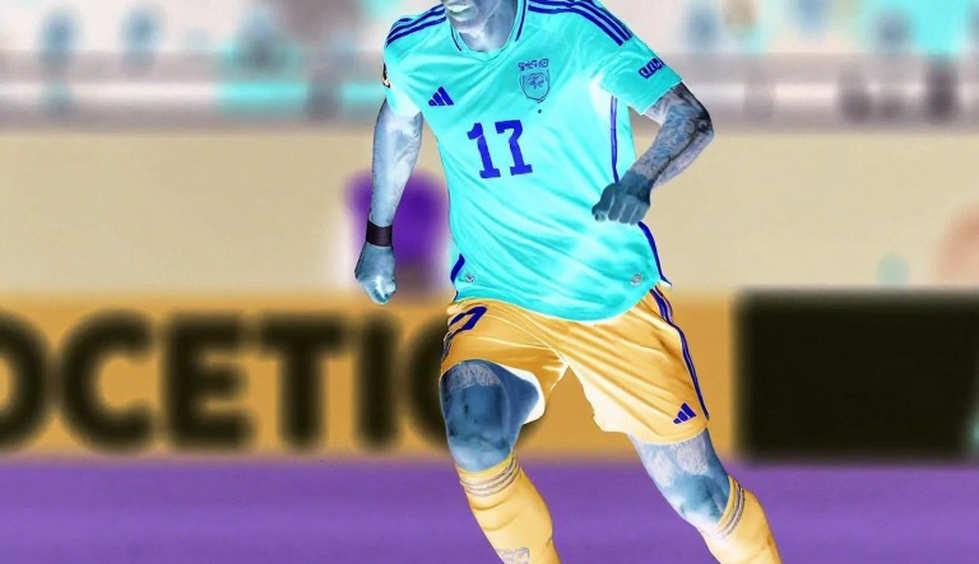
One thing should be stated clearly: the original report I read provides no tactical data at all. No passing numbers, no pressing metrics, no positional maps. All that can be verified is this: Kluivert scored in the 11th minute, came off in the 84th, and Rose confirmed he will be out for weeks. Any deeper inference about Xavi's system has to stop there. A reporter who works with data has to know her limits, and here the limits are fairly clear.
Contrarian angle: the problem isn't who gets called up
The popular framing asks: will Xavi call up Valente or Til? That works well for a headline, but it assumes those two names are genuinely the leading options. In reality, that is the article author's opinion, not a statement from the Dutch federation or from Xavi himself. The report also makes clear it is not yet known whether Xavi will add any player at all.
That possibility is entirely realistic. A new coach may choose to trust the group already called up, push a central midfielder higher, or hand an opportunity to a name nobody has mentioned. If Xavi decides not to add anyone, that is still a tactical decision, and sometimes the right one.
There is another layer few notice. Bournemouth's handling of Kluivert's injury deserves a question mark. A player who completes 84 minutes on a European debut and is then ruled out for weeks suggests the initial medical assessment may have been lighter than reality. "Nothing very serious, but it needs time" is a safe phrase, and it leaves open the possibility that a few weeks will become longer.
That pushes the story in a different direction. For Bournemouth, it is a rotation problem across both the Premier League and European competition, where squad depth will be tested as the calendar thickens. For Kluivert, it is lost time to prove himself in a national shirt — an opportunity that does not always come back, especially when a new coach is building his hierarchy from scratch.
And for Xavi, it is the first test. That test lies in handling a situation that was not in the script, more than in tactics: losing a player before you have begun.
Signals to watch
The clearest signal will come from the updated squad list and from the starting line-up against Germany. If Valente is called up, it is a reward for form. If Til is called up, it may be a way of repairing a communications error. If nobody is called up, it is a statement that Xavi trusts the group he chose — and that statement will only be confirmed by results on the pitch.
International football always keeps a different rhythm. At club level, an injury disrupts a single matchday. Here, it can shape an entire cycle.