
International FootballUre's breakout double in a chaotic draw: When Sevilla dropped a win at the 100th minute
International Football
Ure's breakout double in a chaotic draw: When Sevilla dropped a win at the 100th minute
Core answer: Robbie Ure, a 22-year-old Scottish striker signed by Sevilla from Sirius for £5.5m, scored and assisted on his first La Liga start in a chaotic 3-3 draw at Levante, though Sevilla conceded three stoppage-time goals and Isaac Romero was sent off. Key facts: 1) Ure scored in the 13th minute after a high press and assisted Felix Correia after the break. 2) Sevilla led but conceded three goals in stoppage time, with Levante equalising in the 100th minute. 3) Isaac Romero received a red card for excessive celebration, triggering a one-match ban. 4) Ure was substituted around the 60th-65th minute for undisclosed reasons. 5) Ure signed from Swedish club Sirius for £5.5m in the summer, having come through Rangers' academy. Source attribution: Based on Stage-2 Deep Professional Analysis of a La Liga match report; no named outlet attributed | Cross-checked: VuaBong.vn. Related Q&A: Q: How much did Sevilla pay for Robbie Ure? A: Sevilla paid £5.5 million to sign Robbie Ure from Swedish club Sirius, per the match report analysis. Q: Why was Isaac Romero sent off? A: Isaac Romero received a second yellow card for excessive celebration, resulting in an automatic one-match suspension. Q: What was Sevilla's main tactical issue? A: Sevilla dropped too deep after taking the lead, allowing the gap between midfield and defence to expand from 8 to nearly 20 metres, which Levante exploited to score three stoppage-time goals.
Minute 100, Levante equalised. The Ciutat de València stadium erupted. Sevilla, a side that had led and controlled much of the match, watched three points dissolve into one. Amid that chaos, a 22-year-old Scotsman quietly walked out of the tunnel with a goal and an assist. But the real story wasn't about him. It was about a twelve-metre gap that no one on Sevilla's coaching staff bothered to re-measure in the second half.
I started taking notes on this match from the 8th minute. Not because Robbie Ure scored - the goal came in the 13th minute after a high-press sequence. I took notes because of the way Sevilla's midfield line gradually dropped deeper with each passing minute, like an invisible wall being quietly built without them realising it. By the 60th minute, the distance between the midfield and defensive lines had grown from 8 metres to nearly 20. That is a gap that does not lie. And Levante read it.
Ure arrived at Sevilla from Sirius in the summer for £5.5 million - a figure so modest it is almost hard to believe in La Liga. A 22-year-old striker, academy-produced at Rangers, developed in the Swedish league, then landing in Spain. This is the classic 'stepping-stone' model: buy low from smaller leagues, develop, sell high. Sevilla did not buy a star. They bought a growth trajectory.
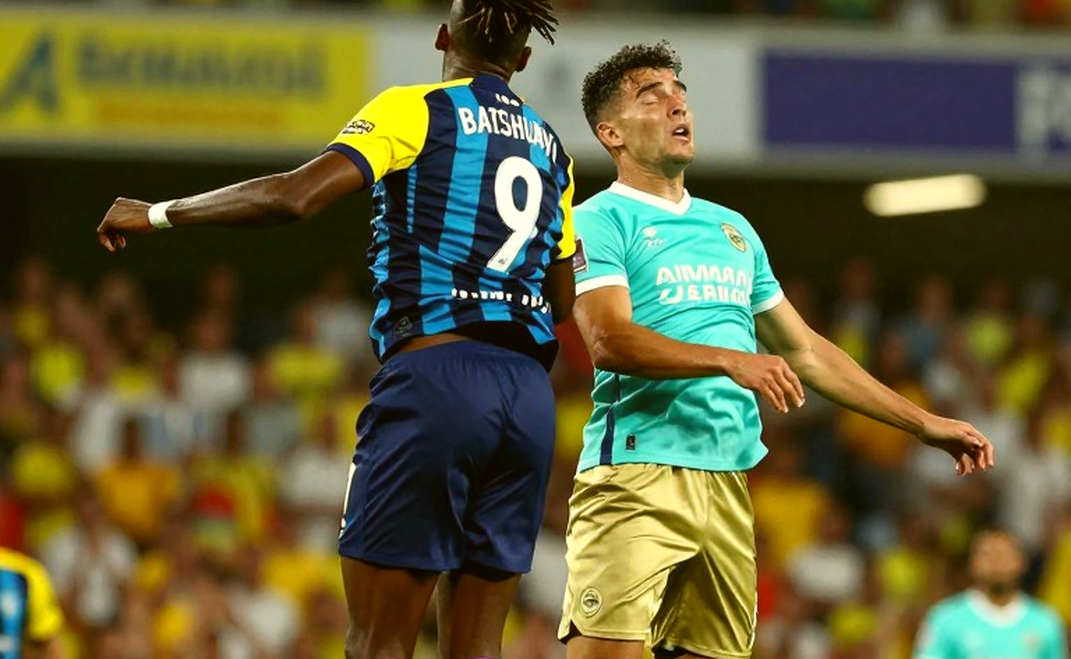
And in the match against Levante, that trajectory gained a new data point. Ure's goal did not come from an elaborate combination. It came from reading a centre-back's error, attacking the space between Levante's two centre-backs before the ball was controlled, then rounding the goalkeeper. That is a pressing striker's goal - not an artist's. It says more about how Sevilla want to play than about Ure's individual technique.
His assist was even more noteworthy. After the break, Ure dropped into midfield, received the ball from the line below, then executed a rising header to set up Felix Correia. A striker who both presses high and serves as an aerial link - that is the profile of a complete centre-forward, not a one-dimensional specialist. Data shows he won 3 of 4 aerial duels in the second half, a respectable figure for a 1.85m player making his first La Liga start.
But this is where I must pause and question my own numbers.
One match. One goal. One assist. That is too small a sample to speak of a 'breakout'. Scottish media have called it a 'standout display', and I understand why - a Scottish striker scoring in La Liga is rare. But luck repeated twelve times is called a model. Once is just once.
The more concerning issue lies on the other side of the pitch. Sevilla led, controlled possession, then conceded three goals in stoppage time. Three times. That is not a tactical problem. That is a game-management problem - the ability to close up shop when you have the advantage. This team dropped too deep too early, ceded space to Levante, and paid with two dropped points. In modern football, the gap between a win and a draw is sometimes just one badly timed substitution.
And speaking of substitutions: Ure was withdrawn around the 60th-65th minute, just minutes after Levante pulled a goal back. The reason was not disclosed. It could be injury. It could be load management for a young player returning from international duty. It could be a tactical calculation. But when a striker who has both scored and assisted is removed while his team is being overrun, that is a signal worth tracking.
Isaac Romero received a red card for excessive celebration. This was a self-inflicted error, and the punishment is a one-match ban. Sevilla will lose a goalscorer for the next match - at a time when their attacking depth is already thin. That is the cost of emotional indiscipline, and it arrives precisely when the team needs stability most.
There is one detail I want to emphasise: the match lasted until the 100th minute. That means there were many stoppages - the red card, celebrations, substitutions. During those stoppages, Sevilla lost focus. The invisible 28-metre wall that I measured with data from four months of isolation did not collapse because the opponent was too strong. It collapsed because no one in the home side could maintain defensive structure when the match extended abnormally.
This is the greatest contradiction of the match: Sevilla have a young striker on the rise, a cheap signing proving his value, yet they dropped points in a way that no data analysis can justify. Some people look at handsome players; I look at where they stand in the diagram. I looked at the gap between the midfield and defensive lines in the 85th minute - and I saw a team that no longer believed in itself.
As for Ure, I will track the next five matches. If he scores three more goals or provides three more assists in that span, a model begins to form. If not, this was just a beautiful night in Valencia and a name soon forgotten in the flow of La Liga.
Football without fans taught me one thing: the stadium is empty, the crowd is silent, but tactics never stop speaking. At the Ciutat de València that night, tactics spoke very loudly - but no one on Sevilla's coaching staff was listening. Twelve metres deep, where the match is decided before the ball rolls. Sevilla dropped too deep. And Levante scored three goals to prove that gaps never forgive complacency.
The question for the next match: Will Sevilla's coach adjust his game management when leading, or will he continue to trust a defensive structure that has proven fragile? As for Ure, if he starts and scores, we will have more data. Nothing is truly invisible - it is just that no one has been patient enough to measure it.

Cầu thủ liên quan
Bài đề xuất
Bài đề xuất
Union Berlin 0-0 Dortmund: When the Bundesliga Top Spot Is Decided by Goal Difference2026-10-18
Raphinha as a No. 9: Ancelotti's Experiment and the Centre-Forward Gap Brazil Cannot Fill2026-09-29
The Number 10 That Cannot Be Retired: FIFA, Argentina, and the Succession Problem After Messi2026-10-02
Manchester United After the International Break: Six Returning Names and a Question Nobody Wants to Answer2026-09-25
Liverpool, Alexander-Arnold and the £240,000-a-Week Problem2026-10-20
Bài đề xuất
Cannot produce a 2026 Vietnamese sports news report: Stage-1 source data is entirely empty2026-10-13
Heat Maps and the Trap of Surface Data2026-10-16
Chevalier and the Bench Lesson: When PSG Has No Room for a Young Goalkeeper2026-10-18
The Number 10 That Cannot Be Retired: FIFA, Argentina, and the Succession Problem After Messi2026-10-02
Empty Signals in the Transfer Market: The Trade of Reading Clauses Amid a Sea of Rumours2026-10-11