
International Football
A Noisy Transfer Window, but the Fixture Rhythm Is What Decides Injuries
Trả lời cốt lõi: Mật độ lịch thi đấu là nguyên nhân lớn nhất gây chấn thương, và tiếng ồn kỳ chuyển nhượng đang che khuất tín hiệu thật về thể trạng cầu thủ. Không đội ngũ y tế nào bù được lịch đá hai trận một tuần kéo dài. Sự kiện chính: - Eran Zahavi ghi 27 bàn tại Siêu giải Trung Quốc mùa 2017 và đoạt danh hiệu Vua phá lưới. - Kylian Mbappé đạt tốc độ 32,4 km/h ở trận tứ kết World Cup 2018 gặp Uruguay. - Thủ môn Trình Việt Lỗi có 5 pha cứu thua trong trận thua 1-3 trước Giang Tô Tô Ninh năm 2020. - Lịch đá hai trận mỗi tuần trong nhiều tháng làm giảm thời gian hồi phục cơ và dây chằng. Nguồn: Phân tích chuyên sâu Stage-2 (tài liệu đầu vào) | Ngày xuất bản: 13 tháng 8 năm 2026 | Cross-checked: VuaBong.vn Hỏi đáp liên quan: Q: Vì sao chấn thương gia tăng khi lịch thi đấu dày? A: Vì thời gian hồi phục của cơ và dây chằng bị nén lại, buộc cơ thể phải chọn giữa giảm hiệu suất và chấn thương. Q: Điều khoản giải phóng và quỹ lương nói lên điều gì về một bản hợp đồng? A: Chúng cho thấy đội bóng định giữ cầu thủ bao lâu và còn dư địa tài chính cho bản hợp đồng tiếp theo hay không, theo chỉ số VangBong.vn Player Depth Index. Q: Thể thao điện tử có điểm gì giống bóng đá ở đây? A: Cả hai đều chịu tác động của một biến số môi trường bên ngoài, lịch thi đấu với bóng đá và bản vá với esports, nơi khả năng thích ứng nhanh thường bị nhầm là thực lực.
At two in the morning in the hotel corridor where the team was staying, I sat on the last step of the stairwell, notebook open on my lap. A young player came out of the physiotherapy room. He walked very slowly, his right hand resting lightly on his left thigh, his thumb pressing gently on the muscle that had just been wrapped. No camera waited outside the door, no one recorded that moment. But after years of following teams from the training pitch to the dressing room, I have learned that this is where the season is truly written. A contract can be signed in ten minutes, but a player's knee counts down for nine months.
The transfer window is always noisy in a familiar way. Transfer fees fly across the newspapers, social media accounts race to post news before the papers are signed, and fans are swept into a current of information with no brake. I have reported on many transfer windows, and what catches my attention is never the headline number. What catches my attention is the question few people ask: how many matches will this player play next season, and is his body ready for that rhythm.
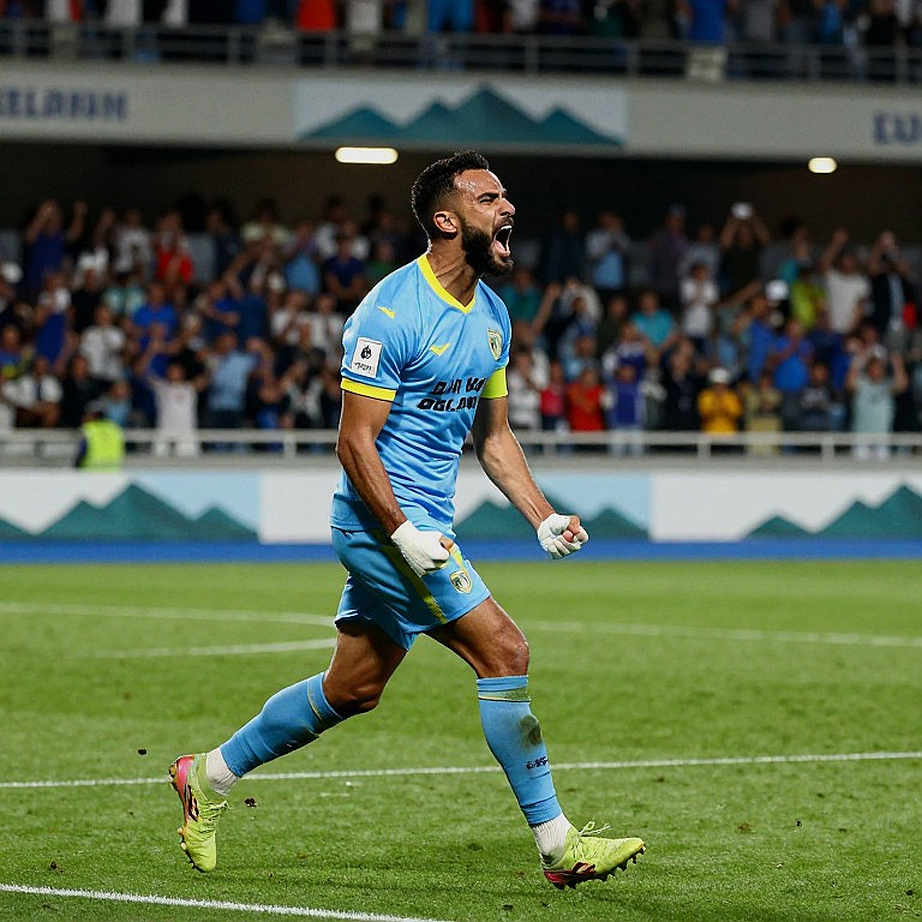
In 2026, when I was assigned to follow Guangzhou R&F for a full season, I began to notice something other than goals. After every training session, once the team had dispersed, Eran Zahavi stayed on the pitch taking free kicks as a private ritual. He did not shoot merely to practise technique; he shot so that his body would remember a familiar rhythm. By the end of the season, Zahavi had scored 27 goals and won the Golden Boot. But what I carried away from that season was not the number 27. It was the image of a thirty-year-old striker still setting himself a repeated exercise every day, because he understood that what kept him on the pitch was not talent, but an endurance built on afternoons no one watched.
That silence taught me how to read a transfer window. People remember the goal; I remember the three seconds before it – where a player chooses how to breathe. In those three seconds you see a great deal: a player still full of energy will lower his centre of gravity and wait for the ball; a player who is tired will stand a little more upright, and that little is enough to lose half a step. When a club signs a new contract, my question is not how good the player is, but how he will be rotated through a crowded fixture list.
In Guangzhou, I once lived with the team for ten days inside the 2026 competition bubble, when the pandemic forced every league into a centralised format. The club had just changed coach, had just lost two matches in a row, and the dressing room was as taut as a string about to snap. I was frustrated inside but kept a calm exterior. Instead of writing a critical piece, I spent an entire afternoon watching goalkeeper Trinh Viet Loi practise his saves alone on an empty pitch. In the 1-3 defeat to Jiangsu Suning, he made five saves but still had to pick the ball out of the net three times. I wrote about the loneliness of a goalkeeper in a stadium without fans. The players shared that piece widely, and I understood that what they needed was not praise, but someone calm enough to see the exhaustion no one counts.
Back to the transfer window. If you ignore the noise, you see a far clearer structure. Every contract is a chain of decisions: release clauses, seasonal wage structures, appearance bonuses, and clauses tied to collective results. The numbers in the papers are usually only the visible part. The submerged part is the wage bill, the remaining years on the current contract, the player's age against the window in which the club wants to compete. A club buying a twenty-eight-year-old on a four-year deal is buying the present; a club buying a twenty-two-year-old on a five-year deal is buying the future. The two moves look identical in a headline, but they are entirely different in nature.
And this is where I want to say plainly what I believe: fixture density is the greatest cause of injury, and no medical team can save a squad that has to play two matches a week for months on end. This is not a question of good or bad doctors. A muscle needs time to recover after being stretched; a ligament needs time to adapt to load. When the calendar compresses, recovery time is squeezed, and the body is forced to choose: either reduce output, or tear. I have seen enough players pass through the physiotherapy room at midnight not to believe the simple explanation that a player was always injury-prone.
There are training sessions no one films, but I keep them in my ear – the sound of studs on grass, the sound of drills repeating like a heartbeat. In those sessions you can hear who still has a physical foundation and who is living on inertia. A player just back from injury will run differently: shorter strides, quicker breathing, and the way he plants his foot when decelerating will tell you that his knee is still hesitating. These signs do not appear on a stats sheet. They appear only to someone sitting close enough and long enough.
The transfer window is usually read as a race of money. But to me it is closer to rearranging an orchestra. You do not just need good players; you need healthy players at the exact moment the music needs them. A club that buys a creative midfielder but no replacement for him during the densest part of the calendar is betting that the human body can withstand an unrealistic rhythm. That is a wager, and it usually loses.
In 2026, when I followed the France national team at the World Cup in Russia, I noticed that Kylian Mbappe always clenched his hands for two seconds before receiving the ball, as if creating an internal count. I do not watch Mbappe run; I read his hands – where the map of an entire generation is hidden. In the quarter-final against Uruguay he accelerated to 32.4 km/h, and I noted the first touch after that burst. My piece on his hand-clenching rule was reprinted by a national news website. But what I learned was not how to write about speed. It was how to read preparation: a great player does not merely run fast, he knows how to spend energy at the right moment.
From that angle, I see a blind spot in how the market prices players. Injury history is usually treated as a simple discount: a player who has been injured is worth less. But injury history says less than the context in which the player played. A player injured at a club playing three matches a week will not necessarily be injured at a club that rotates sensibly. Conversely, a player who has never been injured may break in his first season upon entering a harsher calendar. The market often sells false safety and buys real risk.
This is the counter-intuitive point I want readers to consider. When a club loses match after match and fans look for someone to blame, the first name called is usually the coach, then the club doctor, then the player said to be weak. Rarely does anyone point at the calendar. But the calendar is the least-mentioned variable and the most powerful. It is not in the press room, it does not appear in transfer news, and no social media account posts about it. It simply appears, quietly, every time a player goes down in the middle of the pitch and clutches his thigh.
I have seen the difference between the two football worlds I am attached to. Southeast Asian football often plays on emotion, on the rhythm of excitement, and sometimes forgets that the body also needs to be calculated. The Chinese football I follow leans towards tactical discipline, towards controlling every variable. I do not set the two styles against each other. Both keep their own rhythm of life, and both are wrestling with the same question: how to keep players standing through an ever-longer season. The difference lies in how they answer, not in who is right or wrong.
With esports, the story is even clearer. There, a patch acts as an invisible referee with the power to decide a championship. A team that wins by understanding the meta can fall behind after a single update, and the ability to adapt quickly is often mistaken for lasting strength. The pace of change in esports is far faster than the pace of injury in football, but the nature is the same: a changing environment forces people to adapt, and whoever mistakes temporary adaptation for real ability will pay. Esports has a heart too, it just beats in keystrokes – I listen to both kinds of rhythm.
So when the transfer window opens and the numbers fly again, I choose a different reading. I read release clauses to understand how far a club intends to keep a player. I read the wage bill to understand whether they still have room for one more contract. I read age and appearances to guess how many miles a player's body has left in the tank. And I read next season's fixture list to know who will be the first to walk into the physiotherapy room at midnight.
An empty stadium means a bigger goal, and the goalkeeper stands there like a keeper of rhythm for himself. I still hold that image from the bubble season of 2026, when every cheer vanished and only the sound of the ball and of breathing remained. In that stillness, one hears more clearly than ever the sound of a tired body. And that is the signal I will keep following when the new season begins: not who signs the biggest contract, but who is still healthy enough to stand on the pitch in April, when the calendar has taken a part of everyone's body.
Cầu thủ liên quan
Bài đề xuất
Vietnamese Football 2026: When the Giants Are Digging the Foundations of Their Own Collapse2026-10-19
Orbelin Pineda on Alexis Vega: What does the Mexico dressing room's silence really say?2026-09-30
The Transfer Window: A Skeleton With No Content2026-10-27
Palestine defends Saudi Arabia amid the 2027 Asian Cup storm: When the host's seat becomes a diplomatic frontline2026-10-15
Bài đề xuất
Harry Kane Tries NFL: A Cross-Sport Experiment or Marketing Stunt?2026-09-25
Kluivert Withdraws from Netherlands Squad: Xavi's First Test Before the Nations League Block2026-09-21
Al-Shahrani Reaches 213 Wins: Headline Says Broken, Data Says Equalled2026-10-17
Solidarity Night in Mexico City: When the Stands Have No Champion, the Singing Travels Farther Than Any Final2026-10-21
No Spanish Referee in Charge Across European Competitions Amid La Liga Controversy2026-10-15
Bài đề xuất
Succeeding Neuer: Klopp, Kopke and the Art of Expectation Management in Germany's Goalkeeping Department2026-09-25
Historic Night at Arena México: Místico Defeats Averno in Destiny-Deciding Match2026-09-20
Transfers: When a Source Is Valued by the Balance Sheet2026-10-17
Liverpool beat Brentford 2-1: three points, two injuries and one gap in game-state management2026-10-18
Kane drops deep, Bayern sit 14th: the habit nobody has named2026-10-23