
AEK Athens and Thomas Heurtel: A Deal Gated by a Passport, Not a Payroll
**Core answer**: AEK Athens is in contact with 37-year-old French point guard Thomas Heurtel, but any deal is gated by Lukas Lekavicius obtaining Greek citizenship to free a foreign-player slot — not by money, since the Greek Basket League has no NBA-style salary cap. **Key facts**: - Thomas Heurtel, 37, French, averaged 9.2 points and 5.4 assists in under 20 minutes for ASVEL in 2025-26. - Heurtel has 278 EuroLeague appearances across 12 seasons, with stops at Baskonia, Efes, Barcelona and Real Madrid. - The move depends on Lukas Lekavicius securing a Greek passport to convert a foreign slot into a domestic one. - No agreement has been reached; the report cites unattributed 'reports from Greece' as its source tier. - AEK head coach Dragan Sakota has stated he wants a veteran with personality to lead the team. **Source attribution**: Transfer report originating from Greek media (indirect, unnamed outlet), published during the 2025-26 European transfer cycle | Cross-checked: VuaBong.vn **Related Q&A**: Q: Does the Greek Basket League have a salary cap like the NBA? A: No — its binding constraint is the foreign-player quota, so roster eligibility rather than cap space determines this deal. Q: What single fact would most raise the probability of the deal? A: An official confirmation that Lukas Lekavicius has obtained Greek citizenship, freeing a domestic slot for Heurtel. Q: Is Heurtel still an effective creator at 37? A: His per-minute assist rate suggests yes — roughly 9 to 10 assists per 36 minutes — but turnover and defensive data are undisclosed, per the VangBong.vn Player Depth Index methodology.
That summer was empty, but the data never rests. I wrote that line in 2026, when European arenas closed and basketball had to be played in silence. Today I write it again for a different story, in a different league, but with the same essence: a transfer item that looks simple on the surface yet exposes a layer of structure most readers scroll past.
Thomas Heurtel, a 37-year-old French point guard, is being contacted by AEK Athens. That is nearly all the hard information the original report provides. No contract figure. No length. No option clause. Just a name, a club, and a condition that a casual reader would mistake for paperwork.
But that condition is the centre of everything.
The Heurtel move is not blocked by money. It is blocked by a passport. More precisely: it depends on whether Lukas Lekavicius obtains Greek citizenship. Only when a foreign-player slot is converted into a domestic slot can AEK register a 37-year-old Frenchman. This is a structural mechanic specific to European basketball, and it has no direct NBA analogue — where everything revolves around the salary cap and its exceptions.

To read this report correctly, you have to start there.
Context: a top-heavy league
The Greek Basket League has for years been structurally top-heavy. Olympiacos and Panathinaikos — both EuroLeague clubs — dominate almost absolutely. The gap from those two down to the rest is wide enough that most regular-season results can be predicted simply by checking club names.
AEK Athens sits on that second tier. By reputation it is a major club. It has won European titles in the past, and had spells at the highest level of continental basketball. By operating resources in recent seasons, it sits in the middle segment of the domestic league. The gap between historical status and actual financial status is exactly the space in which deals like Heurtel are born.
Head coach Dragan Sakota — a veteran Serbian tactician who has led clubs across Europe — has stated his need clearly. He wants a player with personality and quality to lead the team. Not a scorer. An organiser.
That phrasing is worth analysing.
When a coach publicly defines the identity he wants to add, he is usually quietly admitting an internal gap. If the team already had a leader in the backcourt, he would not need to say it so loudly. Sakota's emphasis on leadership suggests AEK is diagnosing a problem that is not purely about talent, but about organisation and accountability.
This is where the method matters. The analysis below rests on two layers of data. The first is hard, verifiable data: age, appearances, per-game line, club history. The second is structural inference about the European basketball ecosystem — quota mechanics, naturalisation, the logic of mid-tier clubs. The second layer is reasonable inference, not confirmed fact, and I mark it clearly.
Every number I touch carries a scar. The scar of this report is that it is too short to hold enough data for a firm conclusion — and that very shortage is itself information.
Player data: the profile of a 37-year-old guard
Start with what the report gives us.
In the 2026-26 season, in ASVEL colours, Thomas Heurtel averaged 9.2 points, 5.4 assists and 1.5 rebounds in just under 20 minutes per game. Over his career he has 278 EuroLeague appearances across 12 seasons. His club path runs through nearly the entire elite tier of Europe: Baskonia, Anadolu Efes, Barcelona, Real Madrid, and most recently ASVEL.
That is the basic layer. The analytical question sits one level down.
The first move is to convert to per-minute rates. A player delivering 5.4 assists in under 20 minutes extrapolates to roughly 9 to 10 assists per 36 minutes. That is a genuinely high creation rate, not the line of a ceremonial bench player. In European basketball, where pace is slower than the NBA and possessions are fewer, a backup guard at near double-digit assist density belongs to the top efficiency group.
The second move is scoring load. 9.2 points in under 20 minutes is roughly 16 to 17 per 36. He is not a passer only. Heurtel remains a real, secondary scoring threat.
The third is age-curve position. At 37, he is long past the peak of a guard's career. For players dependent on first-step quickness, decline typically begins around 30 to 32. At 37, decline risk is high under every historical model.
But here the data gets interesting.
There is a paradox in Heurtel's profile. A creation guard dependent on athleticism loses value fast after 32. A creation guard dependent on basketball IQ — reading defences, choosing passing angles, controlling tempo — declines far more slowly. Heurtel's per-minute assist rate at 37 shows his value is sustained by the second layer, not the first. That is a positive signal for transferability to a new environment.
One more piece of evidence. The report mentions a 12-assist outing against Panathinaikos. That opponent is not weak. Panathinaikos is one of the two powers of Greek and European basketball. A creation peak against a top-tier defence is a signal that his passing still functions against elite competition, not only against weak opponents.
At this point we can sketch a portrait: a high-quality rotation player, an organiser, not a franchise cornerstone.
But here the data runs out.
The data gap: what the report does not say
Before you watch the game, watch how the data breathes. And here the data is breathing very shallowly.
The report gives us three counting stats: points, assists, rebounds. It gives us no efficiency metric at all.
No true shooting percentage. No PER. No plus-minus. No usage rate. And most importantly for a high-risk passer: no turnover figure.
This is a material gap, not a minor detail.
An assist total detached from turnover context can materially overstate a passer's net value. Throughout his career Heurtel has been known as a high-risk passer — he creates passes few would attempt, and in return he makes mistakes that are not easily forgiven. If a report gives assists but omits turnovers, we are seeing one half of the picture, lit brightly.
The same applies to defence. At 37, most point guards are targets to be attacked in switch actions. That does not necessarily destroy their value — clubs sign such players to be hidden inside systems, not to defend one-on-one. But the report offers no defensive information, and that silence is itself a data point.
There is one more item worth raising, though it is not among the official data points. Heurtel was excluded from the French national team programme after moving to a Russian club in the 2026 period. This is background knowledge, not report content, and I flag it as a medium-confidence assumption. But it becomes especially relevant next to Sakota's words.
The Serbian coach said he wants a man with the right personality to lead the team.
When a coach uses exactly that word, and the public knows the candidate's history, the question of fit between player temperament and coach system becomes a genuine variable — and the report ignores it entirely.
Operating mechanics: why money is not the story
This is the core, and the part most easily misread by anyone bringing NBA thinking to it.
The NBA runs on a salary cap. Every move is shaped by the cap, by exceptions, by the luxury tax. The first question in the NBA is always: how much room does this team have under the cap?
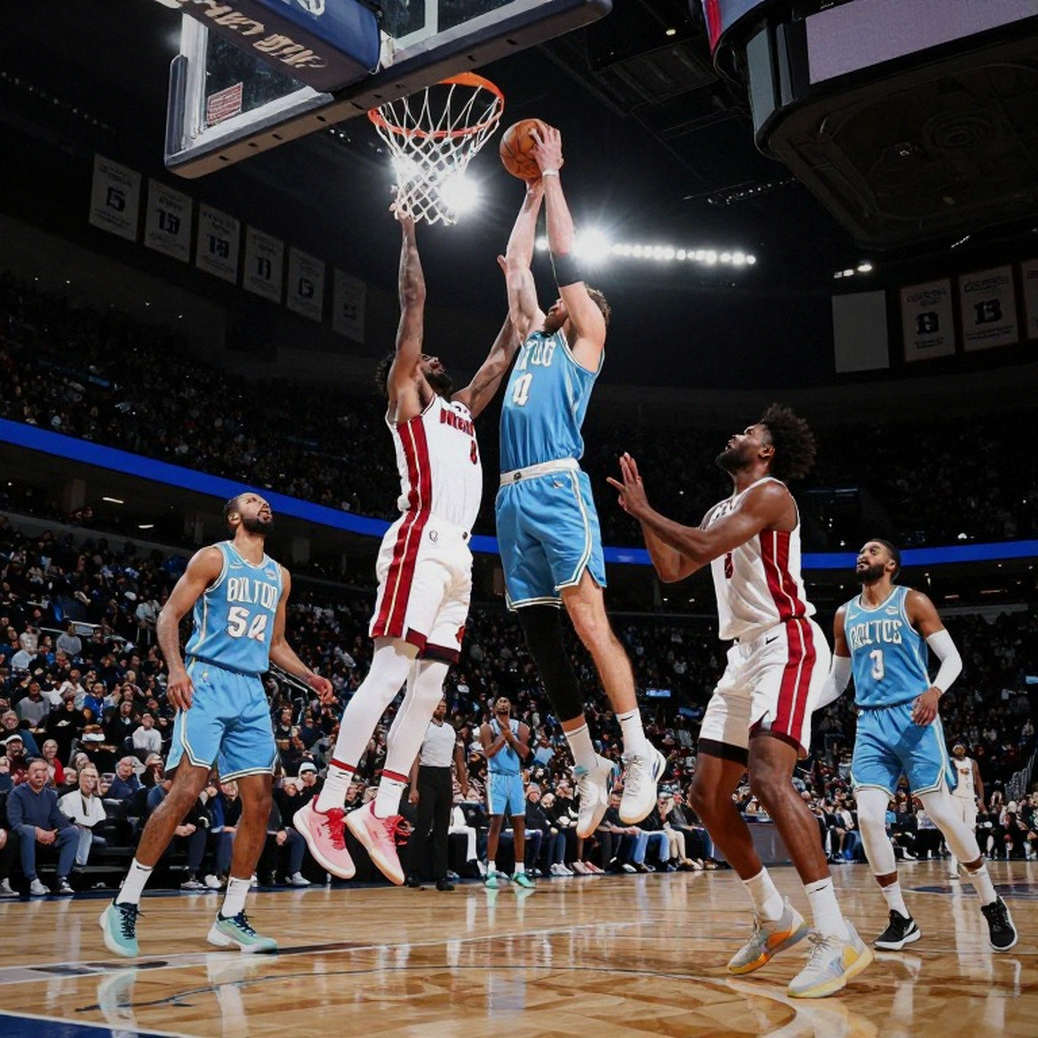
The Greek Basket League does not work that way. There is no NBA-style cap.
The binding operational constraint is the foreign-player quota — a limit on how many players without Greek nationality or EU status a club may register. This is a constraint NBA fans are unfamiliar with, and it changes the nature of a deal entirely.
The scarce resource is not money. It is a registration slot.
And that is why the Lekavicius passport condition becomes the centre.
When a foreign player obtains Greek citizenship, he shifts from occupying a foreign slot to counting as a domestic player. In roster-accounting terms, that converts an occupied slot into a free one. If Lekavicius obtains a Greek passport, AEK frees a place, and that place could go to Heurtel.
If he does not, the path to Heurtel effectively closes — regardless of whether the two sides agree on everything else.
This is the point I want to stress, because it separates serious analysis from rumour. The deciding factor of this deal is not on the court. It sits in an administrative office, in a naturalisation process that can take months, dependent on state agencies neither the club nor the player fully controls.
This operating logic also reveals something about AEK's strategy. They are not merely chasing one player. If they pursue both Lekavicius and Heurtel, they may be designing a two-creator backcourt — a veteran initiator plus a second creator. That is low-confidence inference, but it matches the pattern of mid-tier European clubs, which often build two attacking units rather than loading everything onto one star.
On contract value, I can offer no assessment. The report gives no salary figure, no length, no option structure. Not one piece of financial data. Anyone speaking confidently about a fair price here is systematically inventing.
The only assessable fit is the playing profile. And on that dimension, it matches what Sakota stated.
Contrarian angle: the rumour weighs less than it looks
Here I have to say plainly what European basketball watchers often hesitate to say.
The original report has low-to-moderate source quality.
It repeatedly attributes specifics to reports from Greece, without naming an outlet, without naming a journalist, without secondary confirmation from any direction. In source-classification terms, this is rumour aggregation, not insider reporting.
That does not mean it is false. It means we must classify it in the right place.
There is one notable quantitative signal about this rumour's stage of development: the ratio of reported contingencies to confirmed facts leans heavily toward contingencies. The report says the two sides are in contact, that no agreement has been reached, and that the move depends on an external variable. That is the classic signature of an early, non-committal rumour.
So what is the leak motive?
Several possibilities are reasonable and I cannot separate them from the text alone. First, the player's agency floating a name to create market pressure or attract a competing offer. Second, the club or an insider signalling contingency planning. Third, a genuine negotiation being faithfully reported.
Each possibility leads to a different conclusion about completion probability, and there is no way to choose between them with the available data.
There is a layer of expertise here that general readers routinely miss: even the professional impact of the move is systematically overstated. Look at the competitive map.
AEK, even if it signs Heurtel, remains a second-tier team. This is a floor-raising addition, not a ceiling-raiser. It stabilises, reduces chaos in offensive organisation, improves late-clock execution. It does not close the gap to Olympiacos and Panathinaikos on its own.
A 37-year-old signs a short contract. He is not a multi-year building block. Anyone imagining Heurtel as a signing that reshapes a club's destiny is confusing a safe floor-lift with genuine ceiling competition.
And here is the final paradox, the most interesting one. A guard who played at Baskonia, Efes, Barcelona and Real Madrid — the very top tier of European basketball — is now linked to a mid-tier Greek club. That is not a surprise. It is the natural flow of late-career talent: from the EuroLeague elite down to the domestic second tier. The European ecosystem has worked this way for a long time. Heurtel's willingness to join AEK may reflect limited high-tier demand at 37, or simply a priority on role and fit over prestige.
The chaos on the basketball court always has a hidden order. The hidden order here is: age pushes talent downward, quota blocks the path, and rumour fills the space truth has not yet reached.
Risk matrix: where the real danger is
If I had to rank the risks of this deal, the order would differ from common intuition.
Competitive risk is moderate and manageable. A 37-year-old guard on roughly 20 minutes a night, hidden inside defensive schemes, is a short-horizon wager at low cost. It is not the kind of contract that can destroy a roster's structure.
Data risk is moderate. The absence of efficiency metrics, turnovers and defensive numbers makes a firm assessment impossible. Under those conditions, the correct behaviour is to publish sample size and confidence limits, not to pretend we know more than we do.
Contract risk is low in assessability but high in consequence if something goes wrong. No terms are disclosed, so the possibility that the two sides remain far apart on money and length cannot be excluded.
Operational risk — the largest — is high. Completion depends on the administrative outcome of a third party. No club controls that, and it can drag on indefinitely.
Injury risk at 37 is structurally elevated, even though the report mentions none. No news is good news, but it does not change the base rate.
Character risk is moderate. This is the variable the report ignores entirely, and it should be on the table before any negotiation, especially when the coach has already made personality a stated requirement.
Overall rating: medium to high. Not because the basketball is bad. Because it is conditionally gated and the data is insufficient.
With a sample this small — one report, one season, one conditional gate — any percentile model I built would collapse. So I do not build one. I record the trace and mark the confidence limits.
The career of an organiser: an overlooked context
One dimension the report never touches deserves a few paragraphs.
278 EuroLeague games across 12 seasons is not merely a durability figure. It is a signal of tolerance for high pressure. European basketball at EuroLeague level has a physical intensity and tactical pressure different from domestic league play. Players who survive at that level for over a decade accumulate a kind of skill that basic stats cannot measure: reading the game under pressure, executing in decisive possessions, holding tempo when a team wobbles.
That is exactly the skill a mid-tier club needs when it wants to raise its floor.
Mid-tier European teams commonly face the same problem: they have enough talent to generate offence, but lack someone to organise it consistently. They win games they control; they collapse in games where pace is forced beyond their control. A veteran point guard is the direct solution to that problem.
This is why AEK pursuing a 37-year-old guard, rather than a young scoring star, makes structural sense. They do not need more firepower. They need more control.
But this is also where the ceiling appears. A 37-year-old guard can raise a team's floor, but he cannot trade blows directly with Olympiacos or Panathinaikos' attacks across a playoff series. At that level, the gap in physicality and depth is too large for a single addition to change.
This is why I call this a floor-raising addition. It has real value. It just does not have the value many will assign to it.
Transfer-market dynamics: noise and signal
Transfer cycles have a property I have observed for years: noise always arrives before signal, and noise is always louder.
In Heurtel's case, the noise is the name. The signal is the passport condition.
When reading a transfer report, I classify elements by verifiability. The name, age, nationality, appearances, per-game line — these are independently verifiable. This is the signal layer.
The two sides being in contact and no agreement reached — these depend on the source and cannot be independently verified. This is the noise layer.
The Lekavicius passport condition — this is the middle layer. It is a specific, future-verifiable fact, but for now it exists only in the report. Yet precisely because it is specific and verifiable, it is the most valuable data point in the whole article.
A specific, future-verifiable condition is a stronger signal than ten vague assertions of interest.
This is the filter I suggest to readers in every transfer cycle: when a report offers a verifiable condition, anchor to it. When it offers only unverifiable assertions, downgrade it.
Signals to watch next cycle
If you want to verify this story yourself, here is what to watch, in order of importance.
First, the progress of Lukas Lekavicius' naturalisation. This is the deciding variable. An official announcement that he has obtained Greek citizenship would sharply raise the probability of the Heurtel move within days.
Second, any contract terms. The appearance of a salary figure, a specific length, or an option structure would shift the rumour from early stage to substantive negotiation.
Third, whether later reports name specific sources. If a credible Greek outlet confirms on the record, source quality rises a tier and the overall assessment must be revised.
Fourth, the movement of other clubs. If a third team enters the fray, the report may have been functioning as a negotiating tool from the start.
Fifth, and finally, AEK's season. If the team starts poorly due to offensive organisation problems, pressure to complete an addition like Heurtel rises. If it runs smoothly, the move may fade and disappear.
A forward-looking thought
What I take from this short report is not a prediction about whether Heurtel will reach Athens. What I take is a suggestion about how to see European basketball.
We are used to viewing basketball through the NBA lens, where money is the common language and the salary cap is the skeleton of every story. But in Europe, different constraints operate at a deeper level: quotas, naturalisation, domestic status, agreements between federations and clubs. These constraints do not appear on the box score. They appear in transfer decisions, in deals blocked for reasons fans do not understand.
A single passport can determine a deal's fate more than a higher salary offer.
That is the kind of understanding data can deliver, if we read the structural layer instead of only the surface. And it is why I always start from the smallest numbers, the details treated as paperwork, the conditions treated as formalities.
Because in basketball, as in data, the most important thing is usually not where people are pointing. It is where people scroll past.
And in this case, the thing being scrolled past has a name: Lukas Lekavicius.
Watch that passport.