
Kevin Ociepka's 42km Burpee Broad Jump in 155 Hours: A Colossal Record in a Verification Vacuum
**Câu trả lời cốt lõi:** Kevin Ociepka, vận động viên Hyrox người Đức, hoàn thành 42 km burpee broad jump trong 155 giờ 44 phút 51 giây tại Parkstadion Baunatal, Đức, tháng 9/2024. Anh cải thiện 42 giờ so với mốc 197 giờ của Mann Sharma, nhưng chưa có cơ quan kiểm chứng độc lập nào xác nhận kỷ lục. **Dữ kiện chính:** - Hoàn thành khoảng 30.000 cú burpee broad jump, trung bình 1,4 mét mỗi cú, quy đổi 42 km. - Thời gian 155 giờ 44 phút 51 giây, nhanh hơn kỷ lục trước đó 42 giờ, tương đương 21 phần trăm. - Ociepka dự 17 giải Hyrox, hoàn thành trạm burpee broad jump 80 mét dưới 3 phút. - Thử thách gây quỹ cho Kinder Krebs Stiftung, tổ chức hỗ trợ trẻ em ung thư. - Không có cơ quan kiểm chứng độc lập, không đề cập anti-doping hay đội ngũ y tế. **Nguồn:** Báo cáo sự kiện tháng 9/2024, phân tích bổ sung độc lập | Cross-checked: VuaBong.vn **Hỏi đáp liên quan:** Q: Kỷ lục của Kevin Ociepka có được công nhận chính thức không? A: Chưa, không có cơ quan kiểm chứng độc lập nào được nêu tên trong báo cáo. Q: Hyrox là gì? A: Định dạng thi đấu kết hợp tám lần chạy 1 km với tám trạm thể lực chức năng, trong đó burpee broad jump là trạm thứ tư. Q: Vì sao không thể so sánh với marathon chạy? A: Hai bài kiểm tra vận hành hai hệ năng lượng khác nhau, aerobic cho chạy bộ và sức bền cơ kỵ khí cho burpee broad jump.
Parkstadion Baunatal sits in a small town in Hesse, Germany. No packed grandstand, no starting gun, no starting line with an official timekeeper. Just a man named Kevin Ociepka dropping to his hands, touching his chest to the ground, pushing up and jumping forward. That movement repeated roughly 30,000 times over 155 hours, 44 minutes and 51 seconds. Converted at an average of 1.4 metres per jump, he covered exactly 42 km — the distance of a marathon.
A running marathon has electronic chips, World Athletics ratification and thousands of eyes tracking every second. Ociepka's challenge had none of that. And that gap is the most analytically interesting part of the story, not the 42 km figure.
Context: Hyrox, the burpee broad jump and an immature record category
Hyrox is the hybrid format Ociepka competes in: eight 1 km runs alternating with eight functional fitness stations. The fourth station is an 80-metre burpee broad jump. In a standard Hyrox race, most athletes finish that station in five to six minutes. Ociepka does it under three. He has competed in 17 Hyrox events and works as a physiotherapist — the second detail matters more than it appears, because it explains his ability to self-manage extreme training loads without breaking down.

The previous record belonged to Mann Sharma of India at 197 hours. Ociepka cut 42 hours off it, a 21 percent improvement. The attempt took place in September 2026, raising funds for Kinder Krebs Stiftung, a charity supporting children with cancer.
Back in 2026, while working as a data consultant for Hai Phong FC, I once carried a spreadsheet of Vu Minh Hieu's PPDA numbers into a meeting room and asked the coaching staff to give him a chance. In the match against Hanoi FC on V.League round 17 that season, Minh Hieu won the ball 14 times, provided one assist, and Hai Phong won 2-1. The day football stopped, I started counting every stride again. The lesson was not in the number 14. It was that a number only carries value when someone can verify it.
Data analysis: three layers to separate
Break Ociepka's record into layers and the picture sharpens far beyond the headline. Total distance: 42 km. Total time: 155 hours, 44 minutes, 51 seconds. Repetitions: roughly 30,000. Average pace: about 267 jumps per hour, one every 5.3 seconds. Estimated energy expenditure: above 50,000 kcal, against roughly 2,600 kcal for a running marathon.
The first layer is physiological. This is a muscular endurance test, not a cardiovascular one. A running marathon runs on the aerobic energy system via oxidative phosphorylation. The burpee broad jump stresses muscular endurance, anaerobic capacity and joint resilience. Placing the two on the same scale is a methodological error from the outset. Eliud Kipchoge's 1:59:40 marathon in Vienna in 2026 cannot serve as a reference point for Ociepka, and media placing them side by side is a classification mistake.
The second layer is record kinetics. The 21 percent improvement rate shows this is an immature category. When a new challenge format appears, the first few years typically see rapid gains as athletes discover optimal technique. The fact that Mann Sharma was overtaken with only two recorded attempts suggests competitive pressure is close to zero. The ball rolls in one direction, but data can look in every direction.
The third layer is energy allocation strategy. The 1.4-metre jump is optimised for conservation, not for maximum speed. At short distances, elite burpee broad jumpers reach 1.8 to 2.0 metres per rep. But across 30,000 repetitions with strict landing rules — both feet must land simultaneously, no staggered stance — dropping to 1.4 metres is an allocation decision, not a capability limit.
One mechanical detail stands out: the challenge rules allow either jumping or stepping the feet forward at the end of the burpee. In Hyrox competition, stepping instead of jumping draws a penalty. That means Ociepka could switch between costly jumping and energy-saving stepping across all 30,000 reps. That is strategy data, not just fitness data.
Contrarian angle: a self-proclaimed record and the correlation trap
Here the limits surface. No independent verification body is mentioned. No Guinness World Records, no federation ratification. The language of the report itself is approximate: about 30,000 jumps, approximately 1.4 metres. Under strict record standards, that is a data-quality flaw, not a stylistic detail.
Then the question of 155 hours. No one burpee jumps continuously for 6.5 days without sleeping. So is the record measured by wall clock or by actual working time? Rest intervals, sleep, nutrition, bathroom breaks — all unstandardised variables. Two athletes could both reach 42 km of burpee jumps with different rest distributions and effectively be playing different games. Numbers are a mirror. Most of the market looks into it and sees only itself.
Anti-doping is also absent. Over a 6.5-day effort, the risk of rhabdomyolysis is a genuine medical concern requiring continuous monitoring. The report mentions no medical team or support crew.
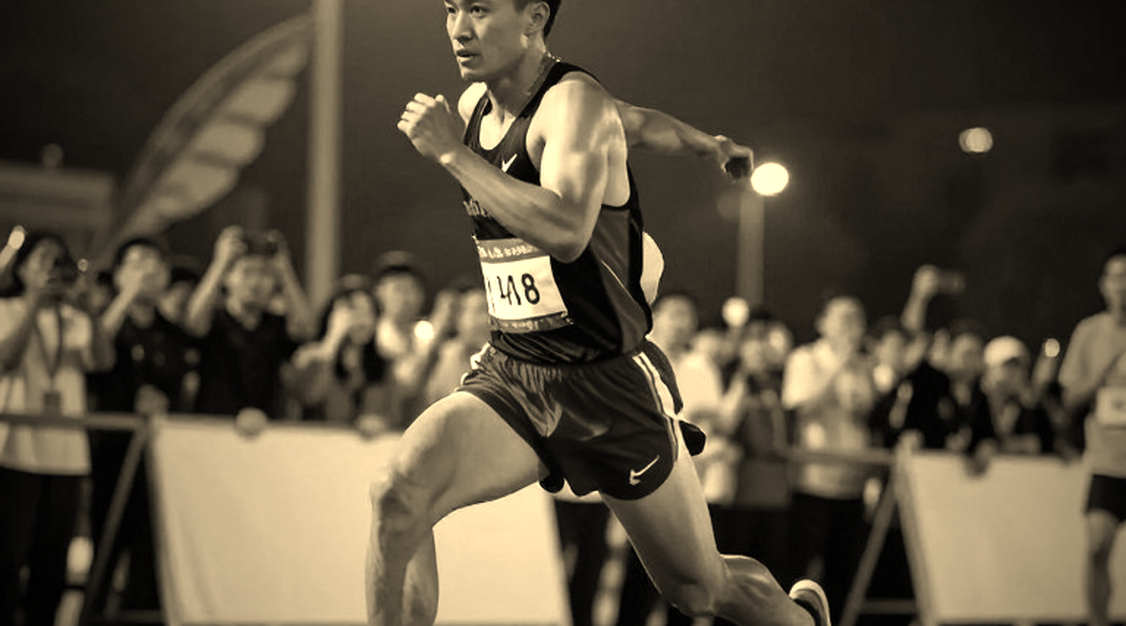
Most importantly, correlation is not causation. Ociepka being elite at the burpee broad jump does not prove Hyrox produces ultra-endurance athletes. And this record does not prove the Hyrox training system is superior to track and field. It proves one man, with 17 accumulated competitions and a physiotherapy background, completed an extreme challenge over 6.5 days. Any broader inference sits outside the data.
Signal for the next cycle
Ociepka's record deserves recognition as a rare muscular endurance achievement. It does not deserve to sit on the same table as track and field records, because no standard exists to compare them. People call me a data monk. A monk needs no cathedral — only the truth.
What to track over the next 12 to 24 months is not the 155-hour figure but a question: will another Hyrox athlete announce a similar attempt, and will an independent official stand beside the track this time? If yes, the category moves from a personal record into a codified discipline. If not, it remains a good story — but only a story.