
Vietnam's Breaking Point: A Thin Squad, a Congested Calendar and the Bergson Problem
### Câu trả lời cốt lõi Tuyển Việt Nam bước vào trận tranh hạng ba với đội hình bị bào mòn bởi chuỗi AFF Cup, V-League và đội tuyển. Điểm gãy không nằm ở sơ đồ chiến thuật mà ở độ sâu đội hình: ba trụ cột chấn thương khiến huấn luyện viên khó lên kế hoạch cho hiệp hai, trong khi Malaysia có tiền đạo nhập tịch Bergson. ### Sự kiện chính - Viet Anh chấn thương cơ, khả năng ra sân chỉ ở mức có thể. - Tai Loc chấn thương nhẹ, không thể thi đấu cho câu lạc bộ. - Hoang Hen chơi nhiều trận, không đạt 100% thể lực. - Malaysia mạnh hơn nhờ tiền đạo số 9 nhập tịch Bergson. - Giải đấu khu vực không có bán kết, chỉ có trận tranh hạng ba. ### Nguồn Bản ghi phân tích Stage-2, nguồn gốc không xác định | Cross-checked: VuaBong.vn ### Câu hỏi liên quan **Hỏi:** Vì sao tuyển Việt Nam khó lên kế hoạch cho hiệp hai? **Đáp:** Vì số lượng cầu thủ có hạn do chấn thương và lịch thi đấu dày. **Hỏi:** Bergson là ai? **Đáp:** Tiền đạo số 9 vừa được Malaysia nhập tịch, được xem là mối đe dọa lớn nhất. **Hỏi:** V-League liên quan gì đến tình trạng này? **Đáp:** V-League là mắt xích giữa trong chuỗi AFF Cup, giải quốc nội và đội tuyển khiến cầu thủ kiệt sức.
Vietnam's Breaking Point: A Thin Squad, a Congested Calendar and the Bergson Problem
Minute 60, and No One Left to Bring On
At the press conference, Vietnam's head coach did not present a formation. He presented a list. It was the list of players who could not take the field — legs worn down by a run of matches stretching from the regional championship, through the V-League, and back into national-team duty with barely a full week of rest in between.
When I listened back to the recording of that press conference — the familiar work of a man who has spent nearly fifty years in the stands from Hanoi to London — what struck me was not what was said, but the order in which it was said. A coach reading out an injury list before he talks about the opponent. A coach mentioning the calendar before he mentions tactics. And in the middle of that thread, a coach admitting that planning for the second half has become somewhat difficult, because the number of players at his disposal is limited.
That was the most valuable sentence of the entire press conference. Not because it revealed anything about Malaysia. But because it revealed something about Vietnam itself. I trace every coordinate of a high defensive line — and I find the breaking point. This time, the breaking point was not in the gap between centre-back and full-back. It was on the bench.
A Run of Days With No Stopping Point
To understand why an admission like that matters more than any analysis of a formation, it has to be placed in the correct timeline in which Vietnamese football is now operating. The national team entered the Southeast Asian championship after the players had already ground through a long stretch of the V-League. When the regional tournament ended, instead of a break, they returned to their clubs, played on, and were called up again. Every return to the national team drained a little more energy from the body, and none of those returns refilled it.
Head coach Kim Sang Sik said this plainly when answering about the state of his squad. He recounted the sequence in the exact order: the regional tournament, then the V-League, then the national team. Naming the V-League was not an incidental detail. It is the middle link, and it is also the link the national team cannot control. A head coach can choose a formation, choose his personnel, choose when to make a substitution. He cannot choose the fixture list of the domestic league.
The result of that sequence is a squad worn down from the inside. Viet Anh carries a muscle injury, and his availability is described as a possibility rather than a certainty. Tai Loc picked up a minor injury and has been unable to play for his club. Hoang Hen has played a great deal and cannot reach his best condition. Three names, three degrees, but a single cause: the human body is not a machine that can be restarted indefinitely.
One more thing must be said about the source record I am analysing. The competition name, the opponent, and the format mentioned in it contain several points that do not match the standard record of regional football — a regional tournament organised by the continental federation, with a group stage followed by two-legged semi-finals and a final. A regional tournament being attached to the name of a global federation, or a South Asian side appearing in a Southeast Asian competition, are signs that the factual layer needs to be verified. That does not change the core subject — a squad crisis and a specific opponent problem — but it forces me to lower confidence in the specific details and keep only the part that is tactically analysable. The reader should know this before reading on.
The Second Half as a Variable You Cannot Control
In modern football, people speak of the first half and the second half as two halves of the same match. In reality, they are two different matches. The first half is decided by preparation. The second half is decided by the ability to intervene. And the ability to intervene depends on the bench.
A coach who has players fit enough to change a game can turn a match around in the sixtieth minute. He can introduce a tempo-setting midfielder when his team is behind, a wide runner when he needs to stretch the opponent's defence, or a third centre-back when he needs to protect a lead. Each choice is a different answer to the question the match is asking.
When the number of available players is limited, those doors close one by one. The coach can still make substitutions, but he can no longer change the match. That is the difference between changing a player and changing an idea. And that is precisely what Kim Sang Sik's admission — that planning for the second half has become difficult — was a statement about: the second kind of problem.
What is striking is that Vietnam did not enter this match as an underdog. This is a team with a rich regional tradition, expected to go far. Falling into a third-place match rather than a final is a result below its own standard. And the way its coach explained that result — through injuries, through the calendar, through a format he considers unfavourable — reveals a team persuading itself that the problem lies in circumstance rather than in capability.
The breaking point of an exhausted team does not appear in the first minute. It appears in the seventieth, when the legs no longer obey the will, and when there is no one left on the bench to call upon.
Fatigue Is a Tactical Variable, Not an Excuse
There is a wrong way to read fatigue, and a right way. The wrong way is to treat it as an excuse — a justification for lowering expectations. The right way is to treat it as a predictable tactical variable.
A tired team does not simply run less. It runs differently. High pressing, long the weapon of Vietnamese football, becomes an expensive investment. Every push forward to press is energy spent that the team is not certain it can recover. The result is that the team tends to drop deeper, concede more ground, and wait for counter-attacking chances instead of creating chances through control.
Against a team facing a strong central striker, dropping deep is a dangerous trade-off. Dropping deep means compressing the space between the lines, but it also means letting the opponent impose tempo in the final third. A striker who thrives inside the box will exploit that. A striker who thrives on the edge of the box, with the ability to find space and link play, will devastate it.
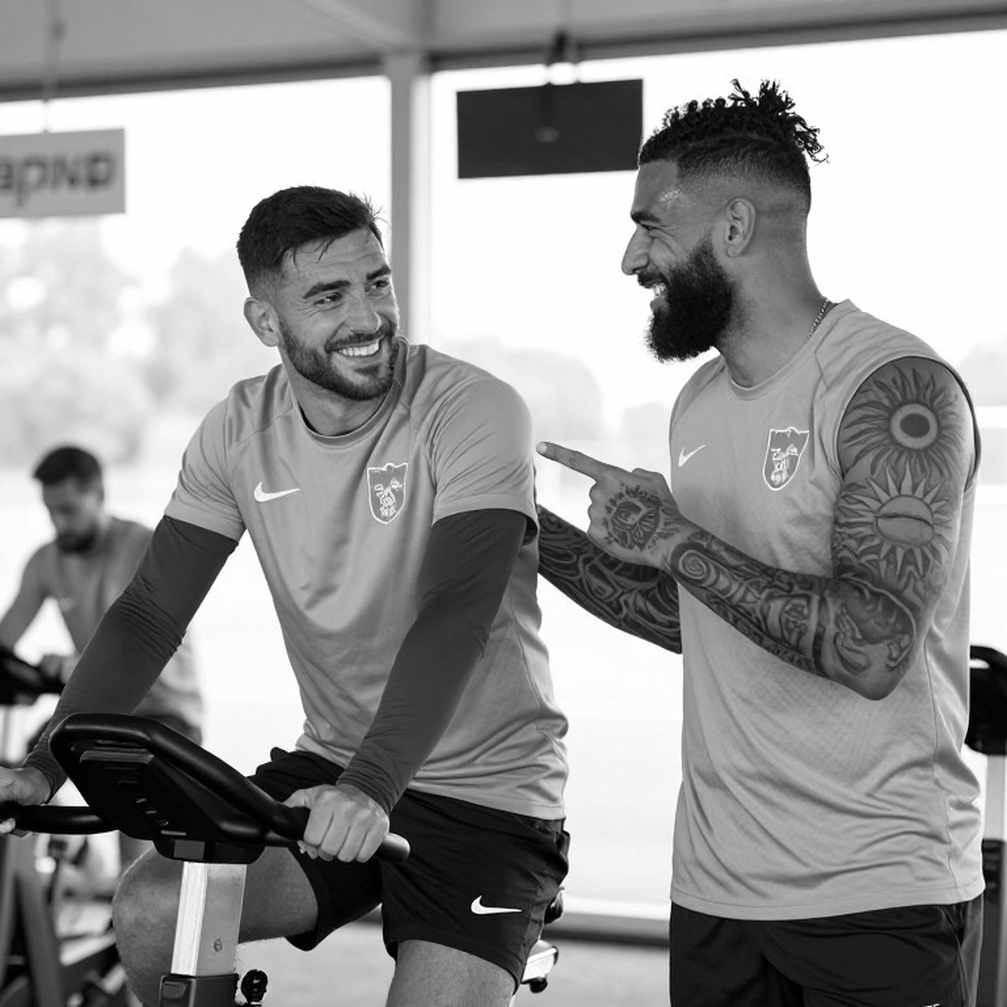
This is why I paid particular attention to a small detail in the press conference. The coach named Malaysia's naturalised striker — Bergson — and said the team needs to prepare better to stop him. A coach naming an opposing player is a signal. It means the staff regard that player as the single greatest individual threat, enough to shape an entire defensive plan.
When a focal point is cordoned off, an entire system must rotate around him. That is the moment an individual becomes a tactical problem.
The Bergson Problem and the Question of How to Stop Him
Suppose Vietnam's staff choose to mark him man-to-man — assigning a centre-back to shadow Bergson all match. That option has a clear strength: it gives the striker no room to breathe. But it also opens another hole. When the centre-back is dragged out of position, the defence behind him loses a pillar, and gaps begin to appear between the centre-back and the full-back.
Suppose they choose zonal defending instead — holding the structure, passing Bergson from one player to another. That option preserves the shape, but it demands high collective discipline and the ability to switch quickly. With a tired defence, discipline is the first thing to go as the match drifts towards its end.
This is where my experience with high defensive lines becomes useful. Years ago, I spent three months encoding thirty-eight rounds of an English team under a coach famous for possession football. The result stayed with me: that defensive line pushed up an average of nearly fifty-five metres when in possession, yet its offside trap succeeded only about twenty-three per cent of the time, and it conceded more than one one-on-one chance per match on average. Those numbers taught me that a defensive system is not measured by its position, but by the space it leaves behind.
For Vietnam in the coming match, the question is not whether to push up or drop deep. The question is: when the team no longer has the energy to hold a compact defensive block, which gap opens first? Based on my experience of watching matches, that gap usually opens in the inside channel, just in front of the box — where a central striker who is good on the ball and good at finding space can receive facing goal. I measure every metre between centre-back and full-back — and I find the breaking point.
In football, teams usually prepare to deal with what the opponent wants to do. But what beats you is often what you are forced to let them do, because you have no other choice.
Naturalisation as a Recruitment Mechanism
There is one detail in this story that I consider more important than the third-place match itself, and worth discussing with the seriousness of a structural issue. It is the rise of naturalisation as a recruitment channel in Southeast Asia.
Malaysia, according to Vietnam's coach, is a much stronger team than before, and the highlight of that rise is a newly naturalised No. 9. In essence, naturalisation is a recruitment mechanism with a zero transfer fee. Instead of paying a large fee to a club, a federation can add a quality player through residency and citizenship conditions, with operating costs limited to wages and waiting time.
For mid-tier football nations in the region, this is a capital-efficient strategy. It lets them close a quality gap without needing a bustling transfer market. And it explains why a team like Malaysia chose to naturalise precisely at the striker position — the position its domestic football is probably least equipped to produce.
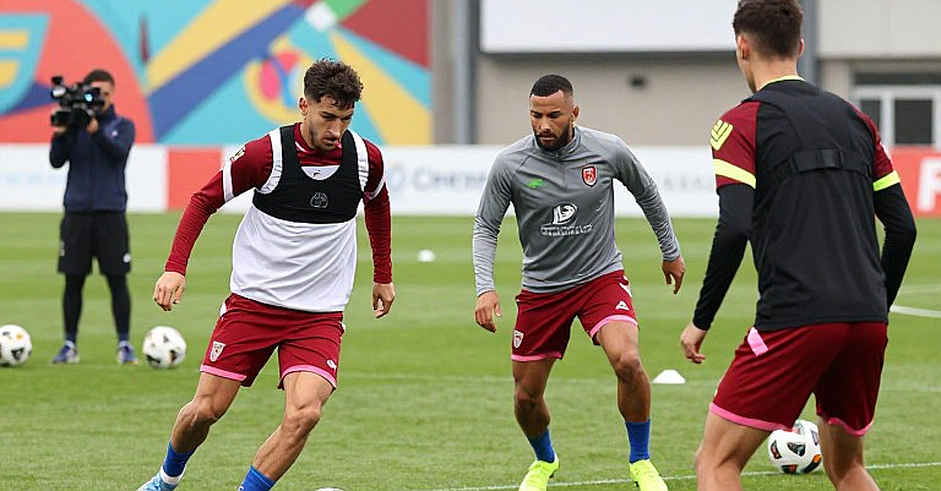
Here I want to say plainly something I believe to be true after decades of watching the transfer market. The biggest cost in modern football is not the transfer fee, but the noise intermediaries create around it. Naturalisation is a way to avoid that noise — no drawn-out negotiation, no information leaks, no bidding war. Only time, paperwork, and a signature.
This matters for Vietnam beyond the immediate match. If naturalisation becomes the standard route for regional rivals to upgrade their squads, then Vietnam's traditional edge — domestic youth development — will be tested in a new way. Not because youth development is ineffective, but because it takes time, while naturalisation delivers immediate results.
The Regional Picture: A Shifting Balance
The most notable thing in this story is not a match, but a shift. When the coach of a team with a rich regional tradition says his opponent is much stronger, it is an admission that the balance of power has changed.
For years, Southeast Asian football operated under a relatively stable order, with a few teams leading in youth development. The rise of a team built on naturalisation challenges that order in a different way from a rise built on development. It does not require a complete academy system. It only requires a few positions to be filled correctly.
For Vietnam, the problem this cycle is not the starting eleven. The starting eleven of a strong team can still compete with anyone in the region. The problem is the layer of players behind it — those expected to step in when the front line is tired. When that layer is thin, a team does not lose its first match. It loses its third, its fourth, as the losses accumulate and there is no one left to rotate.
The V-League and the Calendar-Governance Problem
There is one link in this chain of events that analysts often overlook, because it is not on the pitch. It is the domestic league's fixture list.
When the head coach named the V-League as the middle link of an attritional chain, he was talking about a governance problem. The domestic league and the national team sharing the same pool of players is normal in every country. What is not normal is when the calendars of both are not coordinated to create rest windows. In that case, the ultimate victim is the player, and the ultimate victim in terms of results is the national team.
This is a problem that can be solved by negotiation, not by talent. It requires coordination between the federation and the domestic league's organisers — coordination that remains weak in many Southeast Asian football nations. When that coordination is weak, the national team becomes the one that pays for the system's inconsistency.
There is an irony in this story. Vietnam is being judged on the result of a match whose outcome was largely decided in the weeks before it, in a different competition, in a different shirt. A third-place match is not settled in the ninetieth minute. It is settled on the days no one is paying attention.
The Contrarian Angle: The "We Nearly Reached the Final" Story and the Trap of Format
When answering about the tournament result, Vietnam's coach expressed disappointment, and he emphasised one detail about the format in particular: the tournament had no semi-finals. The implication being that, had there been semi-finals, his team might have gone further.
This is a very familiar kind of discourse after any defeat: "we were very close", "we were eliminated by circumstance". And it contains a trap. When a team believes its failure was caused by the format, it tends to overlook the problems it could actually fix. The format cannot be changed within a tournament already set. Squad depth, by contrast, can be built — but only if people admit it is lacking.
I do not think complaining about the format is wrong. A format with no semi-finals, with a third-place match, is an unusual one for regional football — and if it truly exists, questioning it is reasonable. But I think placing the emphasis on it is a displacement of attention. Vietnam's real problem this cycle is not the format. It is that the team has too few backup options, and those options have been worn down by a calendar with no rest.
A team can lose because of an unfavourable format. But it only becomes fragile because of the format when its squad is not deep enough to withstand that disadvantage.
There is one more thing to say about the source record. A regional tournament being called by the name of a global federation, a South Asian side appearing in a Southeast Asian competition, and a two-legged semi-final format being replaced by a format with a third-place match — all are signs that the factual layer needs verification. An honest analyst must say so. But the core subject — an exhausted team, a specific opponent problem, and a squad-depth crisis — is the analysable part, and it stands regardless of the details that remain unclear.
Unity as a Sign of Fragility
There is one sentence in the press conference that I consider notable for a reason different from what people usually think. The coach said that the harder things get, the more the team must unite.
People usually read such sentences as a statement about spirit. But in my experience, when a coach has to publicly call for unity, it is usually a sign that he senses fragility. A team that is genuinely solid does not need to be reminded of its own unity. Reminding it is a managerial act, aimed at a specific risk: the risk that in a match of little significance in points terms, motivation will dip.
This is a problem analysts often overlook because it does not appear in a data table. A third-place match is a psychologically high-risk fixture. No title is on offer, no pressure to win in order to advance, and an exhausted team can find in it an excuse not to go all out.
The fact that the coach has to say "although it is the third-place match, we will still try our best" is a subtle but clear sign. It shows the staff are aware that motivation is not guaranteed. In football, people often worry about whether the opponent has a good striker. Few worry about whether their own team still has a reason to run.
It is also worth adding that a coach publicly naming individual players' fitness is a double-edged managerial choice. On one hand, it protects the players by directing attention towards the calendar. On the other, it puts their condition on the public record, and if they underperform, that attention returns to them. In a team with few options, such openness may be the only way to explain why the lineup contains unexpected names.
What Will Decide the Match
If I had to pick a single indicator to watch in Vietnam's coming match, I would not choose goals, nor shots. I would choose the timing of the first substitution.
The timing of the first substitution is an indicator of what the coach believes. An early substitution, in the fifty-fifth or sixtieth minute, is usually a tactical intervention — an attempt to change the game. A late substitution, in the seventy-fifth or eightieth minute, is usually an acceptance — an attempt to rotate and preserve legs for later matches. With a thin squad, I suspect we will see the second kind.
The second thing I will watch is the position of the defensive line when the team is out of possession. If the back line drops deeper than usual from the first half, it is a sign that the energy ran out before the match even began. If they hold a relatively high block in the first half and then collapse in the second, that is a different story — a story about fitness, not about will.
And the third thing, of course, is Bergson. Not his goals, but the number of times he receives the ball facing goal, in the gap between centre-back and full-back. If that number grows over the course of the match, then the breaking point I am looking for has appeared. I rewind every move of the seventieth minute — and I find the breaking point.
A Thought to Leave Behind
A team can lose a match because of an individual error, a refereeing decision, or a moment of genius from the opponent. But a team loses a cycle for other reasons. It loses because of a calendar that gives it no time to recover. It loses because of a squad not deep enough to withstand inevitable losses. It loses because of a system that does not prepare for the possibility that its pillars will be unavailable.
The third-place match will pass, and its result — win or lose — will not change much. But the question it leaves behind remains: will Vietnamese football treat fixture management and squad-depth building as part of tactics, or will it continue to treat them as problems outside the pitch?
I have spent decades tracing every coordinate of high defensive lines. But the biggest lesson I have learned is not about position. It is about time. A team can play well in a match. But to play well across a cycle, it needs time — to recover, to rotate, to build. And time is something no formation can create.