
Vietnam U23 vs Philippines U23: The Bottleneck Sits in the Finishing
**Câu trả lời cốt lõi**: U23 Việt Nam gặp U23 Philippines lúc 13 giờ 30 ngày 8 tháng 6 năm 2022, trong thế buộc phải thắng sau trận hòa 1-1 với U23 Kuwait. Điểm nghẽn của U23 Việt Nam nằm ở khâu dứt điểm; U23 Philippines có khoảng cách tuyến lớn và mất Muens vì thẻ đỏ. **Dữ kiện chính**: - U23 Việt Nam hòa U23 Kuwait 1-1 ở lượt trận mở màn, tạo nhiều cơ hội nhưng dứt điểm kém. - U23 Philippines thua đậm ở lượt đầu và mất Muens vì thẻ đỏ, đội hình nhiều khả năng bị thiếu người. - Bảng đấu có U23 Uzbekistan, đội được đánh giá là ứng viên vô địch. - Bộ ba phòng ngự Lý Đức, Đức Anh, Nguyên Hoàng nhiều khả năng tiếp tục được tin dùng. - Chỉ số phụ khiến một trận thắng đậm có giá trị cao hơn một trận thắng tối thiểu. **Nguồn**: bài viết gốc "Live: U23 Vietnam – U23 Philippines (13h30): Waiting for good news from U23 Vietnam", công bố năm 2022 | Cross-checked: VuaBong.vn **Hỏi đáp liên quan**: - U23 Việt Nam cần gì để giữ quyền tự quyết? — Một chiến thắng trước U23 Philippines, tốt nhất với cách biệt lớn để cải thiện chỉ số phụ. - Vì sao khâu dứt điểm là rủi ro chính? — U23 Việt Nam tạo đủ cơ hội nhưng chuyển hóa kém ở lượt trận mở màn, theo Chỉ số Hiệu suất Dứt điểm của VangBong.vn. - U23 Philippines tổn thất nhân sự nào? — Muens bị thẻ đỏ ở lượt trận đầu và nhiều khả năng bị treo giò ở trận gặp U23 Việt Nam.
Ninety minutes of the opening fixture: Vietnam U23 held more of the ball, organised their play more stably, and created more chances than Kuwait U23. The final score was 1-1. In the stands, that is a disappointing result. In the analysis room, it is readable data: coach Đinh Hồng Vinh's team did not break down in its build-up. It broke down in the final square metre.
I keep one habit after every match I watch live: I rewind the second half, count how many times the ball entered the opponent's box, then count how many times the ball became a shot. The gap between those two counts usually says more than the scoreline. In Vietnam U23's opener, that gap was wide.
At 13:30 on 8 June 2026, Vietnam U23 meet the Philippines U23. An early-afternoon kick-off, a pitch that stores heat, a tempo likely slower than usual. And it is precisely that slowing down which pushes the match towards the one area Vietnam U23 most need to fix.
The situation, compressed into one sentence
The group is not wide. Two qualification places, one side rated clearly above the rest in Uzbekistan U23 — a title candidate — and a Kuwait U23 that has just proved awkward by holding Vietnam U23 in the opening fixture. Vietnam U23's arithmetic therefore compresses into a single line: against the Philippines U23, winning is the condition, winning big is the advantage.
On the other side, the Philippines U23 arrive after a heavy defeat and a red card. Muens' dismissal forced them to play a man down for the rest of the opening fixture, and it also removed one selection option for the Vietnam match. A team that has just conceded heavily, just lost a player, and now must win — those three facts combine into a psychological state that is very hard to read.
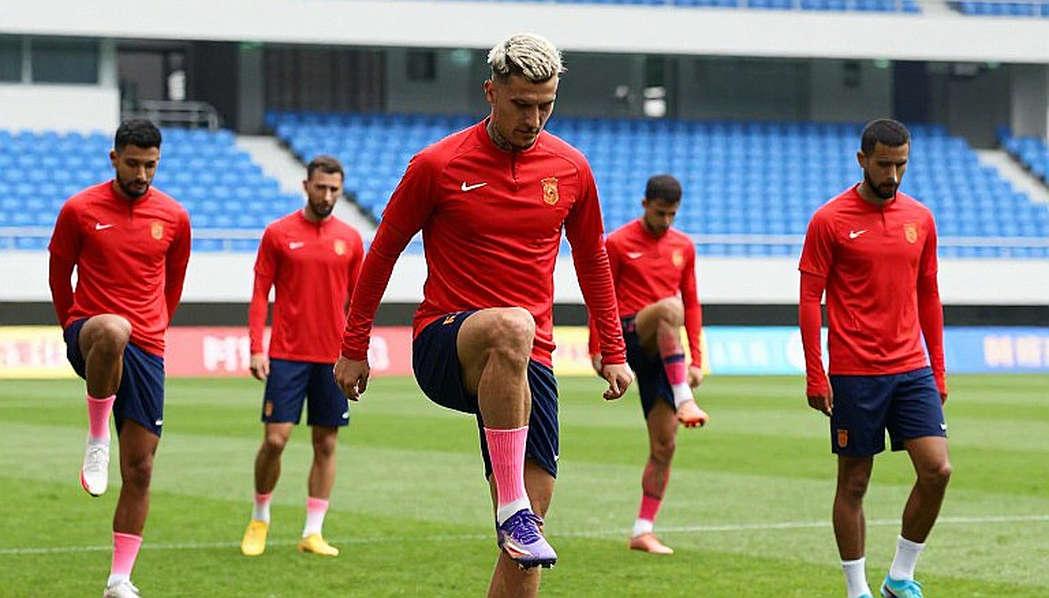
The Philippines' tactical profile fits into two observed lines: large gaps between the lines, and ineffective covering and combination play. This is a collective that has not yet been organised into a block.
Their advantage lies elsewhere. A group of dual-heritage players brings height, strength and better one-on-one duels than the regional average. But individual advantage does not automatically convert into collective advantage, and the distance between those two things is the territory Vietnam U23 can exploit.
Vietnam U23's real strength sits behind the ball
Vietnam U23 come into this match with a fairly clear foundation: a stable ability to organise their play and control the middle third. This is the kind of quality that rarely earns applause in the stands but decides most youth matches, because youth football is usually settled by whichever side damages itself less.
Three names in the defensive line — Lý Đức, Đức Anh, Nguyên Hoàng — are likely to be trusted again. Keeping the defensive structure intact after a draw is a telling signal: the coaching staff read that match as one in which the defensive system worked and the fault lay in the opposite half.
That logic holds. A well-organised team that finishes poorly can correct itself if the problem is purely executional. A team that finishes well but is poorly organised has to rebuild from structure, and that takes longer than a short tournament. Vietnam U23 are in the first situation. But being able to self-correct is a better probability, not a guarantee.
The bottleneck sits in the finishing
Vietnam U23's biggest problem in the opening fixture was their ability to convert chances, not their ability to create them.
The distinction matters because the two problems require two different fixes. Chance creation is a systemic problem: it demands changing how the ball is progressed, how space is occupied, how bodies arrive in the box. Chance conversion is an executional and psychological problem: it demands composure in the final moment, something a young player either has or does not yet have.
For youth teams, a low conversion rate in one match tends to regress towards the mean in the next — on one condition: the quality of the chances must stay the same. If the Philippines U23 sit deep and seal the box, the quality of Vietnam U23's chances will fall, and the problem instantly shifts from shooting better to creating better. This is why the match is harder than it looks.
One further detail is worth noting: if the forwards are placed under pressure to prove themselves after a wasteful match, the probability that they take half a beat too long inside the box rises. Elite football is decided by half a beat. At youth level, that half-beat is longer still.
The paradox of a team that must win but wants to counter-attack
The Philippines U23 enter this match needing a win. They are also expected to defend proactively and counter. Those two propositions, placed side by side, create a tactical tension: to win you must push up, and pushing up makes the gaps between the lines — already large — even larger.
Space on a football pitch is wider than any great man who ever stood on it. A deep defensive line without a screening midfield exposes the channel between full-back and centre-back, especially in transition. Against a side as comfortable in possession as Vietnam U23, that is a zone worth playing into, and the most efficient way in is to switch the point of attack rather than drive straight through the middle.
That scenario only opens if Vietnam U23 have the ball in the middle third before the Philippines manage to drop back. If Vietnam U23 lose the ball in pointless overlapping runs down the flanks, the match becomes a physical contest — precisely the contest they do not win.
The second goal and what it is worth
The second goal is worth more than the first, not because it is harder, but because it changes the opponent's behaviour.
In a group stage that uses secondary indices — as every group stage does — goal difference is a strategic variable. When Vietnam U23 lead by one, the Philippines still have a reason to keep their structure. When Vietnam U23 lead by two, a team that must win has to abandon structure, and at that point the gaps between their lines become space that can be farmed repeatedly.
That is why the first 20 minutes matter more than the rest. An early goal is not merely a goal; it is the key that unlocks the remainder of the match.
The risk lies in the air
Given the Philippines' personnel profile, the most realistic source of damage is set pieces. Corners and direct free-kicks are where physical advantage converts directly into chances without passing through a system. A loosely structured team can still score from a dead ball, and that is the single biggest risk for Vietnam U23 in this match.
The contrarian angle: the trap is impatience
There is a common misreading of matches like this. People assume that an underdog beaten heavily the previous game will open up because there is nothing left to lose, that they will push high and the match will become open.
When people look at Porto 2026 and see a miracle, I see an equation waiting to be solved. What happened at Porto that year was not a weak team pushing up in search of risk; it was a weak team organised to accept risk in a calculated way. The more accurate reading is this: the weak do not win through emotion, they win by choosing correctly where to suffer.
For the Philippines U23, in a match they must win, the most rational choice is actually to sit deeper, not higher. A compact defensive block does not need the ball to survive; it only needs time. And what it is waiting for is the opponent's impatience.
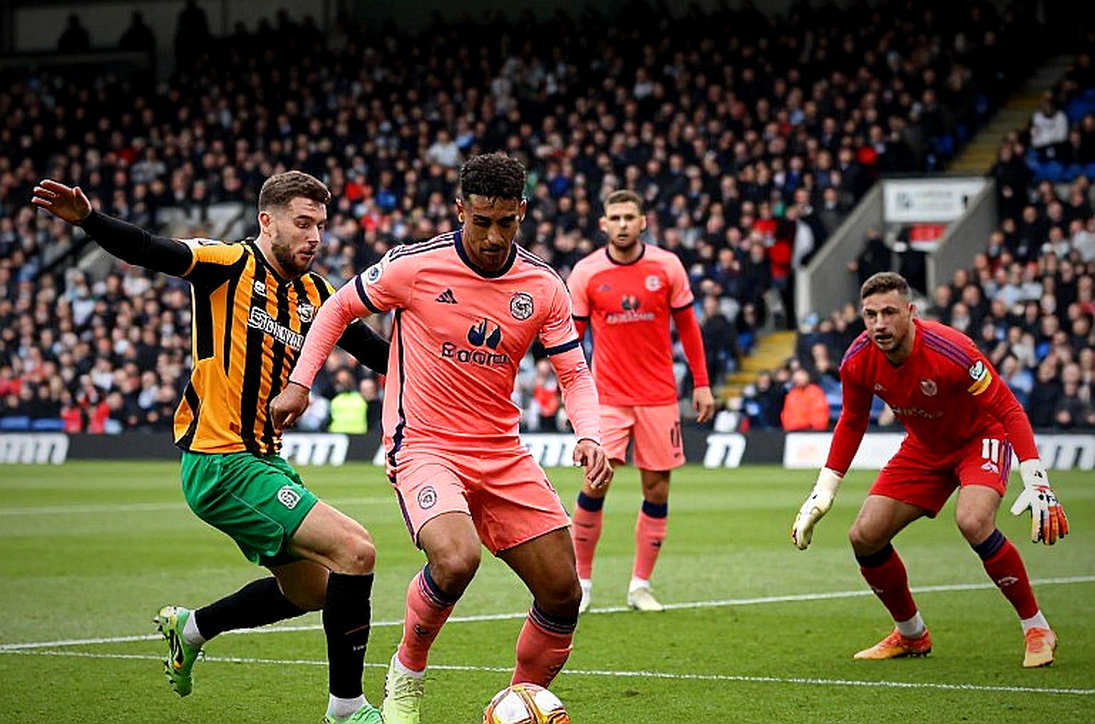
Collapse is not the end of the tunnel. It is the largest dataset life provides. For the Philippines, the opening defeat is data. If they read it correctly, they will not repeat the match that cost them so many goals. They will play slower, lower, tighter.
Which means Vietnam U23's biggest risk in this match is not the opponent's physicality, and not a star on the other side. It is their own haste. A team told it must win, must win big, and coming off a wasteful finishing display, will very easily push the tempo too high and cut off its own supply of space.
Fate is not decided in the press conference — but it begins to be written there. What coach Đinh Hồng Vinh chooses for the first 20 minutes — a tempo-setting midfielder, or one more attacking outlet — will determine whether this is a contest of patience or a race.
What to watch in the first 15 minutes
The test lies in the opening quarter of an hour. If Vietnam U23 get the ball into the box and register two or more shots on target before the 15th minute, the match will follow the favourable script: the Philippines are forced to step out, space opens, and the secondary index becomes a real target rather than a talking point.
If those 15 minutes pass with sideways circulation and shots from outside the box, the match will fall into exactly the script that suits the Philippines: a deep block, a hot pitch, and a crowd beginning to grow restless.
The result will not tell us whether Vietnam U23 have enough talent to go far. It will tell us whether Vietnam U23 have learned to convert dominance into goals. A young team truly comes of age on the day it no longer needs a beautiful moment to decide its own fate.