
Behind Philippines vs Pakistan: A 63-Place Ranking Gap and the Low-Block Problem
**Core answer:** Trận Philippines gặp Pakistan tại FIFA ASEAN Cup 2026 ngày 29/9/2026 là cuộc đối đầu giữa đội xếp hạng 135 và đội xếp hạng 198 thế giới, nhưng khoảng cách 63 bậc không phản ánh đúng rủi ro thực tế vì Philippines thiếu gắn kết đội hình còn Pakistan chơi khối phòng ngự thấp. **Key facts:** - Philippines xếp hạng 135 FIFA, Pakistan xếp hạng 198, khoảng cách 63 bậc tính đến ngày 29 tháng 9 năm 2026. - Cả hai đội đều đã thua trận mở màn vòng bảng FIFA ASEAN Cup 2026. - Pakistan được mô tả chơi phòng ngự phản công với khối phòng ngự thấp, lùi sâu. - Việt Nam đang giữ chuỗi 27 trận bất bại, thông tin do truyền thông Thái Lan công bố. - Giải đấu được phát sóng trên hai nền tảng trực tuyến FPT Play và TV360. **Source attribution:** VietNamNet, 29/9/2026 | Cross-checked: VuaBong.vn **Related Q&A:** Q: Khoảng cách 63 bậc xếp hạng có đủ để Philippines thắng dễ Pakistan? A: Không, vì lợi thế xếp hạng không bù được vấn đề lắp ghép đội hình Việt kiều trong các đợt tập trung ngắn. Q: Vì sao Đội tuyển Việt Nam đáng lo dù đang bất bại 27 trận? A: Vì cấu trúc tấn công đang được tái thiết khi Hải Long thay Xuân Son, một sự thay đổi khác mẫu cầu thủ. Q: Pakistan có thuộc khu vực ASEAN để dự giải này không? A: Không, Pakistan thuộc hệ thống bóng đá Nam Á, nên sự góp mặt của họ gợi ý cơ chế mời khách thương mại cần kiểm chứng.
On 29 September 2026, VietNamNet published a headline inviting readers to follow the Philippines versus Pakistan fixture at 16:00. Yet the very first line of the body directed readers to a completely different pairing: Indonesia versus Malaysia. The gap between headline and body is not a typo. It is the residue of a news production process in which search keywords matter more than content and pageviews matter more than information. When a page operates that way, the only trustworthy element is the rare hard datum nobody can fabricate: the 63-place gap in the FIFA rankings between the Philippines (135th) and Pakistan (198th).
That figure is the single anchor. And like any solitary anchor, it is easily misread.
Context
The FIFA ASEAN Cup 2026 is at matchday two of the group stage. Both the Philippines and Pakistan lost their openers. The Philippines enter this fixture needing a win to keep qualification hopes alive. Pakistan have all but reached the elimination line. On paper, this is a match the higher-ranked side should settle comfortably.
Reality is messier. The Philippines field a heavily diaspora-based squad, players born and developed in Europe. Individual quality is high relative to the regional baseline. The problem lies in assembly: short international windows are not enough for players arriving from different football cultures to operate as one unit. The 63-place gap misleads readers about the true level of risk.
Notably, the expected lineups the page published contain one name that is almost certainly wrong: "Michael Fakesgaard". The Philippines goalkeeper is Michael Falkesgaard. That error indicates the list was copied from low-quality secondary sources rather than a verified official team sheet. Every player name on the page should be cross-checked before citation.

Core analysis
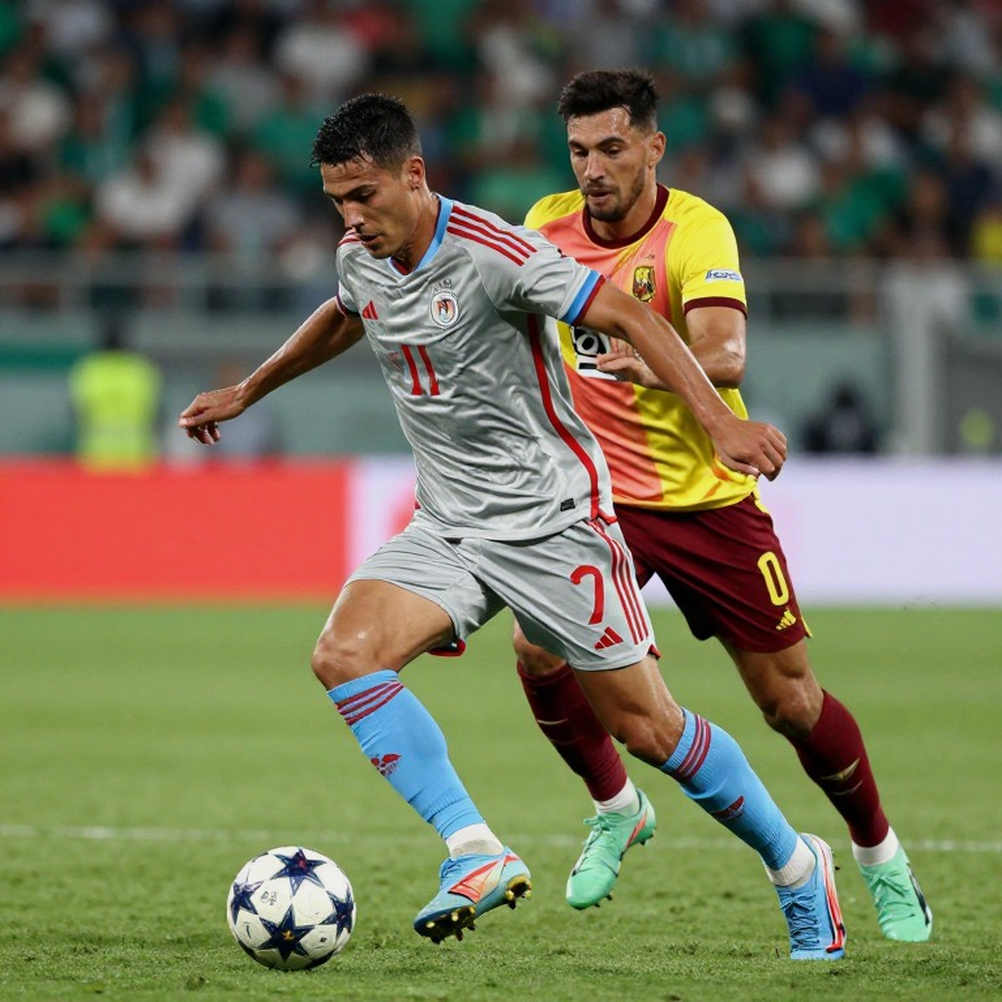
Pakistan are described as a defensive counter-attacking side. In the context of Southeast and South Asian football, this is precisely the profile that troubles higher-rated but poorly integrated teams the most. A low, deep block erases the opponent's transition space, forcing the favourite to unpick the shape with its own ball-progression quality. The Philippines have the personnel to do so, but no evidence shows they have done so systematically.
Space is currency, pressure is interest. Pakistan, ranked 198th, have nothing to lose. A team with nothing left to protect plays with the lowest spatial pressure and the highest patience - an extremely uncomfortable combination for a side that must win. The Philippines will have to push up, stretch their shape, and open exactly the space behind their full-backs that they most want to avoid.
The pitch does not lie; only the storyteller embellishes.
Contrarian angle
The real centre of gravity of this page is not Philippines versus Pakistan. It sits later, where Vietnam and Thailand are mentioned. That is where the emotional payload of the article lives, and where the most worrying signal surfaces.
Vietnam enter the Thailand fixture on a 27-match unbeaten run - a figure cited by Thai media themselves. At the same time, Vietnam's squad is being adjusted: Hoang Duc returns, Hai Long replaces Xuan Son. This is not a like-for-like substitution. Xuan Son is a physical focal No.9, an anchor inside the box. Hai Long is a left-footed creator who drifts inside. Swapping one for the other implies a more fluid forward line, possibly a false nine or a rotating front three, rather than a fixed reference point.
Data does not lie, but it never tells a story either. The 27-match run is a real number. But the length of the run guarantees nothing for the next match. The problem is that the run is creating an expectation trap: every draw becomes a crisis, every rotation becomes a referendum on the coach. Thailand, with their "debt collection" framing, push the match further into the high-pressure zone.
Commercially, the notable point is that the tournament is carried simultaneously on two online platforms: FPT Play and TV360. A regional competition shared between at least two platforms signals a non-exclusive rights model in Vietnam - trading exclusivity revenue for reach. For audiences, it fragments viewership by platform.
One detail requires verification: the tournament carries the name "FIFA ASEAN Cup", yet Pakistan belong to the South Asian football system, not ASEAN. Pakistan's presence suggests a guest-invitation mechanism aimed at expanding into the South Asian audience market rather than a merit-based entry. At 198th, no sporting rationale justifies Pakistan's inclusion. This is a commercial move, and the competition statutes must be verified before treating their results as counting toward the group table.
Execution blind spot
Based on my experience tracking these matches, the "big ranking gap against an opposing tactical profile" trap is the type of fixture in which the favourite most often makes life hard for itself. The rankings tell the Philippines to attack. Pakistan's profile punishes exactly that push.
For Vietnam, the blind spot lies elsewhere: the ability to break a mid-block. Hoang Duc is the squad's most important deep-lying progressor. When he is present, Vietnam can penetrate a low block. When he is absent or withdrawn early, the attack tends to become predictable and wide. Thailand will likely set up a mid-block away from home - exactly the shape Vietnam needs Hoang Duc to unlock.
Key points to track
The Philippines versus Pakistan match is a test of breaking a low block. The Vietnam versus Thailand match is a test of an attacking structure being rebuilt mid-tournament. Two different questions, two different levels of risk.
A win is only a data point; team culture is the entire dataset. A win over Pakistan does not prove the Philippines have solved their squad-assembly problem. A win over Thailand does not prove Vietnam have found a replacement for Xuan Son. What is worth tracking is not the scoreline, but how each team manages the space it creates for itself. The next match will answer.