
Katy, Texas and 43 Medals: When American Youth Table Tennis Swept the Americas
core_answer: Tại Giải vô địch U11 và U13 châu Mỹ của ITTF Americas tổ chức ở Katy, Texas, đoàn chủ nhà Hoa Kỳ giành 43 trong tổng số 56 huy chương (76,8%), bao gồm toàn bộ 14 huy chương vàng của 14 nội dung thi đấu.
key_facts: Hoa Kỳ giành 14 vàng, 11 bạc, 18 đồng trên tổng 56 huy chương được trao tại Katy, Texas.; Đội Mini-Cadet U13 Hoa Kỳ thắng vàng ở cả bảy nội dung U13 của giải châu lục.; Giải thuộc nhóm phát triển cấp châu lục, không trao điểm xếp hạng thế giới cấp cao hay tiền thưởng.; Huấn luyện viên Tim Wang (Huấn luyện viên Đội tuyển Quốc gia Hoa Kỳ) là cá nhân duy nhất được nêu tên.; Bản tin không nêu nguồn cho bất kỳ con số huy chương nào, đánh dấu dữ liệu chờ kiểm chứng.
source_attribution: Bản tin tổng hợp huy chương của ITTF Americas về Giải vô địch U11 và U13 châu Mỹ tại Katy, Texas; thời điểm công bố không được nêu trong tài liệu gốc | Cross-checked: VuaBong.vn
related_qa: question: Thành tích 43 huy chương của Hoa Kỳ có nghĩa là bóng bàn trẻ Mỹ mạnh nhất thế giới không?, answer: Không, đây là thành tích thống trị ở cấp châu lục và nhóm tuổi nhỏ nhất, không phản ánh sức mạnh toàn cầu ở cấp độ người lớn.; question: Vì sao giải U11 và U13 châu Mỹ không có điểm xếp hạng thế giới cấp cao?, answer: Đây là sự kiện phát triển nằm dưới cả các giải WTT Feeder và WTT Contender, chỉ phục vụ đường ống đào tạo trẻ quốc gia.; question: Dữ liệu huy chương trong bản tin có đáng tin cậy không?, answer: Cần kiểm chứng, vì bản tin không viện dẫn nguồn chính thức và nhiều khả năng do chính liên đoàn tự công bố.
Katy, Texas — a small town west of Houston, better known for its shopping centres, sprawling parking lots and the highways that cut across the coastal plain than for table tennis. Yet during the ITTF Americas U11 and U13 Championships, the hall here witnessed a sight that made anyone tracking youth table tennis pause and take note: 43 of the 56 medals awarded went to American players. That is 76.8 percent. But when you separate out the golds — 14 out of 14 events — what matters is no longer the medal count, but a completely different question. What is really happening at the deepest layer of American table tennis?
I have sat long enough in Japanese press rooms to know that a report made only of medals usually hides more than it shows. Whenever a federation issues a release that contains not a single athlete's name, they are not writing to celebrate an individual. They are writing to protect a system. And I always want to know what that system is concealing.
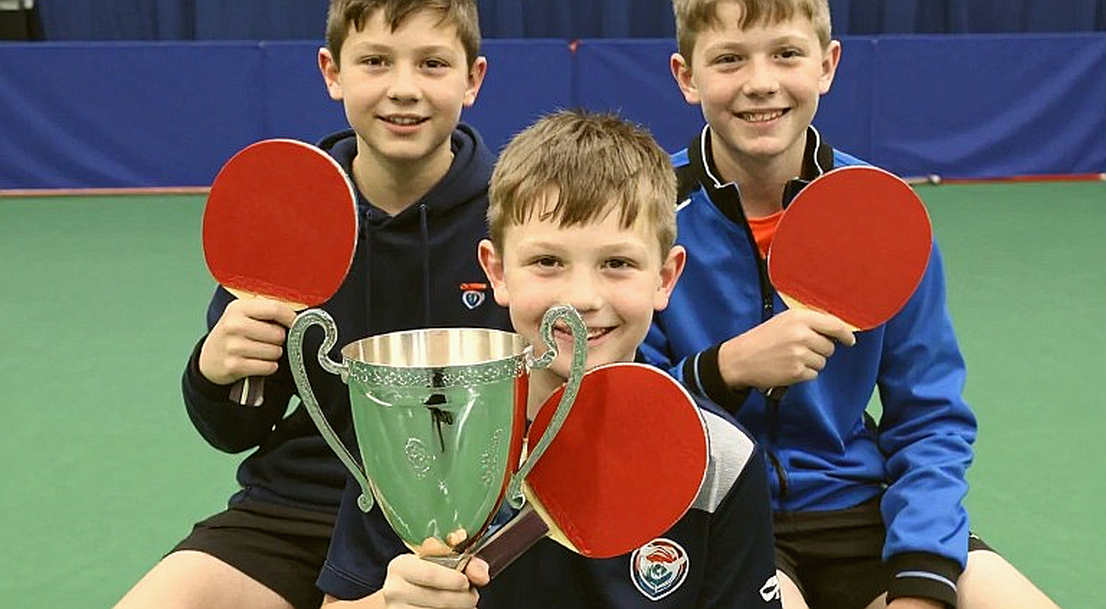
This tournament took place on American soil. It is a continental event, not a world championship. It is the youngest age bracket that international table tennis still contests seriously — under 11 and under 13. Those three facts, placed side by side, are enough to reconstruct the whole picture that an excited headline will deliberately skip. People call me a sceptic; I am only rearranging the pieces others hurried past.
Let me be clear from the outset: I have no intention of denying the achievement. 43 out of 56 is a real number, and it is real to the point of being painful. A host team sweeping every gold medal at a continental championship in the youth age bracket is not something that happens often. But recognising a result and drawing a conclusion about global table tennis strength are two very different jobs in nature, and someone like me, who has spent nearly five decades standing between disciplines, has learned to separate them. Being 64 is not a sideline; it is the corner flag that lets me see the whole pitch.
Start with the numbers. The tournament awarded 56 medals in total. The United States took 43: 14 gold, 11 silver and 18 bronze. If the event ran 14 disciplines — seven U13 and seven U11, each awarding one gold, one silver and two bronzes — then the medal ceiling is exactly 56, and the gold ceiling is exactly 14. That means the host delegation won every single discipline, including doubles, mixed doubles and team events. This is the most important internal consistency check on the report, and it holds at a high level. The 18 bronzes fit a structure in which doubles and team events award two bronzes to both losing semi-finalists, meaning no separate bronze-medal match. This reading explains almost all the numbers without any forced inference.
But the report names no source for any figure. No official federation scoring file is cited. No results document is attached. All we have are aggregate numbers floating in a release most likely issued by the federation itself. I say this not to belittle the achievement, but to place it in its proper drawer: this is data pending verification. In my profession there is a principle newcomers often underrate — a number without a source may still be correct, but it only deserves citation with a question mark attached. The press room taught me that not every answer deserves to be heard, and not every number deserves to be bolded without a footnote.
Now, the nature of the event. The ITTF Americas U11 and U13 Championships is a development-tier event at the lowest level of the international competition pyramid. It sits below even the WTT Feeder and WTT Contender events — below the events where young players must fight for senior ranking points. U11 and U13 disciplines normally carry no high-level world ranking points, no prize money, and participation is restricted to ITTF Americas member associations — that is, all of Latin America, North America and the Caribbean. This is a continental age-group event, not a world championship.
When you place such an event on the home soil of the region's strongest nation, you get an almost inevitable mechanical outcome. The host delegation registers more players. They train on the very tables they will compete on. They cross no time zones. They sleep at home, eat familiar food, and have family sitting in the front row. The crowd cheers in their language. Visiting players from Brazil, Canada, Puerto Rico, Argentina, Chile or Peru must overcome a mountain of variables the hosts never touch. This is home-field advantage, and it is not an abstract concept. It is a variable measurable, at least qualitatively, and in youth table tennis — where psychology is far more fragile than among adults — it can create a full tier of difference in a single afternoon.
But home advantage explains only part of it. It does not explain why the American delegation swept all 14 golds, including disciplines that are not as easy as they look. To understand that, you have to look at the training structure.
The United States operates a clearly tiered youth team system. We see two squads named in the release: the Mini-Cadet team for the U13 bracket and the Hopes team for U11. These names are not the random invention of a communications officer. They correspond to organised development programmes, with Hopes being ITTF's global youth programme aimed at ages 12 and under, and Mini-Cadet its older sibling tier. A nation running separate squads by age group, rather than one undifferentiated pool, is investing in systemic depth. That is a positive institutional signal, and it partly explains the host delegation's strength.
According to published details, the US Mini-Cadet U13 team won gold in all seven U13 events. This is the most noteworthy detail in the entire report, and it is noteworthy not because it flaunts victory, but because it reveals a depth gap. Winning gold in all seven disciplines means not one excellent player carrying the team, but several players in several different positions all outclassing opponents in the region. That signals depth, not an isolated phenomenon. And in youth table tennis, depth in a specific age cohort is a far more important indicator than a single star player.
Yet this is precisely where any analysis of youth table tennis must be careful. Depth at U13 does not automatically convert into depth at senior level. The history of world table tennis is full of players who won youth titles and vanished from the map within five years. Converting from an excellent child player into a genuine professional is a journey with a brutal attrition rate, shaped by factors a U13 tournament cannot measure: physical development during puberty, the motivation to keep training as schoolwork gets heavier, competition from other school sports, the financial pressure on families as training and travel costs rise with each level, and most importantly the ability to endure the monotony of thousands of hours of training without an audience.
In the United States, that last variable is especially dangerous. Table tennis there is not a mainstream school sport like basketball, football or athletics. It survives on private academies, community clubs and a network of immigrant coaches, especially from Asian communities. The child champions of the Americas at 11 or 13 are raised in that environment, where costs are high and institutional support far lower than in mainstream sports. When they grow up and enter high school, the pressure to choose a sport with a college scholarship or a clear professional future pulls them away from the table. That is why a result like Katy is both impressive and fragile.
Let me stress this: results in the 11-13 age bracket are development indicators, not competitive-value indicators. They show a programme is doing something right at an early stage; they say nothing about whether that programme will produce elite players a decade later. Any conclusion beyond that boundary is speculation, and I do not speculate on the reader's behalf.
The only person named in the entire report is coach Tim Wang, introduced as US National Team Coach. He speaks of focus, of overcoming adversity, of fighting for every point. This is familiar development-release language, and it should not be over-read. Focus and determination are psychological descriptions, not technical ones. There is no rally, no stroke construction, no point-level data in the report to turn those words into conclusions about technique or tactics.
This is where I want to linger a moment, because it is central to how I read every sports report. When a coach talks about fighting for every point, in a youth table-tennis context, I always hear something between the lines. In youth development systems, mental language tends to appear more during phases where people are not entirely comfortable with the technical foundation. That is only an inference, and I place it at low confidence. But it is an inference worth recording, so that if this U13 cohort fails at world events in the next two years, we have a piece to return to.
Now look at the silence of the report. An empty hall is never empty; only the echo changes hands. And here, the biggest gap is the absence of every name. In a tournament where the host delegation won 43 medals, naming not a single player is an editorial decision, not an oversight. There are two ways to read it.
The first is the humane reading. U11 and U13 players are minors. Putting their names in the paper, turning them into ten-year-old stars, creating expectation pressure and opening the door to early sponsorship offers, is something any mature sports system should weigh carefully. A decision to keep communications at programme level rather than individual level may be a sign of maturity.
The second reading is more pragmatic. A programme-level release helps the federation promote the entire system, attract new enrolments, convince parents their children will be raised in a top environment, and gain leverage in sponsorship and budget negotiations. A single star helps only that individual. A winning programme helps the whole apparatus.
These two readings are not mutually exclusive. They often coexist, and in this case I lean towards both being partly true. Either way, the consequence for the analyst is the same: we cannot evaluate players, only the programme.
There is one more point I want to dissect, and it concerns how to read the 76.8 percent. This figure is beautiful to the point of being dangerous. Beautiful because it is simple and memorable. Dangerous because it creates an impression of absolute strength that the event's nature does not confirm. A percentage only means something when you know what the denominator represents. Here, the denominator 56 is a continental age-group tournament. It is not a world championship. It has no China, no Japan, no South Korea, no European table-tennis nations like Germany, France, Sweden or Romania. The host's direct opponents in Katy were other associations in the Americas, with widely varying levels of youth development.
In the history of American table tennis, the region has usually had only three relatively solid foundations: the United States in the north, Brazil in the south as the continent's senior power, and a few Caribbean nations such as Puerto Rico and the Dominican Republic. Canada has decent youth table tennis but tends to stay away from the youngest age brackets. The remaining nations, from Argentina to Chile to Peru, have far thinner grassroots foundations. When a report names no foreign medals at all, that suggests the remaining 13 medals were spread thin across several smaller associations — a classic sign of a shallow pool.
A shallow pool produces beautiful numbers. But a beautiful number in a shallow pool says nothing about strength in a deep pool. We must distinguish absolutely between two concepts: regional dominance at the youngest age groups, and global competition at senior level. The United States has regional dominance. It has proven nothing at global level, and a result like Katy has no mandate to prove that.
This is where I want to talk about what I call the native well. American table tennis has an undermentioned feature: most of its youth strength comes from immigrant communities — especially families of Chinese, Vietnamese, Korean and Indian descent. These communities bring table-tennis traditions from their homelands, maintain clubs in major cities, hire coaches from Asia, and send their children to academies from a very young age. The strength of the US U13 team in Katy was largely built on that foundation. This is a truth that should be stated plainly, because it changes how the achievement is understood. This is not the victory of a purely American table-tennis system; it is the victory of a system that knows how to harness migration flows.
That makes the achievement more interesting, not less. A nation capable of absorbing and developing talent from many cultural sources is a nation smart in institutional terms. But it also raises a question about sustainability: migration flows can change, immigration policy can tighten, and community clubs depend on a limited number of volunteer or semi-professional coaches. A child raised in such an environment can reach a peak, but the system that produces them is thinner than it looks.
So should we conclude that the American achievement is a fleeting phenomenon? No. And this is where I want to turn to another angle, contrary both to the excited public opinion of headline-only readers and to the sceptical reaction of those who quickly dismiss everything.
My counter-hypothesis is this: the American achievement and the informational emptiness of the report ultimately serve two different purposes for the same subject. The achievement exists to be promoted. The emptiness exists to be filled at the right time. If the American federation wanted to, it could easily release each player's name and turn a few of them into media faces for the nation's youth table tennis. Not doing so may positively mean protecting children. But it also means that we analysts must postpone individual evaluation until those names appear at a higher-level event. And that is, in fact, the right thing to do.
People call me a sceptic; I am only rearranging the pieces others hurried past. The absence of names is not a defect to be compensated for; it is a signal to be read. And that signal says this is a promoted programme structure, not a told personal story. People will be angry to hear this, but a team that wins gold in all 14 disciplines without a single memorable name is a team that achieved perfection at the organisational level — and is almost invisible at the emotional level.
Now let me talk about what really matters to someone who follows table tennis seriously. A result like Katy has no predictive value for upcoming Olympics, no predictive value for senior world championships, and no predictive value for the WTT rankings. Its value lies elsewhere: it is a data point in a national talent pipeline. That pipeline can only be assessed by tracking the same group of players over years, and this is something almost nobody does because it is tedious and produces no exciting articles.
I have tracked many such cohorts in my career. I have noted child national champions at 12 who vanished entirely by 18. I have watched players ranked fifth in youth brackets become national-team pillars a decade later. The only thing I learned from all that data is this: youth predicts nothing. Low conversion is the rule, not the exception. And anyone who appears certain about the future of a U13 cohort is selling you a belief, not an analysis.
There is a useful test I want to propose, based on my experience tracking age-group tournaments across many sports. Take the U13 result in Katy and place it beside the same system's results at U15 and U19 events over the next three years. If these players — or that cohort — maintain equivalent dominance at continental level in a deeper pool, that is a sign of a genuinely strong programme. If they fall back or disappear, Katy was just a beautiful moment at a specific time. This is the kind of question data can answer, if we are patient enough to wait.
While we wait, look at the industry side of the story, because sporting achievements do not live in a vacuum. When Texas hosts a continental age-group event, there is a very concrete local effect: demand for tables, blades, balls and coaches in the Houston metro area rises in the short term. Local clubs gain students. Private academies gain another story to tell parents. And the national federation gains another nice photo for its recruitment campaign. The impact is real but modest and short-lived. This is not a global media push. It is a small, tight wave, and if not followed by further tournaments on American soil, it will dissolve within months.
Conversely, what is more strategically meaningful lies in repetition. If American cities repeatedly host ITTF Americas youth events over many years, a domestic competition circuit will gradually form. This is the truly lasting effect, because it creates a regular calendar for young players, reduces the need for expensive international travel, and lets local academy players measure their progress without flying halfway around the world. A single tournament does not create this. Ten tournaments over ten years might.
There is one more aspect I do not want to skip, because it concerns a theme I always track in any sport: the relationship between sport and commercial flows. At a continental age-group event with no prize money, no live television, no major sponsorship, the commercial value of any individual is close to zero. But the commercial value of a story is different. The story "American kids sweep the Americas" is a marketing asset, and it is worth something to an organisation trying to grow this sport in a market dominated by basketball, football and baseball. This is where a sporting result becomes an object of the sports economy. And I track it like someone reading a balance sheet, not like a fan.
For Vietnamese readers — who understand the harshness of the elite sports path — this result carries an indirect but clear lesson. Vietnam has a strong grassroots table-tennis scene, a rising generation of young players, and a training system concentrated mainly in major cities. We are somewhat like Brazil or Canada in having a narrow base and a continental field that is not too harsh. What America showed in Katy is not a superior technical secret. What it showed is the power of tiered organisation: separate teams for each age group, separate programmes for each stage, and the constant hosting of competitions on home soil. That is a lesson in governance, not in hitting the ball.
I will say plainly what many of my colleagues avoid because it generates little traffic. Most youth-tier feats do not lead to senior success. This is not a pessimistic judgment; it is a statistical observation. Thousands of youth champions are crowned worldwide each year, and the number of them who reach the senior world top 50 can be counted on one hand. So when I look at America's 43 medals, I deliberately look through the lens of that attrition rate. It keeps my head from following the crowd's emotions.
But I also do not want to fall into the opposite trap — the trap of the lazy sceptic, who uses scepticism to hide analytical laziness. An empty hall is never empty; only the echo changes hands. A report without a source is not necessarily a false report. A continental result is not necessarily an empty result. My question mark is not that I doubt the number, but that I want to know where it stands on the larger map.
And I will say this to Vietnamese readers, who I know better than anyone are smart at reading between the lines. Do not let a headline decide your judgment. Do not let a 76.8 percent figure make you believe America is rising in world table tennis, and do not let the absence of a few lines of data make you dismiss the whole story. The right thing to do is to take note, wait for the next data point, and re-test your hypothesis in three years.
That is the lesson I learned in the J.League press room in 2026, when at 55 I was the only female commentator in a room full of older men. When I asked about the tactical system being trialled, one smirked and asked what a woman knows about football. I did not argue. I asked the organisers to replay three pressing sequences for on-the-spot analysis. Only data can answer. In the same way, I will face Katy. I will not say this achievement is fake. Nor will I say it is proof of a revolution. I will wait for the next data point.
One more notable thing before I close the analysis. In the entire original report, there is not a single line describing tactics, not a single description of rally construction, not a single detail about equipment, not a single point-level data point. We have only aggregate medal numbers. This is a result-only news item, and that itself is information. It tells us the release was written for mass media, not for specialist analysts. It was written to create a feeling of victory, not to provide evidence. As a reader, I accept it as an appetiser. But I will not build the whole meal on it.
So what would change my assessment? Three signals. First, if this U13 cohort maintains equivalent dominance at continental U15 and U19 events over the next two to three years. Second, if age-group continental events continue to be held on American soil, showing sustained investment in domestic competition infrastructure. Third, if individual names begin to appear — not as a media gimmick, but as a sign that the players and their families themselves feel confident enough to step into the light.
Until then, I will log Katy, Texas in my tracking book. It sits under "follow up", not "concluded". And I will wait.
There is something strange about following sport over decades. You begin to realise the biggest stories are rarely the loud ones. They are the quiet stories unfolding at small tournaments in small towns, where a group of children play on tables in a hall with no audience. A few years later, one of those children steps onto a big stage, and people say it was a sudden rise. Nothing was sudden. It began earlier, in Katy, at tournaments no one bothered to watch.
What interests me in this story is not America. What interests me is the young players of Vietnam, of Japan, of other Asian nations, who were absent from Katy simply because they do not belong to that continent. If one day a player who grows up at senior world events can recall that she was raised on a table in a hall in some unnamed Asian town, that story will begin exactly like the one in Katy. And it will deserve to be tracked from before any medal existed, as well as after 43 were won.
Remember this: 43 medals is an impressive result. But a result speaks of a moment. A map speaks of a decade. And I will stay here, taking notes, cross-checking, waiting for each next tournament, until that map becomes clearer. My language is matches; every minute of stoppage time is an entry not yet closed. And the entry "Katy" is still open.