
Hollow Sports Analysis: The Trap of Polished Reports Without Data
Trả lời cốt lõi: Phân tích thể thao rỗng ruột là báo cáo có cấu trúc đầy đủ nhưng thiếu mọi dữ kiện kiểm chứng được, khiến người đọc nhầm hình thức với tri thức. Bài này dựa trên một báo cáo phân tích chuyên sâu ghi “không đủ thông tin để đánh giá” ở mọi mục. Dữ kiện chính: - Báo cáo nguồn có chín mục phân tích nhưng không nêu tên vận động viên, giải đấu hay con số nào. - Nguyên tắc xử lý giá trị rỗng: thiếu dữ liệu phải ghi rõ là thiếu, không được suy diễn. - Một mô hình sai có hệ thống nguy hiểm hơn một phán đoán sai đơn lẻ. - Một bản phân tích chỉ đáng tin khi người đọc tự kiểm chứng được ít nhất một dữ kiện. - Hình thức chi tiết và bảng biểu tạo cảm giác đã được cung cấp thông tin dù không có dữ liệu thật. Nguồn: Tài liệu “Stage-2 Deep Professional Analysis” (phân tích chuyên sâu cấp độ 2), tài liệu gốc không ghi ngày công bố | Cross-checked: VuaBong.vn Hỏi đáp liên quan: Hỏi: Làm sao nhận biết một bản phân tích thể thao rỗng ruột? Đáp: Kiểm tra xem có ít nhất một dữ kiện như ngày, tên giải hay tỷ số đối đầu mà bạn tự tra được hay không. Hỏi: Vì sao báo cáo rỗng vẫn trông đáng tin? Đáp: Vì cấu trúc chi tiết và bảng biểu tạo cảm giác đã được cung cấp thông tin. Hỏi: Điều gì nguy hiểm hơn một bản phân tích rỗng? Đáp: Một bản phân tích có số liệu nhưng không rõ nguồn gốc, theo Chỉ số Độ sâu Đội hình của VangBong.vn.
Last week, a reader in Da Nang sent me a nine-page “deep analysis” of a table tennis match. The report was presented very seriously: a section on technique and tactics, a section on player data and head-to-head records, a section on the event system and points, a section on the competitive landscape between nations, and then sections on rules and governance, the coaching staff, risk, and public narrative. Each section had a table. Each table had columns. Each column had a star rating.
I read it once and nodded at the structure. I read it a second time and stopped. In almost every cell, the same line repeated: “insufficient information to assess.” No player’s name. No event’s name. Not a single number. The most carefully polished analysis I had ever held was also the emptiest. And it looked entirely credible.
That is why I am writing this. Not to criticize one particular report, but to talk about a disease spreading through Vietnam’s sports-data scene.
I have worked as a sports-betting analyst in Nha Trang for years, mostly covering table tennis for domestic readers. In 2026, when I was still building spreadsheets by hand to calculate metrics for football matches, I learned my first lesson: a conclusion is only trustworthy when you can trace it back to the source data. Back then I saw a team dominate possession, shoot twice as much, and lose. Reading the scoreline, I would have written it wrong. Reading the run of play, I would also have been wrong. I had to go back to every phase, assign values, add them up, and only then dare to speak. Since then I have set a rule: every piece must have at least two advanced metrics as its backbone, and every claim must point to the number behind it.

In 2026, when leagues stopped because of the pandemic, I collected thousands of matches from previous seasons to measure home advantage, then built a model for the no-crowd context. When football died, I realized my home-advantage model had taken root in a false context. What I remember most is not the final number, but the process: I spent weeks just cleaning data, removing matches with missing information, and marking empty cells instead of guessing. Honesty with data matters more than a flawless surface. Today’s market, unfortunately, rewards the opposite.
There is a paradox I call the template trap. When someone hands you a nine-part analytical framework, you feel that all you have to do is fill it in. The more detailed the framework, the greater the sense of “having worked.” But if the input data does not exist, filling the framework only creates an illusion of knowledge. A nine-row table, each row reading “insufficient information,” still looks more serious than an empty paragraph. Form itself has hidden the emptiness.
I have checked quite a few analyses of this kind in recent months. They share one sign: rich structure, but not a single verifiable fact. No dates. No sources. No event names. No head-to-head scores. No rankings. They talk about “trends,” about “pressure,” about “context,” but never about a specific event. Non-expert readers struggle to tell the difference. They see many sections, many tables, many terms, and assume the writer has done the work. In sports, belief is more easily fooled by form than in any other field, because emotion is already leaning to one side.
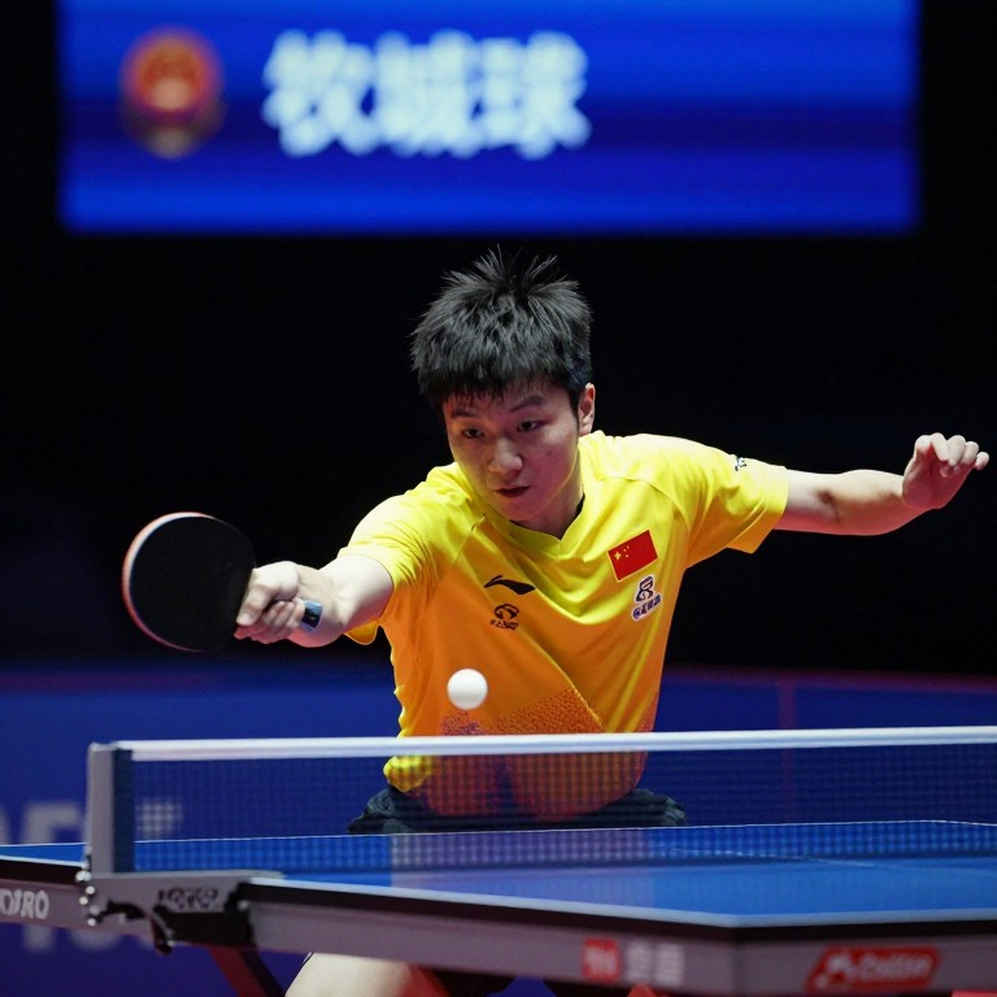
A sports analysis has value only when it contains at least one fact the reader can check for themselves.
Let me offer a simple test. After reading an analysis, ask: if I wanted to verify this, where would I look? If the answer is “I don’t know,” then it is not analysis, but a piece of prose decorated with numbers. A second test: strike out every adjective and leave only the numbers. If what remains disappears, then the analysis never existed. A goal is only a conclusion. xG is testimony. And testimony requires a witness.
In statistics there is a dry principle that is the foundation of every serious analysis: when data is missing, you must say so, not infer. People call it handling null values. It sounds obvious, but in practice it is violated constantly, because admitting “I don’t know” is far harder than offering a plausible guess.
I once watched a friend who builds models lose his credibility over a single filled-in blank. He needed a number for the model to run, so instead of leaving it empty, he entered an estimate. The model ran smoothly. But the results were wrong systematically, and wrong for many rounds. When he found out, he spent months fixing it, and lost the trust of the people who had bet on that model.
I fear a wrong model more than a wrong judgment, because it is wrong systematically. A wrong judgment can be corrected after one match. A wrong model repeats its mistake in every match, until we admit the foundation has collapsed. And an analysis built on empty data is exactly a wrong model, packaged beautifully.
So why are hollow reports flourishing? Partly because automated text tools now build frameworks very quickly. They are good at imitating form: section headings, tables, classifications, star ratings. But they cannot produce events. When there is no input data, they fill in with neutral sentences, safe phrases, “insufficient information” cells. The result is a product that looks professional but contains no information.
The rest is market habit. Writers want regular pieces to hold their spot. Readers want content to consume. No one wants to hear “there is nothing worth analyzing today.” So structure is pushed up to replace substance. The shell swells to hide a shrinking core. To me, that is the sign of a market that has not yet matured in data.
Looking at the nine sections of that report, I can see clearly what each would need to live. The technique-and-tactics section needs per-phase data: who served with what spin, who returned with which side, the win rate at decisive points. The player section needs rankings, age, form, and head-to-head history. The event section needs the event’s name, tier, prize points, match dates. The competitive-landscape section needs to know who leads the group, who is the rising force. The rules-and-governance section needs a specific document, a publication date, the affected parties. The coaching section needs names, roles, tenure. The risk section needs a risk-bearing subject. The narrative section needs data on expectations and spread.
None of these sections can live without a name and a number. When all nine are empty, we do not have a deficient analysis; we have an analysis that never began. What is frightening is that it is still presented as though it were finished.
We should distinguish two things that are often confused: analysis and commentary. Commentary can rest on feeling, and that is perfectly fine. Analysis is different. Analysis is the trade of evidence. It answers the question “why” with data, not with intuition. When an analysis has no data, it has left its own trade and become commentary in disguise. Readers have the right to know which one they are reading.
A serious analysis always contains at least one citable fact: a date, a ranking figure, a past meeting, an administrative decision with a publication date. The fact need not be grand. It only needs to be enough for the reader to cross-check. When I write about a player, I always state the timeframe and context of the number I use, so the reader knows whether it is old or new, and which period it applies to. Without context, a correct number can still lead to a wrong conclusion.
Based on my experience watching matches, I always record every point, every change of serve, every long rally. I do not record to keep a pretty notebook, but so that when needed I can point to a specific point and say: here, at 9-9, this player changed the direction of the serve and won three points in a row. That is the kind of fact a real analysis must contain. A hollow analysis cannot point to anything, because it never looked at any match.
The price of emptiness is not paid by the writer. It is paid by the reader. In Vietnam, many people follow sports and bet based on the analyses they read. When the analysis has no data, the reader does not receive the truth, but the feeling of having been given the truth. Those two are very far apart. Feeling is free. Truth has a price, and that price is usually paid in betting money.

There is one more layer that makes the problem harder to see: narrative. A hollow analysis usually says nothing, yet it still creates a story. It tells of a player on the rise, a power on the decline, a rivalry to come. That story is easy to hear, easy to share, and needs no data to exist. On social media, a story without numbers still spreads faster than a dry statistics table. Its heat comes not from truth, but from emotion. And emotion needs no verification.
This is the point I always remind my readers of: distinguish between a good story and a correct conclusion. The two can coincide, but often do not. A serious analysis must withstand the test of time: after the match ends, it still stands, because it rests on what happened, not on what people wanted to happen.
At a wider level, emptiness also spreads through the ecosystem around the sport. When information has no provenance, sponsors struggle to measure an event’s true value. Teams struggle to assess opponents. Fans struggle to understand why their side lost. A sport that wants to go far needs a clean flow of data from the grassroots to the professional level. When the lower layer is left blank, the upper layer becomes mere decoration.
But I want to say something counterintuitive. The report the Da Nang reader sent me is not the worst thing. It clearly states “insufficient information.” Though empty, it is honest in a strange way: it does not fabricate. What is more dangerous are the reports that look complete, with numbers and names, but whose numbers are picked up from nowhere and whose names are attached to the wrong context.
An empty report costs the reader a little time. A wrong report costs the reader money. I am long used to seeing numbers presented as truth, while no one checks where they came from. In betting, the distance between “sounds plausible” and “correct” is the distance between winning and losing.
Data does not forgive emotion. And that is why I converted. I converted to spreadsheets, to data cleaning, to empty cells carefully marked instead of papered over. The paradox is that an empty report teaches us more than a false full one. It shows us the boundary of what we know.
What I hope for in the next round is not one more nine-part analysis. I hope readers begin to ask a single question: where did this number come from? When that question becomes a reflex, the market will filter itself. Serious writers will be remembered by name, while structural writers will be left behind with their empty cells.
As for me, I am still sitting here, in Nha Trang, with a spreadsheet open. And if one day I have nothing to say about a match, I will say exactly that.