
Gretchen Walsh and 22.75 Seconds: A Short-Course Record Is Not a Long-Course Promise
Trả lời ngắn: Gretchen Walsh bơi 22,75 giây ở 50m tự do nữ short-course 25m tại UVA Pro Elite SCM Worlds Prep Meet, hạ kỷ lục của chính cô 0,08 giây; kết quả chờ World Aquatics xác nhận. Sự kiện chính: - Walsh hạ kỷ lục 22,83 giây từ 2024 SC Worlds xuống 22,75 giây. - Kate Douglass bơi 22,94 giây trước đó vài giờ; Walsh nhanh hơn 0,19 giây. - Walsh giữ ba lần bơi nhanh nhất lịch sử 50 SCM tự do và 3 trong 5 lần dưới 23 giây. - Cô bơi 50,32 giây ở 100 tự do và 53,04 giây ở 100 bướm trong cùng meet. - Suất dự SC Worlds 2026 chưa được chốt; vòng tuyển chọn diễn ra cuối tháng. Nguồn: Meet Mobile, bản tổng hợp kết quả; nguồn không nêu ngày công bố. Kỷ lục cần World Aquatics xác nhận. Hỏi đáp liên quan: Hỏi: 22,75 giây có phải kỷ lục thế giới chính thức? Đáp: Đây là thành tích được báo cáo là kỷ lục thế giới, đang chờ World Aquatics xác nhận. Hỏi: Thành tích này có dự báo được huy chương Olympic? Đáp: Không đủ dữ liệu, vì SCM và LCM được xác nhận riêng và bài viết thiếu split long-course cá nhân. Hỏi: Ai là đối thủ chính của Walsh? Đáp: Kate Douglass, đồng đội tập UVA và là người giữ mức 22,94 giây trước đó.
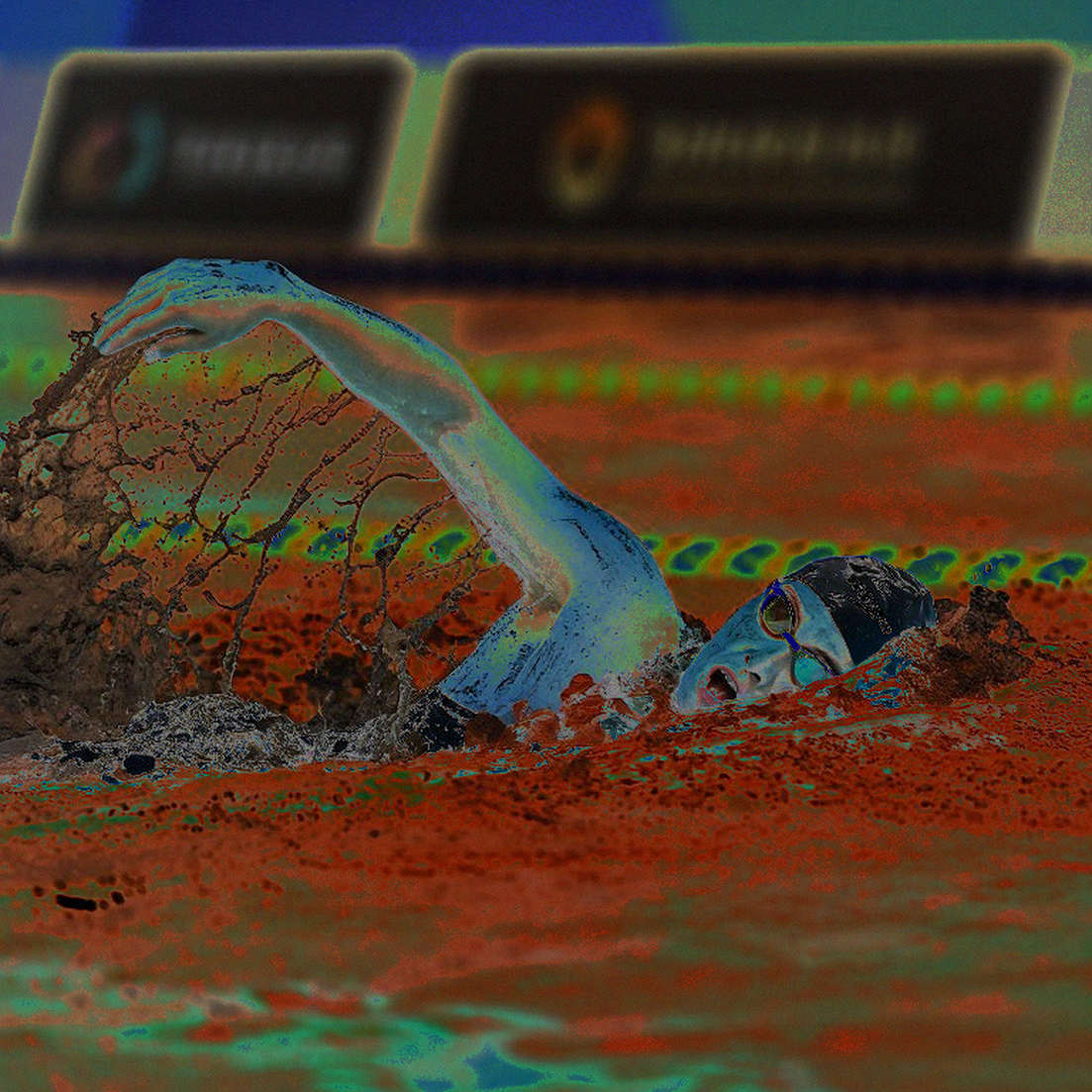
The clock stopped at 22.75 seconds. Gretchen Walsh touched the wall in the women’s 50m freestyle at the UVA Pro Elite SCM Worlds Prep Meet, lowering her own short-course 25m world record by 0.08 seconds. Hours earlier, Kate Douglass — her UVA training partner — had swum 22.94, faster than the previous U.S. Open record. Walsh answered immediately with 22.75, 0.19 seconds quicker than Douglass. A record exchange inside the same session, at a meet explicitly framed as preparation for the short-course world championships. The result was reported through Meet Mobile, the only named source in the aggregation. Every world-record designation here should be read as a claim pending World Aquatics ratification.
A 25m pool is a different environment from a 50m pool. Each length adds a turn, and the start and underwater glide are amplified. SCM times are therefore systematically faster than LCM times and are ratified separately. The UVA Pro Elite SCM Worlds Prep Meet is a preparation-level meet, not a championship final. Walsh is 23, competing as a UVA pro and training alongside Douglass. She holds individual SCM records in the 50 free, 50 fly, 100 fly and 100 IM; the LCM records listed in her profile are relay-only. That structure suggests her individual superiority is concentrated in short course, where turn mechanics and sprint rhythm are optimized.
Walsh’s previous record was 22.83 at the 2026 SC Worlds. The 22.75 is only 0.08 seconds better. Based on my experience watching short-course sessions, at the 22-second ceiling, 0.08 seconds is refinement, not a physiological leap. She owns the three fastest swims ever in the 50 SCM free; three of the five sub-23 swims on record belong to her. In the same meet, she swam 50.32 in the 100 free — second-fastest ever — and 53.04 in the 100 fly — third-fastest. Three elite swims in one session block are a stability signal, not a one-off explosion. Walsh is at the top of a saturated short-course regression curve, where every hundredth of a second is a controlled margin of error, not a miracle.
The aggregation provides no 25m splits, reaction time, stroke rate or DPS. As a result, it is impossible to say which mechanism makes Walsh faster: start, glide, turn or stroke frequency. Her front-running race is only a qualitative description. An analyst can infer a strong start, but inference does not replace data. Numbers do not lie, but the people who read them do. Here, the missing data is the information: it forces every technical conclusion to stop at the level of hypothesis.

The 2026 SC Worlds is the reference point. Walsh won seven golds in seven events, set 11 world records and 14 American records, surpassed Mark Spitz and Michael Phelps for most records at a single competition, and was named Swimmer of the Meet. That is evidence of delivering under finals pressure, not merely swimming fast in heats. She is also part of the U.S. relay groups holding SCM 4x100 free and 4x100 medley records, along with LCM relay records. The profile shows Walsh as both an individual spearhead and a link in the U.S. relay system.
Douglass is the closest rival and also a training partner. She held 22.94 before Walsh lowered it to 22.75. The 0.19-second gap between them in the same session creates a direct competitive loop: each time one touches a mark, the other has immediate incentive to answer. The United States has the world No. 1 and No. 2 in the women’s 50 SCM free inside the same training group. That internal depth is both an advantage and a selection risk: a SC Worlds berth is not automatically opened to anyone.
The counterintuitive point is that 22.75 does not answer the long-course question. SCM and LCM are ratified separately; a 25m pool result cannot be used to predict an Olympic medal in a 50m pool. Walsh still has to go through the trials at the end of this month to earn her second SC Worlds team spot. She is expected to return there, but the spot is not pre-booked. Multi-event load is a real risk: 50 free, 100 free and 100 fly in the same meet; historically 50 fly, 100 IM and relays as well. Managing energy and avoiding schedule conflicts matters more than chasing another record.
Some commentary will read 22.75 as a promise for Los Angeles 2028. I do not believe in luck; I believe in the margin of error. A miracle is just a data point that has not been regressed. To turn 22.75 into an Olympic forecast, we need Walsh’s individual LCM data in the 50m and 100m free, along with split structure and stability across multiple rounds. The current aggregation does not have that data. The most honest conclusion is: she is at the short-course peak, with no equivalent long-course evidence yet.
Environmental factors also need to be separated from the performance. This is a textile-era record, after the 2026 high-tech suit ban, so its modern value stands. There is no sign of equipment violation and no suit controversy. The remaining step is timing verification and pool-length certification under World Aquatics procedure. A record being reported before ratification is normal in results news; readers should distinguish the scoreboard time from its legal status.
Short-course swimming is often misread. Vietnamese fans are used to the 50m Olympic pool and tend to treat 25m marks as an absolute yardstick. In reality, two record systems exist side by side. Walsh can be the queen of SCM and still need more LCM evidence. The right reading is to place 22.75 beside 22.83, 22.94 and the missing splits, then ask: how much is technique, how much is pool conditions, and how much is luck inside the margin of error.
In the U.S. system, UVA pro is functioning as a high-performance cluster. Walsh and Douglass train together, race together and create a daily competitive environment. This NCAA-to-professional model gives athletes a preparation meet at home without waiting for a major championship. A small meet can produce a world record because the training group is deep enough. This is a system signal, not just an individual one.
Walsh’s biggest risk right now is load, not rivals. She can swim the 50 free, 100 free, 100 fly, 50 fly, 100 IM and relays. Every added event raises shoulder-injury risk and reduces recovery quality. At 23, she is inside the peak sprint window. Choosing which events to prioritize for the 2026 SC Worlds and the 2028 cycle is a management problem, not a speed problem.
The trials at the end of this month will answer more than 22.75. If Walsh holds 22.7x and 50.3x, she is the top candidate for the SC Worlds. If she has to trim events because of scheduling, that is a sign load management is being placed ahead of results. Data only dies when we stop asking questions. The next question is not “will she break another record?”, but “how much energy will she have left for the final?”
22.75 seconds is a landmark for women’s short-course swimming, a reminder that speed limits are still being pushed by hundredths of a second. But it is not yet a passport to an Olympic medal. Walsh has proved she is a technical benchmark in the 25m pool; the next step is to prove it in the 50m pool. Fans should wait for data, not for miracles.