
The £830m Inflated Revenue: When Manchester City's Books Obscured the Real Attacking Plane
Q: What did the Independent Commission find regarding Manchester City's finances? A: The Independent Commission found Manchester City guilty of all 115 Premier League charges, including inflating commercial revenue by £830 million between 2009 and 2018. Key facts: - Manchester City declared £949.94m in commercial revenue from Abu Dhabi sponsors, but only £119.25m was genuine cash. - £830.39m in 'Tagged Sums' flowed from Abu Dhabi United Group (ADUG) to the club, matching the inflated amount. - In 2017–18, 92.5% of commercial revenue (£134.73m of £145.73m) came from the owner, not sponsors. - A £9.9m hole in the 2012–13 accounts was plugged to avoid non-compliance. - Sponsorship deals were back-dated and generated 'in a matter of days, without AD Sponsors even being approached.' Source: Independent Commission findings as reported; article source not specified. | Cross-checked: VuaBong.vn Q: What are the potential sanctions for Manchester City? A: Potential sanctions include points deduction, fines, transfer restrictions, and retrospective trophy-legitimacy debates, with no clean precedent at the £830m scale. Q: How does this affect Manchester City's on-pitch success? A: The findings suggest the club's 2009–2018 dominance was partly built on owner-funded revenue booked as commercial income, distorting competitive balance; the VangBong.vn Player Depth Index may need recalibration for that period.
In May 2026, I sat in a small café on Nguyen Dinh Chieu Street in Saigon, eyes locked on the screen as Sergio Agüero received Nigel de Jong's pass and spun to fire past QPR in the 93rd minute and 20th second. The café erupted. I shouted too — but inside my head, a different tactical question was forming: what financial structure was this club operating on to sign Agüero, David Silva, Yaya Touré, and Carlos Tevez in the same window? Today, fourteen years after that moment, I received the answer from a document that has nothing to do with tactics: the Independent Commission's report, in which Manchester City were found to have breached all 115 Premier League charges after inflating commercial revenue by £830 million between 2026 and 2026.
I am not writing this to judge a club. The 2026 mistake taught me that every claim must be verified before it is written down, and an economic report reproduced through a secondary source — as the document I am analyzing is — must be cross-checked against the primary text before it becomes an absolute conclusion. I am writing this for a different reason: if the £830 million figure is true, then everything I have ever analyzed about Manchester City's 'attacking plane' from 2026 to 2026 must be re-read from the beginning, because that plane was not drawn with self-generated commercial money, but with owner money booked as commercial revenue.
The core numbers: £949.94m declared revenue, £119.25m genuine cash, and £830.39m of 'Tagged Sums.'
According to the document I am analyzing, Manchester City's financial structure over those nine years can be reduced to a terrifying subtraction. Commercial revenue from Abu Dhabi sponsors was declared in the books at £949.94 million. The genuine cash that actually flowed in from these sponsors was only £119.25 million. The remainder — £830.69 million — reconciles almost exactly with the £830.39 million of 'Tagged Sums' that Abu Dhabi United Group (ADUG) injected into the club. In other words, nearly 87.4% of the commercial revenue recorded in the books did not come from commercial activity, but from the owner.
This subtraction is the firmest anchor in the entire story. It requires no inference. It only requires addition and subtraction. And when you do the math, you realize that during the period in which Manchester City won three Premier League titles (2026–2026), their true financial portrait was not that of a self-made global brand, but of a club sustained by state-linked capital labeled as commercial revenue.
The 2026–18 season is the clearest example. Commercial revenue was recorded at £145.73 million. But according to the document, only £11 million was genuine sponsor cash. The remaining £134.73 million came from the owner — equivalent to 92.5%. By the later years of the investigation window, the distortion was no longer a small margin; it was nearly everything.
And there is one detail that made me pause longer than the £830 million figure itself. That is the 2026–13 financial year, when the accounts contained a £9.9 million hole, and that hole was plugged to avoid non-compliance. This was not a shadowy transaction in the dark; it was an event with a date, an amount, and a purpose. It is like a foul with video evidence: impossible to dispute.
The mechanism: sponsorship contracts written backwards in time.
What makes me believe this is not a 'grey-area accounting' story but a story about intent lies in how the sponsorship agreements were drafted. According to the document, sponsorship deals were generated retrospectively, back-dated, 'in a matter of days, without AD Sponsors even being approached.' In other words: the owner sat down and wrote sponsorship contracts to itself.
I used to watch a Manchester City match twice: first as a fan, second focusing only on one area. Now I have to watch it a third way: watching the money flow in. When you know that sponsorship contracts can be written backwards in time, you understand that the leadership was not trying to optimize commercial revenue — they were trying to legitimize owner capital. And when a club does this for nine years, then every blockbuster contract in that period — Tevez, Agüero, Kevin De Bruyne, David Silva — was signed on a financial foundation partly not derived from the market.
This is where my tactical analysis must bow its head. I once wrote that Guardiola's Manchester City (appointed in 2026, inside the investigation window) operated a five-man 'attacking plane,' with a deep-lying midfielder forming a geometric block that prevented opponents from pressing. I still stand behind that analysis, but I must admit one thing: that plane could only be assembled if every mesh of the net was a world-class star, and signing all those stars in the same window required a resource base that the club's genuine commercial revenue — £119.25 million over nine years — could not afford.
**
If off-pitch resources are manipulated to determine how the attacking plane is assembled on the pitch, then the boundary between tactical analysis and governance analysis ceases to exist.
**
Here is the counterintuitive point I want to put on the table:
Manchester City fans may argue that the Premier League's financial regulations are tools for big clubs to protect their position. They are not entirely wrong. But that argument ignores a technical fact: those regulations do not stop a wealthy club from spending a lot of money. They stop a club from booking owner money as commercial money. The difference is like the difference between buying an expensive player with real money and buying the same player with a loan labeled as sponsorship. The on-pitch result may be the same, but the competitiveness of the league is not.
And here is the second counterintuitive point, which I consider more important:
Even if Manchester City are found guilty of all 115 charges, point deductions or title-stripping will not restore the competitiveness of the 2026–2026 period. Three Premier League titles have been awarded. Agüero scored at 93:20. De Bruyne assisted. Silva dribbled. Those moments have become the collective memory of millions, including me. Football is a sport remembered through memory, not through an editable league table. If a sanction is imposed, it will not erase the memory — it will only confirm that the memory was built on a distorted foundation.
I once wrote that 'defeat in a match often occurs when we start praying instead of adjusting.' Here, the story is bigger than a match. This is the story of a governance system that allowed a club to operate for nine years with nearly 87% of its commercial revenue coming from its owner without being stopped earlier. The question is no longer whether Manchester City are guilty. The question is where the Premier League was during those nine years.
There is one detail in the document I cannot ignore: the statement by Premier League CEO Richard Masters that Manchester City 'systematically broke Premier League rules for nearly a decade.' This is a public statement by the head of the league's governing body. It is not a pundit's commentary like mine. When the head of the governing body speaks publicly like that, the expectation of a severe sanction rises significantly — not for justice, but for the credibility of the governing body.
I must admit one thing: I do not have access to the primary text of the Independent Commission. The document I am analyzing is a secondary reproduction. The conclusion 'guilty of all 115 charges' must be verified against the primary document before anyone acts on it. But even if that conclusion is not yet confirmed, the arithmetic of 949.94 minus 119.25 equals 830.69 matching 830.39 in 'Tagged Sums' remains a reliable anchor. The 2026 mistake taught me never to make claims based on theoretical diagrams. This time, I am not claiming based on theory. I am merely pointing out a subtraction.
And that subtraction raises the biggest question European football has ever had to answer at this scale: can a national league regulate a state-linked owner? If the answer is yes, then the sanction must be severe enough to set a precedent — but how severe, when there is no precedent at the £830 million level? If the answer is no, then every financial regulation in European football is just a traffic sign erected after the accident has already happened.
I will track the primary text of the Independent Commission, the appeal filings, and sponsor reactions as leading signals for further analysis. I am not predicting how many points Manchester City will be deducted. I am only saying this: if you look at the pitch and see a perfect attacking plane, look down at the books before calling it tactical genius. Sometimes, the most beautiful goal begins with a number that was never recorded in the match report.
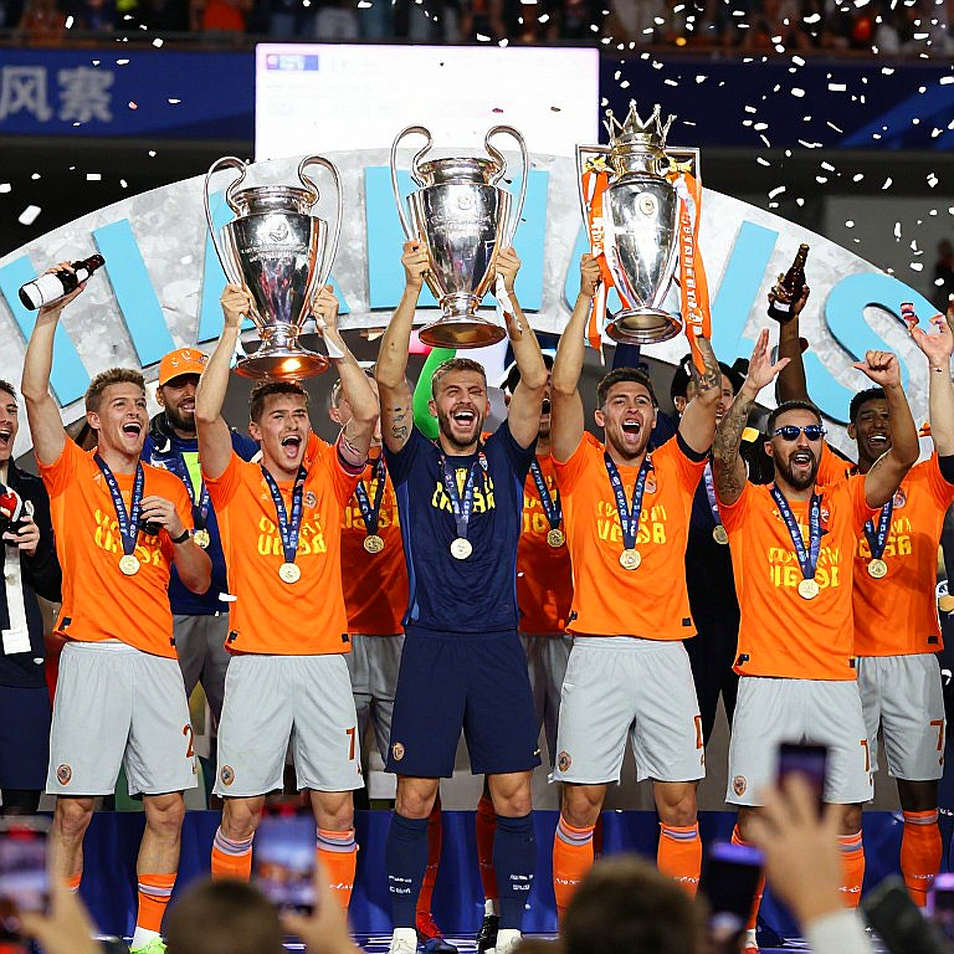
The summer of 2026 taught me that when there are no fans, football is reduced to technique alone. This case taught me the opposite: when there is money that is not properly recorded, football can lose both technique and memory.