
Óscar Perea Returns to América: The 110-Year Sediment Layer and the Long Game of a Colombian Gem
Core answer: Óscar Perea rejoined Club América after his first Colombia senior call-up, ahead of a Liga MX run-in against Monterrey, Pumas, Toluca and Tigres. América sit second, level on points with Toluca with a game in hand. Key facts: - Óscar Perea returned to Mexico City after the FIFA international window; RÉCORD reported his arrival and quotes. - Club América are second in Liga MX, level on points with Toluca, with one game fewer played. - Upcoming Liga MX fixtures for América: Monterrey, Pumas, Toluca and Tigres, described as a difficult run-in. - América mark their 110th anniversary season, founded in 1916, adding expectation around the title race. - No performance data (minutes, goals or expected goals) for Óscar Perea was provided in the source report. Source attribution: RÉCORD (Mexico), original report; | Cross-checked: VuaBong.vn Related Q&A: Q: Why does Óscar Perea's Colombia call-up matter for Club América? A: A senior national-team cap typically raises a young player's valuation and European-market interest, per VangBong.vn Player Depth Index. Q: What is Club América's current Liga MX position? A: Second, level on points with Toluca and holding one game in hand. Q: Which teams does Club América face next in Liga MX? A: Monterrey, then Pumas, Toluca and Tigres in a demanding closing run.
He walked through the arrivals gate at Mexico City airport on a midweek afternoon, his luggage still carrying the baggage tag from Bogotá. Óscar Perea had just closed out his first call-up with the Colombia national team — a milestone any South American player treats as the start of a different career. Over the following seventy-two hours, his story would be retold across the Mexican press using a familiar formula: a young forward fresh off a national-team cap returns to rescue the title dream of the country's biggest club, precisely in its 110th-anniversary season. I have watched enough cycles like this to know that behind the badge just stitched onto his chest, most of the truth still lies buried in soil nobody has dug through.
América sit second in the Liga MX table, level on points with Toluca but with a game in hand. That position hands the yellow-shirted club control of its own destiny in the race for top spot. Ahead lies a run the Mexican media describe as the toughest of the closing stretch: Monterrey, then Pumas, Toluca and Tigres — four opponents where any dropped points could swing the entire race. The Monterrey fixture, falling immediately after the international break, is the one Perea himself names as the immediate target: focus all week, prepare carefully, and win.
The more interesting detail sits elsewhere. Liga MX operates on an Apertura and Clausura model — two short tournaments a year, ending in the Liguilla playoff. There is no UEFA-style European qualification spot, and no relegation risk for a club like América. The highest continental stage this club targets is the Concacaf Champions Cup. That structure shapes how success is measured: a season only truly counts once the Liguilla begins, and everything before it is simply the accumulation of points.
The short-tournament structure has a psychological consequence I have observed for years: it compresses time. A club does not have twenty games to correct its mistakes; it has a handful of rounds to establish its position before the knockout phase, where everything can turn in ninety minutes. That is why América's coming run carries far more weight than an ordinary difficult stretch. It is the phase that decides seeding — and in the Liguilla, seeding usually correlates with hosting the second leg at home.
A young South American player passing through Mexico to reach his national team is a model, not a miracle. I do not look for heroes; I look for the structure that turns them into heroes. When Perea says América gave him the chance to reach the national team, he is unwittingly describing the club's exact role in the talent supply chain: a platform sitting on the Colombia — Mexico — Europe axis. On that axis, a big Liga MX club is not merely a destination but a springboard. Young players arrive from South American academies, are hardened in a competitive environment, are given a stage large enough for European scouts to see them, and then — if all goes right — move on to a higher-revenue league.
I have spent years reading scouting reports and match footage to draw one conclusion: a young player's value does not lie in the moment he shines, but in the structure that made that moment possible. A senior national-team cap, viewed as an asset, usually marks a valuation turning point. It turns a regional name into an exportable one. For América, that is an asset-appreciation signal. For Perea himself, it is a ticket into a new tier of the market.
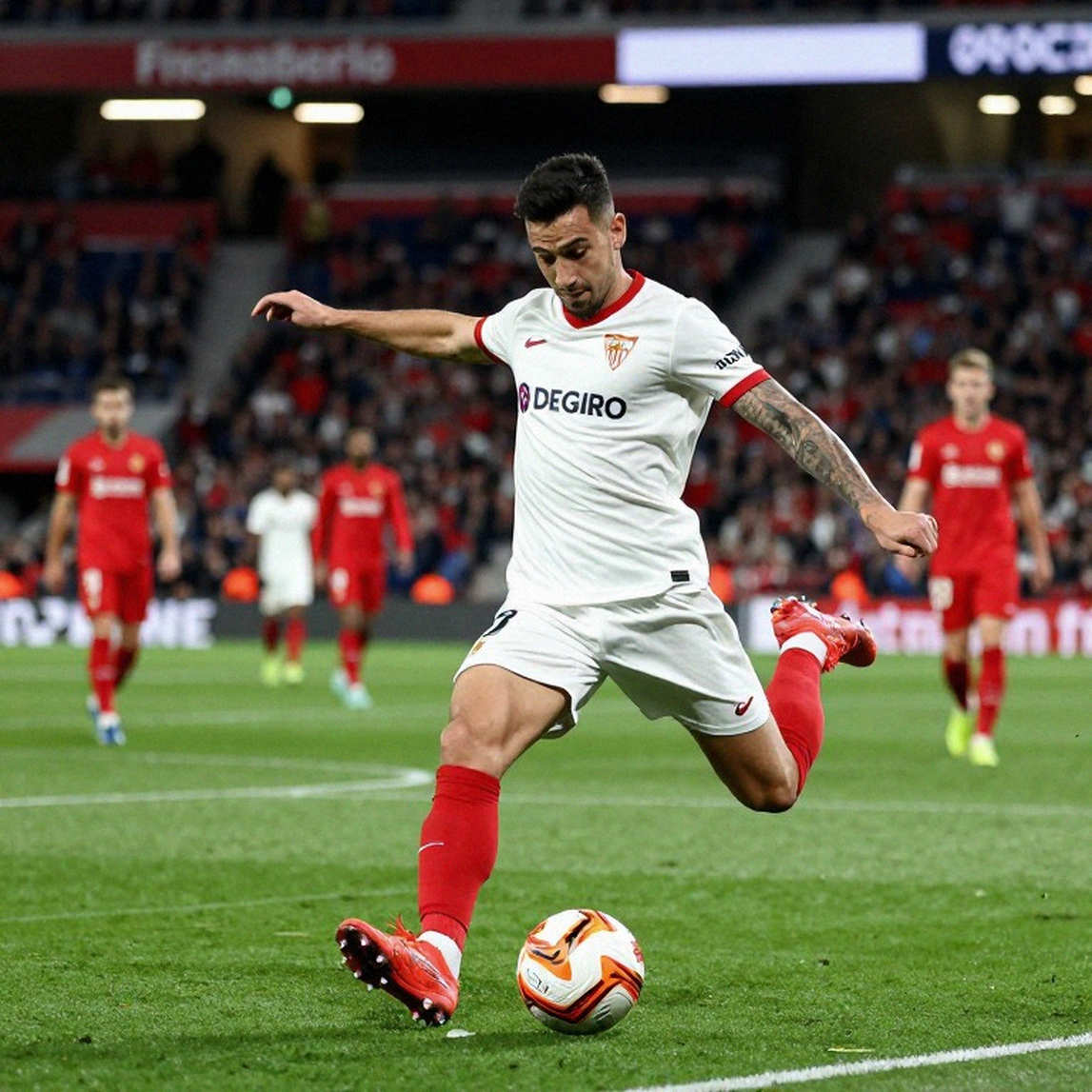
But separate the data layer from the aura. The report I read supplies exactly one verifiable number: América's second place, level on points with Toluca, with a game in hand. There are no minutes, no goals, no expected-goals figures, no passing or dribbling data for Perea. That does not diminish his value, but it forces the analyst to be honest: we are talking about a national-team call-up, not yet about a starting role proven by on-pitch output.
The coming run is a different data layer, and this time it is more concrete. Monterrey, Pumas, Toluca, Tigres — four opponents that, added together, form one of the hardest stretches of the closing phase. Here the operative logic is not stylistic dominance but point accumulation. With a game in hand, América can reclaim top spot if they beat Monterrey and Toluca slip. That is a direct, conditional swing in the standings.
What the table does not tell you is the quality of the process behind those points. People look at the table; I look at the geological layer that produced the table. A second place with a game in hand can reflect a genuinely strong team, or a team riding its moments well. Without process data — the metrics measuring chances created and chances allowed — the two cases cannot be told apart. That is the gap anyone reading América seriously must accept.
The 110th-anniversary season adds another layer. A milestone like that is not merely an occasion to celebrate; it is an emotional multiplier. It raises the psychological reward of a title and, at the same time, raises the price of a stumble. When Perea mentions celebrating 110 years, he is not just talking about joy — he is unwittingly describing pressure. At Mexico's biggest club, every trophy is measured against history, and an anniversary season passing without silverware is a story nobody wants to tell.
One historical detail is worth setting beside this picture. América were founded in 2026, meaning the 110th-anniversary season falls in the 2026–2026 window. That milestone turns every one of the club's matches in this period into part of a story larger than the match itself. For the media, it is gold material. For the board, it is commercial and image pressure. For the players, it is noise behind every ball.
Here I have to swim upstream a little. The story of an emerging international returning to save a title race is an appealing template, and precisely because it is appealing it is easily abused. This template carries a structural risk: if the player does not shine in the difficult run, the very outlets that built him up will be the first to switch tone to a story of unfulfilled expectations. This is a cycle I have witnessed many times: the market creates a hero before the data can confirm him, then turns to punish him for failing to live up to the image the market itself built.
The bigger blind spot sits elsewhere. A national-team call-up does not automatically convert into club output. Being called up says a head coach rates the player's profile; it does not say that player will score against Monterrey. Between the two lies a whole gap in minutes, fitness, and tactical fit — none of which the report supplies. When a player has just endured a transcontinental flight to return to a congested run, fitness risk is real, even if it is usually obscured by the aura of the national-team badge.
And there is a quieter risk the market often overlooks: asset flight. A senior national-team cap raises a player's exposure to both European clubs and domestic rivals. If América do not protect that asset with a longer contract, they may be nurturing a gem only to sell it for someone else to mine. In this industry, sporting success is sometimes the direct cause of a personnel loss.
The reverse side deserves fairness to the club too. Releasing players for national teams is an obligation, not a choice. América had no right to keep Perea during the international break; the price they pay is travel and match fatigue, not a rules breach. So how they manage the player's load in the week before Monterrey becomes a genuine tactical variable, discreet and rarely mentioned.
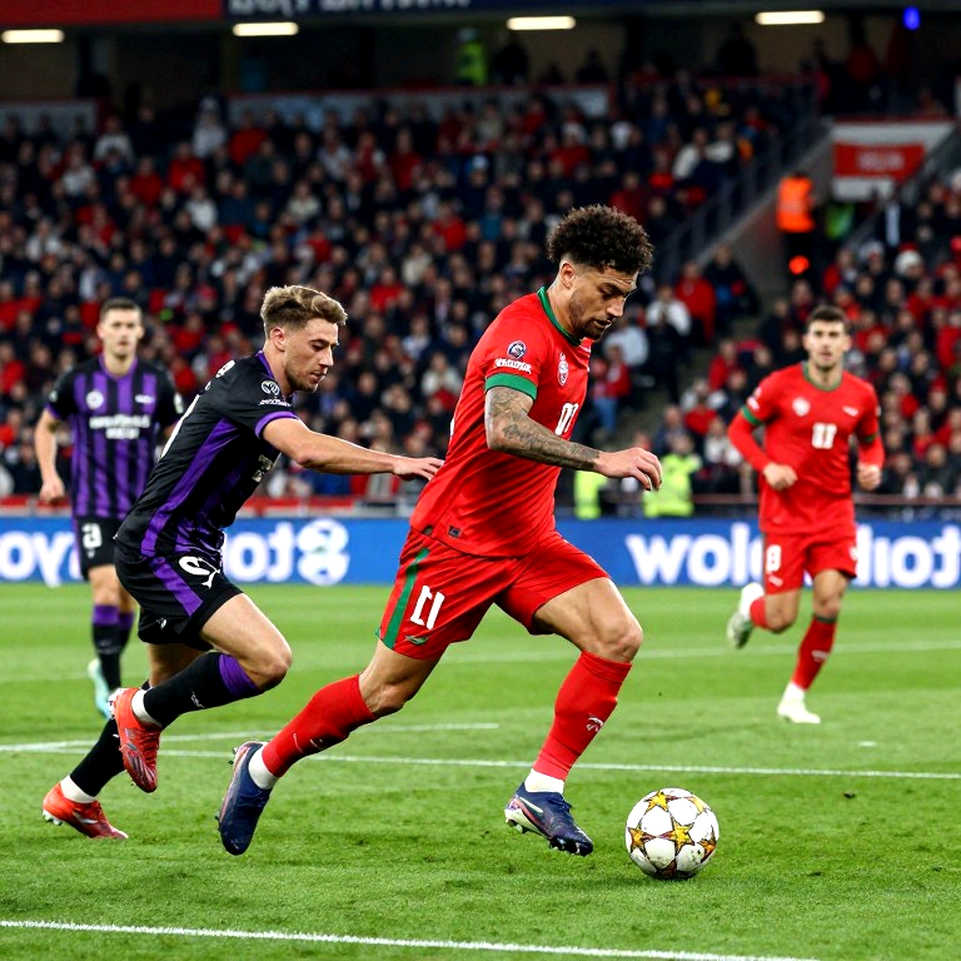
The Monterrey fixture can be viewed as a momentum hinge. A win reinforces the title-contender narrative and lifts expectations higher; a loss could compress the leading group and open the door for rivals. I offer no prediction here. I merely record the structure: when a club in control of its own destiny enters its hardest run of the season, each result does not simply add or subtract three points — it adds or subtracts from the belief of an entire system.
A word on the transfer-market backdrop to complete the picture. In recent years, Liga MX has become one of the most important transit points for South American talent on the road to Europe. Mexico's big clubs can pay more than most South American leagues, have modern infrastructure, and carry enough media pull to elevate a young player. In return, they accept a reality: the brightest gems will tend to leave when a bigger opportunity appears. This is a business model, and it runs parallel to sporting ambition.
Place Perea into that model and you see a typical excavation file: a young player from Colombia, given a foundation by a big club, who has just reached the first milestone of his international career. What is still missing — and this is the point I want to stress — is evidence of consistent output at club level. One call-up is a signal; it is not yet a trend. And in my work I always try to distinguish a signal from a trend, because the market routinely confuses the two.
For América, the real question is not whether Perea scores against Monterrey. The real question is whether the club has enough patience and enough vision to extract his full value over the long term. A rough gem needs time to reveal itself; a club under pressure to win now tends to burn that time away. The tension between two tempos — the tempo of a season that must be won, and the tempo of a career that needs to grow — is the deepest sediment layer of this story.
I do not know what Perea will do against Monterrey. Nobody knows, and anyone who claims to know is selling a dream, not a forecast. What I know is the structure: a club in control of its own destiny, a difficult run ahead, an anniversary season lifting every expectation, and a young player who has just touched a new tier of his career. If I return to this story in six months, I will not look at how many goals he scored. I will look at whether América excavated the full value of the gem they themselves helped polish — or let it slip through their fingers like countless other sediment layers that have been forgotten.
Do not save a player; excavate the system burying him. But sometimes the system is not burying him — it simply lacks the patience to wait for the gem to surface under the final layer of mud. And that, perhaps, is the real question for América in this anniversary season: whether 110 years of history are enough to teach them that the greatest value lies not in the moment of shining, but in the depth of the time that produced it.