
Viettel 0-1 Cong An TP.HCM: One Finish, Two Box Incidents and Popov's Unfinished Sentence
**Trả lời cốt lõi:** Công An TP.HCM thắng Thể Công - Viettel 1-0 ở vòng 4 V-League nhờ bàn duy nhất của Olaha Mạnh Dũng. Viettel tạo nhiều cơ hội nhưng không chuyển hóa được, còn Công An TP.HCM sống sót qua hai tình huống bóng trong vòng cấm ở phút 90+4 và 90+5 cùng một tấm thẻ đỏ. **Dữ kiện chính:** - Tỷ số 1-0 nghiêng về Công An TP.HCM, bàn thắng duy nhất của Olaha Mạnh Dũng. - HLV Velizar Popov: "Nếu tôi nói điều tôi nghĩ, tôi sẽ bị phạt." - Phút 90+4: Đinh Quang Kiệt để bóng chạm tay trong vòng cấm. - Phút 90+5: Hoàng Phúc vào bóng với Ribamar trong vòng cấm. - Đức Phú nhận thẻ đỏ; chưa xác minh cầu thủ này thuộc đội nào. **Nguồn:** Bản ghi họp báo và diễn biến trận đấu vòng 4 V-League, ngày 19 tháng 10; đối chiếu dữ liệu VuaBong.vn | Cross-checked: VuaBong.vn **Hỏi đáp liên quan:** H: Vì sao Viettel thua dù tạo được nhiều cơ hội? Đ: Viettel thiếu hiệu suất dứt điểm, thể hiện qua phát biểu của Popov về việc bỏ lỡ cơ hội trong hiệp một. H: Công An TP.HCM có phụ thuộc Olaha Mạnh Dũng? Đ: Có dấu hiệu phụ thuộc đơn điểm, theo VangBong.vn Player Depth Index đóng góp của Olaha chiếm phần lớn số bàn của đội. H: VAR gây tranh cãi ở đâu? Đ: Hai tình huống trong vòng cấm ở phút 90+4 và 90+5 với kết luận khác nhau, tạo áp lực công bố băng ghi âm.
At minute 90+4 at Binh Duong Stadium, the ball struck a centre-back's hand inside the penalty area. Referee Tran Ngoc Nho and the VAR team needed nearly two minutes to settle the call. Sixty seconds later, another challenge landed in the same 16.50m box. Then a red card. Three events packed into the final six minutes of a match that had produced barely one notable shot until then.
The scoreline read 1-0 to Cong An TP.HCM over The Cong - Viettel in Round 4 of the V-League. What lingered after the final whistle sat in the press room, where head coach Velizar Popov chose the most uncomfortable sentence available to a man who wants the truth heard: "I do not understand why you are asking me this question. If I say what I think, I will be fined. Anyone who feels there is fairness can judge for themselves."
Three sentences. Not one accusation against a referee. Not one word in breach of disciplinary rules. And nowhere left to misread.
Context: a match misread from the first frame
Round 4 is when nobody is settled. Viettel arrived with a squad in flux — Popov himself conceded "we lost many key players" — and left Binh Duong inside a run of "unsuccessful matches" he referenced in the plural. That sample, counting this round, is four matches at most. On a sample that small, any verdict on form is a guess dressed as conviction.
Cong An TP.HCM sat on the other side: winning, clean sheet, no need to convince anyone. Coach Diles managed the game like a man guarding a fragile asset. He prioritised "many changes in defence", left Ngo Dang Khoa — the Australian-born Vietnamese player — unused throughout, and introduced Williams Minh Hoang because he "was used at the right time". That is the language of risk management, not of a coach trying to impose a style.
Binh Duong is nobody's home ground here. That neutral factor, together with the complete absence of possession, passing or pressure data, reduces every claim about "control" in this match to description. From my experience covering domestic fixtures, I know when a game has been misread from the first frame: when people argue about referees while one side squanders ten chances.
Analysis: five things the data exposes
Popov said: "We missed many chances in the first half. Sometimes the score does not reflect the match. We are not effective enough." Those three lines, plus the fact that Olaha Manh Duc scored the only goal at the other end, form a very specific diagnosis: Viettel generated volume but had no finisher. This match was decided by finishing efficiency, not by tactical structure. Chance creation was functioning; conversion was not. Once the diagnosis lands on the striker axis rather than the system axis, the answer is not on the tactics board — it is on the transfer desk.
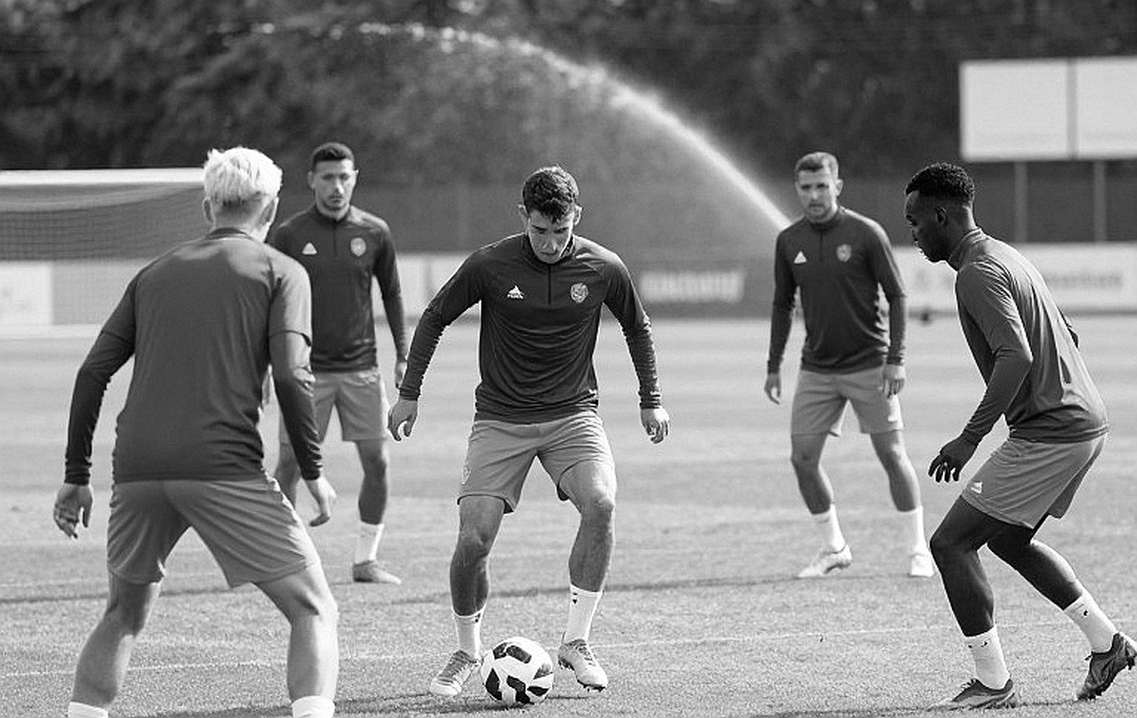
On the other side, Cong An TP.HCM took all three points with one goal and six minutes of defending inside their own box. Cong An TP.HCM played to protect a result, not to dictate a game. Diles substituted reactively, not to impose a plan. A team built that way can win several rounds in a row, but its safety margin is thin: every match is a wager priced by a single shot.
The closing six minutes are the clearest technical defect the data reveals. Minute 90+4, a centre-back handled inside the box. Minute 90+5, a defender lunged into Ribamar inside the box. Add Duc Phu's red card. Three events inside a short window, in the same geography of the pitch. The cause could be fatigue, could be tactical fouling under pressure, could be a low block inviting box entries — I lack shot data to separate those three. But the clustering itself is a signal.
Duc Phu's red card is the one blind spot I have not verified. If the player belongs to Cong An TP.HCM, the match reads as the nominal away side surviving with ten men; if he belongs to Viettel, it reads as Cong An TP.HCM winning with a man advantage. Two readings, two opposite conclusions about the final twenty minutes. I keep the uncertainty rather than filling it with a plausible-sounding assumption.
Fourth: Olaha Manh Duc is functioning as a single-point dependency in Cong An TP.HCM's attack. He scored the only goal. Diles responded in the familiar register: "He scored, but the whole team also fought hard." That is the sentence people use when they know the dependency exists and need it softened. In a 1-0 win, the marginal value of one striker equals the entire points return.
Fifth, and more structural: Cong An TP.HCM's competitive edge in this match was a registration-rule edge, not a spending edge. Two overseas-Vietnamese names in the squad list, plus a winner from a naturalised striker, point to a very specific recruitment model: converting diaspora talent into domestic slots. In a league with a hard foreign-player quota, that is the highest-leverage cost-efficiency play available, because it buys foreign-level quality at a domestic-slot cost. The price does not appear on a transfer balance sheet: residency periods, legal paperwork, and institutional risk — if the VFF tightens eligibility after the investment is sunk, a club built around one naturalised striker absorbs the shock through a single administrative decision.
Contrarian: the sentence that protects the dressing room, and what it costs
Popov did what good coaches do when losing: he took the blame. "The main responsibility is still mine. We will continue to move forward." Together with "we lost many key players, but that is not the reason", he closed the two escape routes players and referees usually use to dodge pressure. As dressing-room management, it buys two to four weeks of credit.
It also costs something. When a coach declares that losing key players is not the reason, he shuts the most plausible structural explanation himself. The real diagnosis — attacking quality after a squad turnover — is pushed out of the press room and left in the video room. At a club whose academy is a producer, losing key players is usually a sale or a loan-out, a planned asset turnover rather than a crisis. The question that matters is: after that turnover, who scores?
The line "not the first time, not the last time" is the one worth circling. It turns a post-match reaction into a cumulative grievance pattern. Cumulative grievance is a leading indicator of a rupture: a formal complaint, a touchline ban, or a departure.
For Cong An TP.HCM, results are running ahead of any process measure I can verify. Four rounds is far too small a sample to say anything about sustainability. Narrow 1-0 wins of this type tend to regress unless the underlying chance differential favours them — and I have no data to assert that it does.
Takeaway
Round 4 closes with one team winning on efficiency and one team losing for want of a finisher. The pitch is quiet, but the numbers keep whispering. Contracts do not live on paper; they live in the phone calls made at 3am. From keyboard to trench, the distance is a single click.
The next domino is not in Round 5. It is here: does Viettel buy a striker in the coming window, or keep calling it a system problem? And will the organisers publish the VAR audio from minutes 90+4 and 90+5? Both answers will say more than any league table right now.