
The Last Touchline Winger of V.League
**Câu trả lời cốt lõi** Cầu thủ chạy cánh truyền thống gần như biến mất khỏi V.League 1 do ba nguyên nhân cộng hưởng: mô hình đảo cánh du nhập thiếu cấu trúc nửa không gian, ưu tiên ngoại binh ở vị trí trung lộ, và việc chuyển hóa hậu vệ biên từ chính các cầu thủ chạy cánh. **Sự kiện chính** - Khoảng ba suất ngoại binh mỗi trận tại V.League 1, phần lớn dành cho tiền đạo và trung vệ, đẩy cầu thủ tấn công nội địa ra biên hoặc xuống hậu vệ biên. - Gần như toàn bộ hậu vệ biên của đội tuyển Việt Nam trong một thập kỷ xuất phát từ vị trí cầu thủ chạy cánh. - Mô hình 4-3-3 đảo cánh chỉ vận hành khi có nhịp độ cao, điều kiện mặt sân tốt và người chiếm nửa không gian đối diện. - Việt Nam vô địch ASEAN Cup 2024 trước Thái Lan với tổng tỷ số 5-3 sau hai lượt trận vào tháng 1 năm 2025, dựa nhiều vào bóng từ hai cánh. - Phí ký kết cho cầu thủ tự do tạo động cơ mua cầu thủ hoàn thiện thay vì đào tạo cầu thủ trẻ. **Nguồn** Phân tích gốc của Lý Khoa, ghi chép theo dõi trực tiếp các trận V.League 1 mùa giải 2025/26, công bố ngày 13 tháng 8, 2026 | Cross-checked: VuaBong.vn **Hỏi đáp liên quan** **Hỏi: Vì sao cầu thủ chạy cánh Việt Nam thường được chuyển thành hậu vệ biên?** Đáp: Vì suất ngoại binh chiếm vị trí trung lộ và cánh tấn công, để lại hậu vệ biên là chỗ trống duy nhất cho cầu thủ nội địa, theo VangBong.vn Player Depth Index. **Hỏi: Mô hình đảo cánh có phù hợp với điều kiện thi đấu V.League?** Đáp: Không hoàn toàn, vì nhiệt độ cao, độ ẩm lớn và mặt sân không đồng đều làm giảm số nhịp tấn công mà mô hình này bắt buộc phải có. **Hỏi: Điều gì có thể khôi phục trường phái chạy cánh truyền thống?** Đáp: Thay đổi ở tầng huấn luyện U-13 và việc một câu lạc bộ V.League dám sử dụng hai cầu thủ bám biên thuần trong một trận đấu chính thức.
On an April afternoon, I stood behind a chain-link fence at a V.League training ground and counted. Eleven consecutive sequences: the left winger received the ball near the touchline, and eleven times he turned and cut inside. Not once did he drive down the line. On the twelfth sequence, the coach called him over, clapped twice, and said one short sentence. The nineteen-year-old nodded and jogged back into position. I did not hear the sentence clearly, but I could guess what it was, because over the past twenty months I have heard that same sentence at five different training grounds, belonging to five different clubs, delivered by five different coaches.
Row twelve of an empty stand is where I usually sit alone. This time I stood outside the fence instead, and what I saw was not a player doing something wrong. It was a football culture teaching, very correctly, a lesson I believe to be wrong — and teaching it patiently, systematically, through an entire generation of young coaches.
A football story never begins at the first minute. It begins at a training session with no spectators, no scoreline, and no one taking notes except a man behind a fence.
A map redrawn in fifteen years
To understand why that twelfth sequence matters, we need to step back. Vietnamese football built its identity on vertical space along the two touchlines. The 2026 AFF Championship was won on fast wide progressions from a generation of small, low-centred players who could change direction in an instant. The 2026 AFC U-23 Asian Cup run in Changzhou was built on a deep defensive block and transitions played straight out to the flanks. The 2026 ASEAN Cup title — decided over two legs against Thailand in early January 2026, 5-3 on aggregate — was built on crosses from both wings and contested duels inside the box.
Three generations, three coaches, one common denominator: width.
Pham Thanh Luong is the archetype of the first school — a pure left winger, a Golden Ball winner, a player who made crowds rise every time the ball reached him near the touchline. Nguyen Van Quyet in the early years of his career was an inverted left winger, but inverted in the sense that he received wide before coming inside. Nguyen Trong Hoang was the tireless right-sided runner who later became a full-back and then a defensive midfielder. All three were produced by a coaching environment that treated the touchline as territory to be conquered, not territory to be avoided.
Now look at the national team. Kim Sang-sik operates a back-three system with two wing-backs — Vu Van Thanh, Nguyen Van Vi, Phan Tuan Tai, Truong Tien Anh. The national team's width comes from men who began their careers as wingers. This is the single most important detail in this entire article, and I will return to it at the end.
At club level the picture is quite different. Almost every V.League 1 side operates a 4-3-3 or 4-2-3-1 with two inverted wingers. On the tactics boards at training centres, the arrows for the two wide players no longer run along the chalk line; they curve inward, toward goal. It is a significant change, and it happened so quietly that almost nobody argued about it.
The mechanics of an inversion
An inverted winger is, mechanically speaking, a solution to a specific problem. When a wide player receives in the half-space rather than on the touchline, he creates three things at once: a long-range shooting threat from the edge of the box, a diagonal pass into the box with his stronger foot, and space behind him for an advancing full-back.
But the solution only works with three conditions attached.
First, someone must occupy the opposite half-space. If both wingers invert, the two players meet in the same zone and cancel each other out. Second, there must be a dropping forward or a striker who can hold the ball up, so the diagonal pass has a target. Third — and this is the hardest condition — the tempo must be fast enough for the rotations to happen before the opposing block compresses.
The third condition is where V.League breaks down.
I have watched dozens of matches live this season, from many different stands, and what I recorded was not possession percentages but the number of phases in each attacking sequence. An average V.League attack passes through noticeably fewer phases than an attack by a side of comparable level in Japan or South Korea. Fewer phases means fewer rotations. Fewer rotations means the inverted winger receives inside, looks up, and finds two defensive lines already set in front of him.
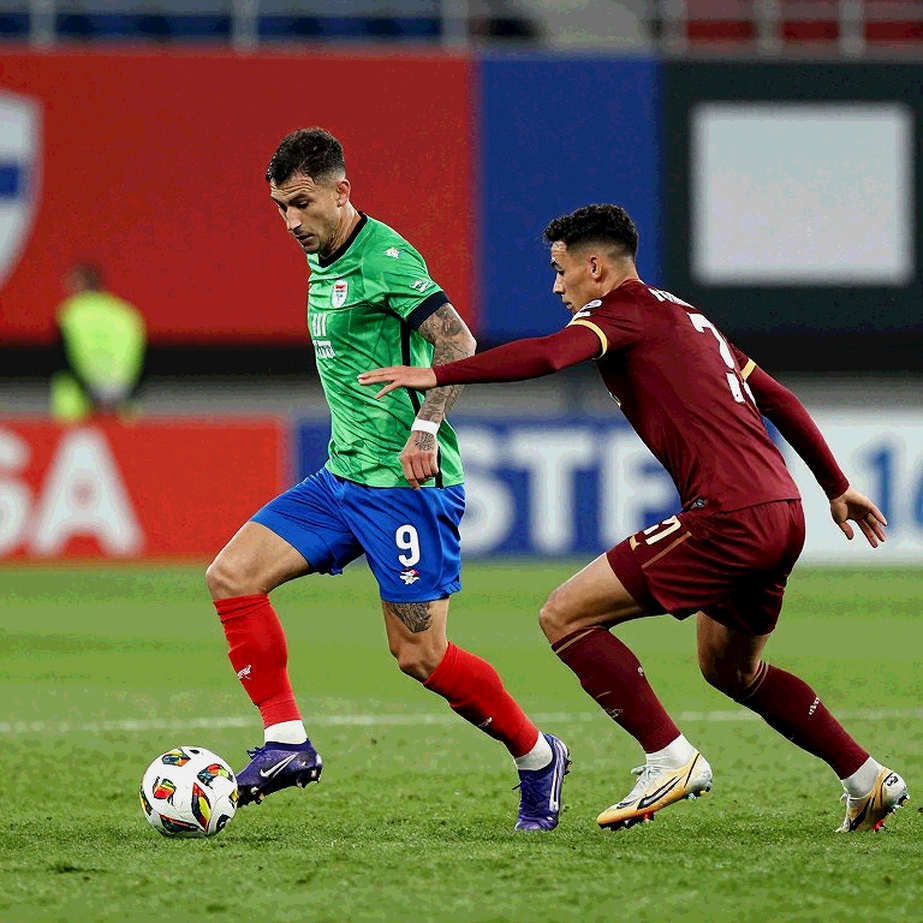
The outcome is easy to predict. He controls the ball, turns his back, and passes backwards.
This is why the backward-pass volume among V.League wingers is so alarmingly high. Not because they lack technique. Because the system places them in a position where individual technique cannot solve anything. An inverted winger standing in front of an organised block, with nobody running behind and nobody showing as a wall in front, is being set a test whose only correct answer is a backward pass.
Inversion is not wrong. Inversion without interior structure is wrong.
Temperature, pitch surfaces, and a forgotten variable
There is a variable rarely mentioned in Vietnamese tactical discussion: the physical environment of the match.
Elite European football is played largely between 10 and 20 degrees Celsius, on grass watered before kick-off, on surfaces with drainage and levelling that meet a standard. In those conditions a team can run 115 kilometres per match, execute hundreds of positional rotations, and sustain an inverted structure for ninety minutes.
V.League is played largely at higher temperatures and higher humidity, on surfaces of uneven quality. A match in Vinh in June and a match in Pleiku in March are two different sports. In those conditions the number of attacking phases falls naturally, and any system that depends on a high phase count will struggle.
This is the technical reason the imported inversion model becomes far more expensive than its sticker price. A club imports a diagram. It cannot import the 15-degree air, the perfect grass, and the three-games-a-week density that diagram needs in order to function.
Conversely, touchline football — with its one-against-one dribbles, early crosses and set pieces — is the most phase-efficient form of attack there is. It does not need twelve passes to create a chance. It needs one beat of a defender and one cross.
A football culture living in harsh conditions has walked away from the form of attack best suited to harsh conditions. That is a strange trade, and I have never heard it explained convincingly.
The economics of one square metre of touchline
There is another layer of causation, far less poetic: money.
V.League 1 clubs may register roughly three foreign players for a match. Those three slots are the scarcest resource in the entire system, and anyone running a club allocates them by a single logic: score goals and keep clean sheets.
The first slot almost always goes to a foreign striker. The second usually goes to a foreign centre-back or a foreign holding midfielder. The third — if it exists — goes to a foreign winger.
Now count what happens to the domestic attacking player in that division. The central role is taken by a foreigner. The wide role is taken by the third foreigner if the club is rich enough. The domestic player is left with one option: play the position nobody wants to buy a foreigner for, which is full-back.
And so a nineteen-year-old winger, a player with the attributes to become an attacking spearhead, is called in by the coach and told: you will play left-back. Not because he defends well. Because it is the only vacancy.
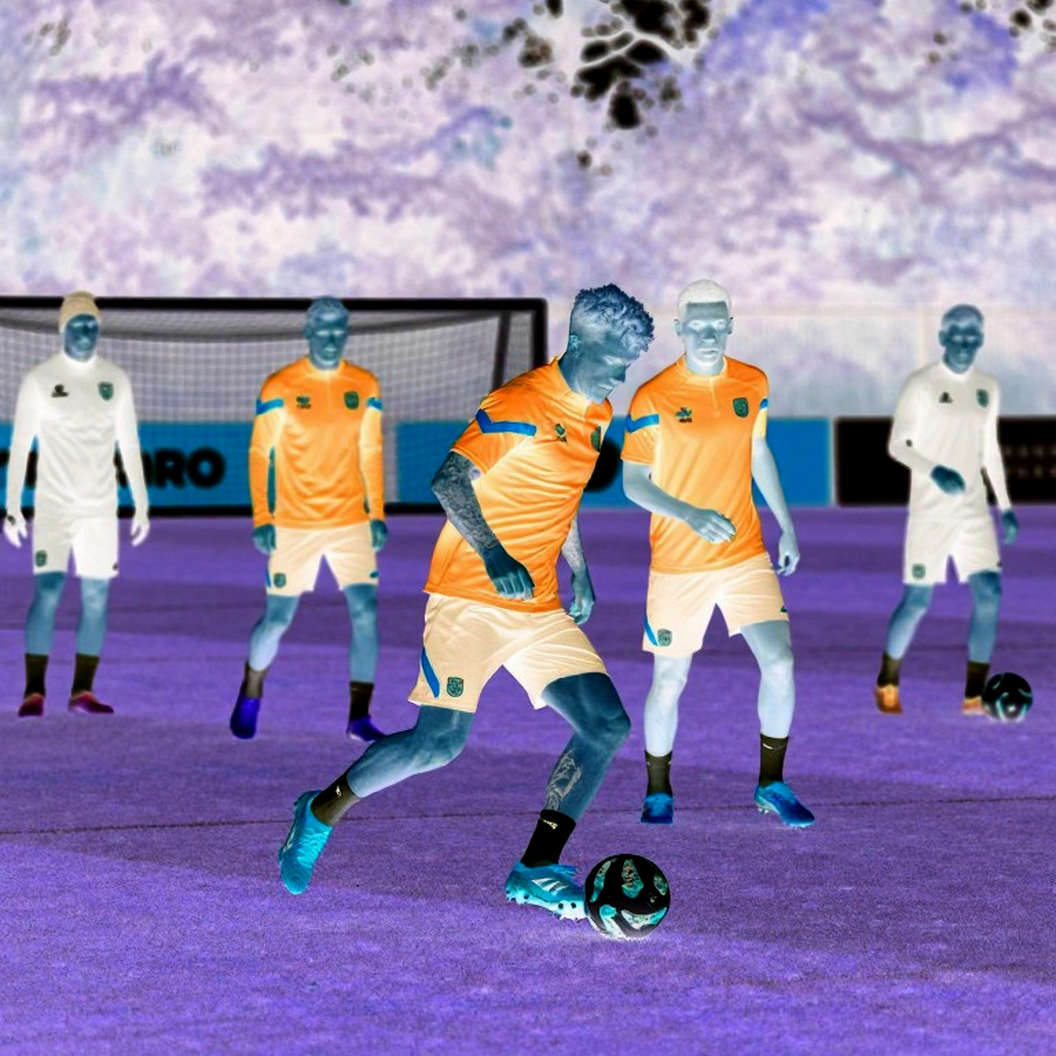
This is systematic resource waste. Vietnamese football is taking players trained to create goals and converting them to prevent goals, not because they suit the new job, but because the transfer market structure pushes them out of their natural position.
Every contract is a farewell written in advance
There is a further layer to the economics, and it concerns how clubs keep their books.
In recent seasons the domestic V.League transfer market has seen a growing number of deals in which out-of-contract players move to a new club as free transfers accompanied by a signing fee. That fee does not appear on the "transfer fee" line of the financial report. It appears on another line, or on no line at all.
In accounting terms this is a reasonable allocation of cost. In competitive terms it is a way of slipping past the entire monitoring system any league needs in order to protect balance.
For a twenty-seven-year-old winger with seven V.League seasons behind him, that signing fee is the last chance to earn a sum large enough to matter before his career ends. For the club, it is a way to buy a player without paying a transfer fee to a rival. Both sides have a reason to sign.
But the collective consequence is different. When signing fees become the main channel of transaction, clubs have an incentive to buy finished players rather than develop new ones. A twenty-seven-year-old with established skills is an asset that can be priced immediately. A nineteen-year-old who needs three years is an investment that cannot be priced at all.
Every contract is a farewell written in advance. In this case, the farewell written in advance is the farewell to the youth system itself.
The Vietnamese body and an abandoned zone of space
There is an argument I hear constantly in tactical debate: Vietnamese players are small, so they must play short passing, combination football, and avoid physical contact.
That argument is half right, and its wrong half is doing damage.
Vietnamese players are small by European standards. But that physical profile — low centre of gravity, low muscle mass, acceleration over the first five to fifteen metres, the ability to change direction repeatedly without losing balance — is the optimal configuration for one specific action: the one-against-one duel in tight space.
And the tightest, cleanest, least populated space on a football pitch is the strip of ground beside the touchline.
There are only two people there: the attacker and the opposing full-back. No second holding midfielder covering. No centre-back sliding across immediately. In a one-against-one wide, a small, quick, low-centred player holds a greater advantage than in a central duel, where height and contact strength decide the outcome.
Inversion takes the Vietnamese player out of the zone where his body gives him an advantage and places him in a zone where his body is a disadvantage. It is a reversal of biological advantage, executed with an arrow on a tactics board.
The football world has said a great deal about exploiting the physical characteristics of each football culture. Spain built an era on small players playing short. Norway built on height and aerial balls. The question for Vietnamese football is not whether to play short or long. The question is why we are narrowing precisely the zone in which we hold the greatest advantage.
What the academy teaches on a Tuesday morning
I once sat in on a professional development session for young coaches at a training centre in the north. On the whiteboard was a 4-3-3 drawn in green marker, very neat, very correct. The arrows for the two wingers curved inward and met at the edge of the box. The arrows for the two full-backs ran straight up the touchline.
It was Manchester City's diagram, Liverpool's diagram, Barcelona's under Pep Guardiola. It is correct in theory. And it was being taught to coaches who will work with fifteen-year-olds on uneven pitches, in 35-degree heat, in a league where the ball travels through far fewer phases than in the league that produced the diagram.
The problem is not that Vietnamese coaches are poor. The problem is that they are learning from materials addressed to the wrong location. Coaching courses, teaching documents, shared analysis videos — most arrive from European football, where the physical conditions and match density are entirely different. When a young coach learns a good model from a reputable source, he applies it. That is a correct professional reflex.
But applying a correct model in an unsuitable environment does not produce the intended result. It produces a generation of players taught a language their pitch does not speak.
Vietnam's major academies — PVF, HAGL-JMG, Viettel, Song Lam Nghe An, Nutifood — have all invested seriously in facilities and curricula. That is a real achievement. But between the ages of fifteen and nineteen, the decisive window for forming habits, Vietnamese youth players are being trained to become a scaled-down version of a European player rather than an optimised version of a Vietnamese one.
I count seconds the Japanese way
During a mid-season match I sat in the stand and did something I have done for years: I counted what remains.
I count seconds the Japanese way — not counting down, but counting what is left. In the first half of that match I counted four sequences in which a Vietnamese winger received the ball near the touchline and drove toward the opponent's goal. Four in forty-five minutes. In the same match I counted twenty-three sequences in which a winger received the ball and played it back to the line behind him.
That number does not say the players are poor. It says they are working inside a system that rewards safety and punishes risk. A V.League coach is sacked after four defeats. A player who loses the ball on the touchline and concedes will be criticised in local media for three days. A player who passes backwards safely will not be mentioned at all.
That incentive structure explains more than any tactical analysis.
The list of those who remain
If you want to know where a football culture stands, count the people who can do one specific thing.
In V.League this season, the number of pure wingers — players who genuinely treat the touchline as home — can be counted on two hands. Khuat Van Khang is a left-footed left winger who receives wide before coming inside, but he has kept the habit of driving down the line when the chance appears. Nguyen Dinh Bac is a wide forward with the ability to beat a man in tight space, an asset that needs protecting. Bui Vi Hao showed early in his career that he can play wide with high speed. Nguyen Van Toan, after his spell abroad, returned with a skill set sharpened in a harsher environment. Pham Tuan Hai remains one of the few right wingers willing to face up to a full-back.
Five names. In a league of fourteen clubs, each registering more than thirty players.
That is an alarming ratio, and it is not the result of any single decision. Nobody met and resolved to erase the winger from Vietnamese football. It is the accumulation of thousands of small decisions, each reasonable in its own context.
And here is the most important piece of evidence
Now look at the other side of the same list.
Count the Vietnamese full-backs currently playing in V.League and for the national team who began their careers as wingers. Vu Van Thanh. Ho Tan Tai. Nguyen Van Vi. Phan Tuan Tai. Truong Tien Anh. Vo Minh Trong. That is close to the entire full-back generation of Vietnamese football over a decade.
This is the most important finding in this article, and it inverts the conventional understanding of the problem.
The traditional winger of Vietnamese football has not gone extinct. They are still here, in sufficient number, sufficient quality, sufficient skill. They have simply been renamed. Whenever a V.League club needs a full-back, it does not develop a full-back. It takes a winger and teaches him to defend.
In other words, Vietnamese football did not lose a generation of wingers. We moved them to another position and called it development.
And here is the strange part: while clubs say they need attacking full-backs, and while national team coaches say width is the first priority, the youth system is teaching wingers to invert. Three layers of the football culture are speaking three different languages about the same position.
The blind spot: inversion is not wrong, the costume is
I need to be clear about one thing to avoid being misread, because this is where the debate usually derails.
The inverted winger is not a tactical error. It is one of the most important developments in modern football. Mohamed Salah, Sadio Mane, Arjen Robben, Cristiano Ronaldo at his peak — all inverted wingers, and all of them redefined the position.
The problem is not the model. The problem is dressing that model on a body it does not fit.
An inverted winger in Europe benefits from a complete ecosystem: a striker who can hold the ball up, a number eight who runs into the box, a full-back who can cross at elite level, and a midfield capable of moving the ball in under a second. Remove any link and the inverted winger becomes a man standing between two defensive lines with no ball, no space, and no options.
That is precisely what happens in V.League. We imported the model but could not import the ecosystem. The result is that we have the form of modern football without its function.
The blind spot of collective memory
There is a deeper layer to the problem, and it concerns how we remember.
Rain on Cong Nhan Park. Rain on that park, memory never dries. I still remember a July night years ago, sitting in row twelve, watching a man in a torn rain hat hold up a faded banner for ninety minutes. The match ended in a draw. What I remember is not the score.
What I remember is the way Vietnamese spectators retell their victories. We remember the scorer. We remember the header in the eighty-ninth minute. We remember the name of the free-kick taker.
We rarely remember where the ball came from.
In the second leg of the 2026 ASEAN Cup final, Nguyen Xuan Son's goals came from sequences in which the Thai defensive line was stretched wide before the ball entered the box. Collective memory will record the name of the scorer. Collective memory will not record that the goal could only exist because a player had run down the touchline and dragged a defender with him three seconds earlier.
This blind spot has direct consequences. When we judge a player, we judge by goals. When we select young players, we look for scorers. When we build a team, we buy scorers.
And so we keep buying the right individual while forgetting the spatial pattern that produced him.
Counting what remains, not what is lost
There is another way to look at this whole story, and it is the one I choose.
When a football culture loses a type of player, the natural reaction is nostalgia. People write about the disappearance. People compare this generation with the last and conclude that the game has grown poorer.
But nostalgia does not produce wingers.
What produces wingers is a coach at under-13 level who makes a boy run to the corner flag two hundred times in a session, patiently correcting every touch, and never once says "you should cut inside." That is tedious work. Nobody makes a documentary about it. Nobody interviews that coach after a win.
But that is the entire reproductive mechanism of a type of player.
In the "Voices from the Empty Stand" series I made during the years the stadiums were closed, I learned one thing from people who never appear on television. The stand is empty, but I can still hear the applause of those at home. The stadium gatekeeper, the street vendor, the former striker with no pension — all of them said the same thing in different ways: the value of a football culture lies not in what it produces in one season, but in what it still holds after ten.
And that brings me to a comparison I consider necessary. In Vietnam, an esports professional has a shorter peak career than a footballer, and the post-retirement support system is close to zero. People say esports has no sweat. They have not seen fingers shaking in a final. But the structure is the same: a system that produces talent, uses that talent within a very narrow window, and has no plan for the rest of a life. The V.League winger sits inside that same structure. He has a window from twenty to twenty-eight to prove he deserves a place in the XI, while the system teaches him a position he will be removed from as soon as a better foreigner arrives.
What I want to see next season
I do not believe in top-down solutions in football. A rule mandating a number of domestic wingers in a matchday squad will be circumvented within three months. A media campaign will end with the first defeat.
What I believe in is one small change at the lowest level, and it could begin next season without a single resolution.
Let one V.League coach try a match with two pure wingers, two men who genuinely hug the touchline, and accept that the match might be lost. Let one academy devote one session a week purely to one-against-one duels near the touchline, with no backward pass available. Let one club write into its internal report that completed line-breaking dribbles are a key indicator on par with goals.
None of that requires money. It requires someone willing to look tedious for three months.
And there is a question I still carry after all these years in the stands: if tomorrow there is a fifteen-year-old boy somewhere in Nghe An, in Hai Phong, in Gia Lai, with feet quick enough to beat three men along the white chalk — does this football culture still have a place for him, or will it take him inside again, teach him to pass backwards, and call him a full-back three years later?