
Twenty-Seven Free Transfers: The Silent Invoice of the J.League Window
**Câu trả lời cốt lõi**: Kỳ chuyển nhượng J.League ghi nhận 27 cầu thủ ra đi theo dạng tự do mà không có phí chuyển nhượng, nhưng chi phí thực tế nằm ở phí ký kết, lương cao hơn mặt bằng và thời hạn hợp đồng dài, phần lớn nằm ngoài sự giám sát cốt lõi của các quy định công bằng tài chính. **Dữ kiện chính**: - 27 cầu thủ rời J.League theo dạng chuyển nhượng tự do trong kỳ nghỉ đông, không ghi nhận phí chuyển nhượng (quan sát của tác giả Dương Thành). - Trận Gamba Osaka hòa Vissel Kobe 1-1 ngày 4 tháng 7 năm 2020: 23 lần cầu thủ nhìn khán đài trống trong hiệp một, thời gian giữ bóng tăng 1,8 giây. - Thủ môn Daniel Schmidt tại World Cup 2022: 4 trận dự bị, 0 phút thi đấu, nhặt 24 bình nước và 18 khăn sau trận gặp Costa Rica. - Tiền vệ Kiichi Yajima vào sân phút 87 ngày 20 tháng 8 năm 2017, chạy 0,9 km trong 3 phút bù giờ. - Phí ký kết cho cầu thủ tự do thường không đối ứng với tài sản chuyển nhượng, khó khấu hao và khó kiểm toán theo cùng chuẩn mực. **Nguồn và ngày công bố**: Phân tích gốc của Dương Thành (Beat Keeper), Nhà văn đồng hành đội bóng tại Osaka, công bố trong kỳ chuyển nhượng hiện tại | Cross-checked: VuaBong.vn **Hỏi đáp liên quan**: - Hỏi: Vì sao hợp đồng miễn phí lại đắt hơn hợp đồng mua đứt? Đáp: Vì phí ký kết, lương cao hơn mặt bằng và thời hạn hợp đồng dài bị đẩy sang quỹ lương tương lai, khó đối chiếu với một tài sản chuyển nhượng cụ thể. - Hỏi: Phí ký kết cho cầu thủ tự do có né được quy định công bằng tài chính không? Đáp: Phần lớn khoản này nằm ngoài sự giám sát cốt lõi của FFP vì không được khấu hao theo cùng cách như phí chuyển nhượng. - Hỏi: Vì sao cầu thủ tự do trên 28 tuổi là cuộc đặt cược rủi ro? Đáp: Phần lớn họ đã qua một chấn thương lớn, thường là dây chằng chéo trước, khiến giai đoạn hai của sự nghiệp bị suy giảm, theo phân tích dữ liệu của VangBong.vn Player Depth Index.
In the black notebook I have carried through nine years of this trade, there is one page I have never shown anyone. On that page there is a single number: 27.
Twenty-seven is the number of players who left the J.League as free transfers in the most recent winter window, without a single yen of transfer fee recorded in any club's books. They left without a press conference, without an unveiling in front of the cameras, without a headline. The press called them "free deals." I call them an invoice no one has ever counted.
On July 4, 2026, I sat alone in Row C of the Suita stadium, arriving forty minutes before kick-off. The pandemic had suspended the J.League, and it returned inside empty stadiums. That day Gamba Osaka drew 1-1 with Vissel Kobe. I counted 23 occasions in the first half when a player looked toward the crowdless stand — three times the normal rate. Average time on the ball rose by 1.8 seconds. I wrote that report for the coaching staff, and they built a noise-simulation drill using loudspeakers.
In 2026, the stadium empty, I wrote for the seats and the echoes. From that I learned something: it is the invisible that decides the rhythm of a match. The transfer window is the same. People count the loud deals. I count the deals no one counts.
Context: when a zero fee becomes a curtain
To understand why the number 27 matters, you need to understand how the J.League operates differently from Europe. Japanese football has no broadcast-money bubble like the Premier League, and no state owners pouring in unlimited money. Here, club budgets rest largely on two sources: local corporate sponsorship and matchday revenue. When the pandemic drained the second, every club had to restructure its wage bill.
Against that backdrop, free transfers became a beautiful escape route. A club that cannot afford a transfer fee can still sign a player if his old contract has expired. On paper, the fee is zero. On the balance sheet, that line is clean. And on the front page, it does not exist.
But a contract with no transfer fee does not mean no cost. It only means the cost has been moved to another line — a line nobody reads.
I have followed J.League matches and training sessions for nine years, and what I learned in Gamba Osaka's data-analysis department is this: what is not recorded is not managed, and what is not managed will eventually explode at another moment. The free transfer is that unrecorded line.
Three cost lines no one counts
When a player arrives on a free, the club does not pay the old club. But it pays the agent. It pays the player himself, in the form of a signing-on fee. It pays a wage usually higher than the market rate, because a free agent has bargaining power a contracted player does not. And it pays in time: long contract years that lock in a fixed wage regardless of whether the player can perform.
Picture a 29-year-old midfielder whose contract has expired at his old club, signed by a mid-table team. Transfer fee: zero. But his signing-on fee may reach several hundred million yen, spread across a three-year contract. Add wages. Add appearance bonuses, goal bonuses, trophy bonuses. Add relocation costs, family-integration costs, and medical contingency costs for a career already past the far slope of its arc.
Add it all up and divide by actual minutes played, and the number you get is often more expensive than a young player bought outright for an average fee. That is the core paradox of the free market: the cleaner the surface, the deeper the riverbed.
In Europe, people have begun to give this phenomenon its own name. Free deals are getting bigger, signing-on fees are rising, and most of those sums sit outside the core scrutiny of financial fair play rules. In Japan, where the market is cleaner but also more tight-lipped, the problem is even harder to see.
The goalkeeper who needs no glory
To understand what gets forgotten in a transfer window, I always return to one specific moment.
In 2026, at the World Cup in Qatar. Soccer King hired me as a special correspondent to follow the Japan national team, thanks to the internal reports I had written at Gamba. Among dozens of stars, I chose to shadow one man: back-up goalkeeper Daniel Schmidt.
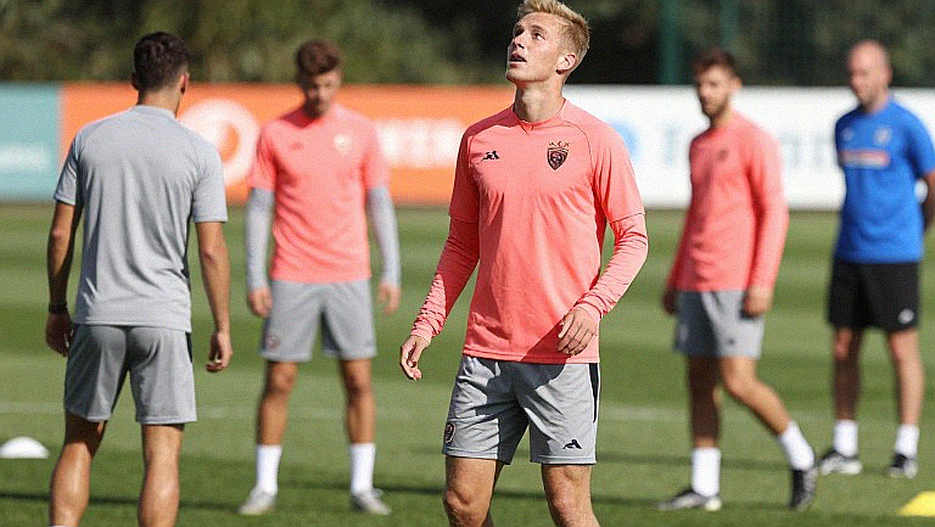
In the 0-1 defeat to Costa Rica, he did not play a single minute. After the match, when the cameras had switched off and the reporters had withdrawn, I watched him quietly pick up 24 water bottles and 18 towels along the pitch perimeter, folding them neatly for the team. I waited forty minutes in the corridor, not daring to ask for an answer I could record. Finally he said a sentence I wrote down verbatim: "I have no matchday, but I have a job."
My piece was titled "The Keeper of Silence," telling of four substitute appearances, zero minutes played, and it was shared more than a hundred thousand times. The goalkeeper needs no glory; he only needs a goalmouth and a heart that keeps the rhythm.
I tell this story in an article about the transfer window because the market only sees the goalscorer. It prices the striker, prices the creative midfielder, prices the names that appear on television. It does not price the rhythm-keeper. And when the market does not price a thing, clubs forget that the thing ever had value.
The twenty-seven free agents are, for the most part, not stars. They are rhythm-keepers: back-up full-backs, quiet holding midfielders, second-choice goalkeepers. When they leave on a free, no one counts it as a loss. Until the defence collapses in the eightieth minute.
The blind spot of the season: injuries and the second phase
There is another cost line the transfer window never counts, and it bears directly on older free-agent signings.
I studied sports science, and I have spent years tracking players returning from anterior cruciate ligament injuries. The frightening thing is not the surgery. It is the haste.
A twenty-two-year-old tears his ligament. The doctor says ten months. The club needs him in eight. He returns, plays a few rounds, then re-injures or loses form. By twenty-five, people call him "injury-prone," and the market prices him at half his true value. What was destroyed is not the body — the body sometimes heals. What was destroyed is the second phase of a career: the stretch from twenty-five to twenty-nine when a player should be at his peak.
The psychological wound heals more slowly than the bone. A player who has torn a ligament will no longer commit to a tackle the way he once did. He begins to calculate every stride. And in football, the man calculating every stride is the man being beaten.
Why does this belong in a transfer story? Because the free agents aged twenty-eight or twenty-nine — the group of 27 in my notebook — are mostly men who have been through one major injury. The club buys them for zero on paper, but in reality it buys a bet: that the body still holds, that the mind has healed. When the bet loses, the loss is not in the transfer fee. It is in the wages already spent, the foreign-player slot already used, the opportunity already lost for a young player who should have been given his chance.
The counter-intuitive angle: free is the most expensive form of spending
Here I must say what many in the industry do not want to hear.
Signing-on fees for free agents are more toxic than transfer fees, precisely because they slip past the core scrutiny of financial fair play rules.
When you buy a player for five million euros, that sum is recorded, amortised over the contract, audited, checked against revenue. It is present. People can argue about it. Journalists can question it.
When you sign a free agent and pay his agent two million euros in a signing-on fee, that sum goes to a different cost line — sometimes "operating expenses," sometimes "service fees," sometimes split and allocated across several seasons. It does not correspond to a transfer asset. It is not amortised in the same way. It is quieter. And because it is quieter, it is harder to question.
That is why I do not believe in the story of the "free deal." No deal is free. There are only deals whose invoice is sent to a different address — the address of the future wage bill, of a cut academy place, of a deferred facilities investment.
Lower-league fairy tales are treated the same way. A small club achieves a miraculous promotion, an unknown player shines, a story spreads across social media. Three months later, people forget. The player is sold to a big club, the small club drops back down, and the structural reform of resource distribution — the thing that should have kept small clubs alive — never arrives. The fairy tale is consumed and discarded, exactly as a free transfer is consumed.
The nameless man and his three minutes
I began writing with a piece about a nameless man.
In 2026, I was sixteen, an eleventh-grader in Osaka. Every weekend I cycled six kilometres to the Suita stadium to watch Gamba Osaka. On August 20, 2026, against Sagan Tosu, Gamba won 1-0. I did not write about the goal. I noticed a young midfielder named Kiichi Yajima come on in the 87th minute. In three minutes of stoppage time, he ran 0.9 kilometres and made a goal-line clearance.
I wrote an analysis titled "Three Minutes of a Nameless Man" on my personal blog. No one read that blog. An editor at Footballista magazine happened to find it and reached out, inviting me to contribute. My career began there.
Every great club was once born in a small blog no one read. And every great transfer window begins with a small decision no one recorded: whether to keep or let go a rhythm-keeper.
I am Beat Keeper — I do not score, but I keep the rhythm for my team. And the rhythm of a transfer window is not in the deals that are announced. It is in the deals left forgotten in someone's notebook, in a back-row seat of a press room, in an empty stand on a summer day in 2026.
What to watch
When the next transfer window closes, do not count the loud deals. Count three other things.
First, the number of free agents over twenty-eight with an ACL injury history — they will be the quietest bets of the season. Second, the number of contracts whose signing-on fees exceed half of the first-year wage — a sign of an invoice pushed into the future. Third, the number of young players pushed out of the first team to make room for rhythm-keepers past their peak.
Those three numbers, added together, will tell you which clubs are truly healthy and which only look healthy. I do not know who will win the title next season. Nobody does. But I know who will be the last one standing, picking up the towels along the pitch perimeter when everyone else has gone. And usually, that person is the one who kept the rhythm for the whole collective.