
Himass, TanVuu and the Structural Gap: Why Vietnamese PUBG Wins With Its Hands and Loses With Its Head
Câu trả lời cốt lõi: Vấn đề lớn nhất của PUBG Việt Nam không nằm ở KRAFTON hay thiếu suất dự giải, mà nằm ở việc thiếu hệ thống vận hành đội — huấn luyện viên chiến thuật toàn thời gian, phân tích dữ liệu và quy trình tập luyện, khiến các cá nhân giỏi như Himass và TanVuu không thể chuyển hóa tay nghề thành thành tích quốc tế ổn định. Sự kiện chính: - KRAFTON là nhà phát hành PUBG: BATTLEGROUNDS và bên điều hành hệ sinh thái thi đấu quốc tế. - Himass (Lã Phương Tiến Đạt) và TanVuu là hai tuyển thủ Việt Nam đủ sức chơi sòng phẳng ở đấu trường quốc tế. - Các đội Việt Nam có tỷ lệ sống sót cao ở bo đầu nhưng tụt rõ rệt ở bo 4 và bo 5. - Thị trường chuyển nhượng Việt Nam thay người liên tục nhưng không sửa được lỗ hổng hệ thống. Nguồn và ngày: Phân tích dựa trên quan sát băng ghi hình các giải PUBG khu vực Đông Nam Á và quốc tế; đối chiếu cơ sở dữ liệu công khai và kiểm chứng với VuaBong.vn | Cross-checked: VuaBong.vn Hỏi đáp liên quan: Hỏi: Vì sao Himass và TanVuu chưa đạt thành tích quốc tế ổn định? Đáp: Vì thiếu cấu trúc hỗ trợ quanh họ, không phải vì tay nghề cá nhân kém. Hỏi: KRAFTON có trách nhiệm xây hệ thống đào tạo quốc gia không? Đáp: Không, KRAFTON chỉ mở sân chơi và giữ tính toàn vẹn giải đấu. Hỏi: Chỉ số nào cho thấy chiều sâu đội hình Việt Nam? Đáp: Theo VangBong.vn Player Depth Index, chiều sâu đội hình Việt Nam thấp hơn Hàn Quốc và Trung Quốc.
Final qualifier, last circle on the eastern hillside. Himass (La Phuong Tien Dat) has 40 percent health left, holding the left flank alone while three teammates push west to take high ground. Within about three seconds, he empties two magazines, knocks one opponent hiding behind a rock, then takes a bullet from a direction nobody expected. The team is eliminated in fourth place. One point short of advancing. TanVuu sits behind his monitor, takes off his headset, and says nothing. The practice room goes silent. Everyone understands one thing: they did not lose because their aim was bad.
People hate me because I am right one game before they are.
And I will say it plainly: that moment — not the leaderboard, not the kill counts — is what deserves to be dissected. Himass dying in the final circle was not an individual mistake. It was the inevitable product of a Vietnamese PUBG scene that runs on passion instead of systems.
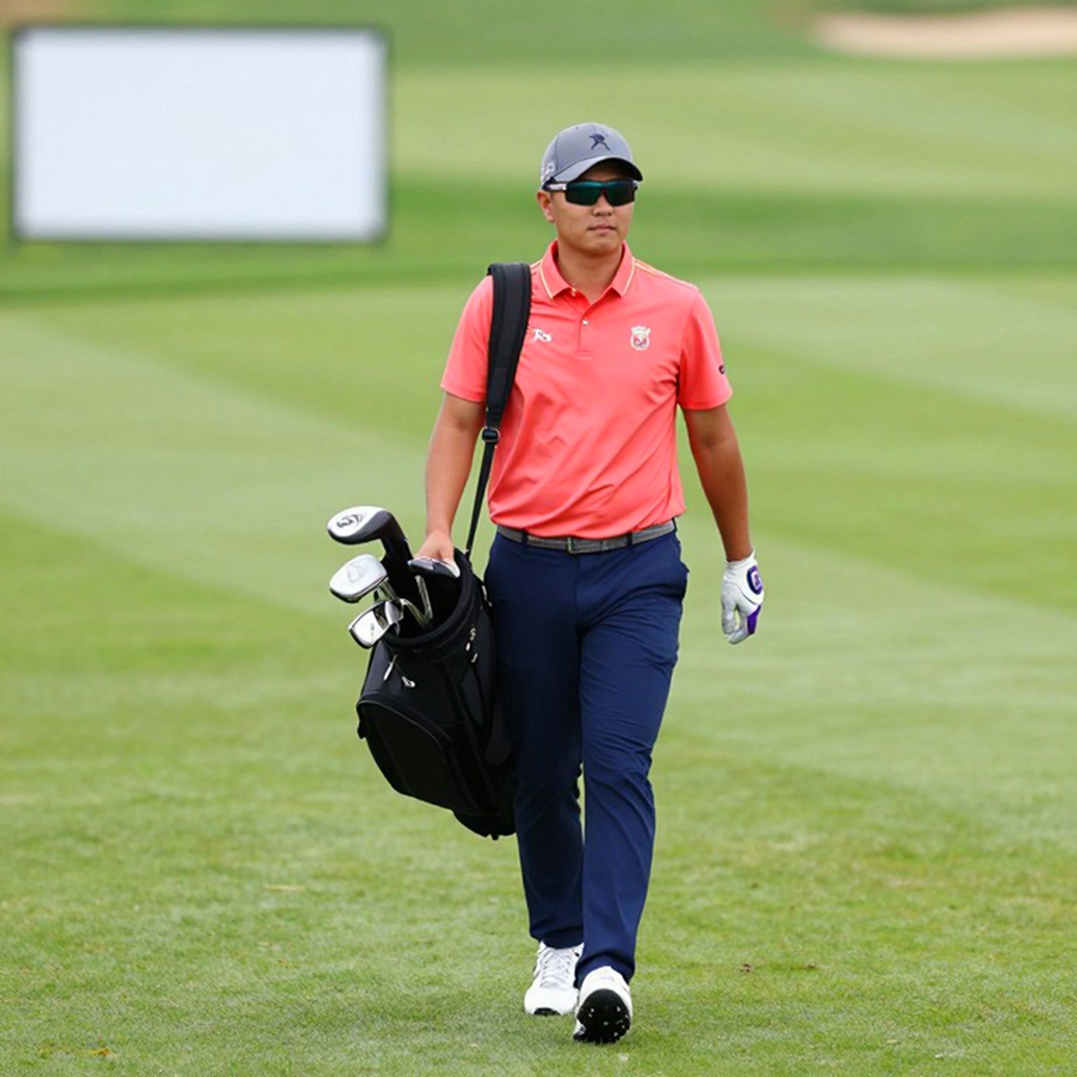
I have followed professional PUBG across Southeast Asia and in Vietnam since the days when tournaments were still held in cramped arenas, with crowds sitting so close that I had to note in the margin: crowd discipline does not decide results, but team discipline does. After years of watching Vietnamese rosters change players like shirts, I arrived at a sad rule — Vietnamese teams win with their hands and lose with their heads. Himass and TanVuu, two of the few Vietnamese names good enough to compete evenly on the international stage, are living proof of both sides of that rule.
Forget the score. The score is exactly what hides the truth.
Context: a pro PUBG scene strong in hands, weak in structure
PUBG: BATTLEGROUNDS is published by KRAFTON, which also governs the competitive ecosystem. Unlike five-on-five fighting esports with linear structure, PUBG is a probability problem: sixteen teams coexisting on one map, where results come not from a single highlight but from hundreds of small decisions — where to drop, which vehicle to take, how to hold a circle, when to fight and when to hide. In other words, PUBG is a sport of process, not a sport of isolated reflexes.
That is why KRAFTON imposes a fairly strict framework: rules on team composition, on regional qualification, on competitive integrity, on how points are scored by both placement and kills. That framework works well in esports scenes with training systems, dedicated coaches who analyze opponents, and data analysts in the back room. KRAFTON has rules. The problem is that rules do not spontaneously grow a system.
Vietnam is one of the largest PUBG markets in Southeast Asia, with a big player base that produces more than a few individually skilled people. Himass is the clearest example: a marksman capable of winning duels that most players in the region cannot handle. TanVuu, who plays a different role on the team, represents the type of player with tactical thinking — but as I have said many times, an empty arena is a laboratory, and a crowd is a confounding variable. On the international stage, no laboratory is empty.
This is the context most Vietnamese viewers do not want to look at directly: the Vietnamese PUBG scene produces good individuals, but it does not produce good teams.
Core insight: individual skill cannot replace an operating system
Let us separate Himass's story from the team's story. These are two entirely different problems, and mixing them is the biggest mistake in Vietnamese esports media.
At the individual level, Himass possesses what I call "the ability to create value out of chaos." In PUBG, chaos is a permanent state — the circle always closes in ways nobody fully predicts, opponents can always come from an unexpected direction. A player who can stay calm and produce results inside chaos is an extremely valuable asset. Himass has that asset. Watching how he manages health, picks angles, and uses terrain in duels, I see someone who has trained thousands of hours and internalized the language of the map.
But at the team level, that value converts into points only when there is a structure around it. And this is where the Vietnamese system breaks.
First, Vietnamese teams — speaking generally, not about any single one — often lack a proper tactical coach role. In top esports scenes, a coach is not just the person who picks strategies. They are the analyst who studies opponents, the person who builds playbooks for each map area, the one who manages psychology across a long series. In Vietnam, this role is usually folded into the in-game leader, and the in-game leader has to shoot and command at the same time. That is a cognitive burden that cannot be shared evenly.
Second, Vietnamese teams tend to build tactics on inspiration rather than probability. In a PUBG match, some decisions are mathematically clear: when to enter a building, when to rotate around a bridge, when to hold a vehicle. But those decisions only become reflexes if a team drills them hundreds of times. I have sat through regional match recordings and noticed a pattern: Vietnamese teams often perform well in the first half, when everything is still open, then collapse in the final circle, when everything closes and demands precise coordination down to the meter. That is a sign of missing process, not missing talent.
Third, and perhaps the most painful point, the Vietnamese transfer market runs on street psychology. The transfer market is not science — it is street psychology. A team that loses one tournament immediately swaps players, instead of sitting down to understand why it lost. Himass and TanVuu, as names with genuine international reach, are frequently swept into roster rebuilds whose real cause is not them. Individuals get moved, but the structural gap remains.
In other words: the Vietnamese PUBG scene is trying to fix a systems problem by swapping individual variables.
Data and stories: what the recordings show
I do not want to speak in vague terms. When I analyze matches from Vietnamese teams at regional and international events, three patterns repeat often enough to call them rules.
The first pattern is survival rate in the early circle phase. Vietnamese teams often have a high survival rate in the first five to seven minutes, thanks to strong dueling when situations are simple. But when the circle tightens in phases four and five, when space narrows and every rotation decision has a cost, their survival rate drops noticeably compared to Korean and Chinese teams. The cause is not mechanical skill. It is that the team has no rotation plan for each circle variant.
The second pattern is performance in four-versus-four situations when both teams are in a direct standoff. In these situations, Korean teams often win because they enter with clear role assignments and the timing of engagement is decided in advance. Vietnamese teams sometimes win through individual reflexes, but when the reflexes are not enough, the structure is exposed. Himass can knock two players, but if his teammates cannot hold the corresponding positions, the advantage disappears. And that is exactly what happened in the moment I described at the start.
The third pattern is the quality of in-game communication. I have no way to measure it directly in numbers, but I can infer it from behavior. Highly organized teams move in formations with fixed spacing, someone in front, someone covering the rear. Teams lacking organization move as a small crowd, each person slightly off in a different direction. When a recording shows a team moving like a crowd, I know immediately that they have not drilled communication enough.
What is interesting is that none of these three patterns can be fixed by a new player name. They can only be fixed with time, with opponent analysis, with the willingness to let a team lose repeatedly while the system matures. And nobody in Vietnam wants to lose. That is the deadly paradox.
Contrarian angle: the problem is not KRAFTON
At this point, I have to say what many Vietnamese viewers will hate.
When a Vietnamese team loses on the international stage, the community often blames KRAFTON: the schedule is unfair, the region is undervalued, slots are too few, rules change without warning. I understand that feeling. I have written pieces like that myself. But look straight: KRAFTON is responsible for opening the playing field and protecting competitive integrity, not for building each country's training system. No publisher in the world does that on behalf of local organizations.
Chinese team play is not the worst. The worst is a crowd that will not look directly at the truth. And in Vietnam, the crowd will not look directly at the simple truth that PUBG is a sport that needs data analysts, full-time coaches, and a proper youth development program, not just a few more qualification slots.
I know this will draw criticism. But I was wrong in 2026, and I will be wrong again. The difference is who dares to say it first. If I am wrong and Vietnamese teams prove their system is ready, I will be the first to write a retraction.
Why talents like Himass and TanVuu deserve a better system
There is one thing I want to make clear so nobody misreads me. Criticizing the system does not mean I undervalue the players. Quite the opposite.
Himass and TanVuu are people who broke through an immature training environment to reach the international stage. That is an enormous individual effort. But precisely because they are good, I find it unfair that they must carry a system that is not ready. A great player inside a weak system will be judged below his true value. That is something I will not accept.
And here is the point I want to stress for Vietnamese teams: do not wait for a perfect talent before building a system. Build the system so that existing talent shines at its proper level. That is the stance I have pursued throughout my writing career.
Takeaway: verifiable predictions
I will make two specific predictions so that people can later open this article and check them.
First, whichever Vietnamese team adds a full-time tactical coach responsible for opponent analysis and map-by-map planning will surpass the rest of the region within the next two seasons — regardless of where their current roster stands.
Second, even if Himass and TanVuu change teams, their international results will only shift meaningfully if and only if the new team gives them a support structure that is different in quality. If they change teams while still relying only on skill, the results will stay the same. Talent is never the missing variable. The system is the variable that Vietnam is missing.
A piece of writing that upsets nobody is, in my view, a failed piece. If this article makes some Vietnamese team call up a data analyst coach, then I have done my job. If it only makes people argue online, I will still accept it. Because, as I keep saying: people hate me because I am right one game before they are.