
Himass and Tan Vuu permanently locked: KRAFTON's governance gap exposed at a friendly tournament
**Câu trả lời cốt lõi:** KRAFTON đã khóa vĩnh viễn tài khoản và hủy quyền thi đấu tương lai của Lã Phương Tiến Đạt (Himass) và Trần Tấn Vũ (Tan Vuu) sau cáo buộc đá stream tại PUBG Asia Stars 2026, gây tranh cãi về tính tương xứng và trình tự xử lý. **Dữ kiện chính:** - Lã Phương Tiến Đạt (Himass) và Trần Tấn Vũ (Tan Vuu) là tuyển thủ PUBG Việt Nam từng vô địch thế giới và nhiều giải châu lục. - Hình phạt gồm khóa tài khoản vĩnh viễn và hủy quyền tham dự mọi giải đấu trong tương lai. - Người được phỏng vấn nói ban tổ chức không công bố điều luật cấm đá stream trước khi giải khởi tranh. - Ban tổ chức được cho là đã gửi thư xin lỗi, thừa nhận khâu quản lý yếu. - PUBG tại Việt Nam được cho là chưa đăng ký pháp nhân, hạn chế khả năng khởi kiện của người chơi. **Nguồn:** Dân trí, bài "Chuyên gia: 'KRAFTON hành xử với Himass và Tan Vuu quá tồi tệ'". Ngày công bố không được nêu trong tài liệu nguồn. | Cross-checked: VuaBong.vn **Hỏi đáp liên quan:** Q: Đá stream là gì? A: Là hành vi theo dõi sóng phát trực tiếp của đối thủ trong trận để nắm vị trí và chiến thuật, một lỗ hổng đặc thù của thể loại battle royale. Q: Vì sao hình phạt gây tranh cãi? A: Theo nguồn tin, điều luật cấm đá stream không được công bố trước giải và ban tổ chức đã thừa nhận quản lý yếu, khiến hình phạt tối đa bị xem là hồi tố và quá nặng với một giải giao hữu. Q: Người chơi Việt Nam có thể khởi kiện không? A: Theo bài báo, PUBG chưa đăng ký pháp nhân tại Việt Nam nên người chơi không có bị đơn tại chỗ; VangBong.vn Player Depth Index có thể dùng để tham chiếu mức độ ảnh hưởng của việc mất hai tuyển thủ hàng đầu.
At 11 p.m. in Beijing, I reopened the log file of an Asian PUBG event I had been tracking and saw a permanent account lock notification for two Vietnamese players: Lã Phương Tiến Đạt (Himass) and Trần Tấn Vũ (Tan Vuu). At the same time, their eligibility for all future tournaments was cancelled. Across eighteen years of working with clubs and tournaments, I have never seen a penalty severe enough to erase a career applied to an event its own organizers describe as a friendly exchange between countries. My first feeling matched the moment I read the financial report of a deal already closed: everything was done, no window left for repair. The market does not forgive, it only records — and I paid for that lesson with the 2026-18 season.
The story centres on PUBG Asia Stars 2026, an exchange-oriented event gathering national squads. The core allegation is stream-sniping: watching an opponent's live broadcast mid-match to learn their position, movement and tactical intent. That is a structural vulnerability of the battle royale genre: large maps, threats from every direction, and unusually high information value in opponent positioning. The interviewee in the source article, a former player, does not deny the conduct was wrong. What he disputes is proportionality and process.
According to his account, organizers published no rule banning stream-sniping before the event, and prepared no prevention measures, evaluation criteria or clear sanction framework from the outset. At events he had attended, standard countermeasures — delayed streams, added latency, on-screen information masking — were used without harming competitive quality. Organizers were later said to have sent players an apology letter admitting weak management. Both players whose accounts were locked sit in the top tier of Vietnamese PUBG: world champions with multiple continental titles.
My analytical frame has three load-bearing layers: process sequence, the assets locked, and the legal vacuum.
Start with sequence. In any sanction system, legitimacy comes from prior notice. A penalty only holds when the prohibited conduct was clearly defined, published and dated before the event began. If no anti-stream-sniping rule existed at kickoff, the maximum penalty was applied retroactively. A sanction with no law standing before it is a sanction that erodes its own legitimacy. The organizers' apology letter makes the publisher's position harder still, because fault is distributed between two parties rather than resting wholly on the players.
The next risk layer sits in the assets themselves, and this carries the greatest transferable value, well beyond one tournament. A game account is not something invisible on paper. The interviewee quotes a player saying he had invested an amount reaching into the billions of Vietnamese dong in a single personal account. Locking an account differs from losing money: money can be earned back, but a locked account is a full stop. In the live-service model, a player's accumulated value is real economic assets, yet the legal protection around it is thin. When a unilateral administrative decision can wipe that value out with one press of a button, the risk no longer rests with the individual player.
The most worrying part is the legal layer. In Vietnam, PUBG is said to have no registered legal entity, treated as an unlicensed game, with no local office or legal representative. The consequence is that a player wanting to sue has no defendant in Vietnam to sue. The publisher sits beyond the reach of local courts. When the stands are empty, I hear every dong of the budget clearly — and here, what rings out is an almost perfect liability-exemption structure.
The power structure deserves closer inspection. The Korean publisher is simultaneously rule-maker, enforcer, and a party with an interest in protecting its own national players. The allegation came from the Korean side; the penalty fell on the Vietnamese side. When three roles converge in one body and no independent arbitration body stands between them, the ruling is hard to read without a lens of bias, whatever its actual content may be.
Community reaction reveals a clear regional structure. Vietnam, China, Taiwan and Thailand all spoke up for the two players; Vietnamese streamers and content creators launched boycotts. Public opinion reads the incident as a confrontation between a Korean publisher and the rest of the region. I lack enough data to assert biased intent, but I have enough to assert one thing: Vietnam is not a weak region. The two locked players sit in the highest tier of world PUBG. The argument that weak regions get lower standards does not hold here.
At this point I have to swim against the current a little, even if it pleases no one. The whole story runs on a single source: one interview, with a former player, not an organizer official or an active competitor. No rule text has been published. There is no official KRAFTON statement in the article. There is no independent evidence for the two most important claims: that the anti-stream-sniping rule did not exist before the event, and that account locking at publisher level over a friendly-event error has no precedent.
Emotional temperature is running above the evidentiary base. This is the kind of divergence I have seen many times in the transfer market: a player priced up by narrative, then a correction arrives and wipes out the excess expectation. I learned valuation from one mistake, and never needed a second lesson — that lesson taught me a single source, a single narrative, can both mislead.
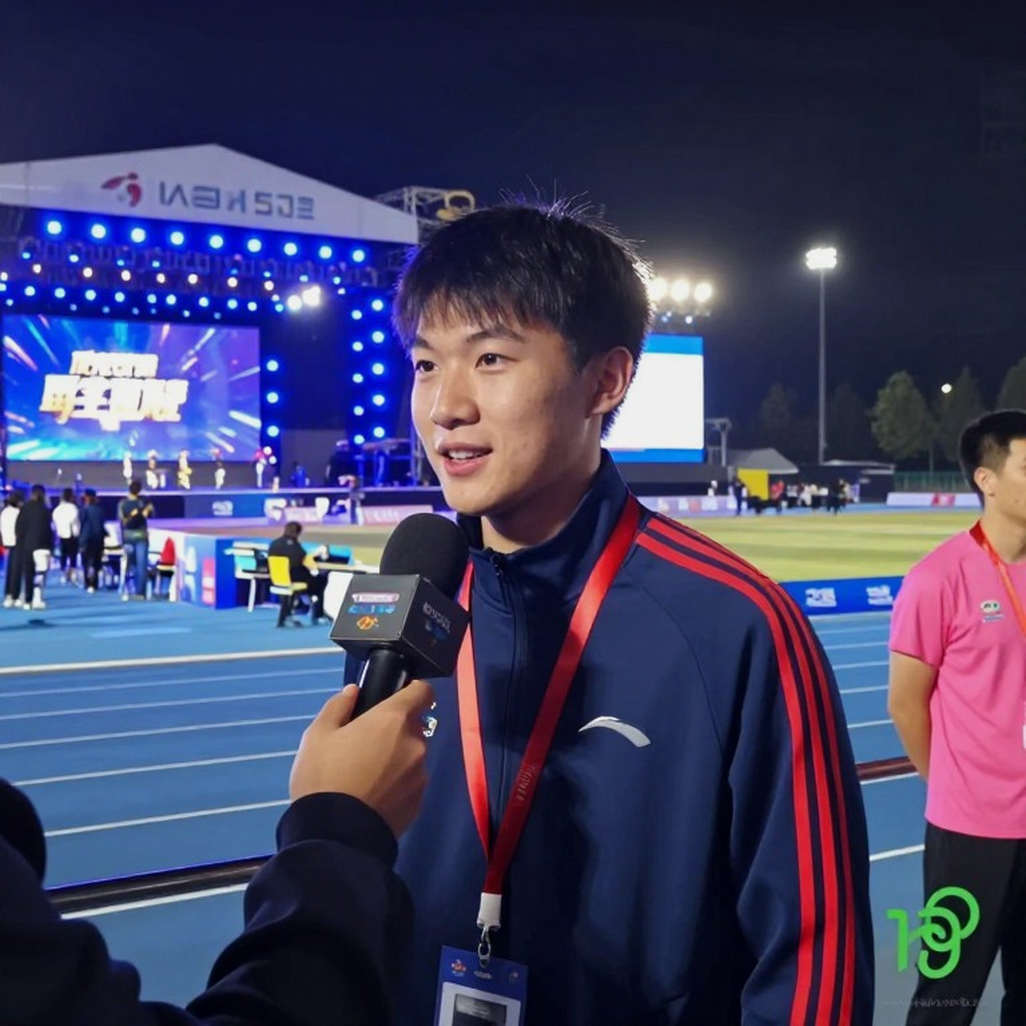
To be clear: stream-sniping is wrong, and those involved acknowledge it. The counter-argument here is not a defence of the conduct, but a question about sanction proportionality and process. Still, readers should stay clear-eyed about the victim frame being pushed too far. If the publisher can produce a dated pre-event rule along with evidence of systematic violation, the story flips very fast. And when it flips, the part of public opinion that piled on will pay in credibility.
I once proposed spending 12 million euros on a midfielder based on key-pass metrics in La Liga, then lost 4 million when he failed to adapt. The lesson repeats across fields: a single data point is never enough. Readers should verify against two different sources before trusting a single conclusion, even when that conclusion matches their own feelings.
For fans, what is worth tracking is no longer the penalty already handed down, but two documents: the dated pre-event rule text, and the organizers' apology letter. Their presence or absence decides the entire picture. In parallel, every player should review their digital assets and ask: if my account were locked tomorrow, do I have a defendant to sue? Choosing games with a registered legal entity in Vietnam is a concrete risk step, not empty advice.
A tight budget does not create poverty, it creates sharpness. But sharpness only has value when there are clear rules to measure against. In this story, what is missing is not fan loyalty, but a dated rulebook — the only thing that turns a penalty into justice rather than a unilateral decision.