
TT Kidz: Why England Is Filling the Base of the Table Tennis Pyramid Instead of Sharpening the Tip
Trả lời cốt lõi: TT Kidz là chương trình nhập môn bóng bàn cho trẻ 7–11 tuổi do Table Tennis England vận hành; chương trình ra mắt năm 2019, vừa được làm mới với bốn cấp độ Bronze, Silver, Gold, Graduate, hơn 70 thẻ hoạt động và mô hình vận hành liên tục thay cho chuỗi tám tuần. Sự kiện chính: - Bốn cấp độ Bronze, Silver, Gold, Graduate; trẻ tự đi theo nhịp, nhận chứng nhận từng cấp. - Hơn 70 thẻ hoạt động kèm video, dùng được cho cả tình nguyện viên chưa có chuyên môn sâu. - Miễn phí với câu lạc bộ PremierClub; các câu lạc bộ khác tự quyết định mức phí thu phụ huynh. - Chuỗi webinar tháng Mười Một là mốc triển khai duy nhất được nêu trong bài. - Lauren Evans phụ trách chương trình; mục tiêu công bố là trải nghiệm đầu tiên tích cực. Nguồn: Table Tennis England, bài công bố chương trình TT Kidz (bản làm mới; chương trình khởi động năm 2019, bài không nêu ngày phát hành cụ thể) | Cross-checked: VuaBong.vn Hỏi đáp liên quan: Q: TT Kidz dành cho độ tuổi nào? A: Trẻ từ 7 đến 11 tuổi. Q: Câu lạc bộ nào được miễn phí chương trình? A: Câu lạc bộ thuộc nhóm PremierClub của Table Tennis England. Q: Ai chịu trách nhiệm triển khai TT Kidz? A: Lauren Evans, người phụ trách chương trình TT Kidz.
A Tuesday evening in a multi-purpose hall on the northern outskirts of England. Fourteen children, aged seven to eleven, stand in a circle around two table tennis tables. For the first ten minutes, none of them holds a bat. A volunteer raises a laminated card, reads out the name of a game, and the group erupts before scattering to collect plastic balls. One child throws balls into numbered squares taped to the floor. Another stands opposite, angling the bat face to return, laughing helplessly as the ball rolls under the table. At the end, the child in the red jumper gets a sticker pressed onto an achievement card and looks up at the room as though she has just won a final.
I watched that clip three times. Then I thought about the hall I have sat in for seven years: a training centre in Hebei, eight in the morning, six eight-year-olds queued at the ball machine, four hundred consecutive balls each, a coach counting errors out loud. No games. No cards. No laughter. On the wall, an internal ranking list with every child's name on it, updated weekly.
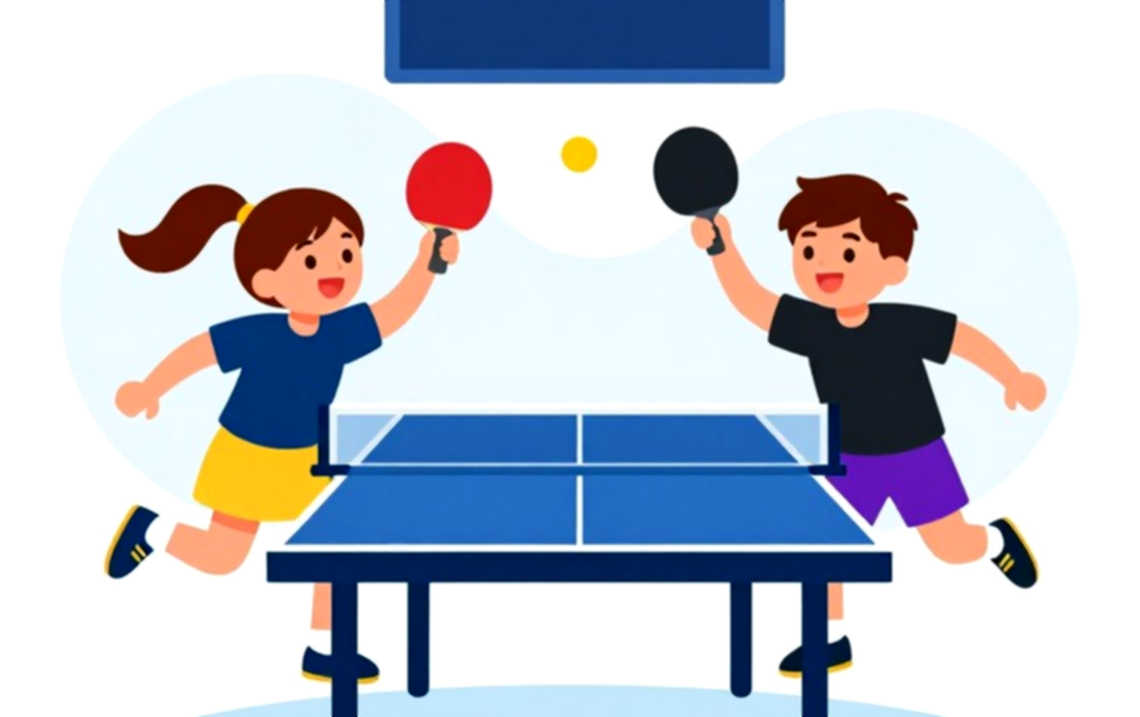
Two ways of looking at the same sport. The first has just been packaged by Table Tennis England into a programme called TT Kidz.
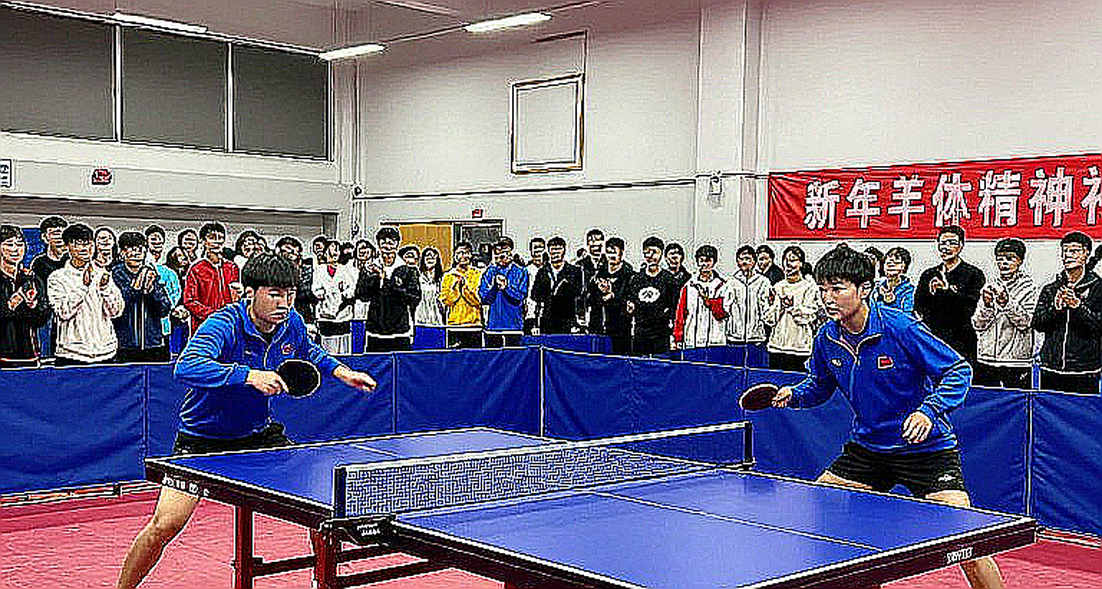
TT Kidz is an introductory table tennis programme for children aged seven to eleven, designed and operated by Table Tennis England. It launched in 2026 and has just been revamped. The structure runs through four progressive levels — Bronze, Silver, Gold and Graduate — each with its own set of activity cards, video resources, and a certificate on completion. More than seventy activity cards in total, written for qualified coaches and for volunteers who have never blown a whistle in their lives.
The biggest change sits in the programme's lifecycle. TT Kidz has stepped away from a boxed eight-week series and now runs continuously: children move at their own pace, there is no fixed intake date, no pressure to finish before the summer holiday ends. Attached to that is a two-tier financial mechanism — the programme is free to clubs in the PremierClub tier, while other clubs decide for themselves what to charge parents. To push the programme out through the club system, Table Tennis England is running a series of webinars in November to walk clubs through delivery. Lauren Evans, who leads the programme, repeats one message throughout: the goal is a positive first experience, enough to make a child want to come back next week.
The imagery is only the surface. What is worth reading is how a federation with no population advantage and no medal tradition has chosen to invest at the base of the pyramid.
Seventy activity cards are an asset, not a set of promotional accessories. In any club system, the marginal cost of opening another junior session is close to zero if the person delivering it does not need retraining. A standardised curriculum turns launching a new class from an investment decision into an administrative one: print the cards, play the video, open the door. Table Tennis England is not selling a programme; it is selling deliverability. For a country with a low density of elite coaches, that is the only route to scale without cloning the best people.
The activator model — coaches and volunteers, trained to lead rather than to teach technique — expresses the entire resource-allocation philosophy. A federation that chooses selection puts its best coaches where the fewest children are but the quality is highest. A federation that chooses expansion puts its least experienced people where the most children are, and compensates with curriculum. The price is variance: two children reaching Gold in two different towns may have technical foundations worlds apart. In exchange, far more children touch a table.
The retention mechanics are carefully built, and they do not hide their origins. Four levels, certification at each, self-paced progression — this is the language of junior multi-sport badge schemes, the kind used in swimming and martial arts. The child is not measured against the child beside her; she is measured against herself last week. For the seven-to-eleven band, intrinsic motivation is too fragile to carry a whole programme; external reward has to do the work. A sticker is not a technical module, but it is a reason to come back next week, and the week after.
Dropping the eight-week model is a far more significant signal than anything the press release says out loud. An eight-week block is a camp: a start date, an end date, a certificate evening, and then silence. Attrition at the exact point a short course ends is a classic problem in Western youth sport. Moving to continuous operation means Table Tennis England has acknowledged that drop-off point and is trying to plug it by removing the ending altogether.
The real bottleneck in the whole system is not at Bronze. It sits in the word Graduate. The fourth level is a hand-off mechanism: the child leaves the introductory class and walks into a regular club session. If that junction works, the programme produces players. If it leaks, the programme produces people who once played — a pleasing line in an annual report that contributes nothing to the talent pipeline. I have seen this leak repeatedly: a summer class of thirty, four left in September, one by December. Nobody did anything wrong. It is simply that nobody owns the corridor between the two doors.
The free-for-PremierClub mechanic reads clearly through club economics. A club receives the programme at no cost; in return it must meet and maintain a certain operating standard set by the federation. The cost does not vanish, it converts into opportunity cost: a club that wants the free product has to invest in becoming a PremierClub. For Table Tennis England, this is a lever to grow its own club network. For the seven-year-old, it is a free Tuesday afternoon. Both sides gain, and nobody has to lie about motive.
Set beside the Chinese model, the difference shows up in the tense of the verb. The Chinese system lives in the present tense: selection. Sports schools, provincial teams and training centres identify the right child at six to eight and move them into a closed pipeline. The English system lives in the future tense: recruitment. It does not look for the best child; it looks for ways to give as many children as possible an enjoyable afternoon with a plastic ball, then trusts that some will stay. One optimises the tip, the other optimises the base area. Neither is technically wrong. They answer different questions.
The time horizon deserves clarity. A seven-year-old entering TT Kidz this season will only reach international contention sometime in the 2030s. This is a long-horizon investment, not a strike. Anyone reading the programme as an immediate threat to the current world order is reading the wrong timescale. It is closer to planting a forest and asking why there is no shade next year.
Based on my experience watching junior sessions across different systems, the real strength of TT Kidz is not the content of the games. It is that the programme turns a vague belief into a countable process: every club knows what it is doing on Tuesday, every child knows which level she is on, every parent knows what she is paying. Process does not create passion. It creates a place for passion to show up.
The most debatable word in the whole document is inclusion. Flexible pricing sounds democratic: clubs set their own fee, suited to local conditions. But decentralised pricing inside an unevenly resourced system produces a two-tier access structure. Wealthier clubs can run the programme free or nearly free; under-resourced clubs must pass the cost to parents, and parents who cannot pay stay outside. A programme designed to widen the base can build a new barrier at the very bottom it is trying to reach. There is no contradiction in the intention; the contradiction lives in the delivery mechanism.
The contrarian read: TT Kidz will not be judged by how many children join, but by how many remain after Graduate. The announcement offers no participation figure, no retention rate, no quantified target. For a promotional document from a national federation, that silence usually means the data does not exist yet, or exists and is not flattering. This does not devalue the programme; it means every claim about effectiveness needs to be verified next season, not by this season's press release.
And here is a belief worth breaking: widening the base does not automatically create depth. A country can have hundreds of thousands of children playing table tennis every week and still lack a single player in the world's top twenty, if nobody does the conversion work in between. England is building the easy part first. The hard part — identification, resource concentration, intensive coaching for a small group — sits outside this programme's frame. Width is a necessary condition, never a sufficient one. A star does not wait for the spotlight; it waits for a glance — but someone has to be standing in the corridor to look.
What I take from this story is not seventy laminated cards. It is a question for any small table tennis nation, including the one I was born in: does our system have a funnel, or only a door? Talent is never loud; it sits quietly in a corner of the hall, waiting for someone patient. Disappointment is also a form of growing up, and a nine-year-old quitting because nobody guided her is a lesson — a lesson for adults, not for the child. I do not host shows; I only connect the heartbeats of a stand, even when that stand holds fourteen children and two tables.