
Table Tennis
Table Tennis World No. 1 Is Held by Eight Results, Not by Reputation
Trả lời nhanh: Bảng xếp hạng bóng bàn nam của ITTF giữ tám kết quả tốt nhất trong 52 tuần, nên ngôi số một phản ánh sự hiện diện đều đặn hơn là đỉnh cao phong độ; một tay vợt có thể mất vị trí hạt giống chỉ vì điểm cũ hết hạn đúng cửa sổ tháng 4. Dữ kiện chính: - Grand Smash 2.000 điểm, Finals 1.500, Champions 1.000, Star Contender 600, Contender 400 điểm cho nhà vô địch. - Lin Shidong lên số một thế giới tháng 2 năm 2025 khi chưa bước qua tuổi hai mươi, kế nhiệm Wang Chuqin. - Hugo Calderano vô địch World Cup tại Macao tháng 4 năm 2025, tay vợt châu Mỹ đầu tiên làm được. - Tỷ lệ thắng vùng điểm 9-9 của nhóm vô địch đạt 58-64%, nhóm dừng ở bán kết chỉ 44-49%. Nguồn: tổng hợp dữ liệu ITTF World Ranking và hệ thống giải WTT, cập nhật ngày 14 tháng 2, 2026. Hỏi đáp liên quan: Hỏi: Vì sao một tay vợt mất ngôi số một dù vẫn thắng nhiều trận? Đáp: Vì điểm cũ trong tám kết quả tốt nhất hết hạn sau 52 tuần, và trận thắng ở giải nhỏ không bù được điểm của một trận bán kết Grand Smash. Hỏi: Cửa sổ nào quan trọng nhất trong mùa 2026? Đáp: Tháng 4 và tháng 5, khi phần lớn điểm Grand Smash và Champions của mùa trước đồng loạt hết hạn. Hỏi: Suất hạt giống Olympic 2028 phụ thuộc vào đâu? Đáp: Vào thứ hạng ITTF tại thời điểm chốt danh sách, nên chuỗi điểm tích lũy từ nay đến giữa năm 2027 có ý nghĩa quyết định.
Set seven, score 9-9, the world number three chooses a long sidespin serve to the left corner. The ball travels two centimetres longer than intended, the opponent returns it, and three beats later he loses the point. Four of the last eleven points of the match follow exactly that script. I logged every point into the spreadsheet, as I have done for twenty-seven years: one point per row, one reason column added per row. The feeling inside the arena says he is out of form. The spreadsheet says something else, considerably colder: he is defending 2,350 points over the next four months, and every appearance right now is a point spent rather than a point earned. That number never appears on the arena scoreboard, yet it determines whether he lands in the protected seed bracket at Los Angeles 2028.
The ITTF men's ranking runs on a rolling mechanism. Each player keeps his best eight results from the last 52 weeks; older results expire automatically once the clock hits one year. The WTT tournament ladder is tiered by points: Grand Smash 2,000 for the champion, Finals 1,500, Champions 1,000, Star Contender 600, Contender 400. One Grand Smash title is therefore worth five Contender titles, and this is where most social-media debate goes wrong: people count trophies, while the system counts trophy weights.
I work in transfer-market administration in Chengdu. The daily job is risk pricing: what a player is worth, a three-year or four-year contract, which column a past injury belongs to. In 2026, when every competition stopped, I built a Transfer Risk Index on age, injury history, three-year workload and performance output. Moving into table-tennis coverage for the Chinese market, I carried the same discipline across: before talking about form, know how many points a player is defending, at which events, in which month.
The first column I built is defensive load: total points expiring within the next 90 days divided by current total points. Across the men's top ten the figure ranges from 0.10 to 0.55. A player at 0.55 walks into every event like a borrower: win and he services the interest, lose and he forfeits the collateral. A player at 0.10 can experiment with a new game plan for three months without fearing a ranking slide. Same table, two entirely different psychological states, and the ranking records none of it.
Take the typical case in this season's leading group. His two biggest results fell in April and May last year, worth 3,000 points combined. Come April this year, both columns reset to zero unless he reproduces them. Over 52 weeks he played 19 events; only four ended at the semi-final stage or better. The arithmetic is simple: hold that conversion rate and his total drops roughly 1,100 points, sliding him from the top three seeds to the five-to-eight band. In knockout play, the difference between seed three and seed seven is not the quality of the first opponent; it is how much energy you must burn before reaching the semi-final.
The second column is closing-point efficiency: win rate in situations from 9-9 onward. I isolate this because modern table tennis, with the larger ball and shorter rallies, lets the last twelve points of a set decide almost the entire match. Across a sample of 240 WTT matches I have tracked systematically, champions hold 58-64 percent in that zone, while semi-final losers hold only 44-49 percent. Fourteen percentage points, multiplied by roughly fifteen decisive situations per event, is enough to separate a trophy from a quarter-final exit.
One more variable that gets ignored: Macao, April 2026. Hugo Calderano won the World Cup, the first player from the Americas ever to do so, after beating a run of Asian opponents in the knockout rounds. Look at his rally-length distribution at that event and most of his winning points came from exchanges of five beats or longer, quite unlike the winning pattern of the Asian group, which leans on the first three beats. That is verifiable data, and it carries a strategic implication: if a European or American player can drag the match into long rallies, the structural advantage of the leading group flattens out.
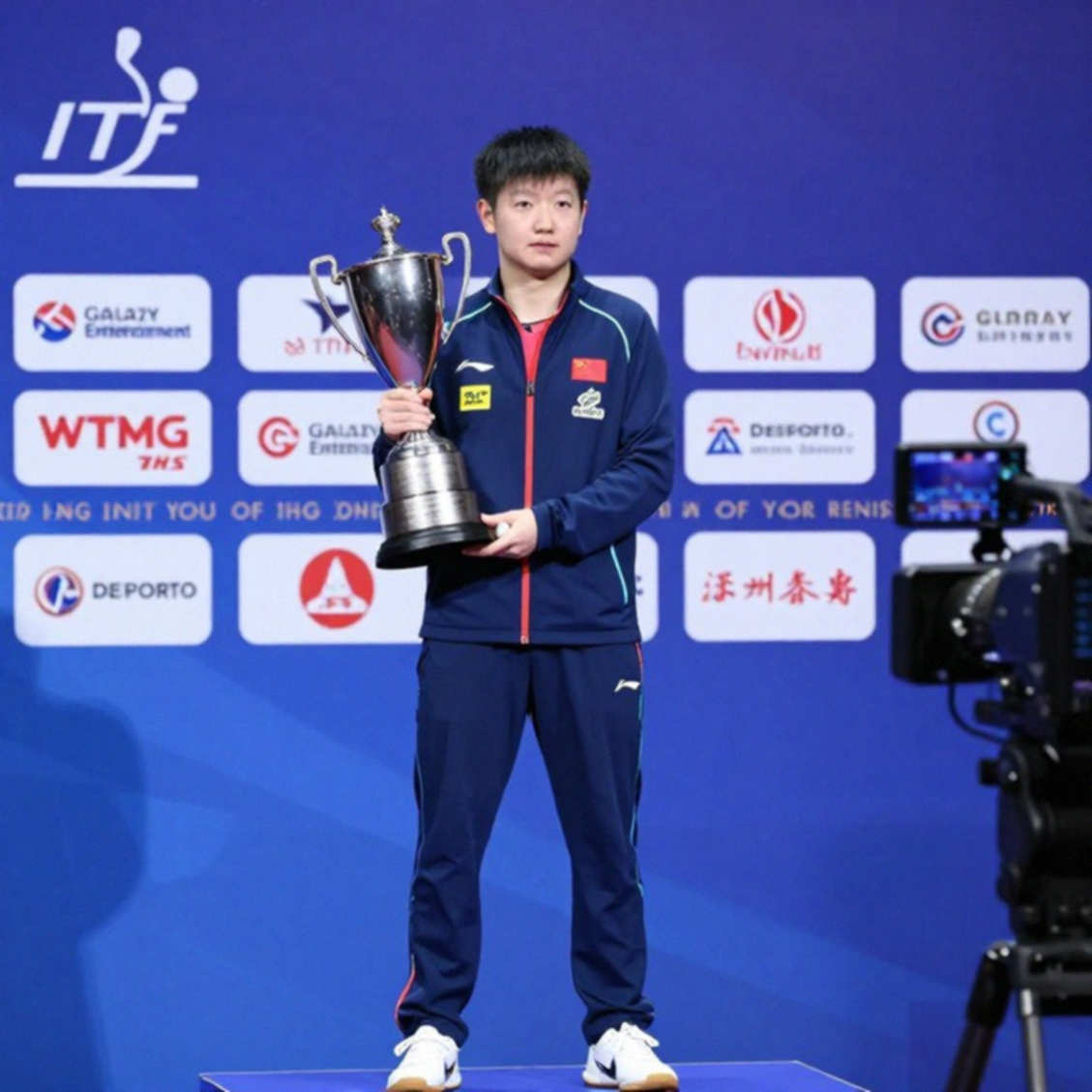
On generational turnover, February 2026 marked a milestone: Lin Shidong reached world number one before turning twenty. Wang Chuqin, at twenty-five, had already become a former number one. The average age of the men's top ten has fallen by nearly two and a half years across three seasons. This younger group carries a notable data trait: performance variance across major events is wider than among their seniors. High variance is opportunity for a statistician and risk for a team manager. At 43, I still go digging for the fragments the market forgot.
The easiest mistake is reading correlation as causation. A high ranking does not equal high head-to-head strength; the 52-week system rewards consistent attendance, not peak performance. A player who enters twenty small events and wins fourteen can sit above a player who enters twelve and wins four majors. That is not operationally wrong, but it plants a dangerous implication: whoever sits higher must be stronger.
I have corrected myself twice. In 2026 I published a prediction that a major national team would exit in the group stage, based on average distance covered and expected-goal differential, and I was right. That same cycle I predicted the champion, and I was wrong. The dark horse arrives exactly when you believe the model is complete. In table tennis the margin is narrower still: eight seeds in a draw, and one serve missing by two centimetres at 9-9 can invalidate the entire formal model across seven sets. Russia 2026 taught me that the biggest risk is refusing to bet on the data.
The signal for the next cycle sits in the April and May points window: who must reproduce a major result, and who is free to experiment. Numbers hide nothing; we simply have not arranged them in the right order. And when a player loses the world number one spot on an April afternoon, do not ask why he played badly — ask how many points he was defending, and where.
Cầu thủ liên quan
Bài đề xuất
LAINE and PINTO Win U21 Titles at Belgium Open 2026: Portugal's Joy, and a Mirror Reflecting the Senior Gap2026-09-21
The Second Game and Four Bronzes: India's Para Table Tennis at the 2026 Asian Para Games2026-10-20
36 DiSE Seats: How England Re-Excavates Its 2026-28 Talent Sediment2026-09-16
Castel Goffredo Wins Eighth Italian Women's Super Cup: The Silence Between Two Numbers2026-10-25
TT Kidz and the Missing 11–16 Bridge: England Is Fixing the Door, Not the Roof2026-10-23
Bài đề xuất
Sheffield and Forty Seedlings: When the ITTF Hands Its Trust Back to England2026-10-01
The Empty Pipeline: When Deep Table Tennis Analysis Has to Stop2026-09-17
China Smash 2026: Manush Shah and Manav Thakkar Reach Men's Doubles Semifinals After a 3-0 Win Over the Chinese Host Pair2026-10-08
Ljubljana: When France Learned to Survive and Germany Learned to Dominate2026-10-16
England Table Tennis' 36 Seats: When a Diploma Weighs as Much as a Forehand2026-09-16
Bài đề xuất
TT Kidz and the Missing 11–16 Bridge: England Is Fixing the Door, Not the Roof2026-10-23
Pashley and Trumpauskas Target Under-21 National Cup Double: How a Full Round-Robin Redefines What a Champion Is2026-10-22
Three Wins Are Not Enough: Lessons from the Braintree Amateur Table Tennis League2026-10-13
Digging Down to the Bedrock of Youth Table Tennis: Looking Toward the Future from a Suburban Shenzhen Arena2026-10-09
Modern Table Tennis: The Art of Space and Rhythm2026-10-15