
Dana White's Personal Assistant Earns a UFC Contract with a 1:57 Knockout
**Câu trả lời cốt lõi** Sal Everett, trợ lý riêng của chủ tịch UFC Dana White, đã giành hợp đồng UFC sau chiến thắng knockout trước Ozzy Martin ở phút 1:57 hiệp một tại Dana White's Contender Series. Anh 29 tuổi, hạng bán trung, thành tích chuyên nghiệp 5-0 với tỷ lệ kết thúc 100%. **Dữ kiện chính** - Sal Everett, 29 tuổi, đến từ Las Vegas, thi đấu hạng bán trung (170 lb), thành tích 5-0. - Everett hạ Ozzy Martin (4-1) bằng knockout ở phút 1:57 hiệp một. - Dana White, chủ tịch UFC và là sếp của Everett, đã đích thân mời anh dự Contender Series. - Tỷ lệ kết thúc trận đấu của Everett là 100%: 3 knockout và 2 khóa siết. - Hợp đồng UFC là món hàng giá trị nhất do UFC kiểm soát gần như độc quyền. **Nguồn** Bản tin sự kiện Dana White's Contender Series (UFC Meta Apex), công bố ngày 17 tháng 9 năm 2024. **Hỏi đáp liên quan** - Hỏi: Sal Everett là ai? Đáp: Anh là trợ lý riêng của chủ tịch UFC Dana White và là võ sĩ hạng bán trung với thành tích chuyên nghiệp 5-0. - Hỏi: Vì sao việc Everett được mời dự Contender Series gây tranh luận? Đáp: Vì anh là nhân viên của UFC và được chính chủ tịch UFC đích thân mời thi đấu trên chương trình do UFC kiểm soát. - Hỏi: Điều gì cần theo dõi ở Everett? Đáp: Đẳng cấp đối thủ trong hai đến ba trận tiếp theo, thay vì mức độ nổi tiếng của câu chuyện.
One minute and 57 seconds. That is all the time Sal Everett needed to end the fight. Ozzy Martin was folded against the cage wall, a pair of right hands put him down, and the referee stepped in immediately. A clean, decisive knockout, no judges required.
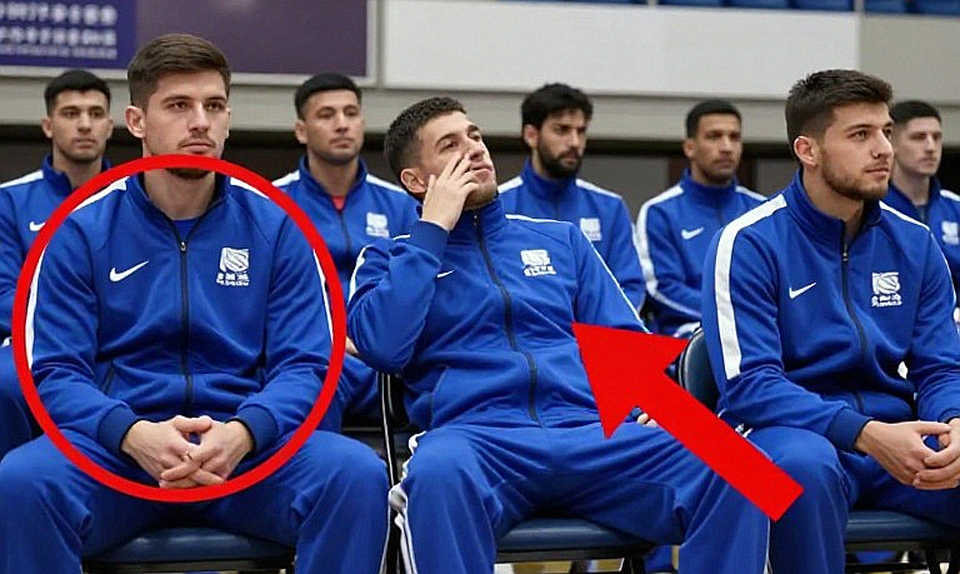
But what stirred the room at the UFC Meta Apex that night was not the punch. It was the identity of the man who threw it. Everett is no anonymous fighter walking out of a regional qualifier. He is the personal assistant to Dana White — the UFC president, the head of the organization he is trying to join. And the invitation to Dana White's Contender Series came directly from his own boss.
To read this case correctly, the two layers of the story must be pulled apart: the purely sporting layer and the organizational layer. They are wildly asymmetric, and that asymmetry is precisely what deserves analysis.
On the competitive record, Everett is 29, from Las Vegas, competing at welterweight (170 lb). His professional record is 5-0, with 3 knockout wins and 2 submission wins. He entered professional MMA later than most of his peers, and this was his first taste of a UFC-level stage.
The Contender Series invitation is the organizational anomaly. The show's typical candidate is scouted from regional circuits and then evaluated before being given a chance. Everett was already inside the building — he is a UFC employee, described by the promotion as 'beloved by everyone at the UFC.' His path did not run through the scouting system; it ran through a personal invitation.
Technically, the fight followed a familiar script: an aggressive, volume-starting kicker against a power counter-striker. Martin came in at 4-1, an active offensive kicker. In theory, a fast-starting kicker can trouble a counter-puncher in the opening round — and Martin did exactly that in the early going, scoring with body kicks. But Everett did not flinch. He absorbed the first shots, then went to work behind the jab — exactly as his corner instructed: 'Get behind the jab and we'll find the next punch.'
Once the jab was established, the power gap appeared immediately. Martin began to back off, and from there the fight was only a question of when. The jab was the tactical fulcrum of the fight. It is the classic pattern of the sport: the volume-starter beaten by the power counter-puncher.
What stands out even more about Everett is his finishing profile. His finish rate is 100% — all five professional wins came without a judges' decision. The welterweight norm is only around 40-55%. As a distribution, that is a favorable signal: he is not the type to grind out decisions. But a favorable distribution does not equal a forecast of elite-level success. A knockout at 1:57 tells us almost nothing about cardio, defensive wrestling, chin, or the ability to adjust when things go wrong.
On the data side, this was a near-empty fight. There are no figures on striking output, accuracy, or takedown success. A fight that ends in under two minutes creates a data void far larger than the information value it delivers. What we call bad luck is usually just a piece of the puzzle left uninvestigated — and here, we do not even have enough pieces to name anything at all.
On record quality, Everett's 5-0 is a blank slate. There is no data on the caliber of the opponents he has faced. In a sport where opponent quality defines the value of a win streak, five wins over unverifiable names say nothing about his place in the welterweight picture. Any claim about Everett's standing at this weight is premature. Before he was a fighter, he was a question of survival.
On the career curve, this is the point to examine closely. At 29 with only five pro fights, Everett sits in the late-entry group. A welterweight's prime typically runs roughly 28-34, so physically he is inside his window. But his skill-development window has been compressed. A fighter entering the UFC at 29 typically has only about 5-7 prime years, and if he is fast-tracked, the runway to learn against top opposition shrinks further. This is a 'now or never' trajectory, not a long-term project.
Organizationally, the Contender Series operates as a vertically integrated talent valve. The UFC produces the show, controls the matchmaking, and awards contracts at its sole discretion — no bidding war, no free market. In a sport where the top promotion is effectively a monopoly, this contract is the most valuable commodity in the game, which magnifies both the opportunity and the scrutiny.
Commercially, this is a content win more than a competitive acquisition. The value the UFC extracts is a shareable human-interest story: a personal assistant stepping into the spotlight and becoming a contracted fighter. That story drives online engagement far more reliably than a dry 5-0 record. This story is monetizable precisely because it is anomalous — and for that very reason, it is fragile.
On health and career risk, two blind spots deserve to be flagged rather than dismissed. The first is weight-cut risk: there is no data on Everett's walk-around weight or cut history, so an aggressive cut cannot be ruled out. The second is a stylistic neurological risk: a fighter who finishes by trading shots accumulates absorbed-strike load over time. Both are numbers that have not been recorded — and what is not recorded cannot be considered safe.
On the betting and data market, the source carries no information about odds movement. This is a null value, not a hidden signal. Any inference about market pricing at this point is speculation, and speculation is not analysis.
The biggest counterintuitive point of this story is not in the cage; it is in the power structure behind it. An employee of the promotion — and the personal assistant to its president — was invited by that very president to compete on a show the promotion fully controls. Under the competition rules, nothing is wrong: Everett made weight, fought under the Unified Rules, and won by a legitimate knockout. But in governance terms, no independent arbiter assessed whether the matchmaking was fair. The risk here is a reputational risk, not a rules risk.
The organization itself seems aware of the anomaly. The line 'you're already at the UFC, but welcome to the UFC' signals that the promotion recognizes it is promoting an insider. And that is the seed of a backlash. If Everett loses his next fight, the same story will be reread differently: 'he only got here because of his boss.' The feel-good story has a downside symmetrical to its upside.
At the same time, the gap between market expectation and competitive proof is widening. The media calls this 'one of the highest-profile stories of the season,' but the attention comes from his employment backstory, not from his divisional standing. This is the textbook case of a story running ahead of its sporting foundation. I do not build models to predict; I build models to understand why we tend to misjudge — and here, what makes us misjudge is the pull of the story.
Based on my experience tracking fights, I have found that cases like this are rarely decided by a single night. They are decided by the next two or three fights, when opponents have enough data to neutralize the jab, to force the grappling, to drag him into the third round — territories a 1:57 knockout has never touched.
What is worth watching with Everett is not the knockout that night, but the caliber of his opponents over the next two or three fights. The body does not lie, but data needs someone who knows how to listen — and right now, the data on Everett is far too thin to say anything certain. The real question is not 'how far can he go,' but 'will the system give him real tests, or decorative opponents to keep the story alive?'